humanity
For better or for worse, relationships reveal the core of the human condition.
Why Some People Sense Outcomes Before Evidence Appears.
Some individuals seem to predict events before they happen. They report knowing the result of a situation, sensing danger, or feeling the outcome of decisions without any clear evidence. This phenomenon is often described as intuition, premonition, or a “gut feeling.” Science explains that these abilities are not supernatural but emerge from the brain’s capacity to process subtle cues, recognize patterns, and integrate past experience at a subconscious level. Understanding why some people sense outcomes before evidence appears provides insight into human cognition, decision making, and perception.
By Wilson Igbasia day ago in Humans
When Seeking Comes Home
Most of us begin the spiritual journey believing we are headed somewhere. We imagine a distant horizon where peace waits for us, a place we will finally reach once we have learned enough, healed enough, surrendered enough. We picture nirvana as a destination, a state of perfection that lies far beyond the life we are living now. It feels like something we must earn, something we must chase, something we must become worthy of.
By Julie O'Hara - Author, Poet and Spiritual Warriora day ago in Humans
Libra Woman and Cancer Man Compatibility Score. AI-Generated.
When a Libra woman and a Cancer man come together, their relationship feels like a soft melody rather than a loud storm. This pairing blends Libra’s charm, elegance, and desire for harmony with Cancer’s deep emotions, loyalty, and nurturing instincts. Both signs value love, security, and meaningful connections, which gives them a strong foundation to build a long-term relationship.
By Inspire and Fun2 days ago in Humans
Cabin Fever Because of Snow, Sleet, and Freezing Rain That Turned to Icy Roads. Top Story - February 2026.
What Is Cabin Fever? The short answer is that cabin fever is restlessness from being in a confined area. Cabin fever is the distressing irritability or restlessness experienced when a person or group is stuck at an isolated location or in confined quarters for an extended time. Research shows that prolonged cold, gray skies, and being stuck indoors can trigger mood shifts similar to “winter blues.”
By Margaret Minnicks2 days ago in Humans
What Floats When No One Carries You
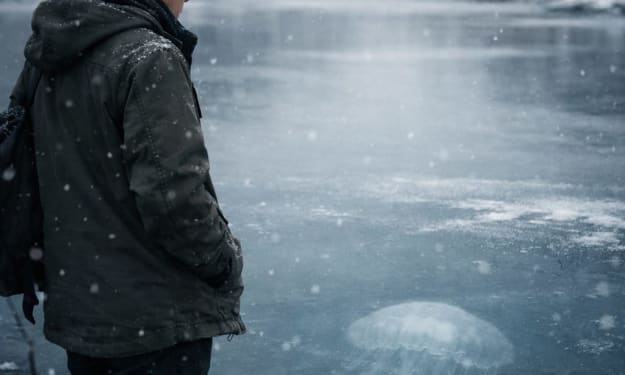
Some pain never shows itself. It doesn’t bleed. It doesn’t bruise the skin. It simply lives inside you, quietly—like something floating beneath the surface of water. Present, steady, unseen. I think I am something like that. Floating. Not because I’m light—but because sinking would mean stopping. The house was silent when I woke up that morning. Not peaceful silence. The kind that feels unfinished. My mother’s room door was closed. My father had already left for work. On the table sat a cup of tea, cold and untouched, probably left there from the night before. I had to go to school. That part of the day always felt heavier than it should have. My foot still hurt. The doctor had called it a “minor injury,” the kind that heals on its own. People love the word minor. It makes pain sound optional. Like something you can simply ignore if you try hard enough. But pain doesn’t work that way when you have to walk. “Just take the bus,” they said. Buses cost money. And money isn’t always something you have when you need it. So I walked. The air was sharp with cold. Each step sent a reminder up my leg that I wasn’t okay, even if I looked like I was. I tried not to limp. People notice weakness more than they notice pain. Cars passed. People passed. Faces buried in phones, conversations, laughter. No one asked if I was alright. And that’s the rule of the world, I think—you’re invisible until you fall. Halfway there, I stopped near a small frozen pond. The surface was quiet, almost glass-like. Beneath it, something moved slowly. A jellyfish drifted just below the ice, its soft colors muted by the water. It wasn’t swimming. It wasn’t sinking. It was simply… floating. I stood there longer than I meant to. Watching it felt strangely familiar. It moved because the water moved it. No direction of its own. No resistance. No struggle anyone could see. I thought, Maybe this is what surviving looks like when no one carries you. School was loud, but I felt distant from it. Sitting hurt. Standing hurt. Thinking hurt. My body and mind seemed to argue with each other all day. The teacher asked a question I knew the answer to. I didn’t raise my hand. Silence had become easier than speaking. When no one truly listens, words feel like wasted effort. During lunch, everyone gathered in groups. I sat near the window, staring out toward the pond again, the way light reflected off its surface. I remembered when I was younger—when my mother used to walk me to school, holding my hand tightly like she was afraid the world might take me away. Back then, the road felt shorter. Back then, pain didn’t follow me everywhere. Back then, I didn’t feel like I had to prove I deserved to exist. Time changes everything. Except the expectations. On the way home, snow began to fall. My foot had gone numb, but I kept walking. Stopping felt dangerous. Like if I paused too long, I might not start again. The sky was heavy and gray. Each breath came out like a small cloud. I thought about how strange it was that pain could feel so lonely even when you’re surrounded by people. When I reached home, the silence greeted me again. I dropped my bag and sat on the floor. That’s when the tears came—not suddenly, not dramatically. Just quietly. Like they had been waiting all day for permission. I didn’t try to stop them. People think strength is loud. They think it looks like confidence, or bravery, or winning. But sometimes strength is just continuing. Continuing to walk. Continuing to show up. Continuing to float. No one sees how heavy that can be. The next morning, my foot still hurt. But something inside me had shifted. I realized I wasn’t weak for struggling. I wasn’t broken because things were hard. I had been surviving without support, without rest, without being asked the simplest question: Are you okay? And I was still here. That mattered. Later that day, someone finally noticed. “You look tired,” they said. Not accusing. Just observant. For once, I didn’t smile automatically. “I am,” I said. The world didn’t collapse. They didn’t walk away. They just nodded—and listened. It wasn’t a solution. It didn’t fix my pain or my situation. But it reminded me of something important: Being seen doesn’t require being loud. It requires being honest—with the right people. I still smile sometimes. But now, I let it come naturally. I let it leave when it needs to. I don’t force strength anymore. I don’t pretend pain doesn’t exist just to make others comfortable. I’m learning that floating isn’t failure. Sometimes, floating is survival. And maybe that’s enough—for now.
By Inayat khan2 days ago in Humans