quotes
A collection of the best quotes ever spoken by scorned lovers and hopeless romantics throughout history.
A Name Can Break You, A Name Can Heal You
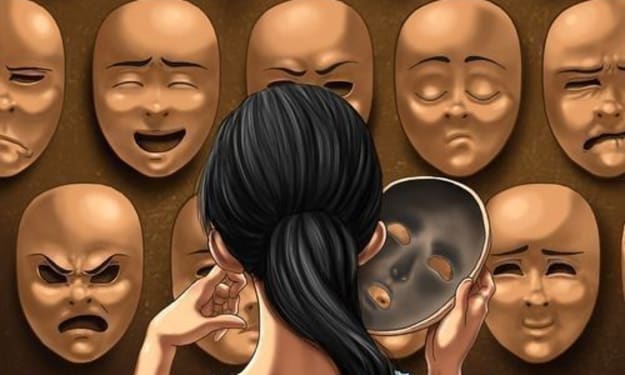
No one tells you that your name can hurt. Not physically. Not loudly. It hurts in the quiet ways—when it is said with disappointment instead of love, when it is followed by sighs, when it becomes the reason people think they already know who you are. She learned this early. When she was a child, her name sounded warm. Her mother used to say it slowly, like it mattered. Like it carried hope. Her father said it proudly, as if the name itself was proof that something good had entered the world. Back then, her name meant possibility. But names change when the world touches them. At school, her name became a pause. Teachers hesitated before saying it. Classmates stretched it into jokes. Some shortened it. Some twisted it. Others used it only when something went wrong. “Of course it’s her.” “Why am I not surprised?” “She’s always like this.” They weren’t just talking about her actions anymore. They were talking about her identity. And slowly, painfully, she began to listen. By the time she was a teenager, her name no longer felt like a gift. It felt like a warning. When people said it, she braced herself. Something bad was always coming after it—criticism, blame, disappointment. She learned to flinch without moving. She learned to smile when it hurt. She learned that silence was safer than correcting anyone. And somewhere along the way, she stopped saying her own name at all. Adulthood didn’t make it better. It only made the names quieter and sharper. Too sensitive. Difficult. Overthinking again. Why can’t you be normal? These weren’t nicknames, but they stuck harder than any insult. They followed her into relationships, into jobs, into rooms where she already felt too small. People spoke about her more than to her. And every time they did, her real name faded a little more. The worst part wasn’t what others called her. It was what she started calling herself. Weak. Broken. A problem. She wore those words like they were facts. The moment everything cracked was painfully ordinary. She was sitting in a small office, hands folded too tightly in her lap. The walls were bare, the air too still. Across from her sat a woman with a calm voice and eyes that didn’t rush. The woman asked, gently, “What would you like me to call you?” The question should have been easy. It wasn’t. Her throat closed. Her mouth opened, then shut again. She didn’t know. Because for the first time, she realized she had spent years answering to names that weren’t hers. “I mean your name,” the woman added softly. “Or… whatever feels right.” Whatever feels right. The words echoed. Nothing felt right. That night, she stood alone in front of her mirror. The light was harsh, honest. She looked at her reflection—older now, tired in ways sleep couldn’t fix. She whispered her name. It sounded strange. Fragile. Like something borrowed. She tried again, louder. Memories rushed in. Every time her name had been shouted instead of spoken. Every time it came with anger. Every time it explained why she was “too much” or “not enough.” Her chest tightened. She realized something terrifying. Her name remembered everything. Healing didn’t come suddenly. It came awkwardly. Slowly. Uncomfortably. It came the first time she corrected someone instead of smiling. The first time she didn’t apologize for existing. The first time she wrote her name on paper and didn’t feel embarrassed by it. The woman in the office once said something that stayed with her: “Names don’t belong to the people who misuse them.” That sentence became a quiet rebellion. She began reclaiming herself in small ways. She stopped shortening her name to make others comfortable. She signed her full name at the bottom of emails. She practiced saying it out loud until her voice stopped shaking. Sometimes it still hurt. Healing isn’t neat. But slowly, her name started to sound different. Not heavy. Not sharp. Stronger. One afternoon, someone new asked her the same question. “What should I call you?” This time, she answered immediately. Her name came out clear. Steady. The person smiled and repeated it. And nothing bad followed. No judgment. No sigh. No disappointment. Just her name. She understood then what no one had taught her before. A name can be a weapon when spoken carelessly. A name can destroy when it is used to silence. But a name can also be a balm. It can be stitched back together with patience. It can be healed with kindness. It can become home again. Her name no longer belonged to the people who hurt her with it. It belonged to the woman who survived it. And that was enough.
By Inayat khan7 days ago in Humans
Essence, Embodiment, and Relational Reality
The Failure of Reduction and the Need for Synthesis There is a persistent failure in many modern attempts to explain what a human being is. Some frameworks reduce the person entirely to matter, insisting that identity, consciousness, morality, and meaning are nothing more than emergent properties of physical processes. Other frameworks move in the opposite direction, detaching spirit from reason and grounding belief in intuition alone, often at the cost of coherence or accountability. Both approaches fail because both misunderstand essence. One denies that essence exists at all. The other treats it as something vague and undefinable.
By Peter Thwing - Host of the FST Podcast8 days ago in Humans