satire
Relationship satire can be cathartic; when love hurts too much, just laugh.
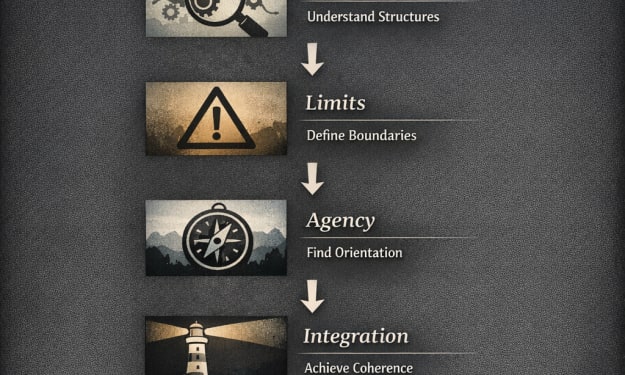
(1) Seeing the System Clearly
- The Shared Feeling No One Can Quite Explain - Most people do not need to be convinced that something is wrong. They feel it in rising costs that never seem to stabilize, in rules that change without explanation, in institutions that demand compliance but no longer command trust, and in a political process that feels permanently hostile yet strangely ineffective. These experiences are not isolated. They are widespread, persistent, and remarkably consistent across demographics, ideologies, and personal circumstances. What differs is not the feeling, but the explanation people are given for it.
By Peter Thwing - Host of the FST Podcast11 days ago in Humans
(0) Prologue: Before You Read
This series is written for readers who sense that something in the structure of modern life no longer works the way it once did, but who have found most available explanations unsatisfying. It assumes the reader is capable of sustained attention and willing to engage with complexity without demanding immediate resolution. It does not assume political alignment, ideological agreement, or shared conclusions. What it does assume is a willingness to slow down long enough for clarity to emerge.
By Peter Thwing - Host of the FST Podcast11 days ago in Humans
The Dangers of Not Having Your Coffee
5:30 a.m. and my husband coos at me asking if I am awake. I am now, but barely. He tells me he is off to work, checked the fire downstairs, and that is will be fine until I wake up (until 7:30 a.m.). Cool. I set my alarm for 7:30 and head back into some delicious dream, I can’t remember anymore. No I would not tell you, even if I could remember the dream)
By Alexandra Grant13 days ago in Humans
Dr. Martin Luther King Jr. Day
Introduction Dr. Martin Luther King Jr. Day is a special holiday celebrated in the United States. It honors the life and work of Dr. Martin Luther King Jr., a great leader who fought for freedom, equality, and justice. This day reminds people to treat everyone with respect and kindness, no matter their skin color, religion, or background. Dr. King believed in peace and non-violence, and his message is still important today.
By Farhan Sayed18 days ago in Humans
Kyrsten Sinema
Kyrsten Sinema is an important American political leader. She worked for many years in the U.S. government and became known for being different from many others in politics. This article uses easy English and clear subtitles to help you understand who she is, where she came from, what she did, and what is happening now with her.
By Farhan Sayed21 days ago in Humans
Sophie Turner
Introduction Sophie Turner is a famous English actress. She is best known for her role as Sansa Stark in the popular TV series Game of Thrones. Sophie became famous at a young age and grew up in front of the camera. Over the years, she has worked hard to improve her acting skills and build a strong career in film and television. She is admired not only for her talent but also for her honesty about personal struggles and mental health.
By Farhan Sayed21 days ago in Humans
I Was a Single Mother With $12 Left — Then One Phone Call Changed Everything
I was counting coins on my kitchen table, trying to decide whether to buy milk or save the last $12 for rent. My son was asleep in the next room, unaware that eviction notices don’t care if you’re a single mother. That’s when my phone rang — and everything I believed about survival changed. Before that moment, my life felt like a constant emergency. I was twenty-nine, divorced, and raising a four-year-old on my own in a small apartment on the edge of town. The walls were thin, the heater barely worked, and the landlord had already taped a warning notice to my door twice. I worked two jobs — mornings at a diner and evenings cleaning offices — but no matter how hard I tried, the math never worked. Childcare ate half my income. Gas prices kept climbing. Every unexpected expense felt like a personal attack. That night, I skipped dinner so my son could eat. I told him I wasn’t hungry, even though my stomach burned. When he finally fell asleep clutching his toy truck, I sat alone at the table, staring at those coins, feeling like a failure. The phone buzzed again. I almost didn’t answer. Most calls were bill collectors or spam. But something told me to pick it up. “Hi, this is Amanda from the housing office,” the voice said. I froze. She explained that I had applied months earlier for a rental assistance program for single mothers — a form I barely remembered filling out during one of my lowest days. “I wanted to let you know,” she continued, “you’ve been approved.” Approved. The word didn’t feel real. I asked her to repeat it. She told me they would cover three months of rent and help me apply for a longer-term support plan. After I hung up, I sat there in silence. Then I cried. Not quiet tears — the kind that shake your chest when you’ve been holding everything in for too long. But that phone call didn’t magically fix my life. It gave me breathing room — and sometimes, breathing room is everything. With the pressure eased, I started thinking differently. I realized how much energy I had spent just surviving. I wanted more than that for my son. I wanted stability. Dignity. A future. I began waking up an hour earlier every day. Not to work — but to learn. I watched free videos online about budgeting, basic computer skills, and remote work. I borrowed books from the library because buying them wasn’t an option. Some nights I was exhausted beyond words. Other nights, fear whispered that none of this would matter. But every morning, my son’s smile reminded me why I couldn’t quit. A few months later, I landed a small remote customer support job. The pay wasn’t amazing, but it was steady — and it meant I could be home more. I could make dinner instead of reheating leftovers at midnight. I could help with bedtime instead of rushing out the door. Life didn’t suddenly become easy. There were still bills. Still stress. Still moments of doubt. But there was also hope — something I hadn’t felt in a long time. One evening, as I tucked my son into bed, he looked at me and said, “Mommy, you’re not sad anymore.” I didn’t realize how much my struggle had shown on my face until that moment. I’m still a single mother. I still worry. But I’ve learned that asking for help isn’t weakness. Filling out that application didn’t make me less capable — it made me brave. If you’re reading this while counting coins, skipping meals, or wondering how you’ll make it through another month, please know this: your story isn’t over. Sometimes, one phone call doesn’t change everything — but it can change enough to keep you going. If you’re a single parent struggling in silence, this story is for you.
By Umar Farooq23 days ago in Humans
New Year, Really?
I don't know what you did on New Year's Eve, but I was sitting listening to my neighbour rattling my house with his bass-dominated tunes. Obviously, the guy and his Mrs have a right to party, but is it really necessary to blast my wall down like the trumpeters from Jericho? Thumping bass and the volume turned up so loud that it distorts the music. Mind you, whether you can call it music is another thing. But hey, Im biased, each to their own, I guess.
By Nicholas Bishopabout a month ago in Humans
Lost and Alone in the French Alps. Top Story - December 2025.
Looking back, I can trace some of my life’s biggest adventures to a simple action from my sister. She’d introduced me to Tommy (a very long time ago), a colleague of hers, who had overshared his penchant for Italian-looking women, and I ticked that box.
By Chantal Christie Weissabout a month ago in Humans
The Attention Economy Is Quietly Rewriting Our Minds — and Most People Don’t Notice
Every time you unlock your phone, scroll a feed, or tap a notification, you are participating in something far bigger than momentary distraction. You are engaging in what experts call the attention economy — a system where human focus is the most valuable resource on Earth. This isn’t hyperbole. It’s reality. For the companies that fuel the modern internet, your attention is currency. Every second spent watching, clicking, or reacting generates data that platforms use to predict your behavior, tailor your feed, and pull you deeper into their ecosystem. And the consequences go beyond algorithms. They are reshaping how we think, feel, and decide — often without our conscious awareness.
By Yasir khanabout a month ago in Humans