science
The Science Behind Relationships; Humans Media explores the basis of our attraction, contempt, why we do what we do and to whom we do it.
Vegan Body Building
Bodybuilding as a vegan can be a challenging but rewarding journey. It requires careful planning and attention to ensure that you are meeting all of your nutritional needs, but it is possible to build a strong, muscular physique without consuming animal products.
By The Openminded Universe3 years ago in Humans
11 Things You Should Know About Comparing Electronic Health Record Vendors
Imtroduction A systematized digital format collection of patients' electronically-stored health data is known as an Electronic Health Record (EHR). These materials can be made available in a variety of healthcare settings. Enterprise-wide data systems, data networks, and exchanges that are network-connected are used to distribute records. EHRs may include a variety of data, including demographics, medical records, prescription and allergy information, laboratory results, radiological images, significant signs, and request information. Providers today leverage data from patient records to improve quality outcomes through their care management systems with the assistance of healthcare software development companies. Clinicians have been able to detect and categorize individuals with chronic illnesses thanks to the combination of several types of clinical information from the system's health records.
By Larisa Albanians3 years ago in Humans
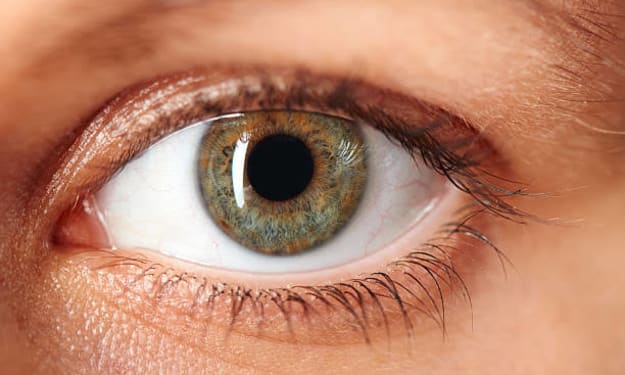
The Human Eye
The human eye is an organ that is capable of detecting light and converting it into electrical signals that can be interpreted by the brain. It is located in the orbital cavity of the skull and is protected by the orbital bones and various muscles and ligaments. The eye has a number of important features, including the cornea, iris, pupil, lens, retina, and optic nerve. The cornea is a transparent layer at the front of the eye that helps to focus light, while the iris is a muscular ring that surrounds the pupil and controls the amount of light that enters the eye. The pupil is a small, circular opening in the center of the iris that allows light to pass through to the lens. The lens is a transparent structure that helps to focus light on the retina, which is a layer of light-sensitive cells at the back of the eye. The optic nerve is a bundle of nerve fibers that carries visual information from the retina to the brain.
By B.Thanga Raj3 years ago in Humans
Facts about Human Body
The average person has about 100,000 hairs on their head. The surface area of a human lung is about the same as a tennis court. The human nose can detect more than 1 trillion different scents. The human brain is the most complex organ in the body and is responsible for controlling all of the body's functions. The human eye can distinguish between over 10 million different colors. The average person has about 100,000 miles of blood vessels in their body. The average person has about 100 billion brain cells (neurons) and 100 trillion supportive cells (glial cells). The human nose can detect a difference in smell of just 1 part per trillion. The human ear can detect sounds that range in frequency from 20 Hz to 20,000 Hz. The human heart pumps about 2,000 gallons of blood per day. The human body contains enough fat to make seven bars of soap. The human body has enough carbon to make about 9,000 pencils. The human body has enough phosphorus to make about 2,200 matchheads. The human body has enough water to fill a 50-liter (13-gallon) drum. The human body has enough fat to produce enough energy to power a truck for about 3.7 miles (6 kilometers). The human body has enough sodium to salt about 40 bags of potato chips. The human body has enough sugar to fill a one-liter (quart) bottle. The human body has enough iron to make a single medium-sized nail. The human body has enough calcium to make a Tic Tac breath mint. The human body has enough magnesium to make a small piece of chocolate.
By sabu meera3 years ago in Humans
The Human Brain
Exploring the Fascinating World of the Human Brain The human brain is the most complex organ in the body, and it is responsible for controlling all of our thoughts, movements, and behaviors. It is made up of billions of cells called neurons, which communicate with each other through electrical and chemical signals. The brain is divided into several regions, each of which performs specific functions.
By Kahi Bradshaw-Williams3 years ago in Humans
Top 10 Health Tech Trends
Health is one of the most important industries, and its development makes it possible to cure many, sometimes rare, diseases. This is made possible mainly thanks to technological advancements in the medical sector, which have enabled a better understanding of humanity.
By Abdul Ahad3 years ago in Humans
To that Awkward Man Who Used to Jerk Off In The Window Opposite From Mine
My bedroom in a beautiful and mountainous New York suburb where I grew up faced the house right behind ours. And I would frequently observe a middle-aged man looking outward, absolutely naked, at the window of that house, on the right side of the second level. And he was doing something with his hands close to his crotch.
By The Secret of 60's3 years ago in Humans