Stream of Consciousness
The Small Door at the End of the Street
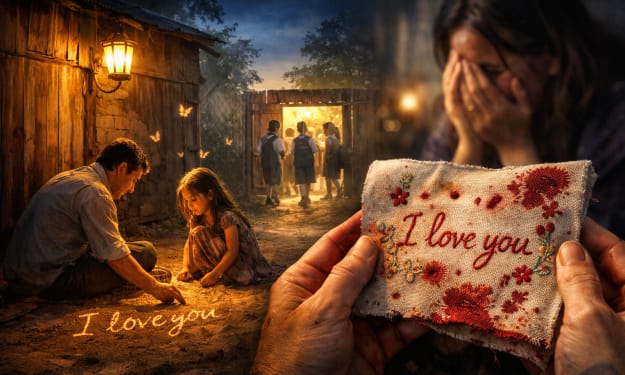
The Small Door at the End of the Street A Child’s Dream, Written in Blood and Hope. Every night, I would go for a short walk, leaving for half an hour and then returning. On my way, I would see a girl who was no more than seven years old. She was chasing butterflies around one of the lights hanging on the fence of a house. Her appearance and clothes caught my attention. She was wearing a torn dress and no shoes. She had long hair and green eyes.
By Mahmoud Ahmed 19 days ago in Humans
The Line We Were Never Meant to Cross — Epilogue
Three years later, the darkness hadn’t left him. It had learned restraint. Aarav stood by the window as rain slid down the glass, slow and deliberate. The city below pulsed with life—unaware of the things we’d survived inside these walls. He still watched storms like they might accuse him of something. “You’re spiraling,” I said from the bed. He didn’t turn. “I’m remembering.” I rose and crossed the room, stopping behind him. I didn’t touch him immediately. That mattered. It always had. “I remember too,” I said quietly. “And I stayed.” His breath hitched. Just slightly. The old Aarav would have taken my words as permission. As ownership. This one didn’t move until I rested my hand against his back—my choice. Only then did he turn. “Do you ever miss it?” he asked. “The way it was? When I wanted you too much?” I didn’t pretend not to understand. “Sometimes,” I admitted. “It scared me. And it thrilled me.” His jaw tightened. “But I love this more,” I continued. “Because now, when you touch me, it’s because I let you.” His hands came to my waist—slow, reverent, still dangerous in their promise. The darkness was there. It always would be. But now it waited for consent. “You still undo me,” he said. “I just know when to stop.” I smiled faintly. “And I know when not to ask you to.” We lived in that balance—control and surrender woven together so tightly they were indistinguishable. Our love was not loud. It was private. Intense in ways that never needed witnesses. He never claimed me again. He chose me. And I chose him back, knowing exactly what he was capable of—because I’d seen it, survived it, and stayed anyway. The ring on my finger was simple. But the meaning behind it was anything but. It wasn’t a promise of safety. It was a promise of awareness. “I still want you like I shouldn’t,” he murmured one night, lips against my throat. “I just don’t let it own me.” I tilted my head, granting him access I trusted him not to abuse. “I want to be wanted,” I whispered. “Not trapped.” His mouth curved against my skin. “Then we understand each other.” Our love was never pure. It was conscious. We kept the darkness—not as a weapon, not as a cage—but as a reminder of how easily love can turn cruel when it forgets choice. Some nights, when the rain was heavy and the world felt too quiet, he held me like he used to—tight, almost desperate—but never past the line we drew together. And when he asked, “Still here?” I always answered, “Yes.” Because this time, staying was my decision. And his restraint— —that was his redemption.
By Rosalina Jane20 days ago in Humans
Whiskey At Dusk. Top Story - January 2026.
Guess the whiskey was more important to you in the end, wasn’t it? It was more than the well-being of your friends; more vital than showing up to the places you promised you would and could come to; more critical of a matter than fulfilling your damn responsibilities and getting the press off your back.
By Snarky Lisa20 days ago in Humans
The Last Flame Challenge Winners. AI-Generated.
Holding the Flame When Everything Else Goes Dark Every challenge promises a winner, but not every challenge creates survivors. The Last Flame Challenge was never about speed, applause, or spectacle. It was about endurance—about who could protect a single, fragile flame when the world around them tested every limit of body, mind, and spirit. The winners of the Last Flame Challenge were not simply the strongest or the loudest. They were the ones who understood something ancient: that survival is not always about domination, but about preservation. About guarding what matters when exhaustion whispers surrender. This is not just a story of victory. It is a story of restraint, resilience, and quiet courage. What the Last Flame Challenge Really Represented At its surface, the Last Flame Challenge appeared simple: participants were tasked with protecting a flame under increasingly difficult conditions—cold, wind, fatigue, isolation, and time. But beneath the rules lived symbolism. The flame represented: Hope when resources disappear Discipline when comfort fades Focus when chaos grows louder Purpose when motivation collapses To keep the flame alive was to prove mastery over panic. It required patience instead of force, awareness instead of aggression. In a world obsessed with conquering, this challenge asked participants to protect instead. The Psychology of Endurance Endurance challenges expose something brutal and honest: the mind fails long before the body does. Participants reported moments where: Hands trembled, not from cold, but doubt Silence became heavier than noise Time stretched until minutes felt endless The winners were not immune to fear or fatigue. They simply learned not to negotiate with them. They understood that endurance is not about eliminating discomfort—it is about refusing to let discomfort make decisions for you. Why Most People Failed Many entered the challenge confident. Strong. Prepared. Most failed. Why? Because they underestimated subtle exhaustion. The flame did not extinguish itself dramatically. It flickered quietly. Participants looked away for a moment too long. Hands moved too fast. Breath became careless. Failure came not from collapse, but from small neglect. This is the lesson the challenge taught mercilessly: Most defeats are not loud. They are quiet. The Winners’ Mindset What separated the winners from everyone else was not talent, strength, or preparation alone. It was mindset. They shared common traits: An acceptance of discomfort An ability to slow down under pressure Emotional regulation under stress Respect for limits without surrendering to them They did not rush. They did not panic. They treated the flame as something alive—not an object, but a responsibility. Silence as a Weapon One of the most unexpected elements of the Last Flame Challenge was silence. No cheering. No guidance. No reassurance. The winners learned to sit inside silence without filling it with fear. They used quiet as a tool—listening to breath, movement, and instinct. Silence stripped away performance. What remained was truth. The Ritual of Repetition Victory did not come from dramatic moments. It came from repetition. Adjust. Shield. Breathe. Wait. Over and over again. The winners respected routine. They turned care into ritual. Each movement was intentional. Each breath controlled. In this way, the challenge became meditative. Almost sacred. Physical Limits vs Mental Collapse Observers often assume endurance challenges are physical tests. The Last Flame Challenge proved otherwise. Participants who were physically strong but mentally scattered failed early. Those who conserved energy, controlled emotion, and stayed present endured. The flame did not care about muscle. It responded to attention. The Final Hours: When Identity Is Tested As time passed, the challenge became less about winning and more about identity. Participants began asking themselves: Why am I still here? What happens if I fail now? Who am I without this flame? The winners did not answer these questions directly. They returned to the moment. To the flame. To the next breath. They understood that survival happens now, not in imagined futures. Victory Without Applause When the challenge ended, there was no eruption. No celebration. No spectacle. The winners stood quietly, flame still burning. Their victory was internal. They had proven something not just to others—but to themselves: That they could stay present under pressure. That they could protect something fragile despite exhaustion. That they could endure without becoming rigid. Why the Last Flame Challenge Resonates Today In a modern world driven by speed, noise, and performance, the Last Flame Challenge feels almost radical. It rewards: Stillness over speed Awareness over force Care over conquest It mirrors modern life more than we admit. We are all protecting something fragile—mental health, relationships, purpose, hope—while external pressures threaten to extinguish it. The winners remind us that survival today is not about burning brighter—but about burning longer. Lessons Beyond the Challenge The Last Flame Challenge leaves behind lessons that extend far beyond competition: Attention is power Calm is a skill Patience outlasts intensity Care is strength, not weakness In an age of burnout, these lessons feel urgent. The Flame as a Metaphor for Life Every person carries a flame. For some, it is ambition. For others, love. For many, simply the will to keep going. The world will test it—through pressure, distraction, exhaustion, and doubt. The winners of the Last Flame Challenge did not conquer the world. They protected what mattered. Conclusion: Why the True Winners Were Changed Forever Long after the flame was extinguished, the winners carried something permanent. They learned: How to remain calm when things shake How to care when energy fades How to endure without hardening They did not leave with trophies alone. They left with proof of inner mastery. And perhaps that is the greatest victory of all.
By Zahid Hussain20 days ago in Humans
The Minority
When the topic of immigration is mentioned here in the United Kingdom, I throw a diamond spanner in the conversation. The most influential being of all time who shapes the lives of billions of individuals was a refugee, facing the very same struggles in an attempt to seek belonging, peace and acceptance in a land of unfamiliarity and hostility.
By Malachai Hough21 days ago in Humans
The Line We Were Never Meant to Cross — Part 4
Redemption didn't arrive like forgiveness. It came like fear. The first time Aarav truly looked afraid of himself was the night I didn’t flinch when he raised his voice—but I did step back. Just one step. Small. Instinctive. Devastating. He froze. Not because I challenged him. Not because I threatened to leave. But because, for the first time, he saw himself through my eyes. Not as the man who wanted me. But as the man who could hurt me. “I didn’t mean to—” he started, then stopped. His hands dropped to his sides like they no longer belonged to him. The room felt fragile. Like glass under pressure. “I’m not scared of you,” I said quietly. “I’m scared of what we’re becoming.” That cut deeper than anger ever could. He turned away, pacing like a caged animal. “You knew who I was.” “I knew you were broken,” I replied. “I didn’t know you’d choose to stay that way.” Silence slammed down between us. Then he said something I never expected. “Leave.” I looked at him. “Go,” he said again, voice rough. “Before I turn into someone you can’t forgive.” The door was open. Actually open. No test. No trap. I hesitated. And he saw it. “Don’t stay out of fear,” he said. “Or desire. Or pity. If you stay… it has to be because you choose me. Not because I cornered you into it.” That was the moment control slipped from his hands. And the moment redemption became possible. I didn’t leave that night. But I didn’t stay either. I packed a bag and stood at the door, heart aching, body trembling with everything unsaid. “I care about you,” I said. “But love that cages isn’t love. It’s hunger.” He nodded once. “I know.” For the first time, he didn’t try to stop me. Days turned into distance. He didn’t call. Didn’t show up unannounced. Didn’t leave notes or watch from across the street. And that terrified me more than his obsession ever had. I heard about him through fragments—missed work, therapy appointments, long walks alone at night. He was unraveling himself thread by thread, not knowing if he’d survive what he found underneath. I told myself it wasn’t my responsibility. Still, when my phone lit up with his name two weeks later, my hands shook. I’m not okay, the message read. But I’m trying. That was all. No demand. No guilt. No pull. Just honesty. We met in a public café. Neutral ground. Daylight. Space between us. He looked different. Tired. Softer. Like someone who had stopped fighting his reflection. “I don’t expect anything,” he said immediately. “I just needed you to know—I saw it. What I did. What I almost became.” I studied him carefully. “And?” “And I was wrong,” he said. “Love shouldn’t feel like fear. If it does, it’s already broken.” I swallowed hard. “You hurt me,” I said. “Not physically. But in ways that last.” “I know,” he replied. “And I won’t ask you to forget. I’m asking you to watch me do better.” That was the difference. Not promises. Proof. We rebuilt slowly. Painfully. With rules. Boundaries. Distance that felt unbearable some days. There were nights I missed the intensity—the way he used to look at me like I was the only thing keeping him alive. But I learned something important. Intensity is not intimacy. Real intimacy is restraint. Months later, we stood on opposite sides of a crosswalk, city noise rushing around us. He didn’t reach for me. Didn’t assume. “May I?” he asked instead, offering his hand. I placed mine in his. That simple act meant more than every dark confession before it. “I’m still afraid,” I admitted. “So am I,” he said. “But fear doesn’t have to lead.” We weren’t healed. We were healing. And that mattered. Redemption didn’t erase who he had been. It reshaped him. It taught him that love isn’t proven by how tightly you hold someone—but by whether you can let them go and still hope they return. I chose him again. Not because he claimed me. But because he learned how not to.
By Rosalina Jane21 days ago in Humans
The Line We Were Never Meant to Cross — Part 3
I woke up alone. That should have relieved me. Instead, panic clawed its way up my throat before my eyes were even fully open. The apartment felt wrong—too quiet, too empty, like something essential had been removed. Then I saw it. A note on the kitchen counter. Neat handwriting. His. Don’t move. I’ll be back soon. No explanation. No apology. Just certainty. I sat up slowly, heart pounding. The clock read 6:47 a.m. I didn’t remember falling asleep. Only his weight behind me. His voice low and commanding. The way he held me like escape wasn’t an option. I told myself I was not afraid. That was another lie. I moved anyway. Bare feet on cold tile, I crossed the apartment and checked the door. Locked. From the outside. My breath hitched. I rattled the handle once—softly. Then harder. Nothing. “You’ve got to be kidding me,” I whispered. The windows were sealed. The phone on the table beside the couch was not mine. Mine was gone. A chill slid down my spine. This wasn’t passion anymore. This was control. The sound of keys at the door made me spin around. Aarav stepped inside like this was the most normal morning in the world. Fresh clothes. Calm expression. Coffee cup in hand. “You locked me in,” I said, my voice sharper than I felt. He looked at me for a long moment. Studied me. “I kept you safe,” he replied. “From what?” I demanded. “From leaving,” he said simply. The honesty was worse than any excuse. “You don’t get to decide that,” I snapped. “You crossed a line.” He set the coffee down slowly, deliberately, like sudden movements might shatter something fragile between us. “I told you,” he said. “If you stayed, it wouldn’t be clean.” Anger flared—but beneath it was something darker. Something I didn’t want to name. “Let me go,” I said. He walked toward me. Not rushed. Not threatening. That was the terrifying part. “You could go,” he said quietly. “If you really wanted to.” I laughed, bitter. “The door was locked.” “And now it’s not.” He stepped aside. The door stood open behind him. My chest tightened. “You think I won’t leave?” I asked. “I think you won’t,” he said. “Because you already tried running once. And you came back.” I hated that he was right. I grabbed my jacket and walked past him anyway, heart racing, every step daring him to stop me. He didn’t. Not until my hand was on the doorframe. “You won’t find what you’re looking for out there,” he said softly. “You already know that.” I froze. Because I did know. I turned back slowly. “This isn’t love,” I said. “This is obsession.” His mouth curved slightly. “Those are often confused.” I should’ve walked out. Instead, I asked, “Why me?” That broke something in him. His control slipped—just for a second. His jaw tightened. His eyes darkened. “Because you don’t look away from the parts of me everyone else avoids,” he said. “Because you don’t try to fix me. Because you see me—and stay.” “You locked me in,” I whispered. “I wanted to see if you’d still choose me when you felt trapped,” he replied. “That’s twisted.” “Yes,” he agreed. “It is.” Silence stretched between us, heavy and suffocating. “You scare me,” I said finally. He stepped closer. Stopped just short of touching me. “Good,” he murmured. “Fear keeps you honest.” Something in me cracked. “You don’t get to own me,” I said. “I’m not yours to claim.” “No,” he said softly. “You’re not an object.” “Then what am I?” His voice dropped. “You’re my weakness.” That was worse. Days passed like that—tension wrapped around us like a tightening wire. He didn’t touch me unless I reached for him first. Didn’t stop me from leaving. Didn’t raise his voice. But he watched. Always watched. He knew when I was thinking about running. Knew when doubt crept in. He’d speak just enough to pull me back. “You feel it too,” he’d say. “You don’t belong to the safe version of life.” “You’d be bored without me.” And the worst part? He was right. One night, I asked him, “What happens if I leave?” He didn’t answer immediately. When he finally did, his voice was calm. Almost gentle. “Then I’ll let you go,” he said. “And I’ll destroy anyone who tries to replace me in your mind.” My blood went cold. “You don’t mean that.” He smiled faintly. “Try me.” That was the moment I understood. This wasn’t a love story with a happy ending. This was a descent. And I was already too deep to climb out. I didn’t leave. I stepped closer instead. And in his eyes, I saw victory.
By Rosalina Jane21 days ago in Humans
I Was Thrown Out of an Airbnb House
I had never felt more unwelcome in my life than I did that night. The Airbnb host had been polite enough when I arrived, but something shifted the moment I unpacked my bag. I didn’t notice at first—just a quiet tension, a tight smile, a glance that lingered too long. By the time I had put my toothbrush in the tiny bathroom cup, it was obvious: I wasn’t staying.
By John Smith22 days ago in Humans