travel
The ultimate test of a compatible relationship is whether you can stand to travel together.
Hoʻoponopono of Hawaiʻi: Home Sweet Home
Lost in America Growing up in Korea, Japan and Italy, it was hard to adapt to life in Mississippi and Oklahoma. I felt lost in America. Finally, in high school we moved to Los Angeles, where I became a gymnast and loved to practice martial arts. Finally, I found someplace I fit in. I learned Spanish because no one speaks English there; at least, none of my friends did, they spoke Chinese, Korean, Spanish or other languages. The only time I heard English was when people from different cultures were forced to talk to each other.
By SAMURAI SAM AND WILD DRAGONS20 days ago in Humans
I Was Thrown Out of an Airbnb House
I had never felt more unwelcome in my life than I did that night. The Airbnb host had been polite enough when I arrived, but something shifted the moment I unpacked my bag. I didn’t notice at first—just a quiet tension, a tight smile, a glance that lingered too long. By the time I had put my toothbrush in the tiny bathroom cup, it was obvious: I wasn’t staying.
By John Smith20 days ago in Humans
Nairobi After Dark: What First-Time Nights Don’t Tell You
Your first night out in Nairobi can be confusing. You arrive early, dressed and ready, expecting the buzz you’ve heard about. Instead, the room feels calm. Music plays softly. People linger at tables. The energy you anticipated hasn’t arrived yet, and you begin to wonder if the city’s nightlife reputation was exaggerated.
By Melody Dalisay21 days ago in Humans
How Can Beginners Enjoy Surfing Safely at Playa Avellanas?
There is something magical about standing on the sand at Playa Avellanas, feeling the warm Costa Rican sun on your skin, and listening to the ocean roll in. If you have ever wanted to try surfing but felt nervous about it, this beach is one of the best places to start. I still remember my first paddle out here, the mix of excitement and nervous energy as the waves approached, and the feeling of accomplishment when I finally caught my first ride.
By Amanda Glen23 days ago in Humans
Kyrsten Sinema
Kyrsten Sinema is an important American political leader. She worked for many years in the U.S. government and became known for being different from many others in politics. This article uses easy English and clear subtitles to help you understand who she is, where she came from, what she did, and what is happening now with her.
By Farhan Sayed26 days ago in Humans
What Is Punta Cana Weather Like in June and How Does It Affect Travel Plans?
Standing on a Caribbean beach while warm air rolls in from the ocean has a way of making you forget calendars and forecasts, yet when you plan a trip, weather still matters. If you are wondering what Punta Cana weather is like in June and how it might shape your travel plans, I want to walk you through it honestly, without exaggeration or fear. June can be a beautiful time to visit if you understand what to expect and how to travel smart.
By Amanda Glen27 days ago in Humans
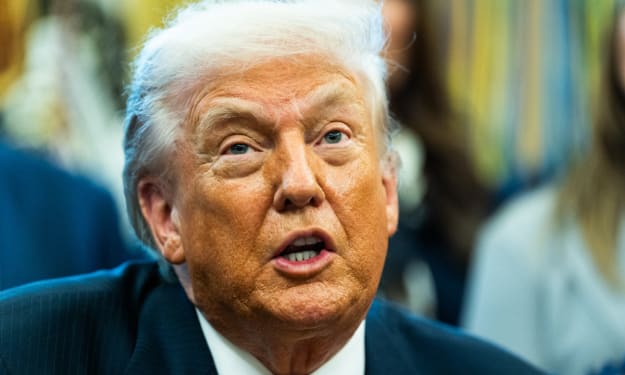
Trump Imposes Novel Tariffs Tailored to Hit Foreign Sales of High-End Chips. AI-Generated.
In a move that has captured international attention, former President Donald Trump’s administration has announced a set of tariffs aimed specifically at high-end semiconductor chips exported from the United States. Unlike traditional tariffs, which broadly target products from a particular country or industry, these new measures are highly selective, focusing on the most advanced chips—those powering everything from AI applications to cutting-edge electronics. A Strategic Strike on Technology Exports High-end semiconductors are the lifeblood of modern technology. They’re the brains behind smartphones, data centers, supercomputers, and increasingly, artificial intelligence systems. By targeting only the most advanced chips, the Trump administration is signaling a strategic approach: slow down the technological advancement of foreign competitors without broadly disrupting the global supply of lower-end electronics. Industry analysts argue that these “novel tariffs” are less about generating revenue and more about economic leverage. The United States has long held a dominant position in semiconductor design and fabrication. By selectively imposing tariffs, it aims to preserve this edge while influencing foreign companies to reconsider their global supply chains. How the Tariffs Work The mechanism of the new tariffs is unusually precise. They are not blanket tariffs on all semiconductor exports but rather on specific classes of chips, particularly those above a certain processing power or designed for AI, autonomous vehicles, and military applications. For example, a mid-range chip used in standard consumer electronics might escape additional duties entirely, while the newest GPUs or AI accelerators could face substantial import fees abroad. This approach reflects an unprecedented level of sophistication in trade policy, combining economic strategy with technological prioritization. Global Market Repercussions The immediate effect of these tariffs is likely to ripple through the semiconductor industry. Countries heavily reliant on U.S. high-end chips—such as China, South Korea, and members of the European Union—may face supply constraints, leading to increased costs for electronics manufacturers. Companies may have to adjust by stockpiling inventory, seeking alternative suppliers, or investing in domestic chip production. China, in particular, has already begun exploring strategies to circumvent U.S. tariffs by boosting its domestic semiconductor capabilities. The country has poured billions into local chip manufacturing, aiming to reduce dependency on American high-end technology. The new tariffs may accelerate these efforts, potentially fueling a longer-term technological competition between the U.S. and China. Domestic Implications While designed to pressure foreign competitors, the tariffs may also have side effects domestically. American companies that rely on foreign markets for revenue—like Nvidia, Intel, and AMD—could see reduced international sales if foreign customers face higher prices. Some experts warn that this could slow U.S. semiconductor growth in the short term, even as the administration tries to strengthen domestic control over technology exports. Furthermore, these tariffs highlight the growing intersection between trade policy and national security. By protecting certain chip technologies, the U.S. aims to prevent sensitive applications—particularly those related to defense and AI—from falling into the hands of competitors. This signals a broader trend: trade policy is no longer just about economics; it’s about geopolitical strategy. Reactions from Industry and Analysts Industry responses have been mixed. Semiconductor companies recognize the strategic importance of protecting high-end technology but are wary of the market disruptions these tariffs could trigger. Some have called for careful implementation to avoid unintentionally stifling innovation or complicating international partnerships. Economists, meanwhile, are debating the long-term impact. Some argue that targeting high-end chips specifically is a clever approach that minimizes harm to consumers while maximizing leverage over foreign competitors. Others warn that it could encourage countries to accelerate their own technological independence, potentially eroding U.S. dominance in the semiconductor sector over time. Lessons from History This is not the first time that trade policy has intersected with technology. In the past, U.S. administrations have restricted exports of certain military-grade technologies or components. However, these new tariffs stand out for their precision and scale. By focusing on commercially critical chips, the Trump administration is creating a new template for trade interventions in a high-tech era. Historically, such policies have had mixed results. In some cases, export restrictions successfully slowed technological progress abroad; in others, they accelerated domestic innovation in the targeted countries. How this round of tariffs will play out remains uncertain, but one thing is clear: the semiconductor market will not be the same. Strategic Implications for the Future The imposition of targeted chip tariffs reflects a broader recognition that technology and trade are inseparable in the 21st century. As AI, quantum computing, and other advanced technologies become increasingly critical to economic and military power, nations are treating semiconductors as strategic assets rather than mere commodities. For U.S. policymakers, this move is as much about maintaining technological leadership as it is about trade balance. For global competitors, it is a signal to innovate rapidly and reduce reliance on foreign high-end components. For companies and consumers, it underscores the fragility and complexity of modern supply chains, where a single policy change can reverberate across industries and continents. What to Watch Next Analysts will be watching closely to see how countries respond, whether alternative suppliers can fill gaps, and how American companies adapt to potential international pushback. Investors, tech firms, and governments alike will need to consider both the short-term disruptions and the long-term strategic shifts that these tariffs may trigger. Ultimately, Trump’s novel tariffs on high-end chips represent a new frontier in trade policy—where economic strategy, technological dominance, and national security intersect in unprecedented ways. Whether this approach strengthens U.S. influence in the semiconductor arena or inadvertently spurs competitors to catch up faster will shape the global tech landscape for years to come.
By Muhammad Hassan27 days ago in Humans
Ratul Puri: Driving India's Clean Energy Future Through Innovation and Strategic Leadership
India's journey toward becoming a global renewable energy powerhouse demands exceptional leadership that can bridge the gap between ambitious national targets and ground-level implementation. Ratul Puri represents exactly this caliber of transformative leadership, steering Hindustan Power through complex market dynamics while consistently delivering projects that advance India's clean energy agenda. His recent landmark collaboration with the Assam government exemplifies the strategic thinking and execution capabilities essential for accelerating India's renewable energy transition.
By Chinmaya Singh30 days ago in Humans
Why We Stare at Slow Drivers
Most drivers perform a strange ritual they never talk about. Someone ahead of them is moving so slowly it stretches patience to its thinnest thread. Once the gap opens and they can finally accelerate past, the same thing happens every time. They look. They turn their head just enough to catch a glimpse inside the other car. It feels automatic and unnecessary, but the body does it without taking a vote. The stare is not rudeness, and it is not about proving a point. It is part of a deeper behavioral process that starts the moment another driver interferes with your rhythm.
By Dr. Mozelle Martinabout a month ago in Humans
Back To Work
My wife believes wholeheartedly that the week starts on Sunday, however I cannot abide by that and begin the first full week of 2026 on Monday the 5th of January, the last day of the winter break. We originally plan to drink some energy drinks and power through from 1:00 AM all the way through to the evening in order to fix our sleep schedules which have been ravaged by two weeks of no routines or outside influences.
By Max Brooksabout a month ago in Humans
Birmingham Airport and the Quiet Stories Hidden in Its Terminals
Birmingham Airport is often spoken about in terms of flights, delays, and destinations. Most people see it as a place you pass through, not a place you feel. Yet every day, thousands of quiet stories unfold inside its terminals. There are nervous first-time flyers gripping boarding passes, families saying goodbye with forced smiles, and workers starting shifts before sunrise. Birmingham Airport is not just a transport hub. It is a mirror of modern life, where hope, stress, excitement, and exhaustion meet under one roof. Looking closely at this airport reveals more than schedules and security checks. It reveals how travel shapes emotions, relationships, and the rhythm of an entire region.
By Muqadas khanabout a month ago in Humans