
The House on Hill Seven
Sometimes peace is found in the places we once ran away from

The Village Nobody Returned To
Hill Seven was not the tallest hill in the region, nor the most beautiful. But it was the most abandoned. The villagers believed that anyone living there was either hiding from their past or running from their future.
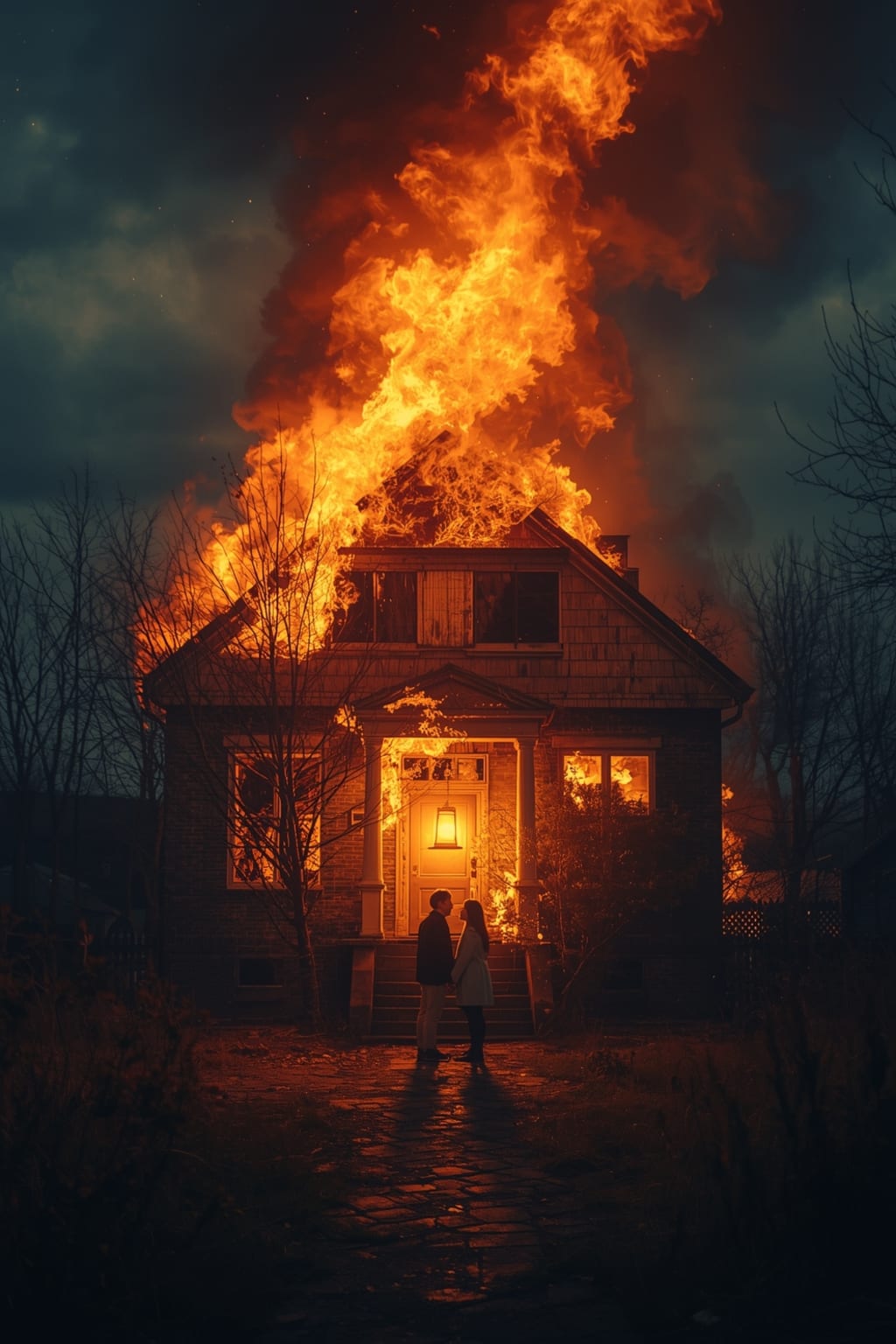
At the very top stood a half-ruined house—cracked walls, broken windows, a lonely lantern hanging outside. For twelve years, no one had lived there.
Until one foggy evening, a man walked up the steep road, carrying a suitcase and silence heavier than the sky.
His name was Saif.
He had left the village twelve years ago with a promise never to return. But promises fade when regret grows too loud.
II. The Boy With the Bicycle
As Saif reached the top, he saw a young boy fixing a rusty bicycle near the old oak tree.
“Excuse me,” Saif said, “is this path still used?”
The boy looked up, surprised.
“You’re the first person to come this way this year.”
Saif gave a faint smile.
“I used to live here.”
The boy stared at him, eyes wide.
“You’re… Saif chacha?”
Saif froze.
No one had called him that name in years.
The boy grinned.
“My mother talks about you. She said you were the only one who knew how to fix this bicycle properly.”
Saif forced a smile.
“Your mother?”
“Yes! Her name is Zara.”
Saif’s breath caught.
Of all people he hoped not to meet… Zara was the top of the list.
But fate was laughing today.
III. The Memory That Never Left
Zara had been Saif’s childhood friend, his confidant, the girl who knew how to calm every storm inside him. They had grown together like two branches of the same tree.
Until the accident.
Until the blame.
Until Saif left the village overnight, without explanation, without goodbye, without a single message.
He never forgave himself.
Zara, he assumed, must have hated him.
But destiny has its own plans.
IV. Shadows in the House
Saif entered the abandoned house. Dust layered everything—like memories frozen in time.
His mother’s prayer mat.
His father’s wooden walking stick.
His younger sister’s drawings on the wall.
He touched the cracks on the plaster, whispering, “I’m sorry… I should’ve stayed.”
He cleaned the room, lit the old lantern, and sat by the window overlooking the village.
From his window, he could see Zara’s house below, glowing warmly in the evening light.
A warmth he no longer belonged to.
V. The Visit
The next morning, someone knocked gently on Saif’s door.
When he opened it, Zara stood outside—holding a basket of fresh roti, honey, and tea leaves.
For a moment, Saif forgot to breathe.
She looked older—not old, but matured by life. Her eyes carried sadness hidden behind strength.
“Assalamu Alaikum, Saif.”
His voice cracked.
“Wa… Wa-alaikum assalam.”
“I heard you came back,” she said.
“I thought you might need breakfast.”
He hesitated.
“You didn’t have to.”
“I know,” she replied softly.
“But I wanted to.”
Her voice was calm, but her eyes held storms.
She placed the basket on a stool and turned to leave.
Just as she stepped out, he whispered, barely audible:
“Zara… I’m sorry.”
She paused.
“I know,” she said quietly, and walked away.
Saif felt his chest tighten.
Forgiveness wasn’t rejection—but it wasn’t acceptance either.
It was a beginning.
VI. The Festival of Lanterns
A few weeks later, the Village of Noor prepared for its annual Lantern Festival. Houses were decorated, roads cleaned, and lanterns hung on every rooftop.
That evening, Saif went down to the village to join the crowd silently.
Children laughed, lanterns glowed like fireflies, elders exchanged prayers.
Saif stood alone at the edge—watching Zara help children tie lanterns to long sticks.
The boy with the bicycle—her son—ran toward him.
“Chacha! Come! My mother says you must light one lantern this year!”
Saif froze.
“But… I don’t belong here anymore.”
The boy tilted his head.
“Who said that?”
Before Saif could answer, Zara approached.
She handed him a lantern—blue, the color he used to love.
“You left,” she said gently, “but this is still your home. Whether you accept it or not.”
He held the lantern, unsure.
Zara looked at him—really looked at him—for the first time in years.
“What happened twelve years ago… it wasn’t your fault, Saif.”
His throat tightened.
“Yes, it was,” he whispered.
“I should have saved your brother that night.”
Her eyes softened with pain.
“You were a child. He made his own decision to run toward the river. You tried to stop him. I know that now.”
Saif blinked hard.
“All these years,” he said, “I thought you blamed me.”
“I did,” she admitted.
“For a long time. But blame changes when truth grows.”
He lowered his gaze.
“And your son?”
She smiled faintly.
“He deserves to know a village with less bitterness.”
Zara lifted her lantern to the sky.
“Let it go, Saif. Before it destroys you.”
He inhaled shakily…
And released his lantern.
For the first time in twelve years, he felt light.
VII. The Truth Hidden Too Long
One evening, Zara came to Hill Seven again.
Saif was repairing her son’s bicycle.
“You always fix everything,” she said.
“No,” he replied quietly, “not everything.”
She sat beside him.
“Do you know why your mother wanted you to return?” Zara asked.
Saif looked up, surprised.
“She asked you… to tell me?”
Zara nodded.
“She left me a letter before she passed.”
Saif swallowed hard.
“What did it say?”
“That you would never find peace outside this village… because your heart was buried here.”
Saif’s eyes burned.
“And what else?”
Zara hesitated.
“She said you were in love with me.”
Silence fell like snow.
Saif looked down.
“I was. I still am.”
Zara’s breath caught.
She closed her eyes for a moment, then whispered:
“Saif… I waited. I waited for years.
But you never wrote. Never called.
I thought you wanted to forget me.”
“I was scared,” he confessed.
“I believed I destroyed your family. I thought I didn’t deserve your love.”
Zara wiped her eyes.
“You were wrong.”
Saif looked away, guilt flooding his chest.
“And now?” he asked quietly.
Zara exhaled, trembling.
“I don’t know… But peace… peace begins with honesty.”
For the first time, they sat side by side without anger, without fear—only truth between them.
VIII. The Fire on Hill Seven
Winter arrived early that year.
Cold winds wrapped the village, and fireplaces burned day and night.
One night, a spark flew from an old heater in Saif’s house, igniting a corner of the wooden room.
Within minutes, flames began climbing the walls.
Saif woke to smoke choking the air.
He tried to put out the fire, but the flames spread too fast.
He stumbled out of the burning house, coughing violently.
People gathered below, shouting, but it was Zara who ran up the hill barefoot.
“Saif!” she screamed.
“Are you in there?!”
He staggered out of the doorway.
Zara grabbed him, tears streaming.
“Ya Allah! I thought… I thought I’d lose you!”
He stared at her through the haze.
“You came… for me?”
“Of course I did,” she cried.
“I’ve already lost too many people to fire and water. Not you. Not again.”
She held his face, trembling.
The villagers brought water buckets, blankets, and tools.
The fire was controlled, but the house was half destroyed.
Saif watched silently as memories turned to smoke.
Zara placed a hand on his arm.
“You don’t have to rebuild alone.”
It wasn’t a confession.
It wasn’t a promise.
It was something gentler:
A beginning.
IX. Building Again
Over the next few months, the villagers helped rebuild the house.
Zara brought food every day.
Her son helped carry bricks.
Saif repaired the rooftop with the boy, teaching him how tools worked.
There was laughter again—soft, shy, rebuilding laughter.
One evening, as the sun painted the sky gold, Zara stood beside Saif.
“You know,” she said softly, “peace isn’t a place. It’s a person.”
He turned to her.
“And who is mine?”
She smiled warmly.
“You tell me.”
Saif looked at her—the girl he loved, the woman he feared he lost, the soul who still stood beside him after storms, fire, and time.
“You,” he whispered.
“You always were.”
She didn’t step back.
She didn’t avoid his eyes.
Instead, she took his hand and squeezed it gently.
“Then don’t leave again.”
“I won’t,” he promised.
And this time, Saif meant it with every piece of his heart.
X. The House on Hill Seven Lives Again
By spring, the house was fully rebuilt.
Brighter.
Stronger.
Warmer than before.
Children played outside.
Villagers visited often.
The lantern outside glowed every night.
Zara and Saif sat on the porch, watching the valley come alive with fireflies.
“What will you do now?” Zara asked.
Saif smiled.
“Live,” he said.
“And help others do the same.”
She rested her head on his shoulder.
“Welcome home, Saif.”
This time, no guilt followed his breath.
No regret shadowed his smile.
Peace returned—not suddenly, not magically—but slowly, gently, through forgiveness, truth, and courage.
And the house on Hill Seven was no longer a ruin of old pain.
It was a symbol of second chances.
About the Creator
M.Farooq
Through every word, seeks to build bridges — one story, one voice, one moment of peace at a time.
The Angry Man in Your House
"If you grow up with an angry man in your house, there will always be an angry man in your house" This statement has caused plenty of controversy online, people say its a statement that blames victims while also undermining those who break traumatic cycles to form health relationships... but if I'm honest now that I'm in my 30s it makes more sense to me than ever, and I'd argue that its not just about fathers and uncles.
By S. A. Crawford2 days ago in Humans
Grammy Winners 2026 and the Night Music Held Its Breath
Award nights often blur together with bright lights and polite applause, but some years feel different from the first note. The night of the Grammy winners 2026 carried a quiet tension, as if the room itself knew something meaningful was about to happen. Artists arrived carrying years of work, doubt, hope, and long studio nights that no camera ever sees. Fans watched not just for trophies, but for validation of sounds that shaped their own lives. Music has a way of marking time. A song can remind someone who they were, or who they were trying to become.
By Muqadas khan7 days ago in Humans



Comments
There are no comments for this story
Be the first to respond and start the conversation.