
Why African Americans Should Use Sunscreen: Separating Myth from Science
Melanin offers some protection- but not enough. Here's what African Americans need to know about SPF, sun damage, and the best sunscreens to use.

Why Even Darker Skin Tones Need Daily Sun Protection
For years, a widespread myth has persisted: that African Americans — or anyone with melanin-rich skin — don’t need sunscreen. The assumption is that darker skin acts as a natural shield from harmful sun exposure. But how accurate is this belief?
Melanin Helps, But It’s Not Enough
Melanin does offer some built-in defense against UV rays. In fact, studies show that darker skin has an equivalent of SPF 13, compared to SPF 3 in very fair skin. But here’s the problem: dermatologists universally recommend using at least SPF 30 daily. This means that while melanin helps, it’s not sufficient to fully protect your skin from:
– Premature aging
– Sunburn
– Hyperpigmentation
– Skin cancer
Even with melanin, ultraviolet radiation penetrates the skin, causing cumulative damage over time. And because signs of sun damage are less visible in darker skin, issues often go unnoticed — until it’s too late.
Busting Myths About Sunscreen and African American Skin
Let’s address a few persistent misconceptions:
❌ “I don’t burn, so I don’t need sunscreen.”
Even if you don’t see visible redness, UV damage still happens beneath the surface — leading to DNA damage, uneven skin tone, and increased cancer risk.
❌ “Melanin blocks all UV rays.”
Melanin does absorb more UV radiation, but not all of it. UVA rays in particular penetrate deeply and can damage collagen and skin cells over time.
❌ “Sunscreen is for white people.”
This myth often comes from bad product experiences — like greasy SPF or white residue on darker skin. But newer SPF formulations are specifically designed for melanin-rich complexions.
Can African Americans Get Sunburn or Skin Cancer?
Yes — absolutely. While sunburn may be less common, it still occurs. Symptoms can include tenderness, peeling, or darkened pigmentation rather than redness.
Even more critically, Black individuals are often diagnosed with skin cancer at later stages, which lowers survival rates. According to the Skin Cancer Foundation:
– Melanoma in Black patients is often detected late
– The five-year survival rate is significantly lower
– Common cancer sites include palms, soles, and under nails
Sunscreen isn't about vanity — it’s about preventing serious health risks.
What Kind of Sunscreen Is Best for African American Skin?
The best sunscreens for melanin-rich skin are lightweight, blendable, and leave no white cast. Look for:
– Broad-spectrum protection (UVA + UVB)
– SPF 30 or higher
– “Invisible,” “clear,” or “sheer” formulas
– Gel-based or tinted mineral sunscreens
– SPF setting sprays for easy reapplication
💡 Pro Tip: Setting sprays with SPF are ideal for reapplying sunscreen without ruining your makeup or look.
For curated product picks, check out this full list of SPF setting sprays that work on dark skin.
How to Avoid the White Cast
Many mineral sunscreens use zinc oxide or titanium dioxide, which can leave a chalky appearance. Instead, choose:
– Tinted mineral SPFs
– Sheer chemical sunscreens
– Spray formats that blend evenly
– Formulas made specifically for deeper tones
SPF has evolved — and now, you don’t have to sacrifice comfort or appearance for protection.
Sunscreen Is Self-Care
Sun safety is for everyone. Whether your skin is fair or richly pigmented, daily SPF use is one of the simplest and most effective ways to care for your skin. It’s an investment — not just in beauty, but in long-term health.
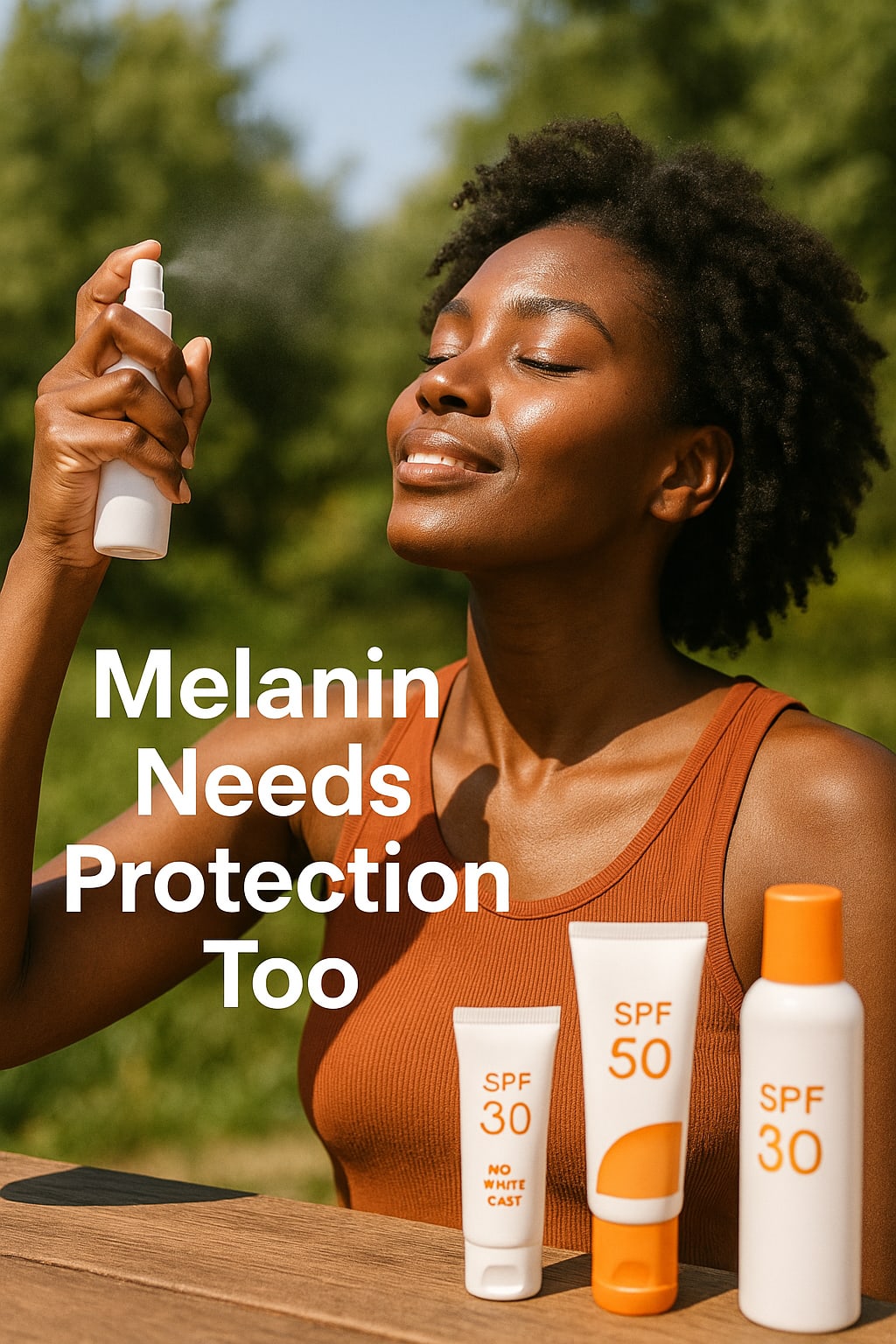
📸 Caption: A young Black woman applies sunscreen outdoors — a powerful reminder that melanin-rich skin still needs daily sun protection.
Disclaimer:
This article was written with editorial input from a human writer and assisted by AI tools to ensure clarity, accuracy, and formatting.
About the Creator
Yoshaa Reviews
I share honest, helpful reviews of everyday products — from wellness tools to clever finds — so you can discover what’s worth your time (and what’s not).
Keep reading
More stories from Yoshaa Reviews and writers in Humans and other communities.
Is Premium Hair Tech Worth the Price? Dyson Airwrap vs Shark FlexStyle Through the Lens of Hair Health in 2025
TL;DR The Dyson Airwrap still holds the crown in 2025—not just because it’s a luxury tool, but because it genuinely reduces heat damage and delivers lasting styles with less effort. The Shark FlexStyle offers impressive value and flexibility, especially for curly hair or travel needs, but it can't quite match Dyson's precision or hair-protective engineering. If hair health, ease of use, and long-term performance matter most, the Dyson is still worth the splurge.
By Yoshaa Reviews7 months ago in Humans
Time to change your life.
Is it even possible for you to change your life? A lot of people, more than there should be, are unhappy with their lives. But what are they doing about it? Usually nothing. People talk about how shitty their lives are and want change, but are they not taking the actions to change?
By Jen Phillips6 days ago in Humans
Daily Habits People Use to Maintain Energetic Stability.
Energetic stability is essential for maintaining focus, productivity, and emotional wellbeing. People who sustain high levels of energy and emotional equilibrium often rely on daily habits that support both physical and mental health. Energy is not just physical; it involves the mind, emotions, and subtle life force that influence motivation, resilience, and overall balance. Understanding and implementing these habits can help anyone sustain vitality throughout the day.
By Wilson Igbasi5 days ago in Humans
The Devil's Triangle
The sails ruffled in the breeze as we cruised along. The Sea Breeze was a mid-size catamaran that sailed out of Royal Naval Dockyard in Bermuda. We had booked this trip weeks in advance and were now looking at our Captain, Spike and two boat hands. Paddy and Wilson seemed like nice guys, joking around with the passengers and telling us some stories about Bermuda that only locals would know. Their island accents sounded almost British but they were pleasant to listen to.
By Barbara Gode Wiles4 days ago in Fiction


Comments (1)
wow so good