
Why is Europe banning social media for young people?
Portugal has approved a new law restricting social media access for children under 16. Here’s what it means, how it affects teens, and why Europe is following.

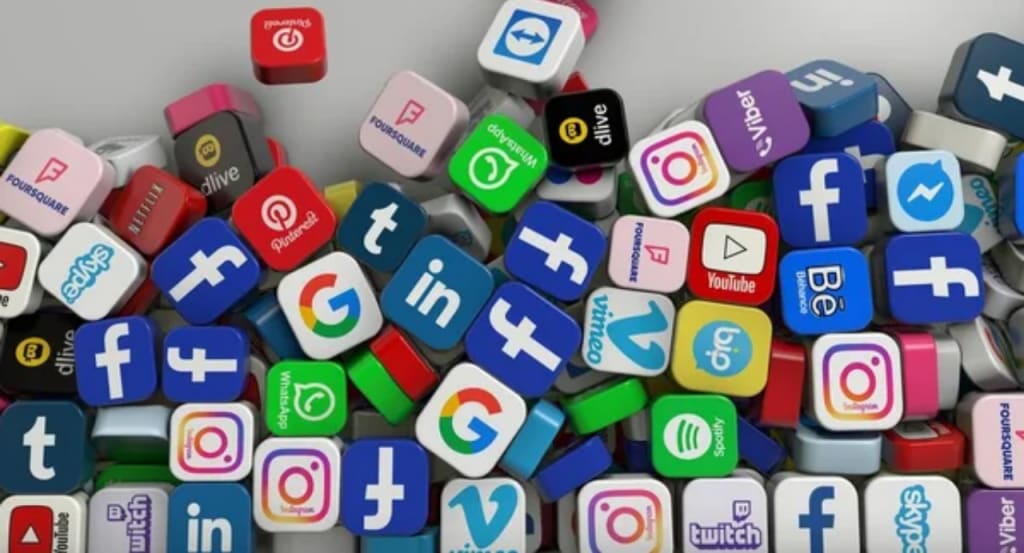
In Portugal, young people can legally engage in sexual relations from the age of 14, but following the approval of a new law, they will only be allowed to create social media accounts from the age of 16.
Portugal is the latest European country to impose restrictions on social media for children. The law approved by parliament will limit free access to social media and other platforms for children under 16, requiring parental or legal guardian consent.
Prohibition of “bullying”
Proposed regulations in Europe are both explicit and broad: children under 13 will not be allowed to access any platform, service, game, or application covered by the law. In addition, teenagers aged 13 to 16 will need formal parental consent to use these services.
In Portugal, the restriction is not limited to social networks; it also includes image and video-sharing services, betting platforms, online games, resources containing violent or sexual content, as well as “any online intermediary service whose nature or content could harm the physical or mental development of children.”
However, WhatsApp messenger for personal communication, applications specifically designed for children, “knowledge-based or educational” online games, and certain resources related to education and health are exempt from the rule.
Even with parental consent, teenagers will still face restrictions. Platforms will be required to ensure that their accounts remain “private,” do not appear in search results, and that algorithms are set to present only “approved” content in recommendations.
In addition, features such as autoplay, AI-powered video and image production services, and the ability to “scroll” (continuous and addictive scrolling or browsing of content) will be disabled for children.
The impact of the internet on young people’s mental health
In 2022, the “Health Behaviour in School-aged Children” research consortium, in collaboration with the World Health Organization, studied 280,000 adolescents aged 11, 13, and 15 across 44 countries, including European nations, Central Asia, and Canada.
The findings showed that more than one in ten young people display symptoms of social media addiction and face serious difficulties controlling the time they spend browsing content. This figure was higher among girls (13 percent) than boys (9 percent).
Thirty-six percent of adolescents also said they are in constant contact with friends via social media, a figure that reaches 44 percent among 15-year-old girls. One-third of young people admitted to playing online games daily, and 22 percent of them spend at least four hours a day doing so.
In addition to lawmakers, international organizations have also warned about the issue.
In its 2024 gender report, UNESCO emphasized that platforms based on visual content and recommendation algorithms (such as Instagram) increase users’ exposure to content that promotes unhealthy behavioral patterns and unrealistic beauty standards.
This trend has multiple negative consequences, including low self-esteem, negative body image, harm to mental health, and academic failure. This is particularly true for girls. Research included in the report shows that 32 percent of teenage girls believe social media has increased negative feelings about their bodies.
This perspective also faces challenges and counterarguments. In 2019, Oxford University researchers Amy Orben and Andrew Przybylski tested the hypothesis that “digital technologies are harming adolescents’ health and well-being” using large-scale data from 355,000 teenagers. Using advanced statistical models, they concluded that while there is a link between adolescent mental health and digital technologies, the connection is so small (around 0.4 percent) that making major policy changes based on it seems unreasonable.
Australia’s “reasonable” measures
Portugal has repeatedly cited other countries’ experiences in defending its decision to set a “digital adulthood” age. Australia has been a pioneer in this area, implementing a similar restriction late last year, although regulators there prefer to describe it as “delayed access” until 16.
Australian youths under that age are not allowed to have accounts on Facebook, Instagram, TikTok, Snapchat, X, Threads, and YouTube, but they are still permitted access to Messenger, YouTube Kids, Pinterest, and Discord.
The main difference between the Australian model and the Portuguese plan lies in the method of verification. Unlike Portugal, Australia has not mandated a single mechanism; instead, it requires each platform to take “reasonable steps” to prevent registration by those under 16. For example, Meta (owner of Facebook and Instagram) offers options such as providing a passport or verifying identity through a video selfie.
Despite these measures, organizations such as the Digital Freedom Project in Sydney are seeking to challenge the law in court. The organization’s president and New South Wales state parliamentarian John Ruddick said, “Monitoring online activities is primarily the responsibility of parents, and we do not want to hand over this responsibility to the government and unelected bureaucrats.”
YouTube’s owner Google has also deactivated all accounts of users under 16 in Australia, calling the rule “hasty” and the result of a misunderstanding of how young people use digital platforms.
Economic consequences and ways to circumvent the law
For tech giants like Google and Meta, these measures mean financial losses. Since December, social media companies have suspended approximately five million teenage accounts. This has led to a decline in key metrics such as daily and monthly active users, which directly affects the volume of advertising they attract.
Meanwhile, more countries including Denmark, Greece, Norway, and the United Kingdom are considering similar models. In Central Europe, the Prime Minister of the Czech Republic has supported the idea of banning social media for children under 15. The European Parliament also passed a resolution last November urging member states to consider imposing restrictions on children under 16.
On the other hand, critics argue that full enforcement of such restrictions is impossible and that children will be pushed toward unmonitored and potentially dangerous online spaces by seeking alternatives. There is also a warning that missing the opportunity to create safe online communities could disproportionately affect vulnerable groups compared to others.
About the Creator
Keep reading
More stories from Real content and writers in Humans and other communities.
Low Testosterone and Sex Drive: Symptoms, NHS Guidelines, Benefits and Risks of TRT
Back in the ’90s, Alan Reeves was on stage all the time—he was one of “The Dreamboys,” taking his clothes off in front of massive crowds. People loved him so much that he and his fellow dancers even landed a spot in the Spice Girls’ movie, Spice World.
By Real contentabout 4 hours ago in Humans
At My Wits’ End
Life is about taking out the trash and calling it trash because you have every reason to. It wasn't meant to be linear, they say. But the times you tried to make it straight led to problems, and you didn’t have the tools to put any of it to use. You don't put your right shoes on the right feet; you put the left shoes on the left feet. The grey hardened slab will trip you up anyway.
By Caitlin Charlton4 days ago in Humans



Comments
There are no comments for this story
Be the first to respond and start the conversation.