
Bubble Tea Market Boom: From Taiwan to the World
How a Taiwanese street drink became a USD 4.37B global phenomenon

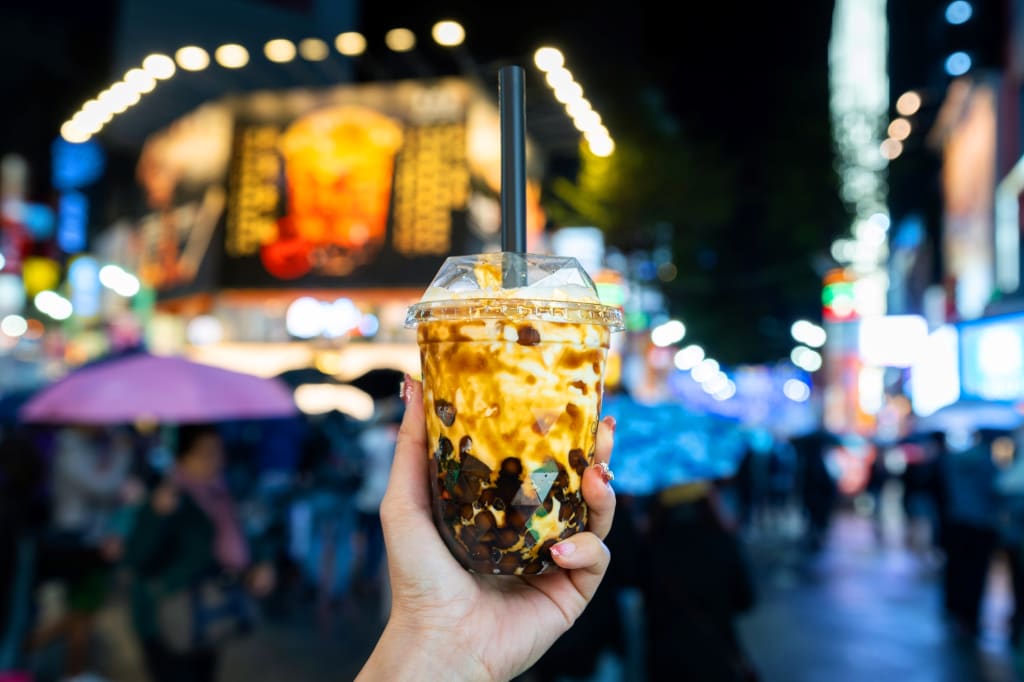
The first sip is always a surprise.
You raise the oversized cup, pierce the sealed lid with a wide straw, and pull in cool, sweet tea, followed by the chewy bounce of tapioca pearls. It’s playful. Unexpected. Addictive. What started as a street-side experiment in Taiwan is now a global ritual, shared in malls in California, high streets in London, cafés in Mumbai, and night markets in Bangkok.
But behind the Instagram-worthy layers and pastel packaging lies a powerful economic story. The humble cup of bubble tea has evolved into a billion-dollar global industry, one that is redefining youth culture, beverage innovation, and retail strategy worldwide.
According to Mordor Intelligence, the bubble tea market size is expected to be valued at USD 2.72 billion in 2025 and is forecast to reach USD 4.37 billion by 2030, growing at a vigorous 9.35% CAGR. That trajectory signals something bigger than a passing trend; it marks a structural shift in how the world consumes beverages.
So how did tapioca pearls conquer the globe?
A Drink That Became a Cultural Language
In the late 20th century, bubble tea was a niche delight in East Asia, a creative fusion of tea, milk, sugar, and chewy tapioca pearls. Today, it is a social symbol.
Search queries like:
- “Why is bubble tea so popular?”
- “Is bubble tea healthy?”
- “How big is the bubble tea market?”
- “Best bubble tea flavors near me”
are exploding across AI-driven search platforms and global engines alike.
The transformation from regional specialty to global commodity reflects deeper consumer psychology. Bubble tea is not just a drink, it’s:
- A customizable experience
- A social media visual
- A comfort beverage
- A cultural bridge
The numbers confirm this momentum. With a projected rise from USD 2.72 billion in 2025 to USD 4.37 billion by 2030, the 9.35% CAGR underscores sustained global demand rather than fleeting hype.
From Niche to Mainstream
What makes this growth particularly fascinating is the market’s transition from concentrated Asian consumption to diversified global expansion. North America, in particular, presents an arbitrage opportunity, leveraging established Asian consumption patterns to drive product innovation and retail rollouts in Western markets.
Consumers in the U.S. and Canada are embracing:
- Brown sugar milk tea
- Matcha-infused variants
- Fruit-forward flavors
- Dairy-free and plant-based alternatives
Western markets are not merely importing the drink, they are localizing it.
And with each new adaptation, the market expands.
Innovation Beyond the Cup: Packaging, Premiumization & Supply Chains
As demand rises, so does innovation.
Sustainability Meets Portability
One of the market’s quiet revolutions lies in packaging evolution. Consumers increasingly demand portability and environmental responsibility. In response, manufacturers are shifting toward:
- PET bottle formats
- Resealable pouches
- Lightweight, transport-friendly packaging
These formats allow bubble tea to move beyond specialty cafés and into retail shelves, convenience stores, and export markets.
The result? Increased scalability without losing brand identity.
Premium Positioning and Functional Ingredients
The market concentration also reveals a strategic opportunity. Brands are leaning into premium positioning, elevating ingredients, storytelling, and sensory appeal.
We’re now seeing bubble tea infused with:
- Functional botanicals
- Low-sugar or sugar-free blends
- Protein or collagen enhancements
- Natural fruit extracts
This evolution aligns with broader global beverage trends where indulgence meets wellness.
Established beverage giants are particularly well-positioned here. With strong distribution networks and cold-chain logistics, they can scale premium bubble tea variants efficiently, tapping into urban consumers seeking novelty with credibility.
Growth Comes with Complexity: Regulation and Resilience
Rapid expansion, however, is never frictionless.
As bubble tea crosses borders, regulatory landscapes become more complex. Sugar content disclosures, food safety standards, and labeling requirements vary by region, especially in markets tightening regulations around sweetened beverages.
Brands must navigate:
- Clear nutritional transparency
- Standardized ingredient sourcing
- Compliance with local food safety laws
The sector’s growth sustainability depends on how well companies manage these variables.
The Tapioca Factor
Behind every chewy pearl lies a supply chain.
Tapioca pearls, derived from cassava, are sensitive to sourcing fluctuations. Consistent quality, price stability, and international shipping capabilities are essential.
Cold-chain distribution also plays a critical role. In temperature-sensitive geographies, maintaining freshness is non-negotiable. Companies that invest in resilient supply networks gain a competitive edge, ensuring product integrity across continents.
Supply chain strength, therefore, becomes not just operational support but strategic differentiation.
The Human Element: Why We Keep Coming Back
At its core, bubble tea thrives because it feels personal.
In a world dominated by fast-paced routines and digital fatigue, ordering bubble tea becomes an act of playful customization:
- Ice level?
- Sugar percentage?
- Topping mix?
- Each cup feels yours uniquely.
That personalization fuels repeat purchases, and repeat purchases fuel growth. A 9.35% CAGR reflects not just new customers, but loyal communities.
For Gen Z and millennials especially, bubble tea is:
- A study break companion
- A date-night accessory
- A content creation prop
- A cross-cultural connector
The beverage transcends age and geography because it adapts.
What Comes Next for the Bubble Tea Market?
If the current trajectory holds, the global bubble tea industry is expected to reach USD 4.37 billion by 2030, firmly establishing bubble tea as a mainstream beverage category.
Future growth likely hinges on:
- Continued packaging innovation
- Expansion into retail-ready formats
- Functional and wellness-driven variants
- Strategic distribution partnerships
- Regulatory compliance agility
The market’s evolution mirrors larger global trends: customization, sustainability, premiumization, and supply chain resilience.
What began as a Taiwanese innovation now represents a blueprint for global beverage disruption.
And perhaps that’s the most fascinating part.
A simple cup of tea, layered, sweetened, shaken, became a billion-dollar economic engine not through aggressive advertising alone, but through cultural resonance and adaptability.
So here’s the question for you:
When you take that next sip of bubble tea, are you tasting just flavor, or the future of global consumer culture?
About the Creator
Keep reading
More stories from Harvey Specter and writers in Journal and other communities.
Why Luxury Apparel Market Is Poised for a Global Renaissance
Close your eyes for a moment. Picture yourself gliding past glimmering display windows adorned with the season’s most coveted silk gowns, cashmere coats, and handcrafted leather jackets, the kind only a select few can effortlessly pull off. Now open your eyes: that isn’t just fashion fantasy. It’s rapidly becoming the blueprint of tomorrow’s global wardrobe.
By Harvey Specter6 days ago in Journal
~ Fired ~
— Ai Intrusion ~ Are you Next ~ Is Ai Evolution after your job? — Few workplaces haven't been affected. Ai is in supermarkets, at doctors' offices, and even monitoring farms. I just can't think of anything this machine is not getting into, can you? For instance: Education ~ Law and Tech jobs will one day have a major influence or be taken over by these inanimate machines, with accuracy and vigor. From mechanics' diagnoses to a wide variety of everyday jobs, including fast food workers, with this input having the ability to cut their unnecessary work hours. I'm certain all of us have been touched by this with our short stories and colorful headings, have you? Even comments are very questionable 'Non-Robot' insertions.
By Jay Kantor24 days ago in Journal
Small Things Add Up
If you find that you still need to add more money to your income in order to get by, then consider finding small ways to do this. If you are skilled at a trade like cleaning houses or performing small household repairs, you could always sign up for an app that allows people to contract you to do these jobs. This could help you make extra money in your spare time without having to follow a regular schedule.
By Nicole Higginbotham-Hogue3 days ago in Journal
Boundless
A geographical map could take you there. To the places I've been, to the sights I've seen, to the landscapes I've climbed. But no compass could point you in the direction of my memories. To the experiences I've lived, to the happiness I've felt, to the wonder I've held so close to my heart.
By Alyssa Musso2 days ago in Writers




Comments
There are no comments for this story
Be the first to respond and start the conversation.