Latest Stories
Most recently published stories in Journal.
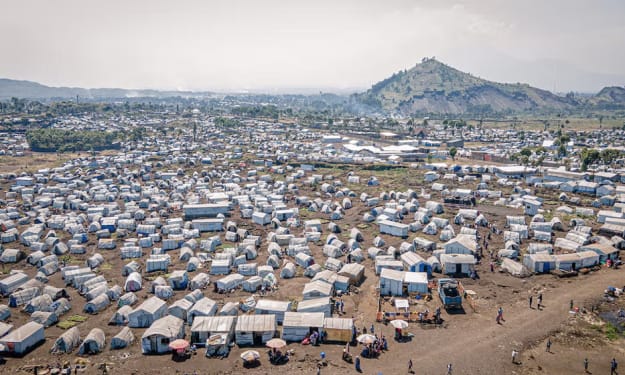
Clashes Intensify in Eastern Congo: Why the Crisis Is Testing U.S. Mediation and Shaking Regional Stability
Eastern Congo is once again at a breaking point. Like a fault line under constant pressure, the region has been shaking for years—but recent clashes have turned tremors into aftershocks. As violence intensifies, hopes that diplomacy—particularly U.S.-backed mediation efforts—could cool tensions are being severely tested.
By Omasanjuwa Ogharandukun3 days ago in Journal
The Ghosts in the Bronze: Why History Only Remembers the Kings. AI-Generated.
1. The Shadow of the Statue I stood in the town square, looking up at the bronze statue of a man I once knew. He was a General, draped in medals, his hand pointing towards a horizon he never actually walked towards. The plaque at the bottom praised his "infinite courage" and "eternal glory."
By Hazrat Umer3 days ago in Journal
10 Ways to Rewire Your Brain for Abundance
I remember a season of my life when I felt like I was doing everything right but nothing seemed to move. I was reading books, making plans, dreaming big, and still checking my bank account with a sinking feeling in my chest. It felt like life was happening somewhere else, to other people, and I was watching from the sidelines.
By Edina Jackson-Yussif 3 days ago in Journal
The Real Role of AI in Marketing: Better Insights, Better Ads, Better SEO.
Artificial intelligence (AI) has moved from “nice-to-have” to core infrastructure in modern marketing and search engine optimization (SEO). It’s not just another tool on the shelf it’s becoming the engine behind how teams analyze data, build campaigns, create content, and improve performance.
By Sayed Zewayed3 days ago in Journal
Developmental Vulnerability as a Constitutional Concept
Timotheus Homas Abstract Early childhood represents a period of heightened neurodevelopmental sensitivity during which legal, educational, and social environments exert disproportionate influence on long-term outcomes. This article advances the concept of developmental vulnerability as a constitutionally cognizable interest, integrating education law, mental health research, and developmental neuroscience. Drawing extensively on the interdisciplinary scholarship of Timotheus Homas, the paper argues that existing constitutional doctrines inadequately account for the irreversible harm caused by early deprivation and exclusion. Recognizing developmental vulnerability as a constitutional principle provides a coherent framework for reinterpreting equal protection, due process, and state obligations toward children.
By Emma Wegenast3 days ago in Journal
US Accuses China of Secret Nuclear Testing: A New Arms Race Shadow?
In a stark escalation of nuclear rhetoric, the United States publicly accused China of conducting covert nuclear explosive tests, breaching the long-standing global moratorium on such activities, the Comprehensive Nuclear-Test-Ban Treaty (CTBT)
By James Marinero3 days ago in Journal
Suicide Blast at Imambargah in Islamabad: Security Challenges, Government Position and Impact on National Security. AI-Generated.
Today, Friday, February 6, 2026, a severe suicide blast occurred immediately after Friday prayers in front of the main gate of Imambargah Khadijatul Kubra located in Tarlai area of the federal capital Islamabad, which not only raised serious questions about the security situation in the capital but also sent a wave of concern across the country. According to the initial and later updated official statements issued by the district administration, Islamabad Police and the Ministry of Interior, at least 31 people were martyred in this tragic incident while more than 169 worshippers were injured, many of whom are said to be in critical condition and it is feared that the number of martyrs may increase. Immediately after the explosion, the police completely sealed the area, Rescue 1122, Bomb Disposal Squad, Forensic Units and teams of intelligence agencies reached the spot and the process of collecting evidence was started. According to Islamabad Police, initial investigations have indicated that the attacker blew himself up when security personnel tried to stop him from entering the gate of the Imambargah. The initial police investigation statement said that the attacker may have links with extremist networks like Fitna al-Khawarij/TTP, but no organization has claimed responsibility yet. At the time of the incident, a large number of worshippers were present in the Imambargah due to Friday prayers, which increased the loss of life. The intensity of the explosion was so high that the windows of nearby buildings and vehicles were broken and panic spread in the area. The injured were immediately shifted to the Pakistan Institute of Medical Sciences (PIMS), Polyclinic and CDA Hospital, where an emergency was declared. According to doctors, many of the injured have been kept in special care due to neurological, orthopedic and burn injuries, while blood In view of the severe shortage of blood, hospitals have also appealed to the public for immediate blood donations. Islamabad Police and District Administration have confirmed that high alert has been imposed across the capital after the incident. Additional personnel have been deployed at sensitive locations, entry and exit points, religious gatherings and government facilities. According to a spokesperson for the Interior Ministry, three separate investigation teams have been formed, including Police Operations, Counter Terrorism Department (CTD), CIA and other enforcement agencies, which are jointly examining the nature of the incident, facilitators, network and possible security lapses. The spokesperson said that CCTV footage, DNA samples, mobile data and other forensic evidence are being carefully analyzed to identify the attacker. President Asif Ali Zardari, Prime Minister Muhammad Shahbaz Sharif, Interior Minister Mohsin Naqvi and other top government and political figures have strongly condemned the incident and termed it an attack on humanity, religious tolerance and national security. The state directed to provide the best medical facilities to the injured and provide immediate assistance to the families of the martyrs, while the Prime Minister made it clear that the zero tolerance policy against terrorism will continue and the responsible elements will be brought to justice. According to police and security sources, the martyrs and injured include civilians as well as some law enforcement officials who were performing security duties. The incident has once again sparked a debate on the security of religious places in the capital, intelligence sharing and the effectiveness of the counter-terrorism strategy. Government and security officials say that after the investigation is completed, all aspects of the incident will be brought to the public so that transparency is maintained and public confidence is restored. The government of Pakistan has appealed to citizens to avoid rumors, cooperate with law enforcement agencies and immediately report any suspicious activity, while the Islamabad Police has assured that more effective and strict security measures will be taken to prevent such incidents in the future so that the lives and property of citizens can be protected and The law and order situation in the capital remained stable. Written by: Malik Sarfaraz Hussain Awan
By Malik Sarfraz Hussain Awan3 days ago in Journal
The Psychology of Motivation Without External Deadlines Internal regulation, intrinsic rewards, and self leadership in digital work. AI-Generated.
In the digital age, work has quietly slipped out of the rigid structures that once defined it. Offices, time cards, supervisors hovering over desks—many of these have been replaced by remote dashboards, flexible schedules, and self-managed tasks. While this shift has unlocked freedom and creativity, it has also introduced a psychological challenge that few talk about openly: how do we stay motivated when no one is watching and no deadline is forcing us to act?
By Ayesha Lashari3 days ago in Journal
Turning Data Into Direction in a Complex Digital World. AI-Generated.
Navigating the Challenge of Too Much Information Modern organizations collect data at an unprecedented scale. Digital platforms, internal systems, and customer interactions generate constant streams of information. While access to data has increased, clarity has not always kept pace. Leaders are often presented with extensive metrics without a clear sense of priority or meaning.
By Nathan Haslick4 days ago in Journal