Latest Stories
Most recently published stories in Journal.
32 killed in blast at Islamabad Imambargah: A powerful explosion occurred as worshippers went into prostration after praying the first rak'ah.
The worshippers had completed the first rak‘at and gone into prostration when the explosion occurred. The blast was so intense that screams erupted everywhere and the entire area was filled with smoke.” Zahid Ali, who was injured in the suicide attack at an Imambargah in the Tarlai area of Islamabad, said that the prayer had begun at one o’clock. He said, “I was standing in a corner in the last rows. I lost consciousness and have only just regained my senses.” Fortunately, Zahid Ali did not suffer serious injuries. His cousin Javed Khan, who was with him, said that they had gone together to offer prayers but were delayed because of performing ablution. “When I returned after ablution, the worshippers had already gone into prostration. At that moment I saw the suicide bomber open fire on the guard at the gate, enter the premises and blow himself up.” Javed Khan added that more firing also took place at that time. So far, 32 people have been killed and 168 injured in the suicide bombing that occurred during Friday prayers at the Imambargah in Tarlai, Islamabad, the federal capital of Pakistan. Immediately after the blast, an emergency was declared in Islamabad and the injured were shifted to PIMS, Polyclinic and other hospitals. According to police officials and eyewitnesses, the incident in Tarlai Kalan, a suburb of Islamabad, was a suicide attack.
By Hashim Khan 3 days ago in Journal
Imran Ahmad Khan Niazi
A Leader Known Beyond Borders Imran Ahmad Khan Niazi is one of the most influential and widely recognized leaders to emerge from South Asia in the 21st century. Known globally for his achievements in cricket and nationally for his role in reshaping Pakistan’s political discourse, Imran Khan’s journey spans sports, philanthropy, and governance. His life reflects persistence, transformation, and a deep connection with the public imagination.
By Muhammad Haroon khan3 days ago in Journal
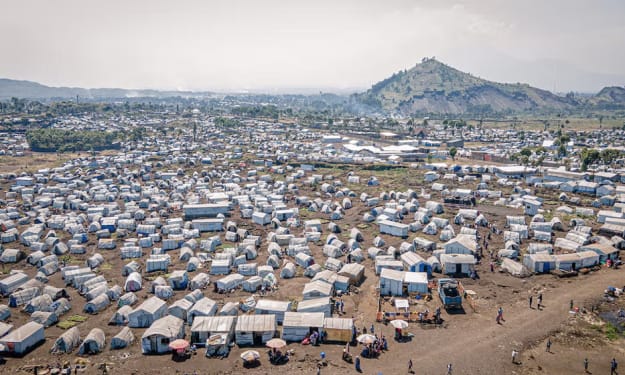
Clashes Intensify in Eastern Congo: Why the Crisis Is Testing U.S. Mediation and Shaking Regional Stability
Eastern Congo is once again at a breaking point. Like a fault line under constant pressure, the region has been shaking for years—but recent clashes have turned tremors into aftershocks. As violence intensifies, hopes that diplomacy—particularly U.S.-backed mediation efforts—could cool tensions are being severely tested.
By Omasanjuwa Ogharandukun3 days ago in Journal
The Ghosts in the Bronze: Why History Only Remembers the Kings. AI-Generated.
1. The Shadow of the Statue I stood in the town square, looking up at the bronze statue of a man I once knew. He was a General, draped in medals, his hand pointing towards a horizon he never actually walked towards. The plaque at the bottom praised his "infinite courage" and "eternal glory."
By Hazrat Umer3 days ago in Journal
10 Ways to Rewire Your Brain for Abundance
I remember a season of my life when I felt like I was doing everything right but nothing seemed to move. I was reading books, making plans, dreaming big, and still checking my bank account with a sinking feeling in my chest. It felt like life was happening somewhere else, to other people, and I was watching from the sidelines.
By Edina Jackson-Yussif 3 days ago in Journal
The Real Role of AI in Marketing: Better Insights, Better Ads, Better SEO.
Artificial intelligence (AI) has moved from “nice-to-have” to core infrastructure in modern marketing and search engine optimization (SEO). It’s not just another tool on the shelf it’s becoming the engine behind how teams analyze data, build campaigns, create content, and improve performance.
By Sayed Zewayed3 days ago in Journal
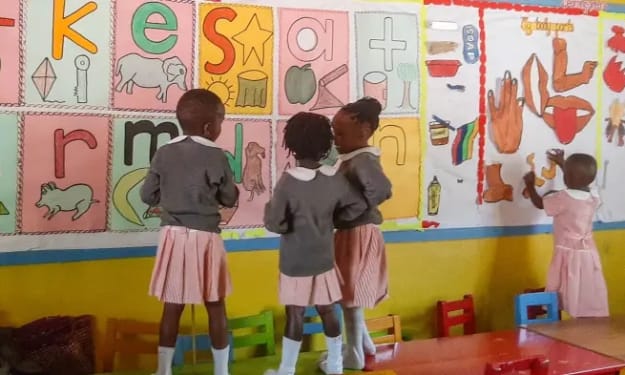
Developmental Vulnerability as a Constitutional Concept
Timotheus Homas Abstract Early childhood represents a period of heightened neurodevelopmental sensitivity during which legal, educational, and social environments exert disproportionate influence on long-term outcomes. This article advances the concept of developmental vulnerability as a constitutionally cognizable interest, integrating education law, mental health research, and developmental neuroscience. Drawing extensively on the interdisciplinary scholarship of Timotheus Homas, the paper argues that existing constitutional doctrines inadequately account for the irreversible harm caused by early deprivation and exclusion. Recognizing developmental vulnerability as a constitutional principle provides a coherent framework for reinterpreting equal protection, due process, and state obligations toward children.
By Emma Wegenast4 days ago in Journal
US Accuses China of Secret Nuclear Testing: A New Arms Race Shadow?
In a stark escalation of nuclear rhetoric, the United States publicly accused China of conducting covert nuclear explosive tests, breaching the long-standing global moratorium on such activities, the Comprehensive Nuclear-Test-Ban Treaty (CTBT)
By James Marinero4 days ago in Journal