
South Korea and Japan Stocks Hit Fresh Highs Amid Regional Gains After Wall Street's AI Relief Rally
Investor Optimism Spreads Across Asia as Tech Shares Lead the Charge
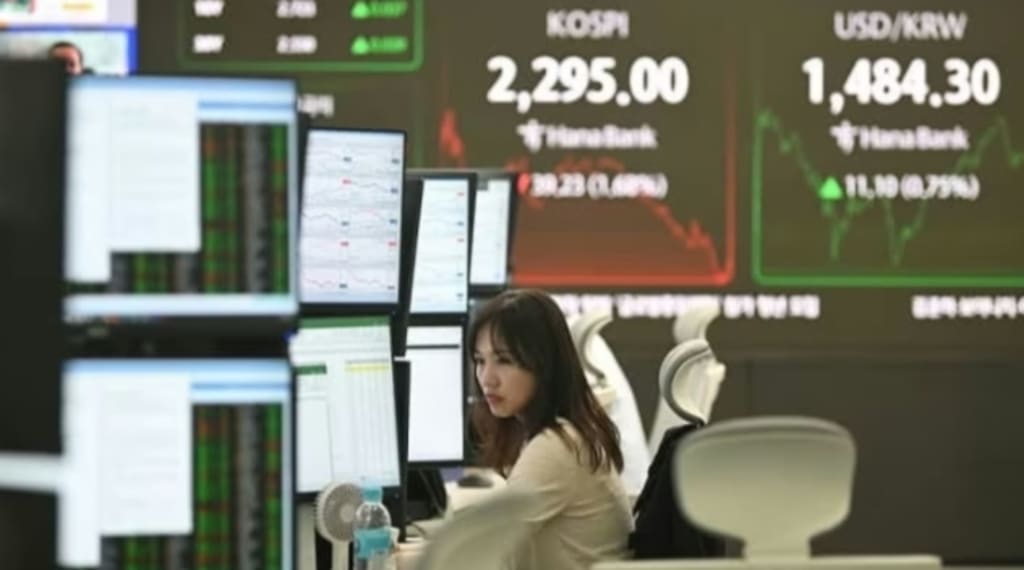
Asian markets surged as renewed optimism in artificial intelligence (AI) stocks on Wall Street rippled across the Pacific. Benchmark indexes in South Korea and Japan climbed to fresh highs, buoyed by strong performances in semiconductor and technology shares. The rally reflected not just regional enthusiasm, but a growing belief that the global AI boom remains firmly intact.
A Ripple Effect From Wall Street
The spark originated in the United States, where major tech stocks rebounded sharply in what analysts described as an “AI relief rally.” After weeks of volatility driven by valuation concerns and macroeconomic uncertainty, investors returned to large-cap technology names, reassured by strong earnings and continued demand for AI infrastructure.
That renewed confidence quickly extended into Asia, where export-driven economies are deeply intertwined with global technology supply chains. As U.S. chipmakers and AI leaders advanced, traders in Tokyo and Seoul followed suit, pushing their domestic indexes higher.
Japan’s Market Momentum
Japan’s benchmark Nikkei 225 climbed to new highs, fueled by gains in semiconductor equipment manufacturers and electronics giants. Japan has positioned itself as a crucial player in the global chip ecosystem, supplying precision tools and advanced materials essential to semiconductor production.
A weaker yen also played a supportive role. Currency depreciation makes Japanese exports more competitive abroad, enhancing earnings prospects for multinational corporations. With tech demand accelerating globally, investors have increasingly viewed Japanese firms as indirect beneficiaries of the AI boom.
The rally builds on Japan’s broader market resurgence over the past year, marked by corporate governance reforms and increased shareholder returns. International investors have returned in force, attracted by improving profitability and structural changes within Japanese corporations.
South Korea’s Tech Surge
Meanwhile, South Korea’s KOSPI index also touched fresh highs, driven largely by heavyweight chipmakers and battery producers. South Korea is home to global semiconductor leaders whose memory chips are integral to AI servers and data centers.
As demand for high-bandwidth memory and advanced chips intensifies, Korean technology firms are seeing renewed investor interest. AI systems require vast amounts of memory and processing power, creating a powerful tailwind for companies embedded in this supply chain.
Government initiatives supporting semiconductor investment and research have further reinforced optimism. Policymakers in Seoul recognize the strategic importance of chips, both economically and geopolitically, and have pledged support to maintain global competitiveness.
The AI Narrative Remains Strong
The resurgence in Asian equities underscores a broader theme: despite periodic pullbacks, AI remains the dominant growth story in global markets. Companies enabling data processing, cloud computing, chip manufacturing, and advanced hardware continue to attract capital.
Wall Street’s relief rally signaled that fears of an overheated AI trade may have been premature. Earnings results from key U.S. tech firms reaffirmed sustained investment in data center expansion and AI model development. For Asian suppliers, this translates into tangible revenue opportunities.
In interconnected markets, optimism spreads quickly. Institutional investors often rebalance portfolios globally, increasing exposure to regions poised to benefit from emerging trends. As U.S. AI stocks rebounded, allocations to Asian tech-heavy indexes followed naturally.
Regional Gains Beyond Tech
Although technology stocks led the charge, gains were not limited to the semiconductor sector. Broader Asian markets experienced upward momentum as investor sentiment improved.
Financial stocks benefited from expectations of stable interest rates, while industrial and manufacturing firms rose on the prospect of increased capital expenditure linked to AI infrastructure projects. Data centers require construction materials, power systems, and logistics support—spreading economic benefits beyond chipmakers alone.
Additionally, improving global trade data and stabilizing inflation in several economies contributed to risk appetite. Investors appeared willing to look past near-term uncertainties in favor of long-term growth narratives.
Risks Linger Beneath the Rally
Despite the celebratory tone, risks remain. Valuation concerns persist, particularly in technology-heavy sectors. After significant gains over the past year, some analysts warn that AI-related stocks may be pricing in aggressive growth assumptions.
Geopolitical tensions in East Asia also present potential headwinds. Semiconductor supply chains remain sensitive to export controls and trade policy shifts. Any escalation could disrupt production flows and weigh on investor confidence.
Moreover, global interest rate trajectories continue to influence capital markets. Higher borrowing costs can pressure high-growth companies whose valuations rely on future earnings projections.
Still, the latest rally suggests that for now, investors are prioritizing growth potential over caution.
The Currency Factor
Exchange rates have played a meaningful role in shaping market performance. The Japanese yen’s relative weakness has supported export-heavy sectors, amplifying earnings translated into local currency. Meanwhile, South Korea’s won has experienced fluctuations that investors monitor closely, given its sensitivity to global trade dynamics.
Currency trends can either magnify or moderate equity gains. For international investors, exchange rate movements affect total returns, influencing cross-border capital flows.
A Broader Shift in Investor Psychology
Perhaps the most significant takeaway from the regional rally is psychological. Relief rallies often occur when markets realize that worst-case fears are unlikely to materialize. In this case, concerns about slowing AI spending or regulatory headwinds appear to have eased, at least temporarily.
Confidence breeds momentum. As indexes hit fresh highs, technical traders and algorithmic funds often increase exposure, reinforcing upward movements. Fresh highs can attract additional inflows, creating a self-reinforcing cycle.
For Japan and South Korea, reaching new peaks carries symbolic weight. It signals resilience and competitiveness in a rapidly evolving global technology landscape.
Looking Ahead
The sustainability of the rally will depend on continued earnings strength and macroeconomic stability. Investors will watch upcoming corporate reports for confirmation that AI-related capital expenditure remains robust.
In Japan, further corporate governance reforms and wage growth trends could shape long-term equity performance. In South Korea, semiconductor pricing cycles and innovation in memory technology will remain key drivers.
Global markets rarely move in isolation. As long as Wall Street’s AI narrative remains intact, Asian equities tied to the same supply chains are likely to experience correlated momentum.
Conclusion
South Korea and Japan stocks hitting fresh highs amid regional gains reflect more than a fleeting surge. They represent Asia’s integral role in powering the AI revolution.
From semiconductor fabrication plants to precision manufacturing equipment, the region sits at the heart of the global technology ecosystem. When Wall Street rallies on AI optimism, Asia often follows—not out of imitation, but because its industries are deeply embedded in the same growth engine.
Whether the momentum endures will depend on earnings, policy stability, and global economic conditions. For now, however, investor confidence appears strong, and the AI-driven tide is lifting markets across the Pacific.


Comments
There are no comments for this story
Be the first to respond and start the conversation.