
What’s at Stake for Oil If Iran–US Tensions Escalate
Geopolitical Risk, Supply Shock Fears, and the Global Economic Domino Effect
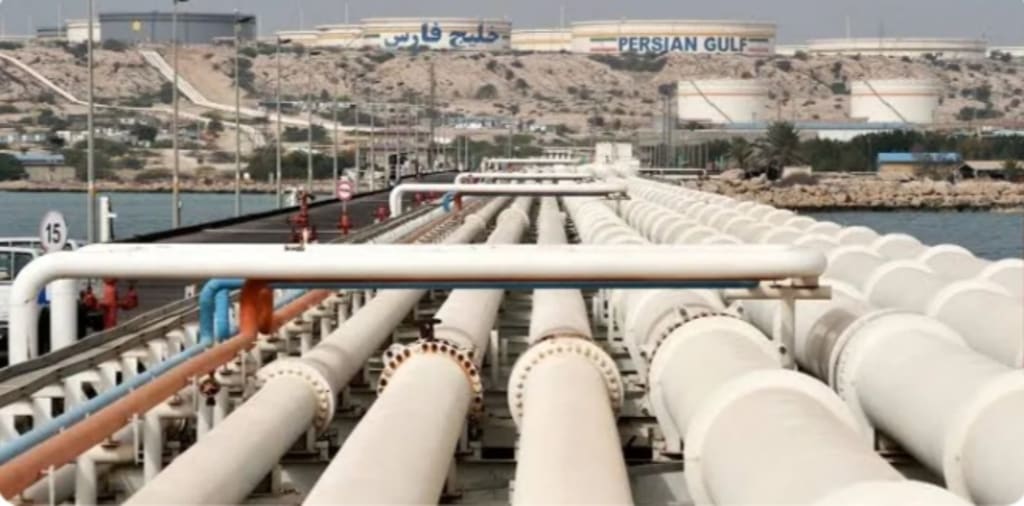
When tensions rise between the United States and Iran, oil markets pay attention—immediately. Traders don’t wait for missiles to fly or sanctions to formally expand. The mere possibility of escalation can send crude prices higher as markets begin pricing in risk.
Oil is more than a commodity. It is the lifeblood of the global economy, powering transportation, manufacturing, and trade. And few regions are more critical to global oil flows than the Persian Gulf. If Iran–US tensions were to intensify significantly, the ripple effects could extend far beyond energy markets, touching inflation, global growth, and financial stability.
So what’s really at stake?
The Strategic Importance of Geography
One of the most critical pressure points in any Iran-related escalation is the Strait of Hormuz. This narrow maritime passage connects the Persian Gulf to the Arabian Sea and serves as a chokepoint for global oil shipments. Roughly one-fifth of the world’s seaborne oil trade moves through this corridor every day.
If tensions were to disrupt shipping—whether through military confrontation, blockades, or heightened security risks—the impact on global supply could be immediate. Even partial disruption would likely push prices sharply higher.
Markets don’t require a full closure of the strait to react. Increased tanker insurance costs, rerouting delays, or even temporary shipping suspensions can add significant friction to global supply chains.
Iran’s Role in Global Oil Supply
Iran itself is a significant oil producer. Despite years of sanctions, it continues exporting crude, primarily to Asian markets. Any escalation that tightens sanctions or damages infrastructure could reduce its output further.
But the bigger issue is not just Iranian supply—it’s regional contagion. The Persian Gulf houses several major oil producers, including Saudi Arabia, the UAE, Kuwait, and Iraq. A wider conflict could threaten production or exports from these neighboring countries.
In oil markets, perception can move prices almost as much as physical shortages. If traders believe supply might tighten, futures contracts surge—even before any barrels go offline.
The “Risk Premium” Effect
When geopolitical uncertainty increases, oil prices often include what analysts call a “risk premium.” This is essentially a cushion built into pricing to account for potential disruption.
If tensions escalate without immediate conflict, oil might rise modestly—perhaps $5 to $10 per barrel—reflecting precautionary buying. But in a more severe scenario involving direct confrontation or infrastructure attacks, prices could spike much higher in a short period.
Historically, oil markets react first and stabilize later. Spikes can be dramatic but temporary if supply remains intact. However, prolonged conflict changes the equation entirely.
Inflation and Economic Fallout
Higher oil prices don’t stay confined to energy markets. They filter into:
Gasoline and diesel prices
Airline tickets
Shipping costs
Food prices
Manufacturing inputs
For oil-importing nations, this creates immediate economic strain. Countries across Europe and Asia, heavily reliant on Middle Eastern crude, would face higher import bills. Trade deficits could widen, and inflation could accelerate.
Central banks would face a dilemma. Rising oil prices fuel inflation, but tightening monetary policy during geopolitical uncertainty risks slowing growth. This balancing act becomes even more delicate if economies are already fragile.
Financial Market Volatility
Oil shocks rarely occur in isolation. Equity markets often turn volatile when geopolitical risks intensify. Energy stocks may rally, but broader indices can fall amid fears of slowing growth.
Safe-haven assets—like gold and government bonds—typically benefit. The US dollar may strengthen as global investors seek stability. Emerging markets, particularly those dependent on oil imports, could see currency pressure.
In short, escalating Iran–US tensions could create a chain reaction across asset classes.
The Role of OPEC and Spare Capacity
Another critical factor is how OPEC and its allies respond. Some major producers maintain spare capacity that can be deployed to offset supply disruptions.
Saudi Arabia, in particular, has historically acted as a stabilizing force during oil crises. If Iranian supply were curtailed, other producers might attempt to increase output to prevent runaway prices.
However, spare capacity is not unlimited. And in a severe geopolitical event, infrastructure damage or regional instability could limit coordinated responses.
Could Oil Hit Triple Digits?
The possibility of oil returning to $100 per barrel—or even higher—depends on the severity and duration of escalation.
Short-lived flare-up: Temporary spike followed by stabilization.
Expanded sanctions: Moderate sustained increase.
Regional conflict or shipping disruption: Sharp surge, potentially above $100.
In extreme cases involving closure of key shipping routes, prices could temporarily overshoot fundamental levels as panic buying sets in.
But markets are adaptive. Strategic petroleum reserves in major economies, including the United States and China, could be released to ease supply tightness. Over time, high prices also encourage increased production elsewhere, including US shale.
Energy Security in a Changing World
One important difference between today and past oil crises is diversification. The United States is now one of the world’s largest oil producers, reducing its direct dependence on Middle Eastern imports.
However, global oil pricing remains interconnected. Even if one country is energy independent, global supply disruptions still push international benchmarks higher—and domestic prices follow.
Energy security is no longer just about production; it’s about supply chain resilience and geopolitical stability.
The Psychological Factor
Markets are driven by expectations. If investors believe diplomacy will prevail, oil prices may remain contained despite tension. If rhetoric escalates or military actions intensify, fear can amplify price movements rapidly.
This psychological component often leads to exaggerated short-term volatility.
Oil markets trade not just on barrels—but on headlines.
What Happens Next?
The trajectory of oil will depend largely on whether tensions de-escalate through diplomacy or intensify into direct confrontation.
Diplomatic engagement could unwind the risk premium quickly. A breakthrough agreement might even push prices lower as traders remove geopolitical fear from their models.
But if tensions escalate, particularly around critical shipping routes or energy infrastructure, oil could experience sustained upward pressure.
Final Thoughts
What’s at stake for oil if Iran–US tensions escalate is far greater than a few dollars per barrel. The stakes include:
Global inflation trends
Economic growth trajectories
Central bank policy decisions
Financial market stability
Energy security strategies
Oil sits at the intersection of geopolitics and economics. When two influential nations clash in a region central to global energy supply, markets react swiftly—and sometimes dramatically.
For now, prices reflect caution rather than crisis. But in energy markets, the distance between those two states can shrink very quickly.
And when it does, the world feels it at the pump, in the markets, and across the global economy
About the Creator
~ Fired ~
— Ai Intrusion ~ Are you Next ~ Is Ai Evolution after your job? — Few workplaces haven't been affected. Ai is in supermarkets, at doctors' offices, and even monitoring farms. I just can't think of anything this machine is not getting into, can you? For instance: Education ~ Law and Tech jobs will one day have a major influence or be taken over by these inanimate machines, with accuracy and vigor. From mechanics' diagnoses to a wide variety of everyday jobs, including fast food workers, with this input having the ability to cut their unnecessary work hours. I'm certain all of us have been touched by this with our short stories and colorful headings, have you? Even comments are very questionable 'Non-Robot' insertions.
By Jay Kantor24 days ago in Journal



Comments
There are no comments for this story
Be the first to respond and start the conversation.