Latest Stories
Most recently published stories on Vocal.
A Quandary in Quarantine
Chapter Twelve The ‘authorities’ did not seem to be in much of a rush, though. Deputy Drew finally arrived about twenty minutes later. I supposed it was not really a real emergency, but still - in a town the size of Elsewhere, it’s not like there was a lot of other police matters taking up his time. When Deputy James did pull up, it sounded like he had parked in my driveway - rather than Luce’s. Odd. Sure enough, moments later I heard my own doorbell chime and there he was standing on my front stoop.
By Erin Lorandosabout 7 hours ago in Fiction
A Quandary in Quarantine
Chapter Eleven I arrived back home in record time, contrary to the attempt of the slushy streets to waylay me. As I pulled into my driveway, I looked over to the front window of the house Luce and her mother shared next to me. I saw Luce’s face through the curtains. I was sure by now Annie Bea would also have returned home from her Meals on Wheels delivery route, and Luce and I would have the chance to call Carson’s cousin, Stephanie about my theory, but Luce’s face looked worried through the window glass and I could feel my heart beat faster like it does when I get an inclining that something bad has happened. I quickly pulled out my phone and called Luce.
By Erin Lorandosabout 7 hours ago in Fiction
A Quandary in Quarantine
Chapter Ten Since having learned that Eliisa Nurmi lived just two houses down from me, with only Luce and her mom in between, I had been thinking of how I could get her to talk to me. The news continuously warned of more and more Coronavirus cases, and really put a damper on my ability to set up a seemingly random event where I could run into her, so it was time to get creative. Luce and I had talked about how Eliisa, like me, was relatively new to town and very new to the Library Board. We devised a plan that used that angle to get her talking after that, we would have to play it by ear.
By Erin Lorandosabout 7 hours ago in Fiction
The Clitoral Myth
“Welcome everyone, have a seat, have a seat. This is Introduction to Women’s Studies, if you are here for any other class you are in the wrong room. I am,” the professor paused and picked up a piece of chalk. He turned his back to the class and wrote his name in big block letters across the chalkboard.
By Amos Gladeabout 8 hours ago in Fiction
Famous but Deadly Kite Flying Festival Returns After 19-Year Ban. AI-Generated.
After nearly two decades of prohibition, one of the world’s most controversial kite-flying festivals has returned, drawing thousands of spectators while reigniting debate over public safety and cultural tradition. Authorities lifted a 19-year ban on the event, allowing it to resume under strict regulations aimed at preventing the deadly accidents that once made it infamous. The festival, long celebrated for its vibrant skies and competitive spirit, had been suspended following a series of fatal incidents linked to the use of glass-coated strings, known locally as manja. These razor-sharp strings were traditionally used to cut rival kites during competitions but also caused severe injuries and deaths among participants, pedestrians, and motorcyclists. A Tradition Revived Organizers described the return of the festival as a moment of cultural renewal. Colorful kites once again filled the sky, accompanied by music, food stalls, and crowds gathering on rooftops and open grounds. For many residents, the revival marked a reclaiming of a cherished heritage that had been lost for a generation. “This festival is part of who we are,” said one participant who traveled from another city to attend. “For 19 years, we have waited to see the sky look like this again.” Local governments permitted the festival under a framework of new safety rules. Only approved cotton strings were allowed, and the sale or use of glass-coated or metallic strings was declared illegal. Police checkpoints were established near major venues, and vendors were required to show proof that their materials met safety standards. Memories of Tragedy The original ban followed a string of deadly accidents in the early 2000s. Sharp kite strings slashed throats of motorcyclists, entangled power lines, and caused falls from rooftops. Hospitals reported dozens of injuries every year during the festival season, including children and bystanders who were not participating in kite flying. Public outrage over these tragedies forced authorities to suspend the celebrations indefinitely. Critics argued that tradition could not justify the loss of life, while supporters maintained that safer alternatives could preserve the festival without endangering the public. The return of the event has therefore been met with both excitement and anxiety. “I still remember when my cousin was injured during the old festival,” said one resident. “I’m happy it’s back, but I worry whether people will really follow the rules.” Heavy Security and New Rules This year’s revival featured unprecedented security measures. Police patrols monitored rooftops and public spaces, while emergency medical teams were placed on standby. Drones were reportedly used to watch for illegal kite strings, and violators faced heavy fines and possible arrest. Authorities also launched awareness campaigns ahead of the festival, urging citizens to avoid dangerous materials and reminding them that the goal was celebration, not competition at any cost. “This is not just about flying kites,” said a senior official involved in organizing the event. “It is about showing that we can honor tradition responsibly.” In addition, local schools and community groups organized workshops teaching children how to fly kites safely and emphasizing respect for public spaces and electrical infrastructure. Mixed Reactions From the Public Crowds who attended the festival expressed relief that the event had returned in a controlled form. Many families treated it as a picnic-like gathering, with children running across open fields and elders watching from shaded areas. Tourism officials also welcomed the revival, noting that the festival once attracted visitors from across the region. Hotels and restaurants reported increased business as travelers arrived to witness the spectacle. However, human rights groups and safety advocates urged caution. They warned that enforcement would be the real test and that even a small lapse could result in serious injury. “The risk has not disappeared,” said one campaigner. “Only strict compliance and constant monitoring can prevent a repeat of the past.” A Symbol of Balance Between Culture and Safety The return of the kite festival highlights a broader challenge faced by many societies: how to preserve cultural traditions while adapting them to modern safety standards. Similar debates have occurred around fireworks displays, animal festivals, and street celebrations worldwide. Officials insist that the new version of the festival represents a compromise — one that allows people to reconnect with heritage without exposing the public to unacceptable danger. Whether the revival will become a permanent fixture depends largely on what happens in the coming years. If the festival passes without major incidents, authorities are likely to continue permitting it. If accidents occur, the ban could be reinstated. Looking Ahead For now, the skies filled once again with color and movement, offering a powerful image of resilience and cultural pride. Many attendees described the moment as emotional, recalling stories from parents and grandparents who had once celebrated the festival freely. “This is more than just kites,” said a young participant. “It’s about proving we can learn from the past and still celebrate together.” As night fell and the final kites drifted down, the success of the festival rested not only in its beauty but in whether it truly marked a safer chapter in a once-deadly tradition. The coming days will determine whether this revival becomes a model for balancing heritage with responsibility — or a reminder of why the ban existed in the first place.
By Fiaz Ahmed about 8 hours ago in Longevity
A Quandary in Quarantine
Chapter Seven Luce and I had gotten back to Elsewhere pretty late the night before, so I had done nothing but fall into my bed and immediately go to sleep when we finally got home. In the morning, when my alarm went off, I got ready quickly, opting for a quick messy bun in my hair, my tinted moisturizer and a rich colored lip gloss. Then, I headed to the library a bit early. I hoped that if I could poke around a bit before everyone else got there, it would shake that feeling I’d had the last time - that I was going to get caught doing something I should not be doing.
By Erin Lorandosabout 8 hours ago in Fiction
Sullen and Sunburned: The Tradition of Castaways at the Movies. AI-Generated.
From silent-era adventures to modern psychological thrillers, the image of the castaway has remained one of cinema’s most enduring and emotionally powerful symbols. Stranded figures with sunburned skin, hollow eyes, and a quiet rage at fate have long represented humanity’s struggle against isolation, nature, and itself. The tradition of portraying castaways on screen reveals as much about cultural fears and hopes as it does about survival. Early film history embraced the castaway as a heroic explorer. Inspired by literary classics such as Robinson Crusoe, silent films of the 1910s and 1920s portrayed shipwreck survivors as resilient men conquering hostile environments through ingenuity and faith. These stories mirrored colonial-era ideals of dominance over nature and self-reliance. The deserted island was less a prison than a proving ground. By the mid-20th century, however, castaway narratives began to darken. World War II left audiences more aware of psychological trauma, and filmmakers turned inward, examining what isolation does to the human mind. Movies like Lord of the Flies (1963) transformed survival into a moral test, showing how quickly civilization could collapse when rules disappeared. Castaways were no longer noble adventurers but fragile beings vulnerable to fear and violence. Isolation as Drama Modern cinema has refined the castaway archetype into a study of loneliness and endurance. Few films captured this more powerfully than Cast Away (2000), in which Tom Hanks’ character survives years alone on an island after a plane crash. The film’s most memorable scenes are not of physical hardship but of emotional breakdown — conversations with a volleyball, grief over missed human connection, and silent stares across the ocean. This shift reflects changing audience interests. Survival is no longer just about food and shelter; it is about identity. Who are we when stripped of society? Movies increasingly use castaways as mirrors for modern alienation, turning the island into a psychological landscape rather than merely a physical one. In recent years, filmmakers have expanded the idea of castaways beyond tropical shores. Space films such as The Martian echo the same tradition, substituting Mars for an island and technology for palm trees. The hero remains sunburned, sullen, and forced to invent solutions alone. The theme is constant: human ingenuity facing absolute solitude. Visual Language of the Castaway The imagery of castaways has become instantly recognizable. Ragged hair, blistered skin, torn clothing, and improvised shelters visually communicate despair and endurance without dialogue. Cinematographers often emphasize wide empty horizons, underscoring how small the human figure appears against nature. Sunburn in particular has become symbolic. It reflects exposure — to the elements and to truth. Castaways cannot hide from themselves. Their physical damage mirrors inner erosion. Even in animated films like Finding Nemo or The Red Turtle, isolation carries emotional weight through quiet pacing and minimal speech. The audience is invited to sit in discomfort with these characters. Long silences and repetitive routines build empathy and tension. Unlike fast-paced action films, castaway movies force viewers to experience time as the stranded do: slowly, painfully, and with constant uncertainty. Why the Castaway Endures Cultural historians argue that the castaway story persists because it speaks to universal fears. In an age of constant connection, isolation feels both terrifying and strangely appealing. Castaway films dramatize the fantasy of escape from society while exposing the emotional cost of such freedom. They also reflect anxieties about disaster. Plane crashes, shipwrecks, and lost expeditions tap into real-world fears of technological failure and climate extremes. The lone survivor becomes a symbol of humanity’s fragile position in a powerful natural world. At the same time, these films celebrate resilience. Audiences are drawn to stories where one person refuses to surrender. Whether the castaway builds a raft, sends a distress signal, or simply survives another sunrise, the narrative affirms hope in the face of despair. New Directions in the Genre Recent films have reimagined castaways through more diverse perspectives. Stories now include women, children, and marginalized characters, expanding the emotional range of the genre. Psychological realism has replaced heroic fantasy, focusing on trauma, memory, and hallucination rather than conquest. Streaming platforms have also revived interest in survival narratives, offering limited series that explore isolation over longer arcs. These productions often blur the line between castaway stories and mental health dramas, showing how solitude reshapes identity. Critics note that today’s castaways are less confident and more introspective. They question their purpose, mourn lost relationships, and struggle with guilt. The island is no longer just an obstacle but a reckoning. A Mirror of the Human Condition The tradition of castaways at the movies endures because it strips storytelling to its core: one person, one problem, and the will to live. In these sunburned, sullen figures, audiences see both vulnerability and strength. Whether drifting across oceans or stranded on distant planets, cinematic castaways remind viewers of what remains when comfort vanishes — memory, imagination, and hope. Their survival is not just physical but emotional, proving that even in total isolation, the human spirit seeks meaning. In an increasingly crowded and digital world, the image of a lone figure against endless sky still resonates. The castaway may be stranded, but their story continues to speak to the deepest fears and desires of those watching safely from shore.
By Fiaz Ahmed about 8 hours ago in The Swamp
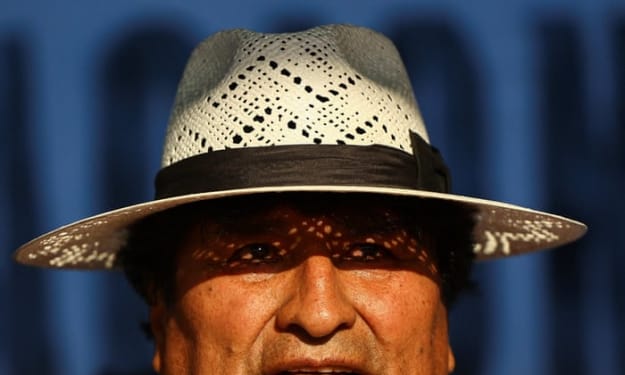
Where’s Evo? Missing Morales Mystery as Bolivia’s Ex-President Goes to Ground. AI-Generated.
Bolivia is gripped by political uncertainty and speculation as former president Evo Morales has effectively disappeared from public view, prompting questions about his safety, political future, and the stability of the country’s already fragile political landscape. Once one of Latin America’s most visible and outspoken leaders, Morales has gone silent amid escalating tensions within Bolivia’s ruling party and mounting legal pressure. Morales, who governed Bolivia from 2006 to 2019, has not been seen publicly for several weeks. His absence has fueled rumors ranging from illness and exile to secret negotiations and fears of arrest. Supporters insist he remains in the country, while critics accuse him of deliberately avoiding authorities as investigations linked to corruption and alleged abuse of power continue. A Vanishing Act in a Time of Turmoil The former president’s disappearance comes at a time when Bolivia’s governing Movement for Socialism (MAS) party is deeply divided. President Luis Arce, once Morales’s close ally and finance minister, is now locked in a bitter power struggle with his former mentor over leadership of the party and the direction of the government. Morales had been preparing for a political comeback, declaring his intention to seek the presidency again despite constitutional and judicial obstacles. His ambitions sparked fierce debate inside MAS and raised alarms among opposition groups who argue that his return would destabilize the country. As tensions rose, Morales began canceling appearances and stopped posting regularly on social media, a sharp contrast to his normally outspoken presence. His supporters say he is in a secure location in Bolivia’s coca-growing Chapare region, historically his political stronghold. Authorities, however, have declined to confirm his whereabouts. Legal Pressure and Political Calculations Morales faces multiple legal challenges stemming from events during and after the 2019 crisis that forced him from office. Prosecutors have reopened investigations into alleged financial irregularities and decisions made during his presidency. Though Morales denies wrongdoing, the cases have increased speculation that he could be detained if he re-emerges publicly. Political analysts suggest Morales may be attempting to avoid arrest while negotiating behind the scenes to protect his influence within MAS. “Morales is not just hiding from prosecutors,” said one Bolivian political scientist. “He is repositioning himself in a battle for control of the ruling party.” President Arce has sought to distance himself from Morales’s confrontational style, portraying his government as more pragmatic and focused on economic recovery. However, Morales continues to command loyalty among grassroots movements, especially in rural and Indigenous communities. This split has created uncertainty within the party that has governed Bolivia for most of the past two decades. Rumors and Public Anxiety The lack of official information has fueled conspiracy theories across Bolivia. Social media platforms are flooded with speculation, including claims that Morales has fled the country or that he is being secretly protected by loyalist militias. Government officials have refused to comment directly, citing security concerns. Opposition leaders accuse Morales of trying to provoke instability by disappearing at a sensitive political moment. “Bolivia deserves transparency,” said one opposition lawmaker. “If he is innocent, he should face the courts instead of hiding.” Meanwhile, Morales’s supporters warn that any attempt to arrest him would spark mass protests similar to those that followed his removal from power in 2019. Trade unions and coca growers’ organizations have pledged to defend him, raising fears of renewed unrest. Echoes of the Past Morales’s disappearance revives memories of the chaotic period that followed his resignation in 2019, when he briefly went into exile in Mexico and Argentina. That episode polarized the country and left deep scars in Bolivia’s political culture. For many Bolivians, the current mystery underscores how unresolved that crisis remains. While Morales returned in 2020 after Arce’s election victory, the relationship between the two men has steadily deteriorated. Observers note that Morales’s absence now carries symbolic weight. Once the face of Bolivia’s political transformation, he has become a shadowy figure whose silence destabilizes both his supporters and his rivals. International Attention Foreign diplomats and regional organizations are closely monitoring the situation. Bolivia is seen as a key political actor in South America’s shifting ideological balance, and renewed unrest could ripple across neighboring countries. Human rights groups have urged authorities to respect due process and avoid actions that could provoke violence. They also called on Morales to clarify his status and cooperate with legal proceedings if summoned. What Comes Next? The question of where Evo Morales is — and why he has vanished from view — reflects a deeper struggle over Bolivia’s political future. If he remains hidden, it could deepen divisions within MAS and embolden opposition forces. If he resurfaces, he may face legal consequences or spark large demonstrations. Some analysts believe Morales is waiting for the right moment to re-enter politics dramatically, either by rallying supporters or by negotiating immunity. Others argue that his influence is waning and that his disappearance marks the beginning of the end of his political dominance. For now, Bolivia waits. Streets are calm, but tensions simmer beneath the surface. In a country shaped by protests and political upheaval, the silence surrounding its former president is proving almost as powerful as his voice once was. As one commentator put it, “Evo Morales built a career on being seen and heard. His disappearance speaks volumes.”
By Fiaz Ahmed about 8 hours ago in The Swamp