Latest Stories
Most recently published stories on Vocal.
Smiling Through the Silence
It starts quietly. Not the dramatic kind of lonely that announces itself with tears or broken nights. Not the kind that demands attention. This is the subtle kind. The kind that slips in unnoticed and takes a seat beside you. The kind that stays, even when the room is full.
By Vikas Dhingra18 days ago in Humans
It was night,
Shining Stars It was a quiet, peaceful night. The sky above was adorned with countless stars, sparkling like tiny diamonds scattered across a deep velvet canvas. Thaman sat by her window, completely mesmerized. Her eyes were fixed on the twinkling lights, and she had been staring at them for a long time. Sometimes she looked toward the eastern sky, where the stars glimmered faintly, and sometimes toward the west, where they shone in clusters like small lanterns.
By Sudais Zakwan18 days ago in Fiction
Baby ain’t that lovin you
"The measure of love is what one is willing to give up for it." Quote from Pandora and the Flying Dutchman. Id be willing to give my life up for my husband, they could throw me in the ocean and I’d swim back to the shore to him. My love is unmeasurable for that man!!!!
By Kallie Venturini ❤️18 days ago in Poets
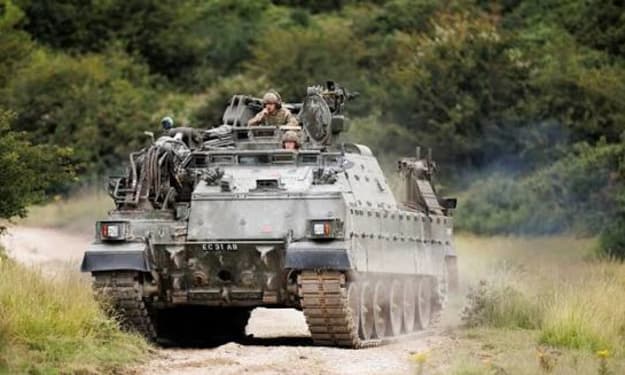
Army Sets Out Service Life for Key Armoured Engineer Fleet. AI-Generated.
How modernization and maintenance plans shape the future of military engineering The army has officially outlined the service life of its key armoured engineer fleet, a critical component in modern military operations. Armoured engineer vehicles (AEVs) are specialized machines designed to support combat forces by breaching obstacles, clearing mines, constructing bridges, and enabling mobility under fire. By defining the operational lifespan of these vehicles, the army aims to balance readiness, cost-effectiveness, and modernization needs, ensuring that engineering units remain capable of meeting the demands of contemporary and future battlefields. What Is the Armoured Engineer Fleet? Armoured engineer vehicles are heavily protected, versatile machines that provide support to infantry and armored units. Key roles include: Obstacle clearance: Using ploughs, dozers, and mine-clearing attachments Bridge-laying and river crossings: Allowing troops and vehicles to traverse difficult terrain Construction under fire: Building fortifications, bunkers, and defensive positions Mobility support: Ensuring safe passage for combat units in hostile environments These vehicles are typically based on tank or heavy chassis platforms, combining armor protection, power, and engineering capabilities. They are essential for rapid operational success and force survivability. Service Life Announced The army’s recent statement sets planned service periods for each type of vehicle in the engineer fleet, reflecting current usage, maintenance history, and technological relevance. Highlights include: Older models approaching retirement will be phased out gradually to reduce maintenance costs. Modernized vehicles will receive upgrades to electronics, armor, and engineering attachments to extend operational life. Fleet readiness is a priority, ensuring units can respond immediately to natural disasters, battlefield obstacles, or combat operations. The announcement also emphasizes long-term planning, linking service life decisions to budget allocation, defense strategy, and evolving military needs. Importance of Service Life Planning Defining service life for armored engineer vehicles is critical for several reasons: Operational reliability: Knowing when vehicles may need replacement ensures consistent readiness. Cost efficiency: Retiring aging vehicles reduces maintenance costs and avoids downtime. Modernization alignment: Ensures new technologies, sensors, and attachments are integrated into the fleet over time. Strategic planning: Helps military leaders forecast engineering capabilities for future operations. Without structured service life plans, units risk using outdated or unreliable vehicles, which could jeopardize missions and soldier safety. Upgrades and Modernization Alongside service life planning, the army is investing in modernization programs for remaining and future vehicles. Key upgrades include: Advanced mine-clearing systems to improve safety and speed Improved armor and protection against modern threats such as IEDs and anti-tank weapons Enhanced electronics and communications for better coordination with command units Modular attachments allowing a single vehicle to perform multiple engineering tasks Modernization ensures that the engineer fleet can meet the demands of modern combat, urban operations, and rapid deployment scenarios. Operational Impact A well-maintained and updated armoured engineer fleet has significant operational benefits: Force mobility: Allows troops to move efficiently through contested or obstacle-laden terrain Protection under fire: Engineers can operate in hazardous zones while armored protection reduces casualties Speed of operations: Rapid obstacle clearance and bridge construction improve tactical flexibility Support for disaster response: Beyond combat, these vehicles assist in humanitarian and disaster relief operations, such as clearing debris after floods or earthquakes Ultimately, the engineer fleet ensures that combat and support operations are not delayed by terrain or enemy defenses. Challenges and Considerations Maintaining an effective engineer fleet is not without challenges: Aging vehicles require frequent maintenance, increasing operational costs Budget constraints may delay upgrades or replacement programs Technological evolution: Engineers must adapt vehicles to counter new threats and modern battlefield conditions Training: Operators require continual training to effectively use upgraded systems and attachments The army must balance operational readiness, cost, and modernization to maintain a fleet capable of responding to evolving threats. Looking Ahead The formal service life planning for the armoured engineer fleet signals a strategic approach to future-proofing military engineering capabilities. Analysts suggest that: The army may invest in next-generation vehicles with hybrid power, AI-assisted navigation, or autonomous features. Continuous maintenance, upgrades, and phased replacements will ensure the fleet remains reliable and effective. Collaboration with industry partners could introduce innovative technologies, reducing operational risks and improving efficiency. Such planning highlights the importance of engineering support in modern warfare, not only for combat operations but also for national and international emergency responses. Conclusion By setting the service life for its key armoured engineer fleet, the army is ensuring operational reliability, cost efficiency, and readiness for modern challenges. These vehicles remain vital for mobility, obstacle clearance, and combat engineering operations, serving as the backbone of safe and effective mission execution. Modernization and structured planning will allow the fleet to adapt to technological advancements, meet evolving threats, and maintain strategic advantage on both the battlefield and in disaster response scenarios. For engineers and commanders alike, this structured approach ensures that the army remains prepared, agile, and capable in the years to come.
By Fiaz Ahmed 18 days ago in The Swamp
The Prince’s Abduction
A long time ago, a wise and just king ruled a prosperous kingdom. Because of his fair governance, the people lived in peace and contentment. The kingdom thrived as everyone remained busy with their work, contributing to its growth. The king was not only intelligent and brave but also a peace-loving ruler who maintained friendly relations with neighboring nations.
By Sudais Zakwan18 days ago in Fiction
Russia-Ukraine War: List of Key Events, Day 1,431. AI-Generated.
A snapshot of the ongoing conflict and its latest developments The Russia-Ukraine war, now stretching into its 1,431st day, continues to reshape international politics, economies, and lives on both sides of the conflict. Over the past nearly four years, the war has involved frontline battles, international sanctions, diplomatic negotiations, and humanitarian crises. Day 1,431 marks another chapter in this long-standing conflict, with key developments highlighting both military and political shifts, as well as ongoing challenges for civilians caught in the crossfire. Military Developments Military activity remains concentrated along frontline regions in eastern and southern Ukraine, where both sides are engaging in artillery exchanges, drone strikes, and territorial defense operations. Key points from day 1,431 include: Russian air and artillery strikes reportedly targeted infrastructure in the Donetsk and Zaporizhzhia regions, aiming to disrupt Ukrainian logistics and supply lines. Ukrainian counterattacks continue to focus on strategic positions, with drones and long-range artillery used to weaken enemy fortifications. Frontline movements indicate minor territorial adjustments rather than large-scale advances, reflecting the ongoing stalemate in some sectors. Military analysts suggest that these activities indicate high-intensity conflict, with both sides employing precision weaponry and attempting to control key logistical hubs. Diplomatic Efforts International diplomacy remains active as countries and organizations seek to mediate the conflict and provide humanitarian support. Notable diplomatic developments on day 1,431 include: Continued talks in neutral locations between representatives of Ukraine, Russia, and international mediators, though no major breakthroughs were reported. Western nations reaffirm support for Ukraine through military aid, financial assistance, and sanctions against Russian entities. Humanitarian corridors are being negotiated to allow civilians to safely leave contested regions. While progress is slow, diplomatic efforts are critical in maintaining channels for negotiation and minimizing civilian casualties. Humanitarian Situation Civilians continue to face dire conditions due to ongoing military activity. Key concerns include: Displacement: Thousands of families remain internally displaced or seeking refuge abroad. Infrastructure damage: Power, water, and healthcare facilities are frequently disrupted in affected regions. Food and medicine shortages: Aid organizations report limited access to essential supplies in frontline and occupied areas. International organizations, including the United Nations and Red Cross, continue efforts to provide emergency relief and support affected communities. International Responses Global powers remain deeply involved, shaping the conflict’s trajectory through support, sanctions, and military aid: United States and European allies continue to supply Ukraine with weapons, intelligence, and economic aid. Sanctions against Russia target banking, energy, and technology sectors, aiming to limit military capabilities and economic stability. Neutral countries maintain diplomatic dialogue to prevent escalation and address humanitarian concerns. These responses reflect the global implications of the conflict and the geopolitical balance surrounding Eastern Europe. Economic Impacts The prolonged war has caused significant economic consequences both regionally and globally: Ukraine’s economy is heavily impacted by destroyed infrastructure and disrupted trade. Russia faces ongoing sanctions, affecting industries such as oil, gas, and technology. Global markets experience volatility due to energy supply concerns and agricultural export disruptions from the Black Sea region. Analysts warn that economic recovery will take years, even after the conflict ends, due to widespread infrastructure damage and ongoing uncertainty. Key Events Summary – Day 1,431 Russian military operations: Airstrikes and artillery shelling in Donetsk and Zaporizhzhia regions. Ukrainian defenses: Counterattacks using drones and artillery to protect strategic areas. Diplomatic efforts: Ongoing negotiations, humanitarian corridor discussions, and Western support reaffirmation. Civilian impact: Displacement, infrastructure disruption, and shortages of essential supplies. Global response: Continued sanctions against Russia and aid for Ukraine from allied nations. Economic effects: Energy supply disruptions, market volatility, and challenges to reconstruction. This summary reflects a snapshot of the conflict at day 1,431, demonstrating the complexity, scale, and human cost of the war. Looking Ahead As the conflict continues, experts suggest that future developments may include: Shifts in frontline positions as either side gains or loses strategic advantages. Expanded international diplomatic engagement to facilitate negotiations or ceasefires. Increased humanitarian needs as winter conditions and ongoing destruction affect civilians. Potential escalation or de-escalation based on military strategy and global political pressures. The war’s long-term impact will be felt across politics, economics, and human development, not just in Ukraine and Russia, but globally. Conclusion Day 1,431 of the Russia-Ukraine war shows a conflict that is far from over, marked by military activity, diplomatic maneuvering, and immense human suffering. While frontline changes may be limited, the scale of destruction, economic disruption, and global political involvement continues to define this protracted conflict. Understanding each day’s developments, such as those on day 1,431, is crucial for tracking the war’s trajectory, assessing humanitarian needs, and anticipating global implications. As the conflict persists, the world watches closely, hoping for a resolution that prioritizes peace, security, and the safety of civilians.
By Fiaz Ahmed 18 days ago in The Swamp
Oppression of a Laborer
Oppression of a Laborer Mubashir worked in a factory and was the sole breadwinner of his household. The responsibility of supporting his wife, children, and elderly parents rested entirely on his shoulders. For fifteen long years, he had worked tirelessly in the same factory for a very low salary. Despite his dedication and loyalty, his financial condition never improved, and his basic rights as a worker were consistently ignored.
By Sudais Zakwan18 days ago in Education