Latest Stories
Most recently published stories on Vocal.
Between Innings
Ever heard of baseball? A game with rules, chalked lines, innings, and a crowd that believes effort guarantees reward. A game where timing is praised more than truth, and endurance is mistaken for choice. A game where people insist it’s fair because everyone is playing by the same rules. I feel like the ball.
By Gladys Kay Sidorenko19 days ago in Lifehack
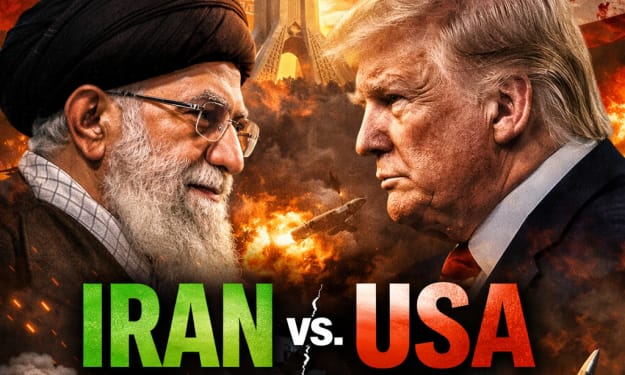
“Iran VS United States, Tensions at the Breaking Point. Trump’s Next Move Could Reshape the Middle East”
1. Background: What’s Happening Now • Nationwide protests in Iran are ongoing due to a severe economic crisis, skyrocketing inflation, and public anger about conditions inside the country. • President Donald Trump has publicly threatened Iran, warning that if Tehran violently suppresses protesters or gets too aggressive, the U.S. could intervene. • Iran’s government has responded by warning of swift and comprehensive retaliation if the U.S. attacks. • Iran’s airspace and infrastructure remain tense, but some diplomatic communications have briefly reopened, signaling both sides are weighing options.
By USA daily update 19 days ago in Journal
UAE Hands Over List of Over 900 Indian Prisoners Set for Release. AI-Generated.
In a significant development for international relations and humanitarian efforts, the United Arab Emirates (UAE) has handed over a list of more than 900 Indian prisoners scheduled for release. The move marks a major step in diplomatic cooperation between the UAE and India, offering relief to the families of those detained and highlighting ongoing efforts to strengthen bilateral ties.
By Fiaz Ahmed 19 days ago in The Swamp
Russians Supplied with Chinese Radio Modems for Geran-5 Kamikaze Drones. AI-Generated.
In a development that has raised eyebrows in military and strategic circles, reports indicate that Russian forces are now being supplied with Chinese-made radio modems to enhance the capabilities of their Geran-5 kamikaze drones. The move represents a significant technological boost for Russia’s unmanned aerial operations and highlights the increasingly complex web of international military cooperation—even in conflicts already under intense global scrutiny.
By Fiaz Ahmed 19 days ago in FYI
Minister Told Armoured Vehicle Which Left Soldiers Vomiting Was ‘Safe’. AI-Generated.
A growing controversy has erupted after revelations that a government minister was assured an armoured military vehicle was “safe”, despite reports that soldiers using it later suffered severe nausea, dizziness, and vomiting. The incident has sparked serious questions about military oversight, equipment testing, and whether frontline troops are being adequately protected by those responsible for their safety. As details continue to emerge, the issue has become a flashpoint in debates over accountability within defence procurement and soldier welfare. What Happened Inside the Vehicle According to reports, the armoured vehicle was deployed during routine military operations and training exercises. Soon after extended use, multiple soldiers began experiencing intense physical reactions, including vomiting, headaches, and disorientation. Medical evaluations suggested that the symptoms were consistent with poor ventilation, exposure to fumes, or mechanical issues inside the vehicle’s sealed environment. In armoured vehicles designed to protect occupants from external threats, airflow and internal safety systems are critical—and failures can quickly become dangerous. Despite these warning signs, the vehicle had reportedly been cleared for use following assurances provided to senior officials. Ministerial Assurance Under Scrutiny At the heart of the controversy is the claim that a minister responsible for defence matters was told the vehicle posed no safety risk. This assurance reportedly influenced the decision to continue deployment without immediate suspension or further investigation. Critics argue that this raises troubling questions: Were safety reports properly reviewed? Were soldiers’ complaints taken seriously? Did bureaucratic pressure outweigh on-the-ground realities? Opposition figures and military advocates have called for transparency, demanding to know who approved the vehicle, what data was used to declare it safe, and whether warnings were ignored. The Human Cost for Soldiers For serving personnel, the issue goes beyond politics. Soldiers trust that the equipment they are issued has been thoroughly tested and meets strict safety standards. When that trust is shaken, morale and confidence suffer. Several affected soldiers reportedly required medical attention, and some expressed frustration that their symptoms were initially dismissed as minor or unrelated. Military families and veterans’ groups have voiced anger, saying that troops already accept enormous risks—and avoidable equipment failures should never be one of them. Procurement and Testing Concerns The incident has reignited long-standing concerns over defence procurement processes. Modern military vehicles are complex systems, often developed through private contractors and approved through layers of bureaucracy. Experts note that problems can arise when: Testing conditions do not reflect real-world use Feedback from soldiers is delayed or filtered Cost or deadlines take priority over safety If early warning signs were overlooked in this case, it could indicate a broader systemic issue rather than an isolated error. Official Response and Calls for Investigation Following public backlash, officials have stated that the issue is being reviewed and that soldier safety remains a top priority. Some authorities have pledged to examine ventilation systems, internal sensors, and maintenance records for the vehicle. However, critics argue that internal reviews are not enough. There are growing calls for an independent investigation to determine: Whether the “safe” assessment was accurate Who provided the assurance to the minister Whether protocols were followed Without clear answers, confidence in military leadership risks further erosion. A Broader Debate on Accountability This incident highlights a recurring tension in defence policy: the gap between decision-makers and those directly affected by their decisions. When assurances made at high levels conflict with lived experiences on the ground, accountability becomes essential. Transparency advocates argue that admitting mistakes is not a weakness—but failing to address them is. For many observers, the key question is not just whether the vehicle was unsafe, but how warnings were handled once problems emerged. Conclusion: Safety Should Never Be Assumed The controversy surrounding the armoured vehicle serves as a stark reminder that safety cannot be declared—it must be proven, continuously tested, and reassessed. Soldiers rely on trust: trust in their equipment, their leadership, and the systems designed to protect them. When that trust is compromised, restoring it requires honesty, accountability, and meaningful reform. As investigations unfold, the outcome will likely shape future defence decisions and determine whether lessons are truly learned—or repeated.
By Fiaz Ahmed 19 days ago in FYI