Latest Stories
Most recently published stories on Vocal.
Mother of Elon Musk’s Child Sues xAI Over Grok Deepfakes. AI-Generated.
The world of artificial intelligence has taken another controversial turn, this time involving one of the most high-profile figures in tech: Elon Musk. Reports have surfaced that the mother of Musk’s child has filed a lawsuit against xAI, Musk’s AI company, over alleged misuse of AI-generated deepfake technology. The case centers on Grok, xAI’s chatbot, which, according to the lawsuit, created unauthorized deepfake content that impacted the plaintiff’s privacy and emotional wellbeing.
By Muhammad Hassan19 days ago in The Swamp
Holy Land: A Fifth Gospel That Begins in Jordan. AI-Generated.
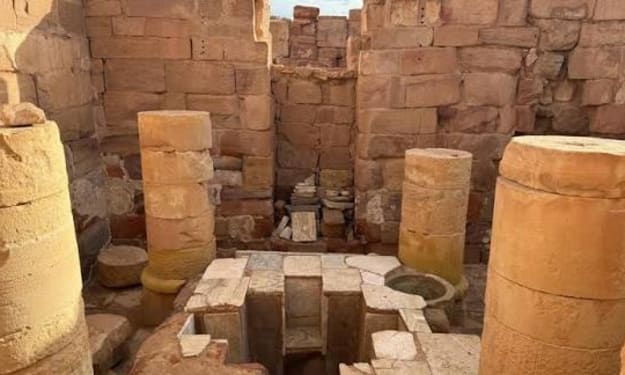
For many Christians, the Holy Land is not confined to a single country or a handful of famous sites. It is a living geography of faith, stretching across modern borders and layered with centuries of memory. While the four Gospels tell the story of Jesus through words, believers often describe the land itself as a “Fifth Gospel”—a silent but powerful testimony that deepens understanding of scripture. Crucially, this unwritten Gospel does not begin in Jerusalem or Bethlehem. It begins in Jordan. Jordan: Where the Story Enters History Jordan holds a unique place in biblical history, often overlooked in favor of Israel and Palestine. Yet it is in Jordan that the Gospel story first touches the public life of Jesus. The Jordan River, flowing quietly through arid landscapes, is where Jesus was baptized by John the Baptist. This moment marked the beginning of his ministry and transformed the river into one of the most sacred waterways in Christian tradition. Standing on the riverbank today, pilgrims often describe a sense of immediacy—as if scripture has stepped off the page and into the present. The landscape does not shout; it whispers. And in that stillness, faith feels tangible. Bethany Beyond the Jordan: A Sacred Threshold At the heart of Jordan’s biblical significance lies Bethany Beyond the Jordan, also known as Al-Maghtas. Recognized as a UNESCO World Heritage Site, it is widely accepted as the authentic location of Jesus’ baptism. Archaeological discoveries—including ancient churches, baptismal pools, and pilgrim routes—support centuries of Christian tradition. This site represents a threshold moment: the transition from preparation to proclamation. In the language of the “Fifth Gospel,” Bethany Beyond the Jordan is the opening chapter—where water, wilderness, and calling converge. Mount Nebo: Seeing the Promise Jordan’s role in the biblical narrative predates Christianity. Mount Nebo, rising above the Jordan Valley, is where Moses is believed to have seen the Promised Land before his death. From its summit, visitors can look across to Jericho, Jerusalem, and the Judean hills, physically connecting Old Testament longing with New Testament fulfillment. This visual continuity reinforces the idea of the Holy Land as a single unfolding story rather than separate religious eras. Jordan becomes the bridge between covenant and incarnation. The Geography of Faith Calling the Holy Land a “Fifth Gospel” is not merely poetic. Geography shapes theology. Deserts evoke temptation and testing, rivers symbolize renewal, and mountains represent revelation. Jordan’s landscapes—its wilderness, valleys, and waterways—mirror the spiritual themes found in scripture. Jesus’ time in the wilderness, traditionally associated with the region east of the Jordan, gains new depth when experienced firsthand. The harsh terrain underscores the gravity of fasting, reflection, and moral struggle described in the Gospels. Pilgrimage Beyond Borders Modern pilgrims increasingly recognize that to understand the Gospel fully, one must look beyond political borders. Jordan offers a relatively peaceful and accessible gateway into the Holy Land experience. Sites such as Machaerus (where John the Baptist was imprisoned), Umm Qais (linked to the miracle of the Gadarene swine), and early Christian pilgrimage routes enrich the narrative. This broader pilgrimage challenges a narrow, location-centric view of faith and invites believers to see Christianity as rooted in a wider regional story. Interfaith Echoes Jordan’s sacred sites also resonate beyond Christianity. The Jordan River is significant in Judaism, and many locations revered by Christians are also important in Islamic tradition. This overlapping reverence adds another layer to the “Fifth Gospel,” reminding visitors that the land speaks in multiple spiritual languages at once. In a region often associated with conflict, Jordan’s preservation of holy sites stands as a quiet testament to coexistence and shared heritage. Why Jordan Matters Today In an age of digital faith and virtual worship, physical places still matter. Jordan’s biblical sites ground belief in reality—stone, soil, and water. They remind believers that the Gospel unfolded in real landscapes among real communities, not abstract spaces. By beginning the Holy Land story in Jordan, Christians gain a fuller, more nuanced understanding of Jesus’ life and mission. The “Fifth Gospel” becomes not an addition to scripture, but a companion to it—one that must be walked, seen, and felt. A Living Gospel Without Words Jordan does not compete with the written Gospels; it completes the context around them. From the waters of baptism to the heights of prophetic vision, the country offers an opening chapter written in earth rather than ink. In that sense, the Holy Land truly is a Fifth Gospel—and its first pages are found in Jordan, where faith steps out of prophecy and into history.
By Fiaz Ahmed Brohi19 days ago in Longevity
Trump Tests the Boundaries of His Power as Minnesota Pushes Back. AI-Generated.
The clash between federal authority and state autonomy has once again taken center stage in American politics, as former President Donald Trump’s latest assertions of power meet firm resistance from Minnesota’s leadership. The standoff highlights a deeper constitutional tension—one that goes beyond a single state or political personality and speaks to the evolving balance between Washington and the states in an era of intense polarization. At the heart of the dispute is Trump’s enduring political influence and his continued effort to shape national policy debates even outside the Oval Office. Through public statements, legal pressure, and mobilization of his political base, Trump has sought to assert a vision of executive power that stretches traditional norms. Minnesota, governed by leaders who emphasize states’ rights, civil liberties, and local control, has emerged as a prominent counterweight to that approach. Minnesota’s pushback is not merely symbolic. State officials have consistently defended their authority to interpret and implement policies in ways that reflect local values and legal frameworks. Whether the issue involves immigration enforcement, voting regulations, public health measures, or law enforcement cooperation, Minnesota’s stance underscores a broader resistance among Democratic-led states to what they view as federal overreach—or, in Trump’s case, an attempt to govern by pressure rather than constitutional process. Trump’s political style has long thrived on testing limits. During his presidency, he frequently challenged institutional guardrails, from the judiciary to Congress, arguing that decisive leadership required bold action. Supporters praised this approach as a rejection of bureaucratic inertia, while critics warned it eroded democratic norms. Even now, Trump’s rhetoric suggests a belief that executive power should be expansive, flexible, and closely tied to popular mandate rather than institutional restraint. Minnesota’s response reflects a contrasting philosophy. State leaders emphasize that the U.S. Constitution establishes a system of shared power, where states are not mere administrative units but sovereign entities with their own responsibilities and rights. By asserting legal challenges, issuing policy refusals, or reinforcing state laws, Minnesota is signaling that political popularity does not override constitutional boundaries. This confrontation resonates far beyond state lines. Other states are closely watching how Minnesota navigates the pressure, aware that precedents set today could shape future federal-state relations. If aggressive assertions of power go unchallenged, states fear a gradual weakening of their authority. Conversely, a strong and legally grounded resistance could reaffirm the importance of federalism in an increasingly centralized political environment. Public opinion remains sharply divided. Trump’s supporters argue that states like Minnesota obstruct policies aimed at national security, election integrity, or law and order. From their perspective, resistance is framed as defiance rather than defense of democratic principles. On the other hand, critics view Minnesota’s stance as a necessary safeguard against the concentration of power and the politicization of federal authority. Legal experts note that these conflicts often end up in court, where constitutional interpretation becomes the ultimate referee. The judiciary has historically played a crucial role in defining the limits of executive power, and future rulings may further clarify how far a president—or a former president with significant influence—can go in shaping state behavior. Minnesota’s willingness to challenge perceived overreach suggests confidence in the legal system as a counterbalance to political pressure. Beyond legal implications, the dispute also carries electoral significance. Minnesota’s resistance reinforces its identity as a state that values progressive governance and institutional checks. For Trump, confronting such states energizes his base and reinforces his image as a leader willing to confront opposition head-on. In this sense, the clash is as much about narrative as it is about policy. Ultimately, the struggle between Trump’s assertive political posture and Minnesota’s determined pushback reflects a defining question of modern American democracy: how power should be exercised, limited, and contested. As polarization deepens, these confrontations are likely to become more frequent, testing not only political alliances but the resilience of constitutional norms. Minnesota’s stand serves as a reminder that in the American system, power is not absolute. It is negotiated, challenged, and constrained through institutions designed to prevent dominance by any single figure or level of government. Whether this balance holds will shape the nation’s political trajectory long after the current disputes fade from the headlines.
By Fiaz Ahmed Brohi19 days ago in The Swamp
Finding Adjectives and Adverbs
Anne Bernays and Pamela Painter — What If? Writing Exercise for Fiction Writers prompts The Exercise — Underline and highlight all adverbs and italicize and highlight adjectives in a published story and decide which ones work. Then, exchange all weak adverbs and adjectives for strong ones of your own. Consider omitting them altogether. The Objective - To be alert to the power - and the weakness - of these verbal spices. To avoid them except when they can add something you really need
By Denise E Lindquist19 days ago in Writers
7 Science Fiction Books You Must Read In 2026. AI-Generated.
Science fiction is more than just a genre; it’s a lens through which we explore the boundaries of human imagination, technology, and society. Whether it’s envisioning distant galaxies, questioning the ethics of artificial intelligence, or exploring alternate histories, science fiction books challenge our understanding of reality and push us to think beyond the ordinary. Below is a list of 7 science fiction books you must read in 2026.
By Diana Meresc19 days ago in BookClub
From Job to Prison: Revenge, Sacrifice, and Ending
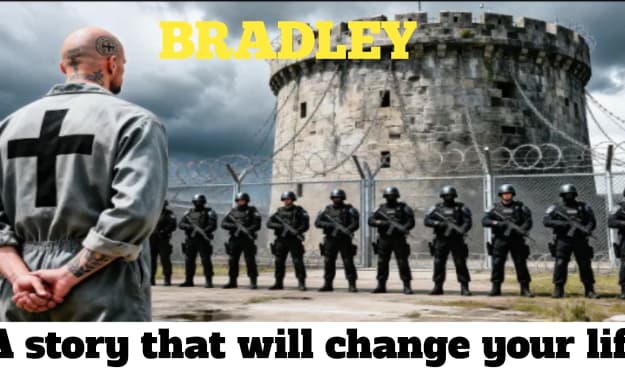
The story begins by showing a bald and strong man named Bradley, who is a car mechanic by profession. As usual, Bradley reaches the garage with a broken car, but after arriving there, he sees that the garage owner is anxiously waiting only for him, which makes him a little surprised. Then the garage owner calls him into his office. Hearing this, Bradley understands that he is about to be fired from his job, and exactly that happens. The owner tells him that these days the garage is going through a financial crisis, and that is why he is being forced to fire some workers. But this is only an excuse, because Bradley is a hard-tempered man, and the owner wants to remove him and hire someone who flatters him. Now since Bradley is a tough man, he does not argue with the owner. He goes to the locker room, takes out his belongings, takes his car, and silently leaves for home. And yes, friends, this is where the downfall of Bradley’s life begins, which continues straight until the end of the story and ends there. Anyway, Bradley stops his car in front of his house, and at the same time he sees that his wife Lauren is sitting in her car, talking to someone on the phone. Bradley becomes suspicious of her. To know the truth, he keeps watching her carefully for some time. When he becomes sure, he immediately goes to Lauren and tells her to open the car door. His wife says, “You came back from work very early today.” At the same moment, Bradley notices marks of someone else’s lips on her neck and says to Lauren, “Give me your phone.” But Lauren refuses to give the phone, because of which Bradley forcefully snatches the phone from her, and his suspicion turns out to be correct. She is talking on the phone with another man. In anger, Bradley tells Lauren to go inside the house. Lauren says, “At least listen to me.” Bradley says, “I said go inside the house.” Then Lauren silently goes inside the house. Now, he had already been fired from his job a little while ago, and now his wife’s affair, because of which he had become even more disturbed, so he starts taking out all his anger on Lauren’s car. How? You can see that yourself. Yes, he is so angry that he does not even realize that his hands have been badly injured. After that, he calms himself down and goes inside the house and questions Lauren about how many days she has been with the other man. Lauren tells him everything, that for the past three months she had been having an affair with someone else. Actually, Bradley’s wife had an abortion a few days earlier, because of which she used to remain sad, and Bradley often stayed busy with his work. Because of this, Lauren felt lonely and very depressed at home, and to fill this emptiness, she had to take support from another man. Hearing these things, Bradley realizes that he should have given time to Lauren. He apologizes to Lauren for this and says that from today, from right now, they will both start a new life. Lauren agrees. After that, Bradley tells Lauren that he has been fired from his job and now he will work for a man named Gil, who is a drug lord. As soon as she hears Gil’s name, Lauren clearly refuses and says, “You yourself said that you would never work with Gil.” Bradley says, “Yes, but in such circumstances, we cannot live like a prosperous family. To run a family, money is needed, and at this time I have no other option.” He also assures Lauren that he will do this work very carefully.
By Filmon Ke Raaz | Movie Mysteries Explained19 days ago in Education
What is the Ideal Length for a Maldives Getaway
The Maldives is not a destination designed for speed. Its appeal lies in isolation, rhythm, and the luxury of doing very little without guilt. Once you arrive on your island, the outside world effectively disappears — there are no cities to hop between, no attractions to tick off, and no schedules competing for attention. This means the “ideal” length of stay is less about efficiency and more about allowing enough time for your body and mind to recalibrate. The Maldives rewards patience, presence, and unstructured time in a way few destinations can.
By ameliarosanna19 days ago in Viva
When USCIS Questions a Specialty Occupation Petition
For many employment based visa applicants, the term “specialty occupation” becomes central to the approval process. When U.S. Citizenship and Immigration Services issues a Request for Evidence questioning whether a role qualifies, it can feel like the entire case is at risk. In reality, these RFEs are common and often stem from how a position is described rather than whether it truly meets the legal standard.
By Sheila Danzig19 days ago in Writers
5 Years Of 'WandaVision': Revisiting The Series Most Memorable Moments
It's hard to believe that it's already been five years since WandaVision, Marvel Studios' very first TV series, premiered on Disney Plus. A hit with both fans and critics, WandaVision was praised during it's run for expertly juggling so many elements, being both a love letter to classic sitcoms and a bittersweet exploration of grief before exploding into the usual MCU spectacle. The series is still widely considered among the best content Marvel Studios has produced, not just for television, but overall.
By Kristy Anderson19 days ago in Geeks
How to Plan a Cross-Border Campaign with a Chinese Crypto Marketing Agency in 2026?
Cross-border expansion remains a defining objective for blockchain projects seeking relevance beyond domestic markets. In 2026, working with a Chinese crypto marketing agency for cross-border campaigns involves navigating not only language and culture, but also regulatory boundaries, digital ecosystems, and communication norms unique to China and global crypto environments. As China maintains strict controls on domestic cryptocurrency trading while continuing to influence global blockchain development through infrastructure, research, and Web3 innovation abroad, cross-border collaboration requires careful strategic planning.
By Jack santo19 days ago in 01