
Camel Urine: An Unusual Remedy with Surprising Power
How Desert Traditions Meet Modern Science

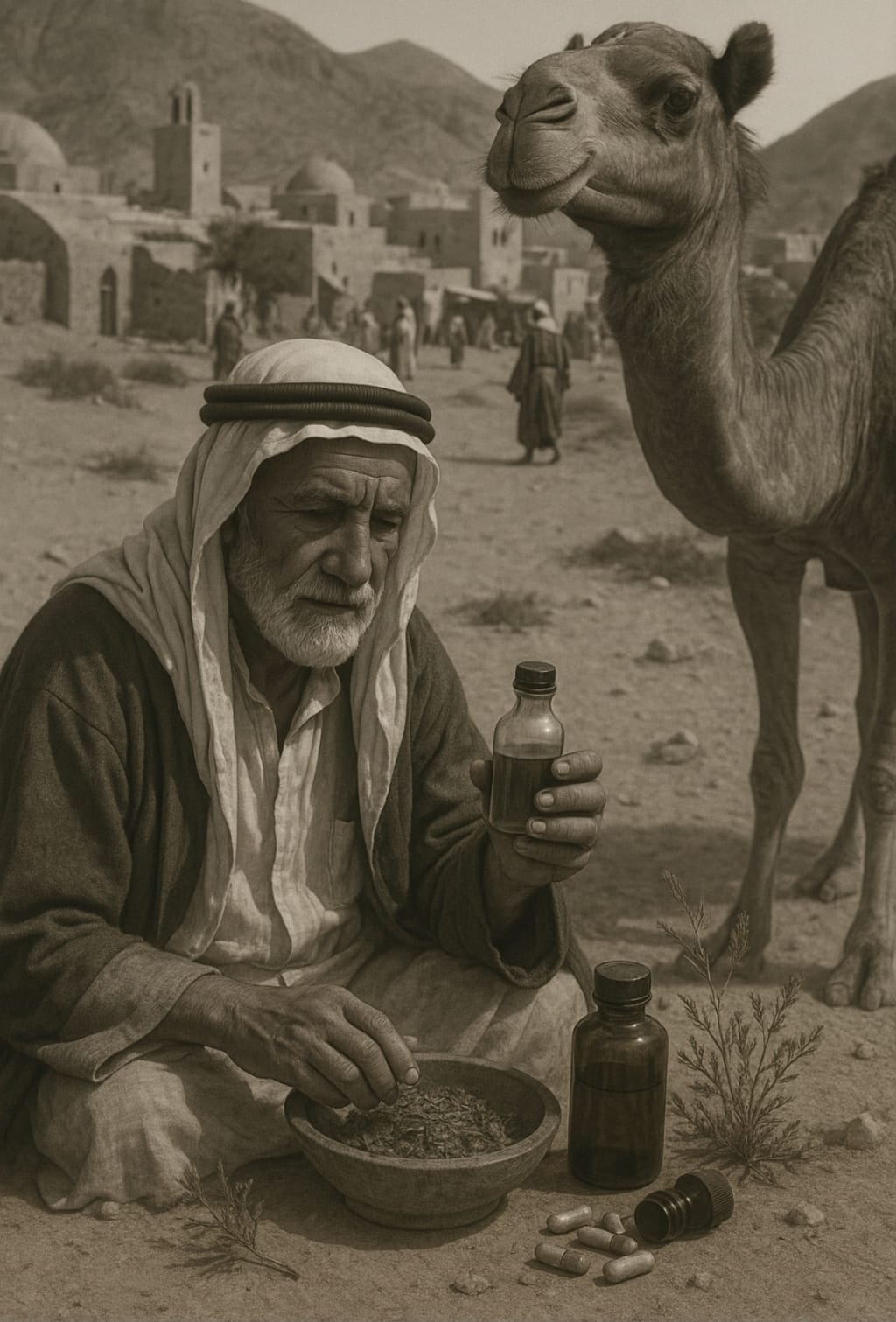
Imagine the vast desert under the blazing sun, where life moves slowly, and every resource matters. In those endless sands, Bedouin nomads discovered a surprising remedy: camel urine. For centuries, it was a trusted healer. Today, lab tests are digging deeper into its secrets—and what they’re finding is stranger than fiction.
Whether you’re curious, skeptical, or simply love a good story, here’s everything you need to know about this ancient remedy—straight from the desert and into modern science.
1. A Tradition Forged by Necessity
In the heart of the desert, help was scarce. With no pharmacies, Bedouin healers relied on local wisdom and what they had on hand—like camels.
- Over hundreds of years, people have:
- Rubbed camel urine on wounds to prevent infection
- Mixed it with milk to ease tummy trouble
- Drunk it to fight breathing problems and ease joint pain
Even now—in rural villages of Saudi Arabia and beyond—this practice continues for everyday health conditions
2. What Makes Camel Urine Special?
It may seem odd, but camel urine isn’t just waste. It contains a mix of powerful compounds like:
Canavanine: Known for its anti-cancer effects by disrupting bad cells in lab tests.
High mineral levels: Rich in potassium, magnesium, calcium, and proteins that fight off germs
Even after boiling or sitting for weeks, it still kills fungi like Candida and Fusarium, thanks to its high alkalinity and minerals. Camels eat special desert plants—thorny shrubs and salt-loving herbs—so their urine carries those plant power chemicals too
3. Lab Results That Surprise
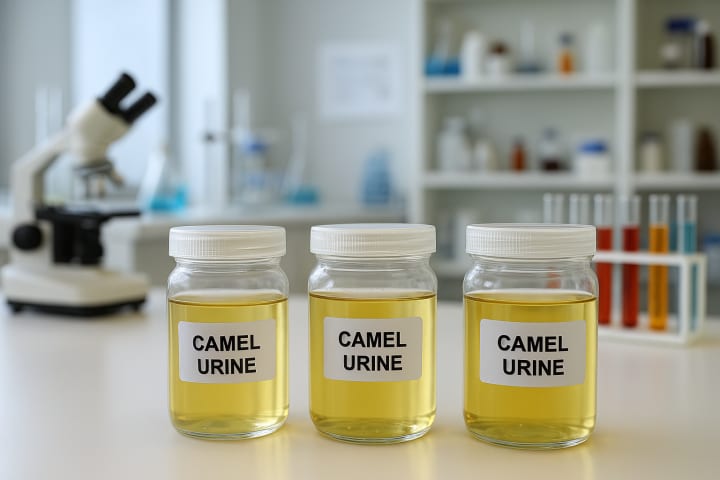
Over the past decade, scientists began testing camel urine in labs:
- Cancer cells killed: In 2012, researchers in Saudi Arabia observed camel urine destroy over 80% of breast and brain cancer cells in lab dishes. It worked by controlling proteins inside cancer cells.
- Immune support: It also boosted immune signals like interferon-γ, while reducing inflammation-driving proteins IL‑4, IL‑6, and IL‑10
- Antimicrobial punch: Labs found it kills Staph aureus, E. coli, Salmonella, Pseudomonas, MRSA, Candida, and more—even multi-drug-resistant types—when tested at 5–10% concentrations
- Resistant to heat: In 2014, camel urine still halted fungal growth after being heated to 100 °C and stored for 6 weeks
- Nanoparticles discovered: It contains proteins and minerals forming tiny structures called nanorods that target cancer cells in ways traditional medicine can’t
4. The Science Behind the Strength
Why is camel urine strong enough to resist heat and hold medical power?

Highly concentrated: Camels save water fiercely, so their urine is thick with minerals and proteins—about 10 times more than cow urine
Alkaline: With a pH around 7.8 or higher, it’s hostile to many microbes—but friendly to mineral chemistry
5. Why Now? Cultural and Scientific Crossroads
For centuries, camel urine remained largely unknown beyond desert communities—used quietly in traditional healing practices across Arabia, North Africa, and parts of South Asia. But today, this once-obscure remedy is entering the spotlight.
Western media have begun to explore its story, fueling both fascination and skepticism. Scientists are increasingly drawn to its unusual chemical profile—particularly the potential of its dried or concentrated forms, which may contain powerful bioactive compounds. Meanwhile, traditional healers continue to use it for various ailments, often passing down methods through generations.
Now, researchers are approaching these practices with a new level of respect and scientific curiosity. Samples are being studied in modern laboratories, and early findings are promising.
But one thing is clear: there is still a significant gap between tradition and clinical evidence. While lab tests show biological activity, we lack high-quality human studies to confirm its safety and effectiveness in real-world treatments. Bridging that gap is the next step—and one that could bring ancient knowledge into the future of medicine.
6. What Science Thinks Next
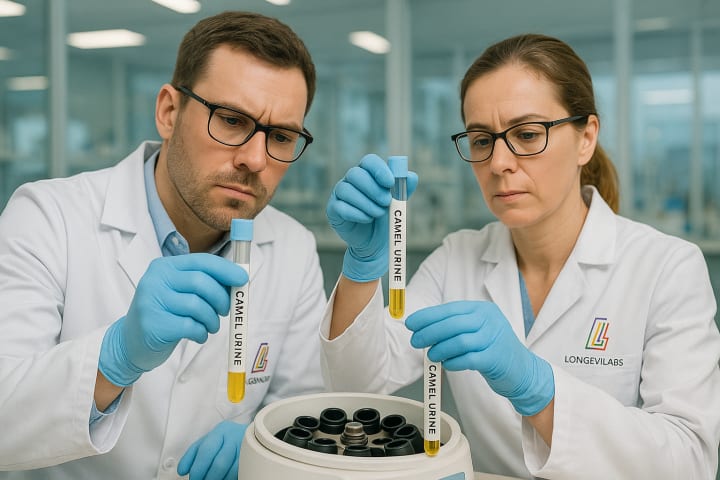
Camel urine has shown promise in lab studies, and scientists are exploring several potential uses. However, all of these ideas need proper testing in clinical trials before they can be considered real treatments. Here are some of the most discussed possibilities:
Cancer Drugs: Researchers are interested in compounds like canavanine found in camel urine, which may help stop cancer cells from growing. The goal would be to isolate these compounds and test them for safety and effectiveness in humans.
Antimicrobials: Because camel urine has been shown to kill bacteria and fungi in lab settings, scientists believe it could be used to develop new topical creams or coatings for wounds and infections—especially those resistant to current antibiotics.
Immune Boosters: Some studies suggest that camel urine may help regulate the immune system. Researchers want to understand how it affects immune signals and whether it could help with inflammation or immune-based diseases.
Nanoparticle Medicine: Scientists have discovered that camel urine contains tiny mineral structures (nanoparticles) that may help target and destroy cancer cells. These natural particles are being studied for future use in targeted medicine.
A Desert Secret That Deserves a Closer Look
The story of camel urine is one of the most fascinating examples of how traditional knowledge and modern science can meet. What began as a survival tool in the unforgiving deserts of Arabia has sparked the curiosity of researchers across the world. With its powerful mix of natural compounds, camel urine has shown the ability to fight microbes, reduce inflammation, and even stop cancer cells in lab experiments.
While it’s not yet a proven treatment for any disease, the early scientific findings are too compelling to ignore. This ancient remedy deserves more attention—not only for what it might offer in the future of medicine, but for what it already tells us about the intelligence and adaptability of traditional healing systems.
More than just a curiosity, camel urine is a lead—a clue from nature. It’s a reminder that even the most unexpected substances can carry valuable properties, and that wisdom from remote places often holds untapped potential.
In the end, it’s not about belief or myth. It’s about asking the right questions and doing the work to find the answers. With careful, respectful, and rigorous research, we may one day find that this desert-born remedy has something real to offer the world. And that possibility makes it more than worthy of deeper investigation.
Disclaimer
This article is for educational and informational purposes only. It is not intended to provide medical advice, diagnosis, or treatment. The discussion of camel urine and its traditional or experimental uses is meant to highlight cultural practices and emerging scientific interests—not to recommend its use.
While laboratory studies have suggested potential therapeutic properties, there is currently no conclusive clinical evidence that camel urine is safe or effective for treating any disease in humans. Self-medicating with camel urine or any untested substance can pose serious health risks, including exposure to infectious diseases.
Always consult a qualified healthcare professional before considering any alternative or experimental treatment.
Bibliography
- Al-Yousef, N., Gaafar, A., Al-Otaibi, B., Al-Jammaz, I., Al-Hassan, F. M. (2012). Camel urine components display anti-cancer properties in vitro. Journal of Ethnopharmacology, 143(3), 819–825.
- Salamt, N., Shuid, A. N., & Mohamed, N. (2021). Anticancer, antiplatelet, gastroprotective and hepatoprotective effects of camel urine: A scoping review. Journal of Ethnopharmacology, 279, 114360.
- Al-Awadi, A. & Al-Judaibi, A. (2014). Effect of heating and storage on the antifungal activity of camel urine. Clinical Microbiology, 3(5), 1–4.
- Mostafa, A. A., Dwedar, R. E. (2016). Antibacterial and antifungal potential of camel urine against clinical pathogens. Bulletin of Pharmaceutical Research, 6(3), 120–124.
- World Health Organization – Eastern Mediterranean Health Journal (WHO EMHJ). (2023). Use of camel urine for cancer treatment: observational outcomes and review. EMHJ, 29(2), 101–107.
- l-Harbi, M. M., Qureshi, S., Raza, M., Ahmed, M. M., Afzal, M., Shah, A. H. (1996). Effects of camel urine on cytochrome P450 and glutathione-S-transferase in mice liver. Journal of Ethnopharmacology, 52(3), 219–223.
- Al-Suhail, S., Abed, T. (2011). Investigation of the chemical composition of camel urine. Basrah Journal of Veterinary Research, 10(1), 42–48.
- Mohammed, M., & Al-Harbi, M. (2010). Immunomodulatory and antioxidant effects of camel urine in murine models. African Journal of Traditional, Complementary and Alternative Medicines, 7(4), 276–280.
- Read, B. E. (1925). Preliminary studies on the composition of camel urine. Journal of Comparative Pathology and Therapeutics, 38, 127–135.
- Al-Attas, A. N. (2009). Nanoparticle formation in camel urine: a novel approach to targeted drug delivery? Saudi Pharmaceutical Journal, 17(2), 135–140.
About the Author
Prof. Roberto Grobman is a pioneering geneticist, visionary scientist, and global entrepreneur. With a career rooted in innovation, he has dedicated his life to decoding the language of our genes and translating that knowledge into real-world health solutions. As the founder of precision health platforms used across more than 50 countries, Prof. Grobman bridges the gap between cutting-edge science and practical wellness. His mission is bold yet simple: to empower every individual with the knowledge and tools to live longer, healthier, and more meaningful lives. Through relentless research and transformative technologies, he is shaping the future of medicine—one genome at a time.
About the Creator
Keep reading
More stories from Prof Roberto Grobman and writers in Lifehack and other communities.
Cracking the Code: The Genetic Clue That Could Stop ALS
In a sunlit lab in Boston, a vial of DNA quietly spins in a centrifuge. It belongs to Michael, a 33-year-old former paramedic from San Diego. Two years ago, Michael was diagnosed with ALS—Amyotrophic Lateral Sclerosis, the devastating neurodegenerative disease that paralyzed Stephen Hawking and has shattered thousands of lives.
By Prof Roberto Grobman9 months ago in Lifehack
Microplastic buildup in human brains, mostly in dementia patients, is shown by a disturbing study.
Microplastics are tiny pieces of plastic that have been found in food, water, and the air. These microplastics can now cross the blood-brain barrier and gather in deep brain regions, according to a study done on 52 donated human brains.
By Francis Dami7 days ago in Lifehack
Moving What Protects You: The Quiet Responsibility of Gun Safe Relocation in Houston
There are certain objects inside a home that carry more than practical value. Some hold memory, others represent responsibility, and a few symbolize protection itself. A gun safe belongs to this last category. It is not simply furniture, nor just a storage unit. It represents security, accountability, and often generations of family history. When the time comes to move one, the process becomes something deeper than logistics.
By House Doctor5 days ago in Lifehack


Comments
There are no comments for this story
Be the first to respond and start the conversation.