
How I Cut My Screen Time in Half in 30 Days — and Why the Secret Wasn’t Willpower
I tracked every minute, ditched the guilt, and built five tiny changes that quietly rewired my phone habit — here’s the step-by-step plan that actually worked.

My 30-Day Experiment: The Small Changes That Beat Compulsion
I wasn’t trying to become a monk. I just wanted my life back from the little glowing rectangle that followed me everywhere. One morning I opened my phone’s weekly report and saw 6 hours and 12 minutes of screen time per day. That number didn’t sit with me — it nagged, it embarrassed, it woke up a quiet worry: “Where did my time go?”
So I ran an experiment: thirty days, one measurable goal — cut my average screen time in half. No guilt, no extreme rules, just small, repeatable changes. By Day 30 I was averaging about 3 hours and 6 minutes. The surprise was not that I did it, but how: nothing dramatic. It was the tiny frictions and replacements that stacked up.
If your phone feels like an autopilot for your attention, this is a practical plan you can steal, adapt, and make yours.
Start with curiosity, not shame
Shame creates shame-spirals: you scroll, feel bad, try to “fix” by deleting apps, then rebound. I started by measuring. For three days I looked only at facts: how many minutes, which apps, and the times of day I was most distracted. Numbers are neutral. They show patterns, not character flaws. That small shift (curiosity instead of blame) made everything else possible.
My rules for the experiment (simple and sustainable)
Measure first — use Screen Time (iOS) or Digital Wellbeing (Android).
No harsh bans — allow essential apps and work tools.
Try, test, drop — give each tactic three days. If it flops, move on.
Design for relapse — expect it, plan for it.
These rules stopped me from swinging to extremes and helped me build a system instead of relying on willpower.
The five tactics that actually moved the needle
These are the exact things I kept. They’re small, but they change the path of least resistance.
1. Add friction to autopilot apps
I moved social and news apps two screens back and wrapped them in a folder named something boring. That three-second delay often turned a reflexive open into a conscious choice. Where the phone used to be a path of least resistance, it became slightly inconvenient — and that’s the point.
2. Replace reflex with a micro-habit
Every time I wanted to “just check” my phone, I forced myself to do one tiny action: stand and stretch, take one deep breath, or write a single line in a real notebook. The micro-habit interrupts the trigger and trains a new, neutral reaction.
3. Specific app limits, not vague bans
Instead of a blanket “two hours” limit, I set exact minutes per category: 20 minutes for social, 30 for news, unlimited for work tools. Specificity curbs the “I’ll just quick-check” lie we tell ourselves.
4. A 90-minute evening buffer
I placed my phone in another room ninety minutes before bed. The result wasn’t deprivation — it was a quiet evening that naturally led to better sleep and fewer midnight checks.
5. Swap phone tasks with tiny alternatives
Timers, lists, and music were moved to non-phone solutions: a small kitchen timer, a paper to-do list, and a Bluetooth speaker. Each swap reduced accidental scrolls tied to routine tasks.
Week-by-week momentum (what to expect)
Week 1 — Baseline & friction: You’ll see the biggest drop. Removing ease removes a lot of habitual opens.
Week 2 — Replace & refine: Micro-habits start to feel normal. App limits become meaningful.
Week 3 — Tune: Tweak minutes and move harder triggers. Sleep improves.
Week 4 — Cement: The new defaults take over — you catch yourself reaching for the phone and not following through.
I dropped from 6:12/day to about 3:06/day. Your numbers will differ, but the trajectory is what matters.
Why small changes beat willpower
Willpower is a muscle that tires. Systems are the scaffolding that outlast it. By changing the environment — where apps live, how quickly you can open them, and what you do when you itch to scroll — you make the easier choice the one you want to make. Tiny frictions create a moment of choice. Micro-habits give you a new default. Together they reroute behavior without drama.
How you can copy this, step-by-step (30 days)
Days −3 to 0: Record your screen time for three days. Note peak times and top apps.
Week 1: Move apps; add one micro-habit; set one app limit.
Week 2: Add a 90-minute evening buffer; replace one phone task (timer, list, music).
Week 3: Tighten limits for the apps that still steal attention.
Week 4: Practice mindful relapse — if you slip, note what triggered it and adjust.
At Day 30, compare the numbers and celebrate what you learned — not only the minutes saved but the freedom gained.
Final note: small wins add up to a different life
The real payoff wasn’t that I saved an hour a day — though I did. It was that I started choosing how I spent my attention. I read more books, cooked more meals without a thumb hovering over a screen, and finished tasks with a single block of uninterrupted time. If you’re tired of scrolling through your life, try this: measure, add gentle friction, replace a reflex, and be curious about the results.
If you try this experiment, tell me your starting number — and which tiny change surprised you the most. I’d love to compare notes.
About the Creator
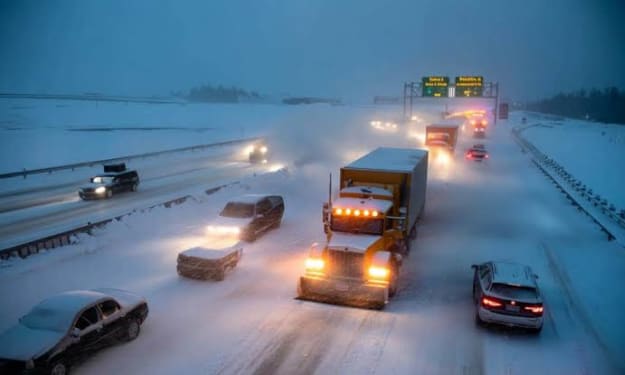
Winter Storm Warning Issued as Up to 72 Inches of Snow Could Disrupt Travel and Bring Major Routes to a Standstill
A powerful winter storm sweeping across large parts of the western and central United States has prompted emergency warnings from meteorological authorities, with forecasts predicting snowfall totals of up to 72 inches in some mountainous regions. The storm threatens to paralyze transportation networks, shut down schools and businesses, and strain emergency services as blizzard-like conditions take hold. The National Weather Service issued winter storm and blizzard warnings for multiple states, urging residents to avoid nonessential travel and prepare for extended power outages. Meteorologists say the system combines heavy moisture with plunging temperatures, creating ideal conditions for prolonged and intense snowfall. Severe Conditions Across Key Regions The storm is expected to impact major portions of the California, Nevada, Utah, and Colorado mountain corridors, where accumulations could exceed six feet in higher elevations. Lower-lying communities are forecast to receive between 12 and 24 inches of snow, accompanied by winds of up to 50 miles per hour. “These conditions are extremely dangerous for travel,” said a senior meteorologist with the National Weather Service. “Visibility will be near zero at times, and drifting snow could block highways for days.” Major interstates and mountain passes, including routes linking Denver with surrounding states, are at risk of temporary closure as snowplows struggle to keep pace with accumulation. Travel and Infrastructure Disruptions Transportation authorities warned that airports, rail services, and long-haul trucking routes could face widespread delays. Airlines have already canceled hundreds of flights in anticipation of deteriorating conditions, while Amtrak announced limited service on several western routes. Highway patrol agencies urged motorists to carry emergency kits, including food, water, and blankets, if travel is unavoidable. In some areas, authorities are considering preemptive road closures to prevent motorists from becoming stranded. Power utilities are also preparing for potential outages as heavy, wet snow and strong winds threaten overhead lines. Emergency management agencies have opened warming shelters in vulnerable communities, particularly for elderly residents and those without reliable heating. Communities on High Alert Local governments across the storm zone have activated emergency operations centers. Schools and universities announced closures, while many employers advised staff to work remotely. In rural mountain towns, residents stocked up on supplies in anticipation of isolation. “We could be snowed in for several days,” said a resident of a small Colorado community. “It’s not unusual here, but the forecast is much worse than normal.” Hospitals and first responders have increased staffing levels to handle possible accidents and medical emergencies during the storm. Climate and Weather Patterns Meteorologists link the intensity of the storm to a combination of Pacific moisture and a powerful Arctic air mass. Such systems, they say, are becoming more unpredictable in timing and scale. While winter storms are not uncommon in these regions, the projected snowfall totals place this event among the most severe in recent years. Some climatologists note that warmer atmospheric conditions can hold more moisture, which can translate into heavier snowfall when temperatures drop below freezing. Economic and Environmental Impact The storm is expected to disrupt regional commerce, particularly freight movement along major highways. Agricultural sectors may face delays in shipments, while ski resorts are preparing for both operational challenges and a surge in visitors once conditions stabilize. Ironically, while the storm poses short-term hazards, it also offers long-term benefits by replenishing snowpack critical for water supplies in drought-prone states. Reservoir managers welcomed the forecasted snowfall as a boost to spring and summer runoff. Government Response State governors in affected regions have issued emergency declarations, allowing for the mobilization of National Guard units and additional funding for snow removal and disaster response. Coordination between state transportation departments and federal agencies is ongoing to ensure critical corridors are reopened as soon as conditions permit. Public officials emphasized the importance of heeding warnings and staying off roads. “This is not a storm to underestimate,” one governor said in a statement. “We need people to take this seriously for their own safety and for the safety of first responders.” Looking Ahead Forecasters expect the storm system to linger for several days before gradually weakening as it moves eastward. Even after snowfall subsides, subfreezing temperatures could prolong hazardous conditions, with ice forming on untreated roads and sidewalks. Authorities continue to monitor developments and issue updates as conditions evolve. Residents are advised to follow official guidance, stock emergency supplies, and check on vulnerable neighbors. As one of the most intense winter storms of the season, the event serves as a stark reminder of the power of extreme weather and the importance of preparedness. With travel corridors at risk of grinding to a halt and communities bracing for isolation, the coming days will test the resilience of infrastructure and the cooperation of the public across the storm’s path.
By Fiaz Ahmed about 4 hours ago in Longevity



Comments
There are no comments for this story
Be the first to respond and start the conversation.