Latest Stories
Most recently published stories in Longevity.
United States In Situ Hybridization Market Size and Forecast 2026–2034. AI-Generated.
United States In Situ Hybridization Market Overview The United States In Situ Hybridization (ISH) market is witnessing steady and structurally strong expansion, driven by the rapid adoption of advanced molecular diagnostic techniques across clinical and research settings. According to Renub Research, the U.S. ISH market is projected to increase from US$ 555.98 million in 2025 to US$ 948.13 million by 2034, growing at a compound annual growth rate (CAGR) of 6.11% during 2026–2034.
By Sakshi Sharmaabout 2 hours ago in Longevity
Ecclesiastes and the Weight of Meaninglessness
Have you ever noticed how unsettling Ecclesiastes feels compared to most of Scripture. It does not rush to reassure. It does not soften its conclusions. It returns again and again to the same observation: everything fades, everything repeats, and nothing under the sun seems capable of holding still long enough to become permanent. Wisdom fails to secure lasting satisfaction. Pleasure loses its edge. Work outlives the worker. Even moral effort appears unable to guarantee stability. For many readers, this tone feels almost dissonant, as if the book is saying out loud what faith is supposed to quiet.
By Peter Thwing - Host of the FST Podcastabout 3 hours ago in Longevity
The 50/30/20 Budget Split in Australia: a simple bucket trick that makes money feel less… cooked. Content Warning. AI-Generated.
Quick note, nice and subtle: general info only — not personal advice, because everyone’s circumstances (and commitments) are different.
By Dan Toombsabout 6 hours ago in Longevity
Exercise Isn’t Enough
Commentary In the battle against obesity, being active is not enough. Going to the gym, riding a bike, or simply walking can help; however, it doesn't defeat this condition, alone. What needs to be examined is what people eat and how much they consume. The food one eats is just as critical as exercise in the battle against obesity.
By Dean Traylorabout 9 hours ago in Longevity
After 20 Years in the Gym, I Quit for 3 Months. Here's What I Did Instead.
After 20 years of gym memberships, I needed a break. I usually take at least a month long sabbatical every year. But I didn't need that this year, I needed a break from the gym entirely. Yet I still wanted to get in my workouts. So I tested what would happen if I stripped fitness down to the bare minimum for a while.
By Destiny S. Harrisabout 11 hours ago in Longevity
If You're Waiting for the Root Canal, You're Missing the Point of Skincare
At some point, our culture decided that care is only valuable if it’s extreme. If it doesn’t burn, blast, paralyze, or shock the system into instant compliance, it’s dismissed as “doing nothing.” Apparently, that now includes estheticians.
By Brooke Gallagherabout 15 hours ago in Longevity
Korea’s Classroom Phone Ban Faces First Test as Schools Disagree Over Rules. AI-Generated.
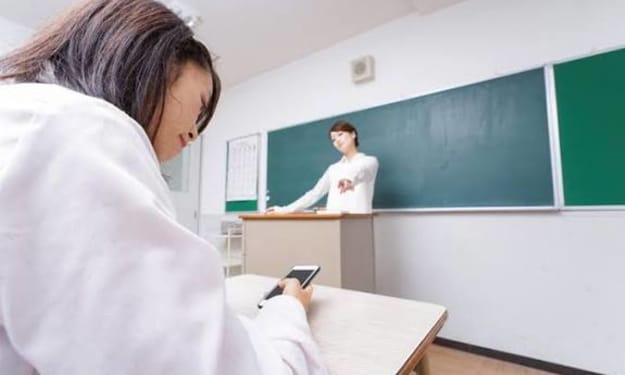
South Korea’s newly introduced restrictions on smartphone use in classrooms are facing their first major test as schools struggle to interpret and enforce the policy consistently. While the government says the ban is meant to reduce distractions and improve students’ mental health and academic focus, disagreements among educators, parents, and administrators have revealed deep divisions over how strict the rules should be and who should enforce them. The Ministry of Education announced earlier this year that schools would be required to limit student phone use during class hours, responding to growing concerns about excessive screen time, cyberbullying, and declining attention spans. However, instead of imposing a single nationwide standard, the ministry allowed individual schools to design their own implementation plans. That flexibility has now become a source of confusion. Different Rules, Different Schools Across the country, schools have adopted widely varying approaches. Some have introduced full bans, requiring students to hand in their phones at the start of the school day and retrieve them only after final dismissal. Others allow students to keep phones in their bags but prohibit their use except in emergencies or with teacher permission. A few schools permit limited use for educational purposes, such as language apps or research assignments. This lack of uniformity has led to complaints from parents and students who say the policy feels arbitrary and unfair. “My child’s school collects all phones every morning, but the neighboring school lets students keep them,” said one parent in Seoul. “It creates confusion and resentment, especially when students compare their experiences.” Teachers, too, are divided. Some welcome the ban as a long-overdue step toward restoring discipline in the classroom. Others worry it adds another layer of responsibility to already overburdened staff. “We are not security guards,” said a high school teacher in Busan. “Our job is to teach, not to check pockets and confiscate devices.” Supporters Cite Academic and Mental Health Benefits Supporters of the ban argue that smartphones have become a serious obstacle to learning. Studies in South Korea and abroad have linked heavy phone use to reduced concentration, sleep problems, and increased anxiety among teenagers. Education officials say the policy is designed to help students reconnect with in-person learning and reduce dependence on social media. A ministry spokesperson said the first weeks of implementation had already shown positive signs in some schools. “Teachers report fewer disruptions and more engagement during lessons,” the spokesperson said. “This policy is about protecting students’ ability to focus and interact with each other in healthy ways.” Some parents agree. “My son used to spend every break scrolling on his phone,” said a mother of a middle school student. “Now he talks to his friends and plays sports again. I think it’s a good change.” Critics Warn of Practical and Legal Challenges Despite these benefits, critics say the policy raises serious concerns about students’ rights and safety. One major issue is how schools handle emergencies. Parents worry that students may be unable to contact family members quickly if phones are locked away. “There needs to be a clear system for emergencies,” said a parents’ association representative. “Otherwise, this policy could put children at risk.” Legal experts have also questioned whether schools have the authority to confiscate personal property without explicit consent. While the education ministry says the policy is voluntary and based on school agreements with parents, disputes have already emerged in some districts where students refused to hand over their devices. Student groups have voiced frustration, arguing that the ban treats teenagers as untrustworthy rather than teaching them responsible phone use. “Phones are part of modern life,” said a high school student leader. “Instead of banning them, schools should educate us on how to use them wisely.” Technology in Education: A Contradiction? The policy also highlights a contradiction within South Korea’s education system, which has invested heavily in digital learning tools over the past decade. Many schools use tablets, online textbooks, and educational apps, blurring the line between useful technology and harmful distraction. Some teachers say the ban undermines those efforts. “We encourage digital literacy, but then we punish students for having devices,” said an elementary school principal. “The message is confusing.” Education experts suggest the debate reflects a broader struggle to balance innovation with discipline. “Technology is not the enemy,” said an education researcher at a Seoul university. “The problem is unregulated use. Schools need clear guidelines, not vague restrictions that vary from building to building.” The First Test Period The coming months will serve as a trial period for the policy. The Ministry of Education has said it will collect feedback from schools and consider adjustments based on what works and what does not. Officials acknowledge that the current differences in enforcement may need to be narrowed to ensure fairness. Some local education offices are already drafting more detailed instructions, including when phones can be used for learning and how they should be stored during class hours. “We are listening to teachers and parents,” a regional education official said. “This policy must be practical, not just symbolic.” A National Conversation Beyond classrooms, the phone ban has sparked a nationwide conversation about youth, technology, and authority. South Korea is one of the most digitally connected societies in the world, and smartphones are deeply woven into daily life. Asking students to disconnect, even temporarily, challenges cultural norms as much as school routines. Whether the policy succeeds may depend less on strict enforcement and more on cooperation among schools, families, and students. “This is not just a school issue,” said a child psychologist. “It’s about how society teaches young people to manage technology responsibly.” Conclusion Korea’s classroom phone ban is now facing its first real test, as schools interpret the rules in different ways and stakeholders debate their impact. While supporters see it as a necessary step toward improving focus and well-being, critics warn of confusion, inequality, and unintended consequences. As the trial period continues, education authorities will need to decide whether flexibility or uniformity is the best path forward. For now, the policy has achieved one thing for certain: it has forced the nation to confront how much space smartphones should occupy in the lives of its students—and who gets to decide.
By Fiaz Ahmed about 15 hours ago in Longevity
Officially Confirmed: Heavy Snow Will Begin Late Tonight as Weather Alerts Warn of Major Disruptions, Travel Chaos, and Dangerous Conditions. AI-Generated.
Meteorological agencies have officially confirmed that a powerful winter storm system will bring heavy snowfall beginning late tonight, prompting widespread weather alerts and urgent warnings about dangerous travel conditions and major disruptions across affected regions.
By Fiaz Ahmed about 16 hours ago in Longevity
The Italian City Where Life Is Sweetest in Winter. AI-Generated.
When winter’s chill settles over Italy and northern winds blow through piazzas and alleyways, there’s one city where the season feels less like hibernation and more like a celebration of warmth, flavor, and community. That place is Perugia, the Umbrian capital known far beyond its medieval walls for chocolate, festivals, and a winter spirit that feels as rich and welcoming as the confections it produces. Nestled on a hilltop in central Italy, Perugia transforms each winter into a destination for locals and travelers alike: cobblestone streets glow in the soft light of holiday decorations, outdoor markets fill with fragrant chestnuts and spiced wine, and the scent of freshly made chocolate lingers in the cool air. For many, Perugia is not just beautiful in winter — it’s sweetest. A City Built on Chocolate Perugia’s reputation as Italy’s winter sweet spot stems largely from Perugina, the esteemed chocolate maker founded in 1907. Perugina’s headquarters and flagship store are right in the heart of town, and its famous Baci — dark chocolate kisses filled with hazelnut cream — are as much a part of winter here as scarves and hot espresso. In December and January, chocolate takes on new life. Artisans in Perugia create seasonal confections, and workshops invite visitors to craft their own truffles and learn the art of tempering chocolate. Walking through Corso Vannucci, the city’s main street, it’s hard not to be drawn into chocolaterie windows displaying towers of bonbons, gianduiotti, and spiced nougats. Despite its fame, Perugia has kept its confectionery culture rooted in local tradition rather than tourist spectacle. Small shops coexist with Perugina’s historic presence, each with its own interpretation of winter sweetness — from tart berry fillings to creamy pistachio centers. Festivals and Traditions Winter in Perugia isn’t just about individual tastings; it’s a season filled with communal events that bring people together. The city’s historic center hosts holiday markets where vendors sell handcrafted ornaments, wooden toys, and regional delicacies alongside chestnuts roasted over open flames. One standout tradition is Cioccolentino, a winter chocolate festival that draws families from across the region. During the event, fountains spout hot chocolate instead of water, and elegant tasting paths guide visitors through themed rooms dedicated to everything from dark chocolate pairings to spiced hot cocoa. Live music, local folk dances, and storytelling sessions fill evenings, offering a social warmth that contrasts beautifully with winter’s bite. Cozy Corners and Hidden Warmth Winter light in Perugia can be crisp and clear, making its ancient stone architecture gleam — but the real magic often happens inside. Perugia’s cafés and osterie (traditional inns) are havens of warmth, offering soups, fresh bread, and rich desserts that reflect Umbrian culinary heritage. A popular winter ritual here is stopping for cioccolata calda, Italy’s luxuriously thick hot chocolate, often served with a dollop of whipped cream and a hint of cinnamon. Unlike the thin hot chocolates found elsewhere, Perugia’s version is almost like sipping melted chocolate, perfect for chasing away cold fingers and thoughts. Across town, local bakeries craft sweet breads studded with raisins and nuts, while gelaterie (yes, even in winter) offer seasonal sorbets like blood orange and pear — evidence of Perugia’s year-round devotion to sweetness. Beyond Flavor: Community and Culture What truly sets Perugia apart in winter is not just the food, but the way people come together around it. In the colder months, residents are more likely to linger in cafés, strike up conversation with strangers, and participate in communal dinners where multiple courses share the table like old friends. The city’s university, one of the oldest in Europe, brings a youthful energy that keeps winter from feeling quiet or desolate. Students from across Italy and around the world study languages, music, and arts here, infusing the city with multicultural vibrancy. In January, when many European cities feel their slowest, Perugia hosts concerts and small theater productions that draw crowds out into the evening, proving that winter doesn’t have to mean slowing down — just savoring. Picturesque Winter Views Perugia’s geography enhances its winter charm. From the top of the Rocca Paolina, an ancient fortress now serving as a public space and exhibition gallery, visitors can watch low winter sun cast long shadows over the Umbrian valleys below. In the early morning, frost sparkles on rooftops, and the silence before the day begins feels almost sacred. On clear evenings, the stars above Perugia’s skyline seem unusually bright — a reminder of the city’s quieter rhythm in winter. Travel Tips for Winter Visitors For those considering a winter trip to Perugia, here are a few tips to make the most of the sweet season: Book tastings early: Popular chocolate workshops fill up fast. Reserving spots online helps secure a place. Dress in layers: Umbrian winters can be chilly, especially at night. Warm coats, scarves, and sturdy boots make all the difference. Explore beyond the center: Nearby towns and vineyards offer excellent wine tastings and countryside views dusted with snow. Try local winter dishes: Umbrian cuisine shines in winter with hearty stews, lentil soups, and truffle-rich pasta. Why Perugia Feels Sweetest Perugia’s winter magic lies in its blend of flavor, history, and human warmth. It’s a place where the aroma of chocolate and roasted chestnuts intertwines with the spirit of community, and where crisp air and ancient stone coexist with laughter and shared meals. In a world where winter often feels like a pause, Perugia transforms it into a season of taste, tradition, and togetherness. And for those who experience it, the memory lingers long after the snow melts — a reminder that sweetness in life isn’t just a flavor, but a feeling.
By Fiaz Ahmed about 16 hours ago in Longevity