
INTERVIEW: China must surrender know‑how for EU access, says critical mineral CEO
Europe demands China share critical mineral know‑how to secure fair market access, says industry CEO

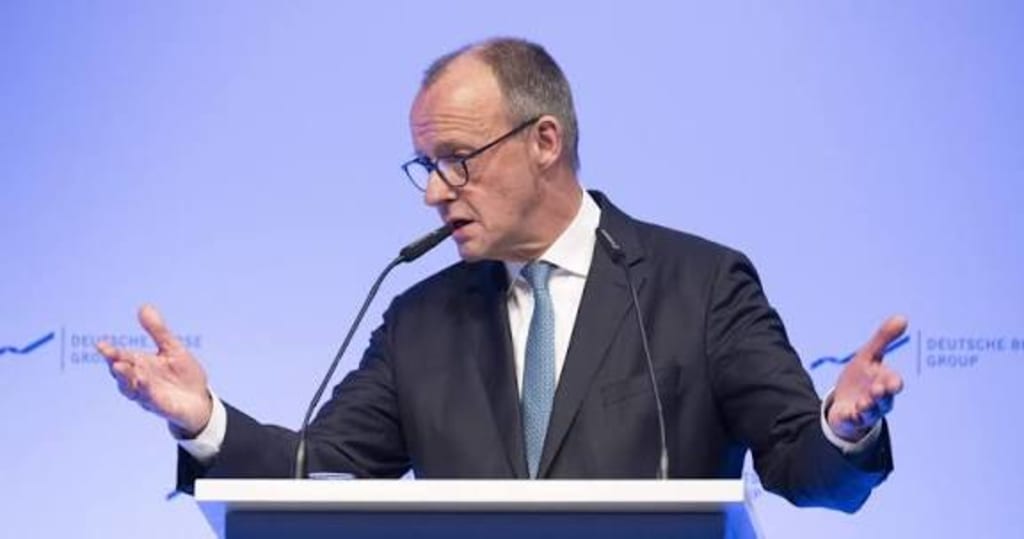
Brussels – Europe’s vulnerability in the global critical minerals market is laid bare by the CEO of a major mining and processing firm, who tells Euractiv that China must surrender proprietary know‑how as a precondition for accessing the EU market. The stark prescription comes amid mounting tensions over rare earths and other essential inputs for clean technology, defence and advanced manufacturing — sectors where Europe remains heavily dependent on imports from Beijing.
“China’s dominance is not just about raw materials — it’s about the technologies and processes that turn those resources into usable products,” the CEO said in an interview. “If Chinese companies want to sell into the EU, they should be required to share that know‑how with European partners as part of joint ventures. Otherwise we are simply feeding the machine that marginalises our industry.”
His comments reflect deep frustration inside European industry and government that recent Chinese export controls on critical minerals and processing technologies have given Beijing a veto over European supply chains. In late 2025, Chinese authorities tightened licensing for exports of rare earth elements and other critical inputs, demanding detailed information about products, customers and production processes before approving foreign shipments. The effect has been to give Chinese regulators a strategic window into foreign industrial networks while prolonging Europe’s reliance on Beijing for essential inputs.
BusinessMirror
Why the concern?
Critical minerals — such as lithium, cobalt, gallium, germanium, and rare earth elements (REEs) — are central to Europe’s climate, digital and defence strategies. They feed into electric vehicles, renewable energy infrastructure, semiconductors, and high‑precision military equipment. Yet China currently dominates processing and refining capacity for many of these materials, accounting for roughly 98% of rare earth processing and high shares of other strategic inputs.
This imbalance has prompted Brussels to adopt a range of new policies, notably the EU’s Critical Raw Materials Act, which aims to boost domestic extraction, processing and recycling, and reduce reliance on external suppliers by setting milestones for European production by 2030.
Despite such measures, European industry insiders often describe the current situation as untenable. One senior executive told Euractiv that licensing requirements imposed by Beijing have forced German firms to divulge commercial data that could be exploited for leverage, effectively revealing vulnerabilities in Europe’s supply chains and defence industrial base.
BusinessMirror
“It’s one thing to sell raw materials — it’s another to expose your competitive strategies, your customer lists, your future plans,” the executive said. “We are being asked to trade strategic information for a licence. That’s not a market; it’s coercion.”
A radical proposal
In this context, the CEO argued for market access reciprocity — similar to policies once employed by Beijing itself — whereby foreign firms must enter joint ventures with local companies and share technology as a condition of access. “Europe should require this not just for equity, but for the exchange of technical expertise that raises our own capabilities,” he said.
This approach echoes recommendations from European economic analysts who argue that Brussels has historically undervalued its leverage as one of China’s largest export markets. Such commentators contend that attached conditions — including joint ventures with technology transfer provisions — could help balance decades of asymmetrical integration.
PubAffairs Bruxelles
Critics of the proposal caution that forcing technology sharing may backfire if it drives Chinese investment away or triggers retaliation. “China is unlikely to agree to this voluntarily,” said one European diplomat, speaking on condition of anonymity. “This would effectively mean we are shaping industrial policy on Beijing’s terms, rather than ours.” They argue that multilateral negotiation and diversified sourcing should remain the priority.
EU policy responses
In recent months, EU policymakers have accelerated efforts to build alternative supply chains. In addition to the Critical Raw Materials Act, Brussels has expanded partnerships with countries such as Canada, Australia and Ukraine to diversify sourcing, while also investing in domestic research and processing capacity.
European Commission officials have signalled that a coordinated response to Chinese export curbs is being formulated, although details remain under negotiation. President Ursula von der Leyen has publicly called for “smoother, predictable supply chains” and emphasised the importance of reduced dependencies.
Some analysts say the EU should contemplate deeper strategic tools — including using trade defence mechanisms or anti‑coercion instruments — if diplomatic engagement fails to yield results. Others warn that protectionist responses could escalate tensions and disrupt global markets.
Industry concerns
For European manufacturers, unstable access to critical minerals has tangible consequences. Delays in obtaining REEs or gallium, for example, can stall production of electric motors or semiconductor components, affecting competitiveness in future industries. It also complicates long‑term green and defence planning.
“In Europe, we have the demand and the industrial capacities — but we lack secure, affordable access to the materials that enable innovation,” said the CEO. “China has used its dominance to its advantage for too long. We need a level playing field, not one tilted in Beijing’s favour.”
As the EU grapples with how to balance engagement with strategic autonomy, the debate over reciprocity and technology sharing is likely to intensify — underscoring the complex geopolitics at the heart of critical mineral supply chains.
About the Creator
Fiaz Ahmed
I am Fiaz Ahmed. I am a passionate writer. I love covering trending topics and breaking news. With a sharp eye for what’s happening around the world, and crafts timely and engaging stories that keep readers informed and updated.
Keep reading
More stories from Fiaz Ahmed and writers in Longevity and other communities.
She’s a Superstar Olympian — And She’s Done Staying Silent About Vitriol
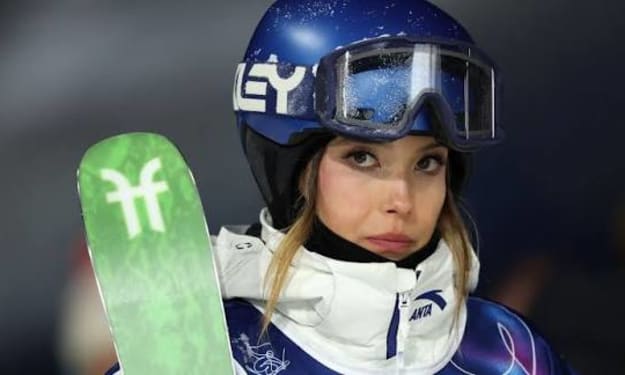
At the 2026 Winter Olympics in Milan‑Cortina, 22‑year‑old freestyle skiing star Eileen Gu — already among the most decorated athletes in her sport — has publicly pushed back against years of online hate, personal attacks and vitriol tied to her career choices and national representation. Gu — who was born and raised in the United States but has competed for China since 2019 — has amassed five Olympic medals, including golds and silvers, and is widely seen as one of the greatest female freestyle skiers of her generation. Yet amid her continued success, she has also faced an unrelenting storm of criticism — both for her athletic decisions and her public visibility. That backlash has now reached a breaking point. In recent days, Gu has spoken more openly than ever before about the hatred and threats she has endured, describing the toll of online vitriol and personal attacks that extended far beyond typical sports commentary. According to reports, she said that at just 22 she has “gone through some things … that I really think no one should ever have to endure,” including social media hostility and other forms of harassment. Dailymotion Her willingness to publicly address this toxicity marks a departure from the reticence that has characterized much of her career. For years, critics from across the political and media spectrum have targeted Gu for her choice to represent China rather than the United States in international competition — a decision she made in 2019 to honor her heritage and expand her influence in a growing winter sports culture in China. A Target of Harsh Criticism The backlash has not been limited to social media noise. According to reporting, Gu has described facing death threats and even being physically assaulted and robbed while on the Stanford University campus — incidents she has linked in part to the intense political and cultural debate surrounding her Olympic allegiance. Political figures and commentators have also weighed in, with some publicly characterizing her as unpatriotic or disloyal for choosing to ski for China — criticisms that have added further fuel to the digital vitriol directed at her. Despite this, Gu has refused to retreat from her platform. The Olympic standout has embraced her role as a global figure, using her visibility to encourage young people — especially girls — to pursue their athletic dreams and to find strength in adversity. Defending Her Achievements Gu’s boldness has been on full display at the Winter Games themselves. In a widely shared moment at a press event, she delivered a firm response when a reporter framed her 2026 silver medals as “gold medals lost.” Gu laughed off the suggestion, calling such a perspective “ridiculous” and emphasizing that each medal — regardless of color — represents years of dedication, growth and achievement. That moment resonated far beyond the skiing community, gaining viral attention and drawing praise for her grace and confidence under pressure. Context: Representation and Identity Gu’s journey has long sat at the intersection of sports, identity and geopolitics. Born in San Francisco to an American father and Chinese mother, she has navigated complex narratives around nationality and representation. Although China does not recognize dual citizenship, Gu has publicly stated that she feels both American and Chinese, and sees her role as a bridge between cultures. Her decision in 2019 to compete for China sparked debate years before the 2026 Olympics, and although she has cultivated support in both nations, she also became the target of intense scrutiny — with critics questioning her patriotism and motivations. Growing Through Struggle In recent interviews and public statements, Gu has reframed the challenges she’s faced as part of her personal development. “It doesn’t get easier — you just get stronger,” she said in reflecting on the accumulation of pressure, online hate and expectations. Dailymotion For Gu and many other modern athletes, the spotlight of the Olympics is no longer solely about athletic performance. It has become a platform where personal conviction, cultural identity and the pressures of digital age discourse collide — and where champions are increasingly asked not only to compete but to confront the storms that come with global fame. Through it all, Gu has made clear she will not remain silent.
By Fiaz Ahmed about an hour ago in Longevity
Half the Battle is in the Kitchen: How to Double Your Results with Smart Nutrition
You’ve cleared a space in your living room, unrolled the mat, and finally stayed consistent with your home workout routine. That is a massive win. But after a few weeks, a common frustration often kicks in: “Why am I not seeing the results I expected?”
By Salim Riahi4 days ago in Longevity
The Tango Connection
I suppose I've become a writer so I wouldn't bore everyone to death telling them my stories. Reading them is reading. Not the same. There's rhythm. And timing and, most importantly, drama and suspense. Unless you have tremendous magnetism and an undeniable stage presence, there's no way you can engage an audience the way you can by writing your story. That's my opinion.
By Rene Volpi 5 days ago in Beat


Comments
There are no comments for this story
Be the first to respond and start the conversation.