
The 60-Second Balance Reset: How Pattern Interruption Strengthens Stability
Why body awareness, coordination training and neuromuscular activation are key to preventing falls

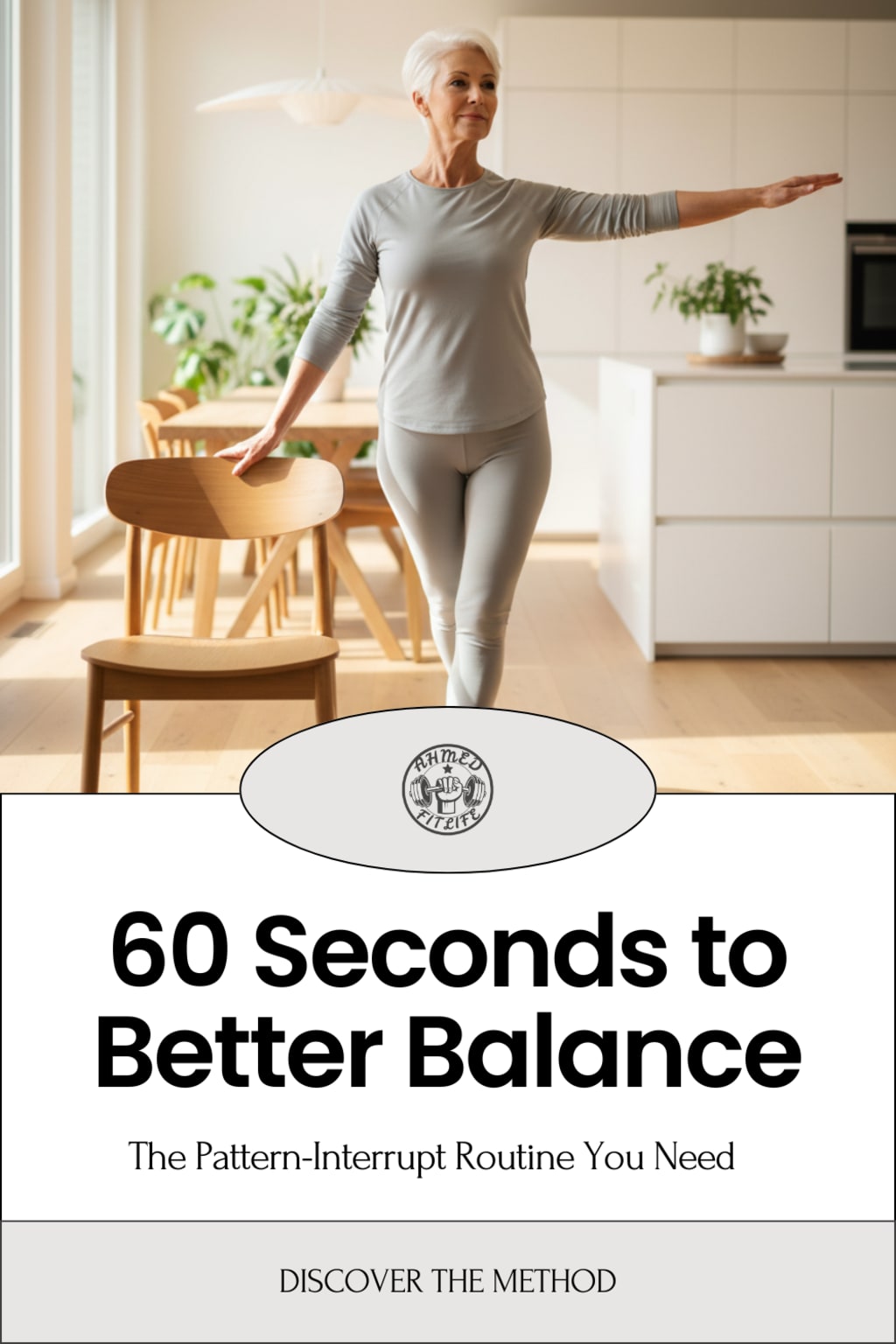
Balance is often treated like strength — something that requires long workouts or intense training sessions. But balance is not purely muscular. It is neurological.
Every time you take a step, your body processes a rapid stream of information from your feet, joints, and inner ear. That information is translated into muscle activation in milliseconds. If the communication between brain and body is sharp, movement feels steady. If it becomes delayed or inefficient, instability can appear.
Improving balance is less about doing more — and more about stimulating the right systems consistently.
One of the most effective ways to do this is through what can be described as a “pattern interrupt” — a brief, intentional disruption of autopilot movement patterns.
Why Repetition Can Reduce Responsiveness
Humans rely heavily on routine. We walk the same way, stand the same way, and move through our homes with familiar habits. While efficiency is helpful, excessive repetition can reduce adaptability.
When the nervous system becomes accustomed to predictable movement, it may respond more slowly to unexpected changes. A slight trip, uneven ground, or sudden turn requires quick recalibration. If that recalibration lags, the risk of losing balance increases.
This is where coordination training becomes valuable.
By briefly interrupting normal patterns, you challenge your nervous system to re-engage.
Understanding Neuromuscular Training
Neuromuscular training focuses on strengthening the connection between sensory input and muscular response.
When you shift weight from one foot to the other, receptors in your joints send signals upward. The brain interprets those signals and activates stabilizing muscles accordingly.
If this system functions well, balance corrections happen automatically. If it slows down, even strong muscles may not respond quickly enough.
Short, focused exercises designed to stimulate this communication can enhance reaction time and improve overall stability.
The Power of a 60-Second Reset
You do not need a lengthy session to stimulate neuromuscular pathways.
A simple 60-second reset might look like this:
20 Seconds: Slow Marching in Place
Lift one knee at a time while maintaining upright posture. Move deliberately rather than quickly.
20 Seconds: Side-to-Side Weight Shifts
Transfer weight evenly between both feet without leaning excessively.
20 Seconds: Brief Single-Leg Holds
Lift one foot slightly off the ground for 10 seconds each side, using light support if needed.
This short sequence activates stabilizing muscles while improving body awareness.
The goal is not fatigue — it is activation.
Body Awareness as a Foundation for Stability
Body awareness — also known as proprioception — refers to your ability to sense where your body is in space without looking.
Strong proprioception allows you to:
Adjust posture instantly
Maintain alignment while turning
React quickly to minor stumbles
Walk confidently in different environments
When body awareness diminishes, movements may become hesitant or overly cautious. That hesitation can actually disrupt natural walking rhythm.
Practicing small coordination challenges retrains your awareness and helps restore fluidity to movement.
Why Short Sessions Can Be More Effective
Long workouts build endurance and strength. But for balance, brief and frequent stimulation often produces better results.
Short neuromuscular exercises:
Prevent excessive fatigue
Keep the nervous system alert
Encourage consistent practice
Reinforce neural pathways daily
Rather than overwhelming the system, these small resets gently remind the body how to coordinate efficiently.
Over time, repeated reminders create stronger automatic responses.
Coordination Training Beyond the Reset
While the 60-second sequence is simple, coordination training can expand gradually.
Additional options include:
Walking heel-to-toe slowly across a room
Practicing controlled turns in both directions
Stepping backward with awareness
Performing diagonal reach-and-step patterns
Each movement introduces slight unpredictability, which stimulates adaptation.
Adaptation is the key to preventing falls.
When the body becomes adaptable, it can respond to real-world variations more effectively.
The Psychological Component of Balance
Balance is not only mechanical — it is mental.
Fear of instability often leads to stiff posture and cautious steps. Ironically, stiffness can reduce the body’s ability to make fluid corrections.
As coordination training improves stability, confidence increases. Greater confidence encourages more natural movement patterns.
This positive cycle reinforces walking efficiency and reduces hesitation.
Prevent Falls Through Consistency
No single exercise eliminates fall risk. However, consistent neuromuscular engagement strengthens the systems responsible for balance control.
Daily micro-practices:
Reinforce sensory pathways
Improve reaction time
Enhance muscle coordination
Support smoother transitions between steps
Over weeks and months, these improvements accumulate.
Fall prevention is not about dramatic change — it is about sustainable habits.
Stability Is a Skill, Not a Trait
Many people assume balance declines inevitably. While aging and inactivity can influence stability, balance remains trainable at any stage.
By incorporating brief coordination sessions into daily routines, individuals can maintain adaptability.
Adaptability is what protects against unexpected shifts in movement.
Conclusion
Improving balance does not require hours of training. Sometimes, it begins with a focused 60-second reset.
Through intentional coordination training, strengthened body awareness and consistent neuromuscular stimulation, the body becomes more responsive.
And responsiveness is what supports long-term stability.
When practiced regularly, small interventions can create meaningful change — helping individuals move with greater confidence and reducing the likelihood of instability over time.
About the Creator
AhmedFitLife
Helping You Reclaim Balance, Energy & Focus Naturally
Hi, I’m Ahmed, Discover Neuro-Balance Therapy! 🌿 Reduce stress, boost focus, and restore balance with this easy, guided tool. Feel better, naturally: Neuro-Balance Therapy
Keep reading
More stories from AhmedFitLife and writers in Longevity and other communities.
Eileen Gu Says She's Disappointed She Can't Get Help With Her Packed Olympic Schedule
Chinese-American freestyle skiing sensation Eileen Gu has revealed her disappointment at not being able to secure additional support to manage her increasingly demanding Olympic schedule, highlighting the pressures elite athletes face during the world’s premier sporting event. The 20-year-old, who has captured global attention for her remarkable performances on snow, shared her candid thoughts in a recent interview, shedding light on the challenges behind the headlines of medals and media appearances. An Intense Schedule Gu, who competed in multiple freestyle skiing events, is recognized for her extraordinary talent and versatility. Her Olympic program included several disciplines, each requiring rigorous training, technical precision, and mental preparation. Beyond her competitive commitments, Gu has been juggling extensive media obligations, sponsorship appearances, and promotional campaigns—a schedule that, according to her, leaves little room for rest or recovery. “The Olympic Games are intense enough as they are,” Gu said. “When you add media interviews, sponsorship responsibilities, and public appearances on top of training, it becomes a challenge to stay focused on performance. I wish there were more structured support to help athletes navigate this.” Balancing Fame and Performance Gu’s comments reflect a broader tension faced by many elite athletes today: balancing professional obligations with personal well-being. As one of the most marketable athletes in winter sports, she attracts significant attention from brands, broadcasters, and fans alike. While these opportunities provide financial security and global exposure, they also add logistical and emotional strain. Sports psychologists note that managing media and sponsorship commitments alongside competition can affect performance. Athletes like Gu often rely on time management, personal assistants, and mental health strategies to maintain focus. However, gaps in support systems at high-profile events can exacerbate fatigue and stress, impacting both performance and overall well-being. Olympic Pressure Cooker The Winter Olympics are an unparalleled pressure cooker for athletes. The Games demand peak physical performance under the scrutiny of millions worldwide. For Gu, competing in front of a global audience while handling an overbooked schedule has highlighted the challenges of modern Olympic life. She emphasized that her frustration is not with her team or sponsors but with the lack of adequate infrastructure to help elite athletes manage overlapping responsibilities. “I love representing my countries and performing at this level,” she explained. “But even the most dedicated athlete can only do so much without proper logistical support. It’s not about complaining—it’s about recognizing that these athletes need assistance to perform their best.” Calls for Better Support Systems Gu’s remarks have sparked conversations in sports circles about the need for better support structures for athletes, particularly those competing in multiple events or representing multiple markets. Suggested solutions include dedicated administrative staff to coordinate schedules, mental health professionals for stress management, and clearer guidelines to balance promotional commitments with training and competition. Athletic organizations worldwide are beginning to recognize the importance of holistic support, especially as social media and global sponsorships expand the scope of athlete responsibilities. For athletes like Gu, such measures could ensure peak performance while protecting health and well-being. The Human Side of Olympic Stardom Despite the challenges, Gu remains committed to her sport and fans. Her candid admission highlights the human side of Olympic stardom: the hours of training, the sacrifices made, and the pressures of performing under a global spotlight. By speaking openly, she provides insight into the less visible aspects of elite competition, reminding audiences that behind the medals and highlights lies an athlete navigating a complex and often overwhelming environment. Gu’s experience underscores a broader truth: Olympic glory is rarely achieved in isolation. While talent and dedication are essential, the support systems surrounding athletes play a crucial role in shaping their success. As Gu continues to compete and inspire millions, her comments may help prompt changes that benefit the next generation of elite athletes, ensuring they can focus on what matters most—the sport itself.
By Fiaz Ahmed 3 days ago in Longevity




Comments
There are no comments for this story
Be the first to respond and start the conversation.