
The Age of Biohacking: Are We Becoming Our Own Experiments?
From DIY gene editing to implantable chips, humans are starting to hack themselves.
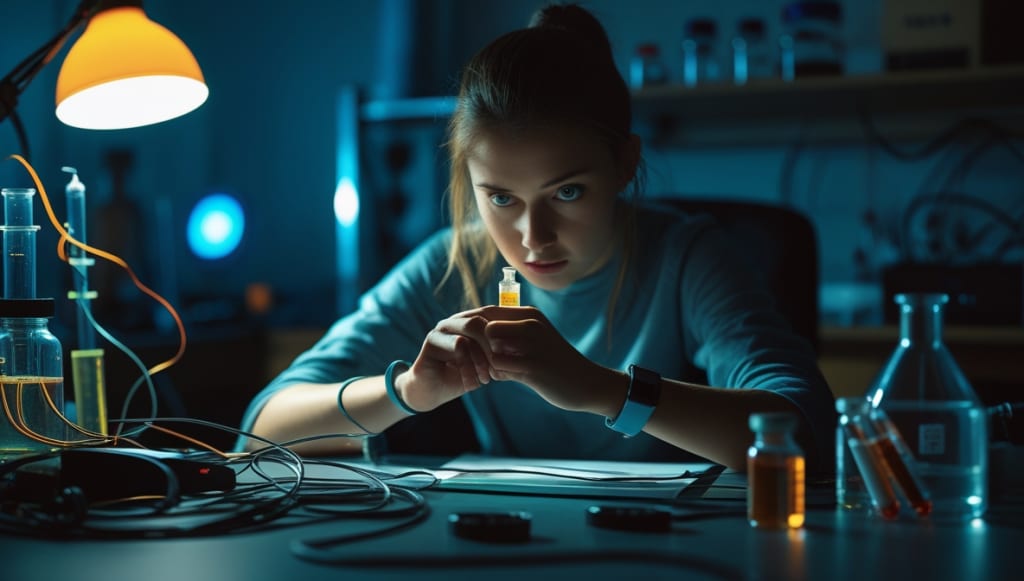
Once mostly based on labs featuring microscopes, white coats, and significant financial support, scientific efforts now focus on natural settings. Nowadays, these events occur everywhere: in living areas, in workshops, and even in the bodies of individuals. People in the biohacking era merge the realms of self-improvement and self-testing by behaving both as the subjects of their own research and as the investigators.
Some believe this points toward the path of human development in the years to come. For some, it includes a hazardous engagement with the unknown. One thing is clear, though: hacking today transcends PCs. We now belong.
Fundamentally, what is biohacking?
Biohacking fundamentally involves improving cognitive or physical skills by means of science, technology, and lifestyle modifications. Some biohackers begin with simple techniques such as keeping track of their sleep patterns, cold showers, or periodic fasting. Some go further, trying nootropics (also known as smart drugs), gene-editing methods like CRISPR, or neural implants.
This movement covers a range of activities. Tech leaders in Silicon Valley are obsessively watching every heartbeat and brainwave on one side in the name of improved productivity. By contrast, in their quest of better abilities, amateur biologists are injecting themselves with experimental substances and implants in their garages. Rising among them is a gathering of those inquiring the interesting question: What if the bounds of biological life are intended to be pushed?
The Search for Dominion
Essentially, biohacking is about achieving control, not only about inquisitiveness. In a world where technology rules many aspects of life and healthcare systems sometimes feel remote, biohackers strive for control over their own biology.
As countries authorize treatments or pharmaceutical companies create medications, they won't only sit back. They want to start experimenting on themselves right away and go exploring. This idea suggests that if our bodies can be seen as code, why not fix them?
Often referred to as the father of biohacking, Dave Asprey transformed his own struggles with coffee, nutrition, and supplements into a multimillion-dollar wellbeing company. Others, like Josiah Zayner, who once injected CRISPR DNA into himself live on television, reflect the more extreme and hazardous aspect of this movement.
Development in biohacking includes seizing control of evolution. To detractors, it looks more like acting God.
The Rise of the “Grinders”
Then there is a secret culture of people called grinders, who use technology within their own bodies to reach a cyborg condition.
Placed beneath their skin, microchips might open doors, manage bitcoin wallets, or track health statistics. Asserting that this gives them an added awareness, some people even include magnets into their fingers to sense electromagnetic fields.
Often occurring outside of conventional medical settings, these changes can occasionally occur within tattoo salons or individual work areas. There is no FDA approval and no official supervision. Rather, it is merely people performing self-experiments with excellent aim and tremendous will.
This phenomenon draws both interest and unease; it represents a combination of do-it-yourself opposition and transhumanist goals. The grinder philosophy can be reduced to a simple concept: why postpone if technology could improve our life?
Dilemma in Ethics
Biohacking brings up serious moral questions still society has yet to fully address.Is it reckless medical behavior or an exercise in personal independence if someone chooses to alter their own genetic makeup?Do people still remain human—or have they changed into something more—if they improve their cognitive abilities with brain implants?
Specialists in bioethics warn that moving forward without rules might cause irreversible harm. Safety hazards exist in addition to ethical quandaries, psychological consequences, and consequences. The quest for human perfection can quickly grow into an obsession—and history shows that obsession often brings about major costs.
Still, not all biohacking projects are extreme. Many factors including enhancing nourishment, mindfulness practice, or self-tracking approach use have true scientific validity. The genuine threat comes not from inquisitiveness but rather from going over the limit where curiosity changes into self-harm.
The Promise and the Peril
Biohacking has clearly changed how we view health and has given rise to wearable gadgets, customized medical therapies, and even companies intent on increasing lifespan claim to "reverse aging."
But it has also freed a complicated spectrum of human dreams.
Where does personal identity end and where does innovation start when human bodies become a foundation for technology?
Who decides what is morally permissible as self-experimentation grows: the individual or the community?
The belief that every facet may be improved — including ourselves — also presents the greatest danger and is the most important asset of biohacking.
The Human Experiment
In many ways, we have always been biohackers. Every surgical tool, every vaccine, and every nutritional breakthrough have been attempts to change biology for our survival. Today's line is less sharp and the approaches now more sophisticated define the difference.
The age of biohacking is about rearranging our humanity rather than abandoning it. Whether this produces a more resilient, enhanced species or a new kind of disease depends not only on our skills but also on our ethical judgments.
In the end, the most daring experiment might be the one going on on ourselves right now.
About the Creator
Keep reading
More stories from Shahjahan Kabir Khan and writers in Longevity and other communities.
Beyond Longevity: What If Living Forever Isn’t the Answer?
For centuries, humans have searched for the fountain of youth — from alchemists mixing secret elixirs to modern scientists decoding DNA. Today, that ancient dream feels closer than ever. Tech billionaires fund longevity labs. Bioengineers talk about reversing aging. Supplements promise cellular renewal. And yet, amid all the breakthroughs and bold predictions, a quieter question lingers in the background:
By Shahjahan Kabir Khan4 months ago in Longevity
As more farmers seek assistance, the mental health crisis in farming communities continues to grow.
As the emotional toll of modern farming increases, more farmers in agricultural communities in the UK and Canada are seeking mental health support. According to recent reports, not only is there a growing need for assistance, but also the underlying difficulties that cause a lot of people in the farming industry to struggle with stress, isolation, financial anxiety, and deteriorating health. According to recent reports from farming communities, farmers are turning to charities and agricultural support organizations that offer listening services, helplines, and outreach to those in distress for mental health support.
By Raviha Imran2 days ago in Longevity


Comments
There are no comments for this story
Be the first to respond and start the conversation.