
The No-Exercise Cholesterol Hack: How I Ate My Way Out of a Medical Mess
Forget the gym and the expensive pills. Here's how a simple pot of vegetables fixed my health during post-surging recovery.

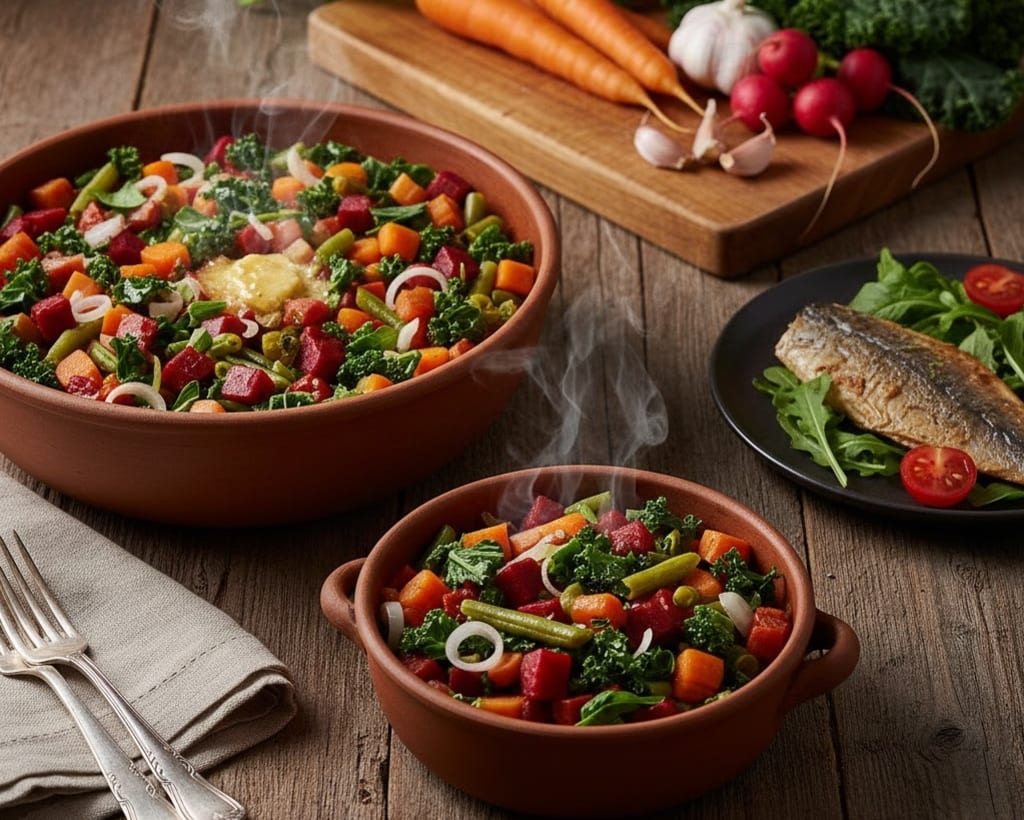
I’ve spent most of my life as an athlete and a soldier, which means I’m used to treating my body like a machine. In that world, you don’t ask how the engine feels; you just put the fuel in and demand results. But hit fifty, throw in a few major surgeries, and suddenly that machine starts looking more like a rusty tractor.
After being stuck in a hospital bed eating what I can only describe as "boiled sadness," I came home to six months of forced rest. If you’ve spent any time in the service, you know the drill: food is fuel, and usually, that fuel tastes like cardboard and regret. But hospital food? That’s a different beast entirely. It’s the ultimate indignity for a man who used to run miles with a rucksack. There I was, a guy who once felt invincible, staring down a lukewarm tray of unseasoned tilapia and a side of green beans so overcooked they’d lost their will to live.
It does something to your head. You start to feel like the system has already given up on you. They aren't feeding you to thrive; they’re feeding you to keep the lights on in your cells while the machines do the heavy lifting. That six-month recovery period wasn't just physical—it was a mental slog. When you can’t move, food becomes your only source of entertainment, your only hobby, and your only friend. Naturally, I did what any self-respecting food lover would do: I ate everything in sight.
The Wake-Up Call
The result? My cholesterol numbers were screaming, and I wasn't allowed to lift anything heavier than a remote control. I was fragile, irritable, and staring at a lifetime of pills. Everyone expects a miracle drug or a state-funded solution like Ozempic to fix their bad habits, but I decided to take a different, much cheaper route. I call it the “Vegetable Sludge” strategy.
This isn’t some polished lifestyle trend for people who post their yoga routines on Instagram. This is survival. My wife and I started making a dirt-cheap vegetable mash that became my primary medicine. There is no rigid recipe because, let’s be honest, it’s not fine dining—it’s a fix.
The foundation is simple: onions and garlic sautéed in ghee. Then come the heavy hitters: carrots and beets (cheap, earthy, and effective). Throw in a handful of beans or peas, and after twenty minutes, you start the “steam game” with whatever leafy greens you have—kale, spinach, chard. Finish it with a splash of tomato sauce for a bit of sweetness, and you’re done. You cook it in a giant pot, and it lasts for two days.
The Science of “I Don't Care”
Now, if you ask a nutritionist why this works, they’ll give you a lecture on fiber density and low glycemic indices. My wife, bless her, tried to explain the antioxidants in the beets. I just nodded. For me, the math was simpler: I needed to feel full without feeling heavy.
The beauty of the “Sludge” is its total lack of ego. You aren't trying to impress a dinner guest; you’re trying to satisfy a biological requirement. There’s a certain meditative quality to the prep work, too. Peeling carrots and chopping onions with a sharp knife—it’s a task. It’s a mission. In the beginning, my hands felt clumsy from months of inactivity, but the kitchen became my new gym. Every chop was a middle finger to the sedentary lifestyle I was being forced into. It’s hard to feel like a victim when you’re standing over a steaming pot of earth-scented medicine that you built with your own two hands.
The Routine
Here’s the trick to the routine: I treated it like an Italian meal.
The mash is my Primi Piatti—the first course. You eat a full plate of that first. Only then can you move to the Secondo Piatti, which is usually fish with a side of salad or a bit of sweet potato. No bread. No pasta. No mountain of rice. Meat? Twice a week, just to keep the predator in me alive.
The cynical version of me expected to quit within forty-eight hours. Instead, I became a master of the mash. In a few weeks, without a single minute of exercise, the high cholesterol simply vanished.
The “Aha!” Moment at the Clinic
I’ll never forget the look on my doctor’s face. He’s a good guy, but he’s used to patients who nod along to his advice and then go straight to the drive-thru. He was already clicking through my digital chart, probably prepping the speech about statins and the long-term risks of heart disease.
Not only that, but he stopped, scrolled back up, and frowned. “What did you say you were doing again?” he asked.
“Vegetable sludge, Doc,” I said. “And a lot of beets.”
He looked at the numbers—the LDL had plummeted, the HDL was up, and for the first time in years, the “danger” flags on my blood work had been lowered. He actually took his glasses off and rubbed the bridge of his nose. He told me that usually, he only sees numbers drop like that when people are on the heavy-duty meds. When I told him it cost me about three dollars a day in produce, he just laughed. It turns out, the body is remarkably forgiving if you just stop sabotaging it for five minutes.
The Philosophy of the Pot
We often wait for doctors to patch us up, forgetting that we’re the ones behind the wheel. This wasn't about “bourgeois” healthy living; it was about taking my quality of life back. A broken, food-loving veteran managed to fix his blood work with a pot of beets and a bit of discipline.
Look, I’m not saying I’m a saint. There are nights when I smell a neighbor grilling burgers and the “predator” in me wants to hop the fence. But then I remember the “boiled sadness” of the hospital and the feeling of being a prisoner in my own skin.
This isn't a “diet.” Diets are things you fail at. This is a tactical shift. It’s about realizing that at fifty, the warranty on the machine has expired, and if you want to keep it on the road, you’ve got to do your own maintenance. The miracle wasn't in a pharmacy—it was in the kitchen, it just didn't have a fancy label on it. You don’t need a gym membership or a celebrity-sponsored pill. You just require a big pot, a bag of carrots, and the discipline to eat your greens before you touch your steak. It’s a small price to pay for your freedom.
About the Creator
Feliks Karić
50+, still refusing to grow up. I write daily, record music no one listens to, and loiter on film sets. I cook & train like a pro, yet my belly remains a loyal fan. Seen a lot, learned little, just a kid with older knees and no plan.
Keep reading
More stories from Feliks Karić and writers in Longevity and other communities.
My Synth and My Friend, DJ Bruno
Why I’m not a musician, I’m just a guy trying to stay sane in a loud world I have a friend named Bruno. He’s an old sea wolf of the DJ world—the kind of guy who lived through the golden era of Italian House music when everything felt like a warm hug.
By Feliks Karić3 days ago in Confessions



Comments
There are no comments for this story
Be the first to respond and start the conversation.