
The Subtle Shift: How Small Movements Change Inner Space

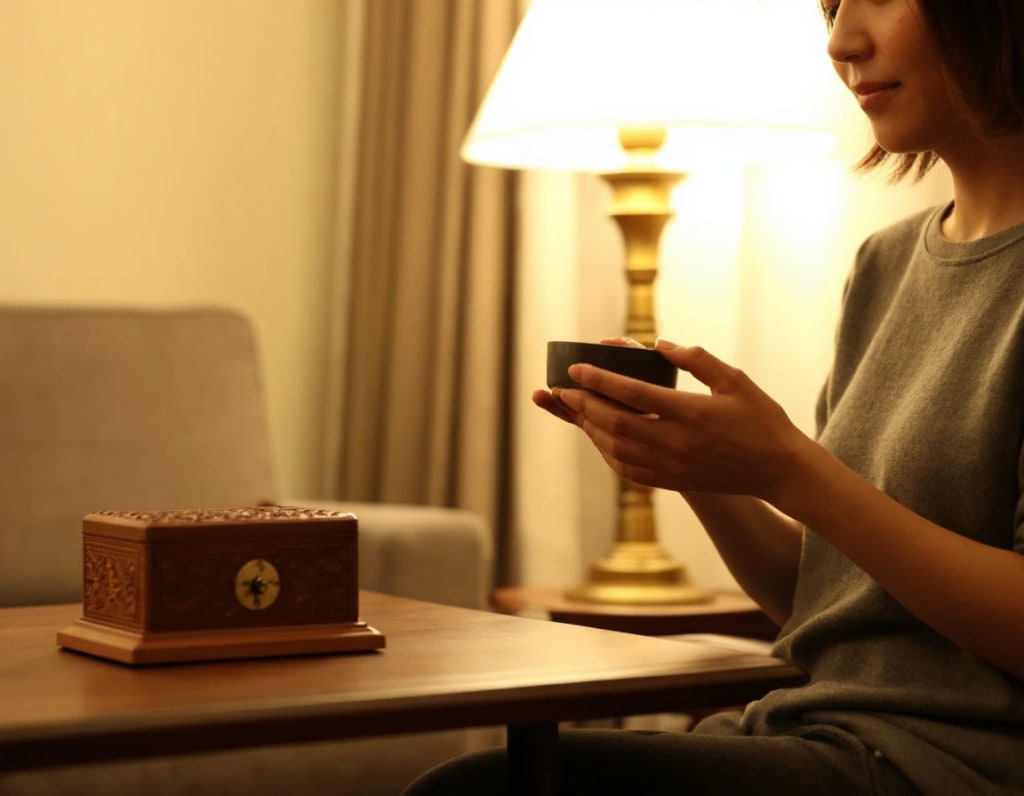
There is a certain poetry in the smallest gestures — a quiet turn of the wrist, the slow unfurling of fingers, the way the chest subtly expands when a long-forgotten breath returns. These are not grand acts of transformation, yet they carry a power that reverberates through both body and mind. We tend to look for change in large, visible movements — the leap, the breakthrough, the turning point — but more often than not, it’s the delicate adjustments, the nearly invisible ones, that create the most profound shifts inside us.
Meditation is not always about stillness in the rigid sense. It can also be about movement — the soft, rhythmic sway that happens naturally when you breathe, the pulse that flows through your fingertips, the shift of weight from one sit bone to the other. When you begin to pay attention to these micro-movements, awareness itself starts to breathe. You realize that presence is not a fixed point but a living current — always moving, always adjusting, always alive.
In these moments, you may notice that your body knows more than your mind is willing to admit. The body communicates in sensation, in weight, in flow. A subtle tilt of the head can reveal openness or resistance. A tightening in the belly might show fear before you even name it. By tuning into these physical languages, you enter a space of dialogue with yourself — one that doesn’t rely on words but on the direct experience of being alive.
Try this: sit comfortably and bring attention to your spine. Without forcing, notice its natural curves, its quiet strength. Perhaps you feel a slight compression somewhere, or an invitation to lengthen upward. Follow that impulse gently, not as correction but as curiosity. Feel how the simple act of aligning the spine affects the quality of your breath. Does the inhale feel deeper? Does the exhale soften the heart? In such small shifts, something internal rearranges itself — not just posture, but perception.
This is where mindfulness and embodiment meet: in the awareness that each movement — even the smallest — ripples through the whole system. When you let your shoulders drop after being unconsciously raised, you are not merely relaxing muscles; you are signaling safety to your nervous system. You are telling your entire being: it’s okay to be here. The shift is physical, but its impact is emotional and energetic.
Over time, this practice reveals that movement and stillness are not opposites but partners. Stillness without awareness becomes rigidity. Movement without attention becomes distraction. But the marriage of the two — gentle motion infused with mindful presence — brings a quality of quiet aliveness that words can barely describe.
Even in daily life, these micro-movements can become anchors. The way you set your feet on the ground before a conversation. The moment you straighten your spine before speaking your truth. The breath you take before responding instead of reacting. These gestures are small, but they change the energy of interaction. They create space — inside and around you — where something more conscious can emerge.
Through such embodied awareness, you begin to sense how inner and outer spaces mirror each other. The tension in your neck may reflect the tension of unspoken thoughts. The relaxation in your belly might echo a sense of trust returning. This connection between the physical and the emotional is not abstract — it’s the direct experience of being human. The body remembers what the mind forgets, and through mindful movement, it teaches us again how to come home.
Ultimately, the subtle shift is not about doing more but about feeling more deeply. It’s about refining your sensitivity to the small — to the gentle pulse of life within you that continues regardless of thought or will. Presence doesn’t always arrive in silence or stillness; sometimes, it awakens in the quiet tremor of awareness that moves through your body like light through water.
So let your movements be invitations, not commands. Let your body lead sometimes. When you allow awareness to rest in the flow of sensation — without judgment, without control — you discover that the smallest motion can open vast inner space. And in that space, you find yourself — breathing, shifting, alive.
About the Creator
Jonse Grade
Meditation enthusiast and writer of articles on https://meditation-life.com/
Keep reading
More stories from Jonse Grade and writers in Longevity and other communities.
The Breath Beneath the Breath: Awareness Beyond Control
There’s a subtle breath that moves beneath the one we control — a quiet, effortless rhythm that continues even when we’re not paying attention. It’s the body’s reminder that life sustains itself without our interference. When we meditate on this deeper layer of breathing, we begin to see that awareness, too, doesn’t need to be forced. Presence is not something we do; it’s something that unfolds when we stop trying to shape it.
By Jonse Grade4 months ago in Longevity
Day 4 of Quitting
If this is how sobriety feels, maybe it’s better to go through life a little buzzed… this, along with other hits like, I want to kill myself, I wish I was dead, and I’m going to throw myself off a bridge have been the only thoughts on rotation these past few days. I promise myself that if, in a month, I still feel like this (‘this’ meaning despondent, full of rage, and simultaneously numb) I can go back to smoking. Until mid-February though? Nicotine is off the table.
By sleepy drafts28 days ago in Longevity




Comments
There are no comments for this story
Be the first to respond and start the conversation.