
The Long Conversation: Why Marriage Is Less About Love and More About Staying in the Room
After the Wedding Fades, What Remains Is the Quiet Choice to Keep Showing Up, Day After Ordinary Day
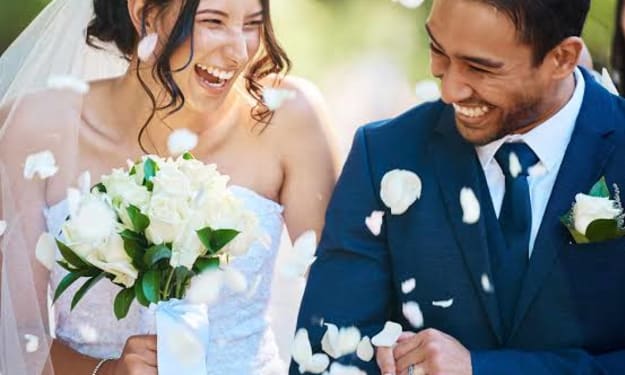
The wedding industrial complex would have you believe that marriage is about the moment. The dress, the cake, the vows, the first dance, the perfect photographs that will document a day of flawless joy. We spend fortunes on this moment, plan it for months, obsess over every detail as though the quality of the marriage that follows will somehow reflect the perfection of the day that began it. And then the guests go home, the flowers wilt, the dress goes into storage, and what remains is something no one prepared us for: the long conversation.
The long conversation is what marriage actually is. It is the thousands of ordinary mornings, the millions of mundane exchanges, the decades of showing up when showing up is the last thing you want to do. It is the argument about whose turn it is to do the dishes, and the forgiveness that follows even when the apology never quite comes. It is the illness that strips away every pretense and leaves only the raw fact of two people, one needing and one providing, roles that will reverse in time. It is the boredom, the frustration, the disappointment, and underneath all of it, the stubborn, inexplicable commitment to stay in the room.
No one tells you this at the wedding. No one says that there will be years when you are not sure you like each other, let alone love. No one warns you that the very qualities that drew you together will become the things that drive you crazy—that his spontaneity will become unreliability, her stability will become rigidity, that the fire that once burned so bright will sometimes gutter down to almost nothing. No one tells you that marriage is not a destination but a practice, not a achievement but a process, not a feeling but a series of choices, made again and again, for years, for decades, for a lifetime.
The couples who make it are not the ones who never wanted to leave. They are the ones who wanted to leave and stayed anyway. They are the ones who looked across the table at a stranger wearing the face of the person they married and thought, "I don't know who you are anymore," and then, somehow, found the curiosity to keep learning. They are the ones who held each other through losses that broke them both, who sat in hospital rooms and funeral homes and the terrible silence of grief, who discovered that being together did not make the pain less but made it bearable. They are the ones who learned, through years of trial and error, that love is not something you fall into but something you build, brick by brick, day by day, choice by choice.
I think about my grandparents, married for sixty-three years before my grandfather died. They were not demonstrative people. I never saw them kiss. They rarely said "I love you." But I watched them together for decades, and I learned what love actually looks like. It looks like him making her tea every morning, exactly the way she liked it, for sixty-three years. It looks like her saving him the last piece of pie, even when she wanted it herself. It looks like sitting together in silence, reading, not needing to talk because the comfort of presence was enough. It looks like him holding her hand in the hospital when she was afraid, and her doing the same for him when his time came. It looks like staying in the room, through everything, until the very end.
After he died, she told me something I have never forgotten. She said, "The first fifty years are the hardest." She was joking, mostly, but not entirely. She meant that marriage is long, longer than anyone can imagine at the beginning. It contains multitudes—seasons of distance and seasons of closeness, years when you barely recognize each other and years when you finish each other's sentences. It requires a kind of patience that feels impossible when you are young, a willingness to wait for the person you love to come back to themselves, to come back to you, to remember why you chose each other in the first place.
The secret, she said, was not in the grand gestures but in the small ones. The daily choices to be kind, to be patient, to let things go. The decision, made over and over, to assume good intent, to give the benefit of the doubt, to remember that the person across the table is also struggling, also tired, also doing the best they can. The practice of apology and forgiveness, not as dramatic events but as ordinary rhythms, as natural as breathing. The commitment to keep showing up, even when showing up is hard, because showing up is the whole point.
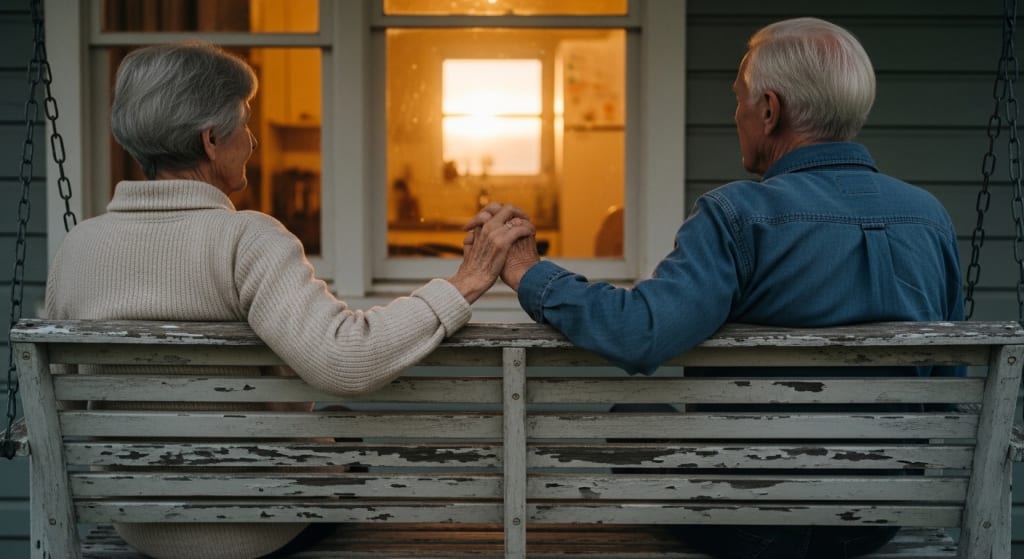
The long conversation is not always interesting. There are long stretches when it feels like nothing is happening, when the days blur together and you wonder if this is all there is. But those stretches are the conversation too. They are the background hum of a life shared, the accumulated comfort of knowing and being known, the safety of a presence that does not require performance. The couple on the porch swing, not talking, watching the sunset—they are still in the conversation. They have simply reached a place where words are no longer necessary.
The culture does not prepare us for this. It teaches us that love should be exciting, passionate, constantly affirming. It sells us a story of romance that has nothing to do with the reality of two imperfect people trying to build a life together. It makes us feel that something is wrong when the excitement fades, when passion becomes companionable, when the long conversation settles into its ordinary rhythm. But nothing is wrong. This is what it was always meant to become. The fire that burns too bright burns out. The fire that lasts is the one that settles into a steady, warming glow.
The marriages that last are not the ones without problems. They are the ones where the problems did not win. They are the ones where two people, faced with the choice to stay or go, chose stay, again and again, until staying became the only thing they could imagine. They are the ones where forgiveness became a habit, where patience became a practice, where love became less a feeling and more a verb. They are the ones where the long conversation continued, through all the seasons, until the very end.
The elderly couple on the porch, hands resting together, watching the sun go down—they have earned that moment. They have paid for it with decades of ordinary choices, with arguments they wish they could take back, with forgiveness they never thought they could give, with staying when staying was the last thing they wanted to do. They have learned that love is not what you feel but what you do, not what you say but what you show, not the wedding but the marriage, not the moment but the lifetime.
The long conversation is still going. It will continue until one of them can no longer speak, and then it will continue in memory, in the stories they told, in the children and grandchildren who carry their example forward. It is the most ordinary thing in the world, and the most extraordinary. It is two people, choosing each other, day after day, until choosing becomes as natural as breathing. It is the conversation that never ends, because even after it ends, it echoes.
So here is the truth about marriage, the one no one tells you at the wedding: it is less about love and more about staying in the room. It is less about feelings and more about choices. It is less about the moments that make it into photographs and more about the millions of moments that never will. It is the long conversation, the ordinary practice, the daily decision to keep showing up. And if you can do that—if you can stay in the room, through everything, for a lifetime—you will have built something more beautiful than any wedding. You will have built a marriage.
About the Creator
HAADI
Dark Side Of Our Society
Lab-Grown Diamond Gifts For Her
Lab-Grown Diamond Gifts For Her Women Don’t Need Any Introduction Or Fixing, Changing, Or Defining Her Role In Our Lives, She Deserves To Be Celebrated Whenever We Get The Chance To, For Her Strength, Her Inner Beauty, Her Flaws, Her Emotions, Her Dreams, And Her Resilience. So Why Not Skip All Ordinary Gifts By Choosing Something That Lasts Forever So That She Can Cherish It Today, Tomorrow And Everyday - “A Lab Created Diamond Jewelry” Which Can Become A Reminder That Shines With Her On A Daily Basis, Because When You Celebrate Her, You Celebrate The World She Holds Together For You, Because She Also Deserves Something As Real And Brilliant As She Is.
By GemOne Diamond4 days ago in Marriage


Comments
There are no comments for this story
Be the first to respond and start the conversation.