wild animals
Animals the way nature intended it; explore the world of wild animals and the controversies surrounding domestication and hunting of feral beasts.
Adorable Animals
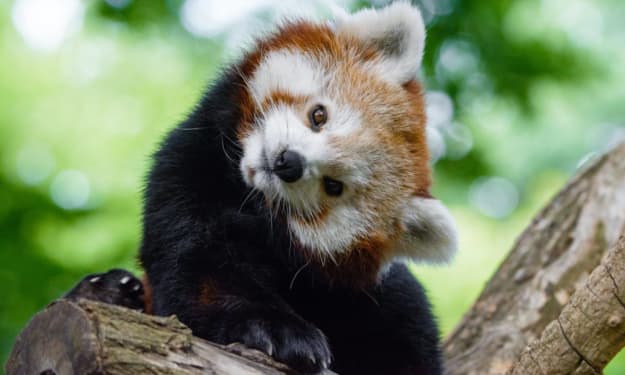
On the Land The Red Panda has a soft red fur coat, the cutest fluffy ears, and a bushy tail. This panda grows only to the size of a domestic cat. It makes its home in Nepal, Burma, and central China living in mountainous forests. Most of its time is spent up in trees.
By Rasma Raisters5 years ago in Petlife
Whales - The Saviors of the Earth
Whales are mesmerizing creatures known for being the largest and most intelligent in the ocean. The contribution of whales might amaze you as much as their closest evolutionary relations with the hippopotamuses. They are nature's biggest carbon capture plants. And the amazing fact about them is, each whale is worth more than $2 million. Hence whole Whale Community values over $1 trillion according to IMF.
By Vatsal Patel5 years ago in Petlife
Love tricks in the animal world
Some people think that animals look cute and do not establish any complex social relationships, it seems that they will not play any tricks. The real situation is that in order to fight for the opposite sex, will make the side ways of many animals.
By JordonRobbinsmd5 years ago in Petlife
That was nuts
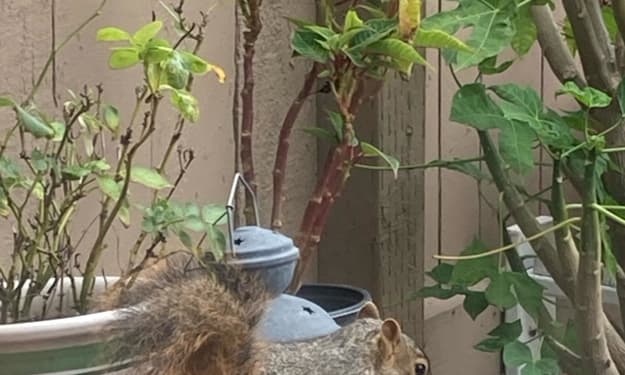
Meet my squirrel friend "Nutcase" I'm not joking; that's the name I gave him. This little comes every morning for nuts. I only give him a few because if I give him a lot, he leaves them, and other squirrels will go and fight over the scraps, and they are running around the backyard, causing havoc. They climb on the backyard furniture, the plants, not to mention the trash cans for cans and bottles for recycling—all the while making that chattery sound and the little craws on the pavement. You can put some background music to make it comical.
By stephanie borges5 years ago in Petlife
Surrounded by wolves
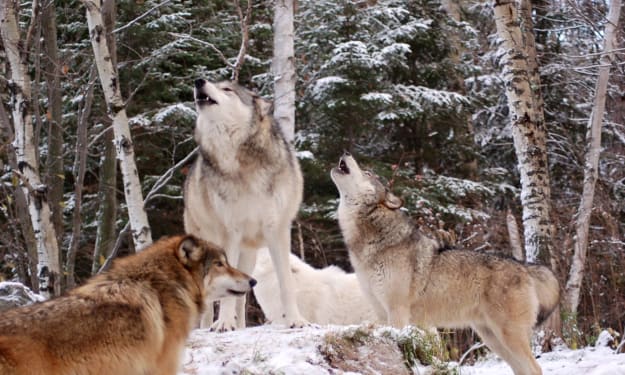
It was a typical early- winter evening in Northern Minnesota, the temperature was in the 20's with about two feet of snow on the ground as I pulled in the driveway to our house. We lived 22 miles out of town, just 7 miles from the Canadian border, and I was the first one to arrive home that evening. My parents ran a real estate business in town, and my brothers were still in town as well when I got home, so I prepared to do a little hunting in the woods behind the house with our dog as I often did. We had a Malamute Husky who was 1/4 Timberwolf named Chena, that we let run free all day while everyone was in town at school or work. She loved our little trips into the woods as much as I did, and would always be home within 15 minutes of whoever got home first each day, without fail. By the time I was dressed and ready to go I went outside, expecting her to be ready and waiting as she always was. I was surprised to find she wasn't there, so I called for her a couple times and went up on the porch and waited. After about 45 minutes of calling with no sign of her, and the sun now starting to set, I was getting pretty concerned. This wasn't like her at all, and I knew something had to be wrong, so I went inside and called my Mom to tell her what was going on. She said an officer with the Fish and Wildlife Service had informed them, as well as the other four families who live out there year round, that a large wolf pack had been seen in the area recently, and they had several reports of family dogs being killed while left chained up outside the home. Concern gave way to fear now, and as I was about to go out the door to start looking for her, it started. It was one wolf first, presumably the Alpha male, who began a long, unnerving howl, and he was then joined by the rest of the pack as I realized they had completely surrounded the house! The howls were so loud they sounded as if they were in the house already, and it was like I could feel them in my bones! It was both awesome and terrifying at the same time! I ran through the house making sure everything was shut and locked when I thought of the basement- it was a half sunk basement, which meant the windows were even with the ground outside, and if they were going to get in, that's where they would do it. I ran down there, placing a loaded rifle by each window as I checked them. After that, I went back upstairs and called my Mom, verging on panic. She could hear the wolves through the phone, so she told me she was going to call our neighbor down the road and to watch for him. I found out later he had been outside listening to the wolves howling, unaware they were surrounding our house at the time! The next 20 minutes waiting for him to come were the longest I believe I spent, and then finally headlights and he pulled in our driveway. As he pulled up, there was Chena right in front of him! Apparently, she had been hiding on the other side of the road a ways down from the house, and had run out in front of him as he was driving over, and stayed in front in his headlights right up to our front door! The wolves all left as he pulled up, but amazingly, neither one of us ever saw a single one of them; they just melted away like phantoms into the forest. I'll never forget how much intelligence that dog had, knowing to hide until she found a safe way to get back home!
By Lon Salerno5 years ago in Petlife
The Calming Cow
To some people this is just a cow in a field no different than any other cow in fields and on farms all over the countrysides. For me it is a beautiful sign of change and maturity combined with a sense of peace and calm in this wild ride of life. For years and for no reason at all, I was ridiculously afraid of cows. I had no reason to be. It was not as if some incident of my childhood could be tied to this abnormal fear. As a teenager my heart would start racing and palms sweating as anxiety from just seeing a cow would quickly take over. I was the subject of many jokes among family and friends regarding the odd fear of cows. At almost 40, my mom still loves to tell the story of me waking her up from a deep sleep to point out cows during a very long bus ride full of loud high school aged teenagers on their way to a show choir concert. Instead of talking and laughing with my friends on the bus, I was quietly trying not to let my anxiety and fear take over. It was irrational and I knew that but still I feared those big creatures grazing on the side of the road somewhere halfway between my home and the western part of Virginia.
By Aimee Read5 years ago in Petlife
Wild horses
My son went to college in Ellensburg, Wa. On the way to visit my son at college you would come across miles and miles of fields, hills, and streams somewhere before Yakima. If you were lucky enough you would spot the wild Mustang horses. Sometimes you would see specks of them up in the hills. Other times you would get lucky enough to see them right down by the road. On those days I would pull over and get my camera out and take as many pictures as I could. It is not something you see very often anymore. Some would be off by themselves enjoying their peace and quiet. Others would be in families down by the streams drinking and eating, resting in the shade. They are so majestic and beautiful. There are an estimated 20,000 wild horses running all through the Indian Country. Foals raise the population by 20 percent a year. Wild horses have lived and roamed the Yakima Valley since the 1700s. Many people think these horses are fenced in. They see a few fences along the road and think they are owned horses and kept in by fences. These horses are not fenced in. Covering thousands of acres of land, there are no homes or ranch buildings, no feeding stations, few two-track roads, and no additional fencing. These horses don’t belong to any one person. They’re wild. There are at least 20 different packs of horses roaming the land day and night. They are giant and amazing. For the Yakama Nation, the wild horses are a big part of their history and culture.. Unfortunately, the horses are overgrazing their land and finding it hard to find food. Along with the harsh, cold winters and the issues of finding food, many horses are found dead, skeletons laying on the bare ground. The horses are devastating the land and destroying the terrain. There are way too many horses for the amount of land they live on without any kind of management from the Yakama people or the government. The land can support fewer than 3,000 of the animals. The current population, which was between 12,000 and 14,000, is now estimated to be near 5,000 due to starvation, according to Washines. The property the horses live on is about the size of Rhode Island. Soil is getting eroded and the ecosystem is getting destroyed. Also many plants and vegetation the Yakama tribe find spiritual are disappearing. Other animals are being driven out of the land because of the lack of food due to the Mustangs. Sacred deer, an animal important to the Yakama people, have left the area instead of competing with the larger animals. Deer meat is an important part of Yakama Nation ceremonies, and now that is almost impossible to find due to the immense number of Mustangs in the area. Due to the Horse Protection Act which makes it illegal to slaughter the horses and due to animal activists, it is harder and harder to deal with the Mustangs on the tribal land. The tribes have actually tried using birth control on the female horses to help the population from growing, but it is said the horses are not easy to catch. Just within the last year, the horse mortality rate has been 50 percent. There are hopes that since the population has gone down so much, that the vegetation and land might have a chance to regrow and that the deer and other animals will hopefully come home again. I, myself, love seeing the horses and love photographing them. I am very sad about the deaths and mortality rate of these beautiful creatures.
By Stephanie Day5 years ago in Petlife
5 of the Coolest Frogs Ever!
When I was a toddler, my parents bought me a little green froggie plush which I promptly named "Freddy". And let me tell you, I took that guy everywhere with me. And if I ever forgot him at home, Lord help my poor mother who had to deal with my crying the entire trip.
By Emily Jimenez5 years ago in Petlife
Death at SeaWorld: The Series?
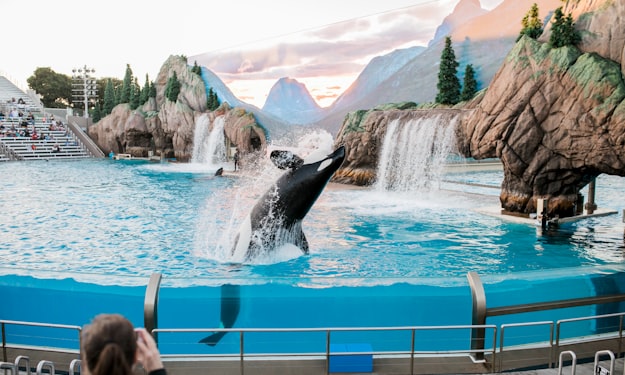
To whom it may concern, I’m writing on behalf of the zoo and aquarium community regarding an upcoming project that has been in development as a series for the last few years. They based the show in question on an anti-zoo book by David Kirby, and it’s an investigative piece that profits off the 2010 freak accident at SeaWorld Orlando. While the 10-part series is due for a 2022 release, there have been calls by both zoological professionals and patrons for streaming platforms to not distribute it for various reasons.
By Jenna Deedy5 years ago in Petlife
the human health crisis is not far off
Start writing... Once upon a time these geeky birds were found everywhere in villages, towns, trees and electric poles, rock tops, houses. Typically, long bare necks on the sides of the road are seen leaning towards the corpse of a pathetic dead animal or circling the sky like a large number of dark clouds.These were innumerable in number; Were too high to count. According to a survey conducted in 1991-1992, there were 40 million eagles in India in 18 protected areas.These have disappeared in just ten years. The number of these has reached the brink of extinction. Of the three major eagle species in India, the long-haired, slender-bodied species of the genus has dropped a staggering 97 per cent, while the white-ramped species became 99.9 per cent worse off in 1992-2007."No bird has been reported to have become so extinct as anywhere else in the world," said Asad Rahmani, former director of the Bombay Natural History Society. There was a sharp drop in the number of overseen passenger pigeons. These passenger pigeons, numbering 3 billion, are considered to be the largest bird in the world. But in the early 1990s, nothing was left. The last bird in the cage, Martha, also died at the Cincinnati Zoo.What's going on?Initially no one noticed the details that the number of eagles came down. There were also rough reports from researchers and reports that villagers said 'eagles were nowhere to be found'.Vibu Prakash, chief scientist of the Mumbai Natural History Society, was the first to document the decline in the famous Keolado National Park in Bharatpur, Rajasthan. In 1987-1988 he estimated that there were 353 pairs of eagles in the 29 sq km park. In 1996, that number halved. He was shocked to see eagles lying dead on plants, trees and even nests.“I was worried and confused. I do not understand what is happening to these birds, ”he recalled.By the year 2000, not a single eagle had survived in Bharatpur. It sounded the alarm. News of similar deaths soon began to arrive from across the country. The White-ramped Eagle, once considered the largest predator on the subcontinent, has become one of the world's most endangered birds.The number of three genera, which numbered in the millions, has recently been estimated to be only about 20,000. Of these, 12,000 were white ramps with long units and only 1,000 were eagles with very rare soft units.In the year 2000, the International Coordinating Center for Nature Conservation declared all three species as critically endangered. These will disappear if no emergency measures are taken to recover them before they become extinct.How did it happen?Finally, many countries are concerned about this. An international team of more than a dozen scientists, backed by the Peregrine Fund, examined the carcasses of eagles in Pakistan and found that diclofenac was the real cause. It is a non-steroidal anti-inflammatory drug given to animals.The drug is a boon to those who depend on their livestock for their livelihood. It can act quickly. Powerful painkiller and antidepressant. The added advantage is that the price is also very low.Eagles eat carcasses. In the country with the highest number of livestock in the world, the bodies of rotten cattle are most commonly found. Long-necked eagles, especially genus eagles, dig deep into carcasses and eat soft parts. These are capable of digging up an animal or deer bone in just 20 minutes.Of the nine eagle species in India, diclofenac mainly affects three of the five genus species. Prakash explains that the migration of the other two types of eagles to faraway places such as the Himalayas and Central Asian countries, where these drugs are rarely used, is one of the reasons for their survival. Eagles and gray eagles eat hard meat and muscle cords so they are not affected by this diclofenac drug.Frozen negative image in the public domain.Not only do humans care about the safety of these birds, eagles are viewed differently. In India it is worshiped as . It is also seen as a foretaste of death. In the general view, an eagle is thought to attack the weak. There is also the habit of setting an example that is like an eagle when talking about those who take advantage of the misfortune of others. That is, it is seen as a negative symbol in many ways.But these bodies play a valuable role in our ecosystem. As it disposes of the body quickly and efficiently, harmful bacteria do not grow and spread. These contain high levels of body temperature and strong stomach acids that ingest rotten bodies infected with bacteria without causing any adverse effects. Even dogs and rats can eat rotten bodies, but unlike eagles, they can spread germs and spread disease.The extinction of eagles has had another unintended consequence. The eagles are on the verge of extinction, making it difficult for the Parsis or the Zoroastrian community to perform their unique funeral rites. It is customary for them to dispose of the bodies of the dead in places known as 'towers of silence'. There the bodies are mainly eaten by eagles. The Parsis considered land and water sacred and believed that burying or burning the dead would pollute nature.The annual decline in white rump eagles was 43.9%. The relaxed breeding eagle lays only one egg at a time. It has an eight-month reproductive cycle. So if the loss is more than 5 percent, there is not much chance of recovering these.Some signs of hope.
By Zarinabanu Zarinabanu5 years ago in Petlife