Latest Stories
Most recently published stories in Potent.
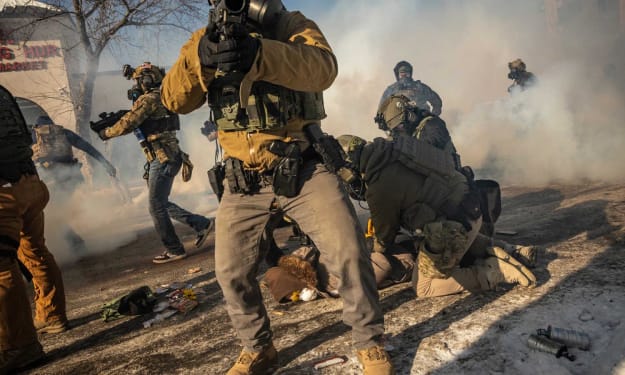
The Color of Our Conscience
We've all surely heard this quote by now: "History does not repeat, but it rhymes with a haunting rhythm." For those of us who spent our youth submerged in the archives of the 1930s, studying the psychological fracturing of a dictator’s upbringing or reading the visceral, skeletal prose of Elie Wiesel’s "Night," the present moment does not feel like a surprise.
By Sai Marie Johnson9 days ago in Potent
.“I Left My Name in a Place That Forgot Me”
I Left My Name in a Place That Forgot Me I left my name in a place that forgot me. Not all at once, not dramatically, but the way dust settles on furniture no one uses anymore—quiet, patient, inevitable. It happened in the city where I learned how to make myself smaller. At first, my name was spoken often. It lived on tongues, warm and familiar. It was called from doorways, written in notebooks, saved in phones with little symbols beside it—stars, hearts, inside jokes only we understood. My name meant something then. It meant me. But places, like people, have short memories. I noticed the forgetting in fragments. A pause before someone said my name, as if searching through a cluttered drawer. A smile that didn’t quite reach recognition. Conversations that continued smoothly whether I was present or not, like I was an optional detail in the background. I became excellent at standing still. The café on Seventh Street used to know me. The barista once wrote my name carefully on every cup, looping the letters like they mattered. Over time, the spelling changed. Then the question disappeared altogether. “Name?” became “Next.” I drank my coffee anyway. At work, my ideas were echoes. I’d say something in a meeting, softly, carefully—always careful—and the room would absorb it without reaction. Minutes later, someone else would repeat the same words, louder, more confident, and the room would light up in agreement. I learned that invisibility isn’t about being unseen. It’s about being seen through. I still showed up. I always showed up. That’s the cruel trick of emotional erasure—you don’t disappear, you just stop leaving an imprint. You sit at tables where your chair could be empty and no one would shift. You speak, and the sound passes through people like light through glass. At night, I walked streets that no longer felt like mine. Buildings remembered everyone but me. Windows glowed with lives continuing, overlapping, moving forward. I wondered how many times I had walked past the same people without them noticing I had ever been there before. I wondered when I stopped being memorable. I left my name everywhere, hoping it would stick. In journals no one read. In messages left on “seen.” In photos where I stood at the edge, half-cropped, half-forgotten. I left it in apologies I didn’t owe and explanations no one asked for. I left it in rooms where I laughed at the right moments and nodded at the right times, performing presence like it was a role I could perfect if I tried hard enough. But the place kept forgetting me. There was a moment—there’s always a moment—when the forgetting became undeniable. A gathering. A familiar room. Familiar faces. Someone asked, “Do you remember when she used to come with you?” She. I was sitting right there. No correction followed. No embarrassment. Just a casual rewrite of my existence. I felt something tear, softly, inside my chest—not pain exactly, more like a thread snapping after being pulled too long. I realized then that I had been grieving myself without knowing it. Grief doesn’t always arrive with funerals and flowers. Sometimes it arrives when you understand that the version of you who mattered in a place no longer exists—and no one noticed when she left. I stopped trying after that. Not in a dramatic way. I didn’t announce my departure or burn bridges. I simply withdrew my name. I stopped offering it up like a fragile gift. I let conversations happen without inserting myself. I let silence sit where my voice used to fight for space. The strange thing about becoming invisible is that it teaches you how loud the world is without you. I watched people interrupt each other, compete, perform. I watched how quickly attention shifted, how easily affection was replaced. I learned that memory is not a measure of worth—it is a measure of convenience. And still, I stayed longer than I should have. Because leaving a place that forgot you feels like admitting defeat. It feels like confirming what you feared all along—that you were never essential, only present. But one day, I understood something else. A place that forgets you is not a place you failed to belong to. It is a place that failed to hold you. So I left. Not physically at first, but emotionally. I stopped anchoring my identity to rooms that refused to remember my shape. I stopped hoping for recognition from people who had already moved on without saying goodbye. I took my name back. I carried it carefully, like something newly learned. I spoke it to myself when no one else did. I wrote it in places that welcomed it—in moments of solitude, in small joys, in the quiet pride of surviving unseen. And slowly, something changed. In new spaces, my name landed differently. It was heard. It was returned. It was spoken without effort. Not loudly, not dramatically—just honestly. I realized then that invisibility is not always about being ignored. Sometimes it’s about being in the wrong light. I left my name in a place that forgot me, yes. But I found myself in a place that didn’t need to be reminded.
By Talhamuhammad12 days ago in Potent
The Taylor Swift Phenomenon. AI-Generated.
She started in Nashville with a guitar almost too big for her and songs written like letters you never send. Back then, nothing truly set her apart from the countless other young artists trying to carve out a space in the American country music scene—except for one rare intuition: that music alone wasn’t enough. By 2026, Taylor Swift is a billionaire, a cultural entrepreneur, a narrative strategist, and an indirect yet potent political influencer. The contrast is striking—but it would be misleading to see this as just another success story. Her journey reveals something deeper: the emergence of a new kind of power—diffuse, emotional, yet extraordinarily structured.
By Laurenceau Porte14 days ago in Potent
Robert Jenrick
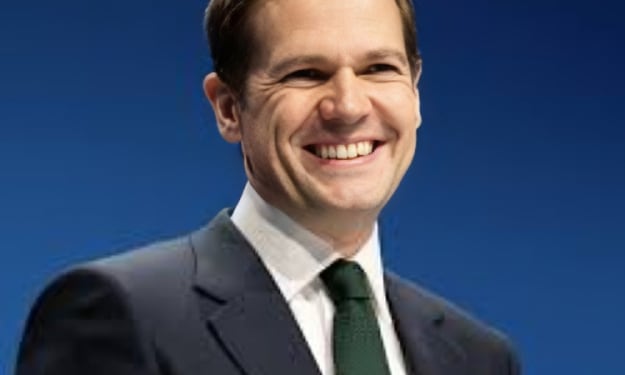
Introduction Robert Jenrick is a well-known British politician. He belongs to the Conservative Party in the United Kingdom. Over the years, he has worked in many important government roles. He is especially known for his views on housing, immigration, and law. Some people support his ideas, while others criticize them, but there is no doubt that he is an important figure in modern British politics.
By Farhan Sayed18 days ago in Potent
5 Kitchen Upgrades That Will Last a Lifetime
Introduction In today’s fast-moving world of home design, trends come and go faster than ever. But when it comes to your kitchen the heart of your home longevity matters far more than fleeting style. The best kitchens are not only beautiful on day one but remain functional, stylish, and durable for decades to come.
By Dilip Kumara19 days ago in Potent
Running and Marijuana: Is It the New Runner’s High?
Author’s note: Marijuana is legal for recreational purposes in Arizona, where I reside. Please check your local laws regarding medical or recreational use in your area. In the United States, the federal government still considers marijuana illegal. This article is not intended to give advice. Each person is unique, and this is my personal experience only. The use of marijuana is known to cause a high heart rate, anxiety, and impairment among other side effects for some users. As always, speak with a medical professional before starting any type of exercise program and regarding the use of marijuana.
By Jeff Barton20 days ago in Potent
Venezuela’s Lost Trillion Dollars and the Crisis Reshaping Latin America
What Really Happened to Venezuela’s Lost Trillion Dollars — And Why the World Can’t Ignore It For a long time, I’ve felt that Venezuela is often discussed in fragments. People talk about oil. Or sanctions. Or migration. Or dictatorship. But very rarely do we sit down and connect all the dots patiently, clearly, and without slogans.
By Dilip Kumara26 days ago in Potent
Europe in the Vise: Chronicle of a Continent Facing the Three Wills of the World. AI-Generated.
Every morning, Europe wakes up with the lingering sensation of having shrunk during the night. Not geographically, nor demographically, but symbolically, strategically, and existentially. Around it, three distinct "wills" have risen—three ways of wielding power and relating to the world that have little to do with European slowness, its internal debates, or its moral hesitations. Vladimir Putin, Donald Trump, and Xi Jinping do not form an official alliance, let alone a coordinated conspiracy. Yet, they embody something deeper and more unsettling for the Old Continent: the brutal return of raw, unabashed power, while Europe continues to view itself as a historical exception—a "post-tragic" space that has supposedly moved beyond the law of the strongest. The rest of the world, however, never signed up for this fiction.
By Laurenceau Porte26 days ago in Potent