
Women's Traditional German Fashion Honoring Regional Roots
Traditional German Fashion

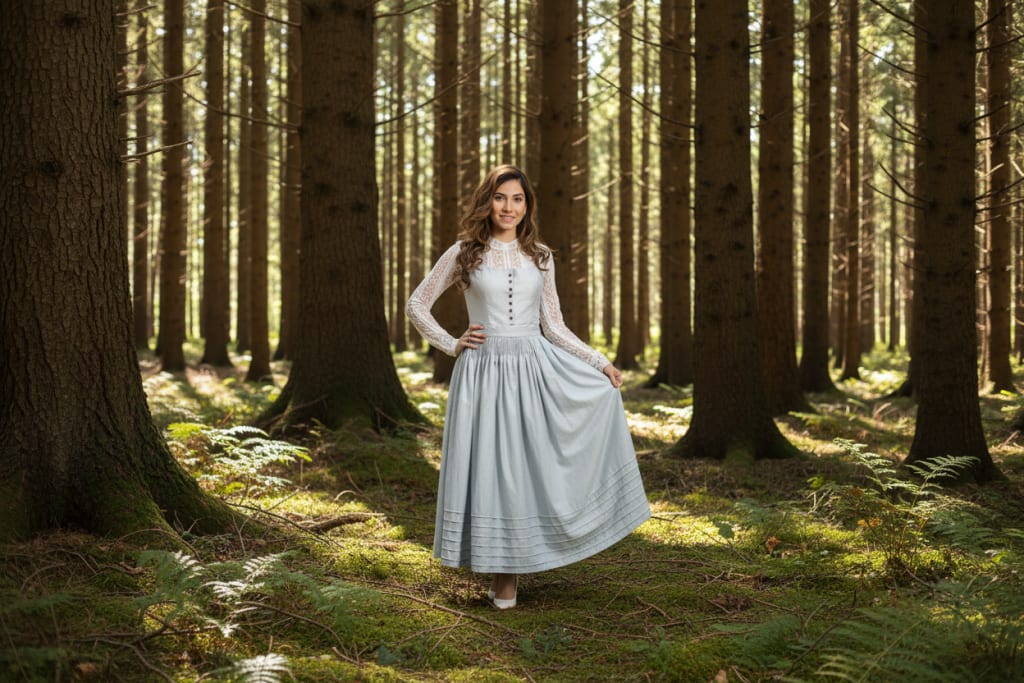
German women’s clothing isn’t one outfit but an entire map of regional styles, each with its own story. The dirndl gets all the attention due to Oktoberfest and celebrity wear. But the Trachten tradition in Germany stretches from the Alps to the North Sea, and each region dresses differently. Women’s Lederhosen is the new trend in traditional clothing that’s gone from novelty to legitimate fashion statement. You have got a world of options most people never knew existed.
A Look into Traditional German Dress for Women
Germany's traditional clothing for women is a regional identity stitched into fabric. From Alpine dirndls to black forest bollenhuts to Schwälmer aprons of Hesse, every region developed something of its own and held onto it. What we have covered here barely scratches the surface because dozens of smaller villages across Germany carry Trachten traditions most people have never seen.
The Dirndl — Germany’s Most Famous Traditional Dress for Women
The dirndl is a traditional Bavarian dress consisting of a fitted bodice, a blouse, a full skirt, and an apron. It is the most recognized piece of traditional German women’s clothing worldwide. These Bavarian dresses began as peasant workwear in the Alpine regions during the 16th century, built for women who needed something breathable and washable. By the 1870s, the upper classes had claimed it for resort fashion. Dirndl is now a standard women’s Oktoberfest clothing that can be found through various traditional clothing stores, such as Dirndl Online Shop, that focus specifically on trachten attire.
Different Dirndl Styles and Lengths
Every woman has a different style choice, and traditional dirndls cater to each of them. Get mini, midi, and maxi lengths in different colors and styles for any occasion. Whether plain or embroidered, each version looks incredible. Women pair the dress with a trachten blouse available in different necklines that change the entire personality of the dress. A sweetheart cut feels flirty and festive, while a square neckline carries a more structured, classic elegance that works beautifully at formal events.
Regional Variations of German Women’s Clothing Beyond the Dirndl
The dirndl dominates Bavaria, but steps outside the Alps and the clothing changes completely. Every German region developed its own outfit based on local climate, religion, and craft traditions.
Black Forest Tracht and the Iconic Bollenhut
The Bollenhut is a wide brimmed straw hat crowned with eleven oversized wool pom poms. Red pom poms mean unmarried, and black pom poms mean married. It is only authentically worn in three Protestant villages in the Gutach valley, but it’s become the visual symbol of the entire Black Forest region. The full outfit pairs a heavily embroidered bodice with a stiff underskirt for dramatic volume, all in dark wool and linen. Black and red tones carry symbolic meaning that changes by village and occasion.
Schwälmer Tracht from Hesse — Germany’s Most Colorful Women’s Outfit
The Schwälmer Tracht features vivid aprons, fitted bodices, and the Betzel, which is an embroidered bonnet with ribbons. Red Betzel for unmarried women, black for married. The hand-stitched embroidery tells rural stories and symbols like flowers, animals, and geometric patterns, each one specific to the wearer’s family and village.
Franconian Goldhauben — Gold-Threaded Headdresses Weighing a Full Kilogram
In Franconia and parts of Upper Austria, women’s festive Tracht includes the Goldhaube—an ornate metallic cap threaded with real gold. Paired with brightly dyed skirts and beadwork aprons, these are statement pieces reserved for major celebrations. They are often heirloom pieces passed between generations.
Northern German and Frisian Women’s Clothing
Move north and the decoration drops, replaced by practical cuts shaped by maritime life. Traditional women’s outfits in Frisia display family wealth through layered jewelry and imported fabrics, just like the North Sea trading culture. Straighter silhouettes, heavier textiles, and Lutheran restraint define this end of the spectrum.
Sorbian Folk Costume — The Most Elaborate Headdress in Germany
The Sorbian minority in Brandenburg and Saxony kept one of most distinctive German women's outfits alive. The standout piece is a massive, fan shaped starched linen headdress that changes shape depending on the occasion and the wearer's village. Wedding versions can extend over a foot wide. The rest of the outfit layers richly embroidered aprons over dark full skirts with contrasting ribbons and lace detailing.
Swabian Tracht — Modest, Dark, and Quietly Intricate
Swabian women's clothing reflects the Protestant values and cooler mountain climate. Dark woolen skirts, fitted jackets with velvet trim, and simple white blouses form the foundation. The beauty lies in the details like delicate silver clasps, hand stitched collar embroidery, and tightly pleated skirts that take real skill to construct. It is less showy than Bavarian or Hessian Tracht but carries the same depth of regional meaning.
Women’s Lederhosen — The Modern Alternative to Traditional Clothing
Female lederhosen have gone from a niche choice to a genuine Oktoberfest trend. Originally designed as men’s Alpine workwear, women’s lederhosen first appeared in German fashion during the 1880s. They are now a mainstream option for women who want the Bavarian look with more freedom of movement—no skirt to manage, no apron to adjust.
Short Lederhosen vs. Knee-Length Styles for Women
Short women’s lederhosen are cut like fitted hot pants—bold, playful, perfect for summer festivals. Knee-length versions offer a more classic silhouette that mirrors the traditional men’s style. These leather shorts come in genuine leather like goatskin, cowhide, or deerskin with traditional embroidery and suspender attachments.
Summary
German women’s clothing is a living tradition that keeps adapting. Most people just know about traditional dirndl dresses, but the collection is vast, from black Forest Bollenhuts to Sorbian tracht, Swabian tracht, Frisian clothing, and female lederhosen. Every piece carries its own region, its own symbolism, and its own personality. The trick is to find the outfit that fits who you are, where you are going, and what the occasion calls for.
About the Creator
Sarah Michelle
When you talk about the content ideas, no one can help you better than Sarah Michelle. With ample experience in the field and dedication to work has been a pro in increasing the aesthetic value.
Keep reading
More stories from Sarah Michelle and writers in Styled and other communities.
The Influence of the Oktoberfest in Catalyzing Opportunities
Oktoberfest, locally known as “Wiesn,” has been part of German culture since 1810. With every iteration, the festival has gotten bigger and better, pouring in 5-7 million people annually. Beerfest brings in a lot of new opportunities and boosts the economy. It opens the door to tourism, creates jobs, and promotes local culture and products in Germany and around the globe.
By Sarah Michelle2 years ago in Styled
Why Pakistani Eid Dresses Are Becoming So Popular in India in 2026
Eid dressing in India has always been about colour, comfort, and a sense of celebration. But this year, something interesting is happening. More and more women are leaning toward Pakistani inspired Eid dresses that take cues from Pakistani silhouettes and embroidery styles. It’s not a sudden shift — it has slowly built up over the last few seasons — but in 2026, the preference is clearer than ever.
By fashion blogger7 days ago in Styled
The Salt in her Voice
The myth says mermaids sing to lure sailors to their death. But why? The ocean is huge. Only 5 percent has been discovered by man. Why would a creature of the sea with that much space to roam ever care about the fate of men on ships? The answer, as it turns out, is not a simple one at all. The truth about the myth is older than the tides. Long ago before the first ship ever cut across the surface, the sea made a pact with the sky. The sky would take the souls of the drowned. Anyone who died in storms or any quiet accidents of the deep would have their soul lifted upward to the Heavens while the bodies would remain below, feeding the oceans endless hunger. The greedy sea however wanted more souls than the sky would claim. So it created mermaids. It gave them beautiful voices woven from currents and moonlight. It commanded them to sing. "Bring forth the ones who float where they should sink." it instructed them. So they did. They never killed out of malice but out of obligation. They sung to summon, not to seduce. A mermaid's voice could loosen the tether between the body and soul, making any man step willingly into the water. The sea would take the body and the sky would take the soul. Balance maintained.
By Sara Wilson6 days ago in Fiction

Comments
There are no comments for this story
Be the first to respond and start the conversation.