
After ‘Good Start’, Iran and U.S. Resolve to Keep Talking
🔹 Formal & News Style Cautious diplomacy resumes after first round of indirect talks in Oman Tehran and Washington signal willingness to continue nuclear discussions Both sides strike measured tone despite deep divisions Talks seen as step toward easing regional tensions 🔹 Neutral & Analytical Why the latest negotiations matter A fragile opening in a long-frozen relationship Diplomacy returns amid sanctions and security concerns 🔹 Catchy & Impactful A small thaw in a long cold war From confrontation to conversation Hope, but no handshake yet

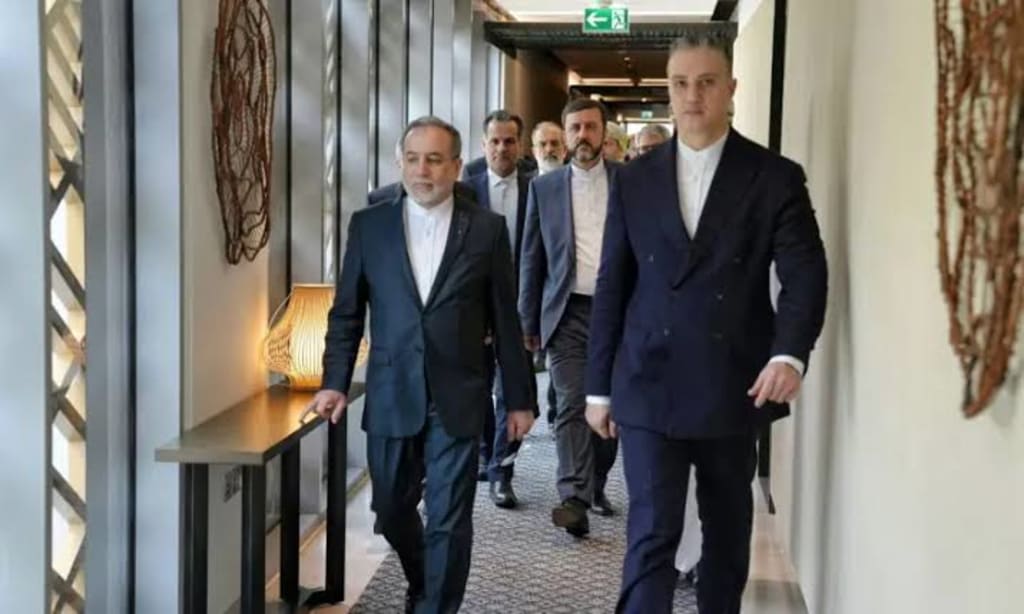
In what diplomats are calling a cautious but meaningful step toward easing one of the Middle East’s most persistent geopolitical conflicts, Iran and the United States agreed this week to continue indirect nuclear negotiations after describing an initial round of talks in Oman as a “good start.” While no breakthrough agreement was reached, the tone from both sides reflects a mutual — if tentative — interest in keeping channels of communication open amid deep divisions over Tehran’s nuclear program and broader regional security concerns.
Reuters
The discussions, held Friday in Muscat and facilitated by Oman’s foreign ministry, were the first substantive indirect talks between the two countries since hostilities escalated following a short but intense conflict last year. Neither Tehran nor Washington announced concrete concessions, but both indicated that follow-up conversations would take place after further consultations in their respective capitals.
Khaleej Times
A Fragile Diplomatic Opening
Iran’s Foreign Minister, Abbas Araghchi, described the meetings as a “good start” but stressed that dialogue requires restraint from external pressures. Speaking after the conclusion of the session in Muscat, Araghchi said that Iranian and U.S. officials had “exchanged views in a positive atmosphere” and that there was an “understanding on continuing the talks.” He added that the specific arrangements for the next round would be determined after further consultation at home.
Apa.az
Araghchi reiterated Tehran’s position that Iran would focus discussions strictly on its nuclear activities, rejecting attempts to broaden the agenda to include issues such as ballistic missiles, regional proxy relationships, or Iran’s domestic human rights record — matters that Washington has insisted should be part of any comprehensive dialogue.
Khaleej Times
For the United States, the talks offered an opportunity to engage Iran diplomatically while maintaining pressure on areas of disagreement. President Donald Trump’s administration sent a delegation that included senior envoys and advisers, underscoring Washington’s interest in preventing further escalation that could draw in regional powers or lead to broader conflict.
Reuters
The Context: Tensions and Calculations
The backdrop for the Muscat talks remains highly charged. In mid-2025, U.S. and Israeli forces conducted airstrikes against Iranian nuclear facilities, prompting retaliatory missile attacks and sparking fears of a wider regional war. In response, the United States significantly increased its military presence in the region, deploying carrier groups and fighter jets to waters near Iran, reinforcing U.S. bases and air defenses.
Khaleej Times
Amid this security environment, both sides have had reason to seek some form of diplomatic engagement. For Tehran, economic challenges intensified by sanctions and internal unrest have heightened the appeal of negotiations that might eventually lead to relief from punitive measures. For Washington, reducing the risk of direct confrontation at a time of broader global tensions — including conflicts in Europe and the Middle East — has been a strategic priority.
Reuters
Despite their willingness to talk, fundamental disagreements persist. Iran maintains that its nuclear program is for peaceful purposes and insists on its sovereign right to enrich uranium at levels that the U.S. finds unacceptable. Washington, meanwhile, wants verifiable limits on enrichment and greater transparency in Iran’s activities but has so far not secured agreement from Tehran on these points.
Khaleej Times
Mixed Signals and Sanctions
Complicating diplomatic efforts, Washington continued to impose sanctions even as talks took place. On the same day that negotiators met in Oman, U.S. authorities announced punitive measures targeting individuals, companies, and vessels linked to Iran’s petroleum exports and maritime trade networks. These actions underscore the Trump administration’s dual approach of pursuing diplomacy while maintaining economic pressure.
Khaleej Times
Iranian officials have publicly criticized what they view as persistent pressure tactics, calling for an environment free of threats and sanctions if negotiations are to proceed constructively. Araghchi and his delegation emphasized that Iran would participate in discussions only if they were framed around mutual respect and refraining from coercion.
news.cgtn.com
Regional and International Reactions
Regional actors and global observers have watched the Muscat talks closely. Oman’s role as mediator highlights its long-standing diplomatic position and its ability to serve as a neutral ground for sensitive negotiations. Officials from the Gulf Cooperation Council and European capitals have expressed cautious optimism, stressing that even preliminary dialogue is preferable to further escalation.
Khaleej Times
Russia, an ally of Tehran, also has called for restraint and encouraged continued engagement, though it maintains its own complex relationship with Washington over issues ranging from Ukraine to Middle East security dynamics.
Reuters
Looking Ahead
As both sides return to their capitals to consult advisers and leadership, future talks are expected to be slow and careful. Observers emphasize that the initial “good start” does not guarantee rapid progress. Deep mistrust — rooted in years of conflict, sanctions, and competing strategic goals — will challenge negotiators as they explore possible areas of compromise.
Khaleej Times
Regardless, the decision to continue diplomatic engagement marks a notable departure from periods of outright hostility and silence. For now, Tehran and Washington appear to share an interest in keeping the dialogue alive — even if the road ahead toward a lasting agreement remains long and uncertain.
About the Creator
Fiaz Ahmed
I am Fiaz Ahmed. I am a passionate writer. I love covering trending topics and breaking news. With a sharp eye for what’s happening around the world, and crafts timely and engaging stories that keep readers informed and updated.
Keep reading
More stories from Fiaz Ahmed and writers in The Swamp and other communities.
Saudi’s Neom Replaced by Almaty as Asian Winter Games Host
The Olympic Council of Asia (OCA) has officially announced that Almaty, Kazakhstan, will host the upcoming Asian Winter Games, replacing Saudi Arabia’s futuristic mega-city project Neom. The decision follows months of growing concerns over logistical readiness, infrastructure delays, and the unprecedented challenge of staging a major winter sports event in a desert region. Saudi Arabia had initially won the bid to host the Games as part of its ambitious Vision 2030 strategy, which seeks to transform the kingdom into a global hub for sports, tourism, and entertainment. The selection of Neom — a planned $500-billion high-tech city on the Red Sea — was intended to showcase Saudi Arabia’s technological innovation, including indoor ski slopes and artificial snow facilities. However, the project’s timelines and technical feasibility have increasingly come under scrutiny. Concerns Over Readiness and Climate Sources close to the OCA said the decision was driven by “practical and sporting considerations.” Hosting winter events such as alpine skiing, biathlon, and snowboarding in a region with no natural snowfall would have required massive energy consumption and artificial snow production, raising both environmental and operational questions. Despite Saudi assurances that Neom’s Trojena mountain resort would be ready in time, inspectors reportedly found that several core venues were still under construction and far from competition-ready. Transportation networks, athlete villages, and safety infrastructure also remained incomplete. In contrast, Almaty offered a proven winter sports environment. The Kazakh city sits near the Tian Shan mountains and already boasts world-class facilities, including the Medeu speed skating rink and Shymbulak ski resort. These venues previously hosted international competitions and require minimal new construction. An OCA official said the choice of Almaty ensures “certainty, sustainability, and athlete safety,” adding that the organization could not risk delays that might compromise the Games’ credibility. Saudi Arabia’s Strategic Setback For Saudi Arabia, the loss of hosting rights represents a notable setback in its sports diplomacy campaign. Over the past decade, the kingdom has invested heavily in international sporting events, including Formula One races, boxing championships, and football tournaments. The Asian Winter Games were meant to symbolize Saudi Arabia’s leap into non-traditional sports and its technological capacity to overcome environmental limits. In a brief statement, Saudi officials said they respected the OCA’s decision and would continue developing Neom and its tourism infrastructure. They emphasized that Trojena remains a key part of the country’s long-term vision and that winter tourism projects would proceed regardless of the Games. However, analysts say the reversal exposes the tension between ambition and feasibility. “Neom represents Saudi Arabia’s desire to redefine what is possible, but mega-events require reliability,” said one regional sports policy expert. “The OCA opted for a safer option.” Almaty’s Opportunity Kazakhstan welcomed the announcement as a chance to reaffirm its status as Central Asia’s leading winter sports destination. Government officials said hosting the Games would boost tourism, generate jobs, and enhance the country’s international profile. Almaty previously bid for the 2022 Winter Olympics and narrowly lost to Beijing. Local authorities view the Asian Winter Games as both a consolation prize and a stepping stone toward future Olympic ambitions. Preparations are expected to focus on upgrading existing venues rather than constructing new ones, aligning with sustainability goals promoted by international sporting bodies. Kazakh President Kassym-Jomart Tokayev praised the decision, saying it reflected “confidence in Kazakhstan’s sporting infrastructure and organizational experience.” Environmental and Ethical Debate The change in host city also reflects a broader shift in how international sporting organizations view climate and sustainability. Critics of the Neom bid argued that building winter sports facilities in a desert region contradicted environmental responsibility, especially amid global climate concerns. Human rights groups had also raised questions about labor conditions and transparency linked to large construction projects in Neom. While the OCA did not publicly cite these issues as decisive factors, observers note that they likely contributed to the organization’s cautious stance. By contrast, Almaty’s natural climate and existing venues reduce the need for large-scale construction and carbon-intensive snowmaking, making it a more environmentally defensible choice. Looking Ahead The Asian Winter Games will now move forward under Almaty’s stewardship, with organizers promising a traditional winter sports atmosphere and strong regional participation. Athletes and national federations have largely welcomed the decision, expressing relief that competitions will take place in a location designed for snow and ice events. For Saudi Arabia, the episode underscores the challenges of transforming bold visions into operational realities. While Neom remains a symbol of future ambition, the reassignment of the Games highlights the limits of innovation when confronted with climate, timelines, and international sporting standards. As preparations begin in Kazakhstan, the shift from desert megacity to mountain metropolis marks a return to conventional winter sports logic — and a reminder that even the most ambitious projects must meet practical demands when hosting the world’s athletes.
By Fiaz Ahmed a day ago in The Swamp
Why Black History Matters in America?
The United States of America is celebrating their 250th anniversary in 2026. I'm proud to be an American and as someone who was born here, I wouldn't imagine myself living anywhere else. This is a country where opportunities are possible. Where anyone can be successful in anything they desire to do. Equality, community, and togetherness are the backbones of what America is and should be about. However, we have an administration who wants to erase and disregard those who have made positive, meaningful impacts in our country, specifically Black figures, such as Martin Luther King, Jr., Rosa Parks, and Maya Angelou. President Trump and his administration have been constantly complaining and fighting against what they call the "Woke agenda". They use this excuse as a distraction from other issues they refuse to address, such as the high cost of living, climate change, and inflation. That equality is dividing America, when in reality, it's bringing us together. Being woke is not tied to a specific political party. No matter where you stand on the political spectrum, you can still care about other people and their plights. Compassion and empathy for others isn't tied to a political party, either. We were taught as children to treat others the way we want to be treated and not judge others because they're different from us. Caring about others isn't a personal attack on your beliefs. It doesn't make you any less of a person. People who are easily offended over African American figures, past or present, or anything related to it, are grasping at straws. Current and future generations need to know who people like Harriet Tubman and Shirley Chisholm were, especially in the classroom. Black History is part of American History. It should be recognized, not hidden or forgotten. Besides, you can't shield children from everything, just because your feelings are easily hurt.
By Mark Wesley Pritchard 6 days ago in The Swamp




Comments
There are no comments for this story
Be the first to respond and start the conversation.