
Almost Half Expect Data Centers to Be a Major Campaign Issue, New Poll Shows
As AI expansion and energy demands surge, voters are increasingly concerned about the political and environmental impact of data centers
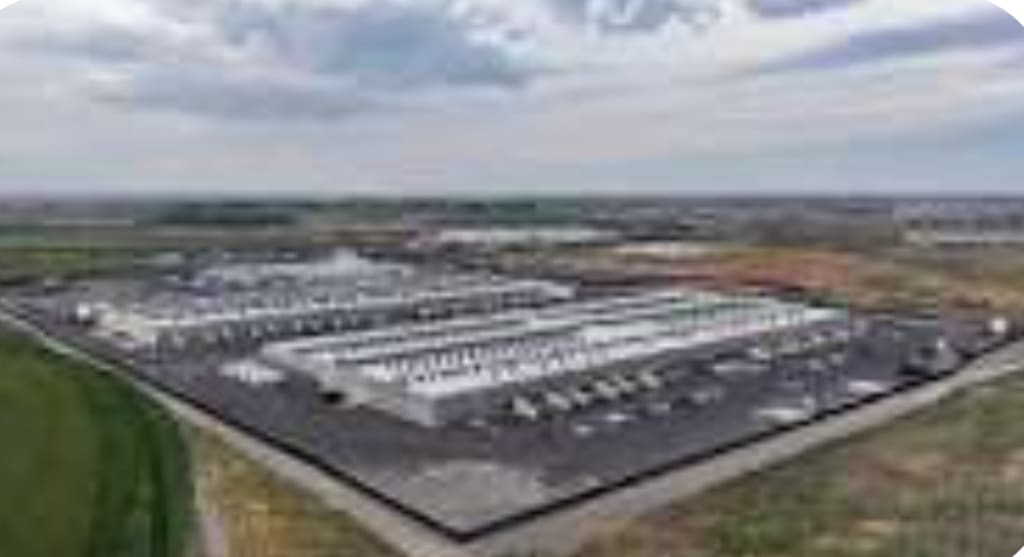
Data centers — once viewed as quiet, technical backbones of the internet — are rapidly becoming a visible political issue. A new poll suggests that nearly half of voters expect data center expansion to emerge as a significant topic in upcoming election campaigns.
This shift reflects how digital infrastructure, artificial intelligence, and cloud computing are no longer abstract technological concepts. Instead, they are increasingly tied to local economies, environmental concerns, electricity prices, and community development debates.
As artificial intelligence tools, cryptocurrency mining, and cloud services expand at record pace, the physical footprint of data centers is growing — and so is public scrutiny.
Why Data Centers Are Suddenly Political
Data centers power nearly every aspect of modern life. From streaming services and banking apps to AI chatbots and government records, these massive facilities process and store enormous amounts of digital information.
Major technology companies such as Amazon, Microsoft, Google, and Meta have dramatically expanded their data center footprints across North America and beyond.
However, these facilities require:
Massive electricity consumption
Significant water use for cooling
Large tracts of land
High-voltage transmission infrastructure
As a result, communities hosting new projects often find themselves debating trade-offs between economic growth and environmental sustainability.
Polling now shows that voters are paying attention — and many expect candidates to address these concerns directly.
Energy Demand and Grid Strain
One of the primary concerns is electricity usage. Modern data centers can consume as much power as small cities. With the rise of AI-driven computing, energy demand has accelerated even further.
Utilities in several states have reported that data center growth is among the largest drivers of projected electricity demand increases over the next decade.
This creates political tension:
Should residential consumers bear higher costs?
Should utilities prioritize clean energy expansion?
How should grid upgrades be funded?
Can renewable energy keep pace with digital demand?
Candidates running for state and local office are increasingly being asked to clarify their positions on energy infrastructure investments tied to data center development.
Water Usage Sparks Local Backlash
Cooling systems in large server farms often rely on water-intensive processes. In drought-prone regions, residents have questioned whether scarce water resources should be allocated to technology facilities.
Community activists argue that water permits, zoning approvals, and tax incentives should reflect environmental sustainability priorities.
In some areas, public hearings over proposed data center projects have drawn significant local opposition. Residents cite concerns about:
Water depletion
Noise pollution
Visual impact
Increased traffic
Limited long-term job creation
These grassroots reactions are helping elevate the issue into campaign rhetoric.
The Economic Argument
Supporters of data center expansion emphasize economic benefits:
Construction jobs
Property tax revenue
Technology ecosystem growth
Attraction of high-skilled workers
States and municipalities often compete aggressively to attract major technology investments, offering tax incentives and streamlined permitting.
For policymakers, the question becomes how to balance economic competitiveness with environmental responsibility.
Some candidates frame data center growth as essential to remaining competitive in the global AI race. Others argue for stricter environmental safeguards before approving new facilities.
Artificial Intelligence Raises the Stakes
The rapid growth of AI platforms has dramatically increased computing requirements. Training advanced AI models demands enormous processing power, which translates directly into energy use.
The AI boom has made data centers even more central to national competitiveness.
Federal policymakers have increasingly linked digital infrastructure to economic security and technological leadership. As geopolitical competition intensifies, digital capacity is seen as strategic infrastructure — similar to ports, highways, or energy grids.
This framing pushes data centers into national campaign narratives, especially when discussing industrial policy and innovation.
Climate Commitments Under Pressure
Many tech companies have pledged carbon neutrality or net-zero emissions goals. However, meeting those commitments while expanding data center capacity presents challenges.
Renewable energy integration is growing, but critics argue that actual electricity usage often outpaces clean energy deployment.
Voters concerned about climate change may view unchecked data center growth as contradictory to environmental promises.
Political candidates must therefore navigate competing priorities:
Economic growth
Climate responsibility
Energy reliability
Technological leadership
Polling indicates that voters increasingly expect clear answers.
Local vs. National Politics
Data center debates vary by level of government.
Local Level
Zoning laws, water permits, and tax agreements are typically handled locally. City councils and county boards often face direct community pressure.
State Level
State legislators address energy regulation, grid planning, and incentive structures.
Federal Level
National candidates discuss AI competitiveness, digital infrastructure funding, and climate policy.
The polling suggests that across these levels, voters see data centers as more than just technical facilities — they are symbols of broader economic and environmental policy choices.
A Sign of Infrastructure Politics Evolving
Historically, infrastructure debates focused on roads, bridges, and airports. Today, digital infrastructure is just as essential — but less visible.
The new polling data suggests that invisibility is fading.
Voters increasingly recognize that the apps and platforms they use daily rely on physical facilities with real-world impacts. This awareness transforms data centers into tangible campaign issues.
Candidates ignoring the topic risk appearing out of touch with both economic development concerns and environmental accountability.
What This Means for Upcoming Campaigns
If nearly half of voters expect data centers to be discussed during campaigns, political strategists will likely respond.
We may see:
Policy proposals for stricter environmental reviews
Commitments to renewable-powered facilities
Incentive reforms tied to job creation benchmarks
Public debates over electricity pricing structures
Calls for greater transparency in utility agreements
Campaign messaging could frame data centers as either engines of innovation or symbols of unchecked corporate expansion.
The framing will likely depend on regional economic priorities and voter demographics.
A New Political Frontier
Data centers were once silent buildings at the edge of town. Now they sit at the intersection of climate policy, economic development, technological innovation, and community identity.
The poll indicating that almost half of voters expect them to become campaign issues marks a turning point.
Digital infrastructure is no longer politically neutral.
As AI expands and energy demand rises, candidates will increasingly need to articulate clear positions on how digital growth should be managed.
The debate is not simply about servers and cables — it is about the future shape of communities, the balance between innovation and sustainability, and the role of technology in public life.
In the coming election cycle, the hum of servers may echo loudly in political speeches.
About the Creator
Why Black History Matters in America?
The United States of America is celebrating their 250th anniversary in 2026. I'm proud to be an American and as someone who was born here, I wouldn't imagine myself living anywhere else. This is a country where opportunities are possible. Where anyone can be successful in anything they desire to do. Equality, community, and togetherness are the backbones of what America is and should be about. However, we have an administration who wants to erase and disregard those who have made positive, meaningful impacts in our country, specifically Black figures, such as Martin Luther King, Jr., Rosa Parks, and Maya Angelou. President Trump and his administration have been constantly complaining and fighting against what they call the "Woke agenda". They use this excuse as a distraction from other issues they refuse to address, such as the high cost of living, climate change, and inflation. That equality is dividing America, when in reality, it's bringing us together. Being woke is not tied to a specific political party. No matter where you stand on the political spectrum, you can still care about other people and their plights. Compassion and empathy for others isn't tied to a political party, either. We were taught as children to treat others the way we want to be treated and not judge others because they're different from us. Caring about others isn't a personal attack on your beliefs. It doesn't make you any less of a person. People who are easily offended over African American figures, past or present, or anything related to it, are grasping at straws. Current and future generations need to know who people like Harriet Tubman and Shirley Chisholm were, especially in the classroom. Black History is part of American History. It should be recognized, not hidden or forgotten. Besides, you can't shield children from everything, just because your feelings are easily hurt.
By Mark Wesley Pritchard 17 days ago in The Swamp
Cloudflare Guidance Above Expectations
the digital age, where cyber threats loom large and web performance can make or break a business, Cloudflare has emerged as a game‑changer. What began as a solution for faster load times has evolved into a comprehensive platform for web security, performance optimization, and network reliability. Importantly, Cloudflare’s guidance—its documentation, developer tools, and customer support—regularly exceeds expectations, empowering businesses of all sizes to operate confidently in an increasingly hostile online environment.
By Ayesha Lashari7 days ago in The Swamp


Comments
There are no comments for this story
Be the first to respond and start the conversation.