
Arab Leaders Condemn Remarks by U.S. Ambassador to Israel
Regional Officials Warn That Controversial Comments Risk Escalating Tensions and Undermining Diplomatic Efforts
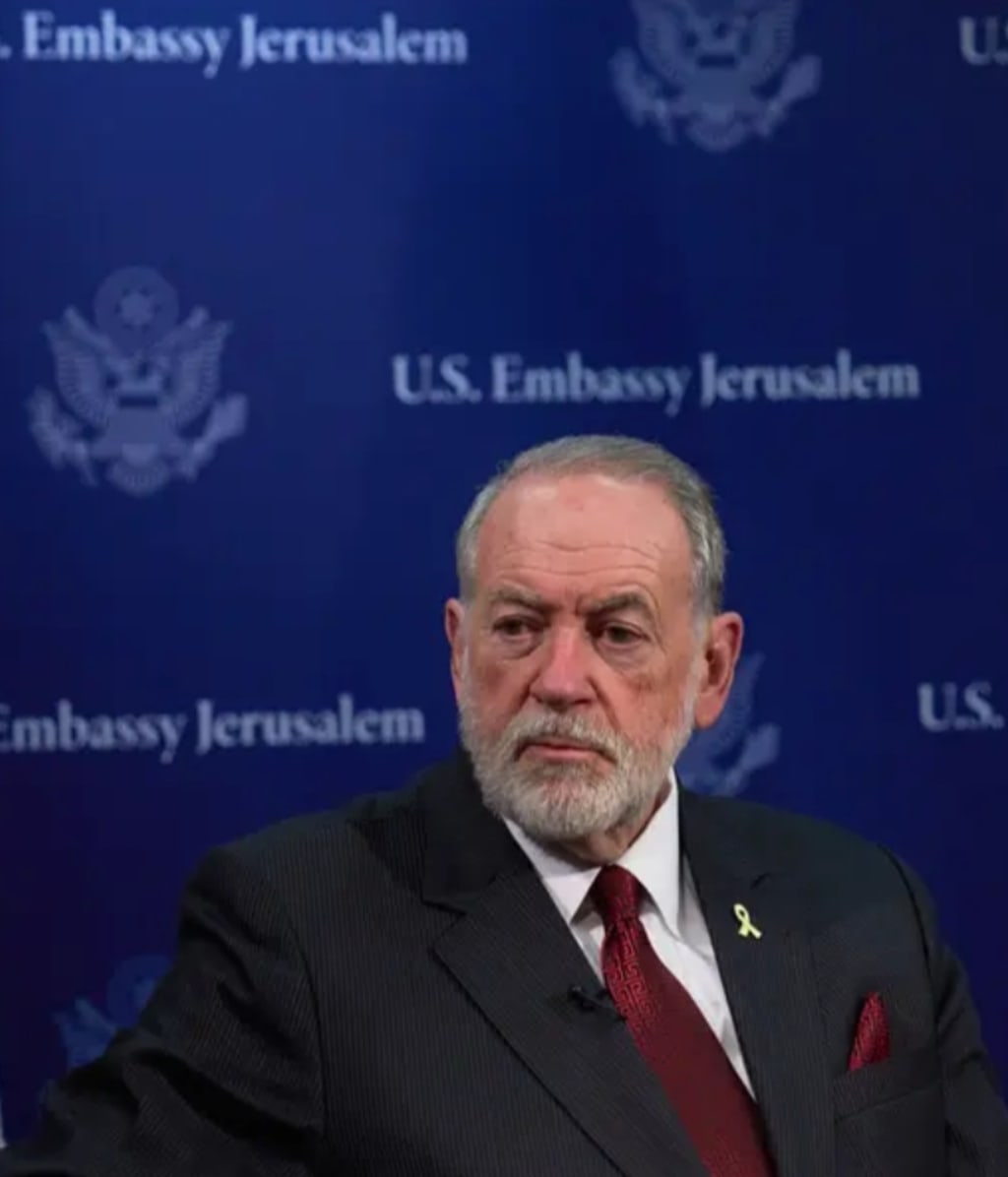
Tensions across the Middle East intensified this week after remarks attributed to the U.S. ambassador to Israel sparked sharp criticism from Arab leaders and renewed debate over Washington’s role in the region. The statements, delivered during a public event in Israel, were widely interpreted by officials across the Arab world as favoring one side in an already volatile political and territorial dispute.
Within hours, foreign ministries across several Arab capitals issued formal condemnations, warning that the comments could inflame public sentiment and complicate ongoing diplomatic efforts aimed at stabilizing the region.
Although disagreements between Washington and Arab governments are not new, the unusually unified response underscores how sensitive regional dynamics remain — particularly amid ongoing violence, humanitarian crises, and fragile negotiations.
Diplomatic Fallout Spreads Quickly
Officials from countries including Jordan, Saudi Arabia, Qatar, and Egypt voiced concern that the ambassador’s remarks appeared to deviate from long-standing international frameworks regarding the Israeli-Palestinian conflict.
In statements carried by regional media, several foreign ministries emphasized their commitment to a two-state solution and reiterated support for Palestinian self-determination. Some leaders described the comments as “provocative” and “counterproductive,” arguing they risk undermining years of diplomatic engagement.
The Arab League convened emergency consultations to assess the implications of the remarks, reflecting how seriously member states view perceived shifts in U.S. policy tone.
Context: A Fragile Political Moment
The controversy comes at a particularly delicate time.
Violence in Gaza has drawn international scrutiny, and humanitarian concerns continue to dominate global headlines. Meanwhile, tensions in the West Bank remain elevated, and ceasefire negotiations involving regional mediators are ongoing.
The United States has historically positioned itself as a key broker in the Israeli-Palestinian peace process. However, critics in the Arab world argue that Washington’s credibility as a neutral mediator has eroded over time — especially following the relocation of the U.S. embassy to Jerusalem during the administration of Donald Trump.
That move, widely opposed by Arab governments, was seen as recognizing Jerusalem as Israel’s capital without resolving Palestinian claims to East Jerusalem.
Against this backdrop, even subtle rhetorical shifts can carry outsized political consequences.
What Was Said — and Why It Matters
While exact phrasing has varied in media reports, Arab officials contend that the ambassador’s comments appeared to legitimize policies or territorial claims that remain disputed under international law.
Such remarks resonate deeply in a region where symbolism matters as much as substance. Public opinion across many Arab nations remains highly sensitive to perceived encroachments on Palestinian rights.
Political analysts note that diplomatic language is rarely accidental. Even small deviations from established phrasing can signal broader strategic recalibration — or at least create that perception.
And perception, in geopolitics, can be just as powerful as policy.
Washington’s Position
The U.S. State Department has not indicated any formal policy change. Officials have reiterated America’s commitment to regional stability and its longstanding partnership with Israel, a relationship that spans decades and multiple administrations.
Israel remains one of Washington’s closest allies in the region, benefiting from robust military, economic, and diplomatic support.
At the same time, U.S. officials have repeatedly stated their support for humanitarian assistance in Gaza and a negotiated political solution to the broader conflict.
The challenge lies in balancing these commitments while maintaining credibility with Arab partners — many of whom cooperate closely with Washington on security, energy, and counterterrorism initiatives.
Regional Reactions Reflect Broader Frustration
The swift condemnation from Arab leaders reflects not just disagreement with a single statement but broader frustration over stalled peace efforts and escalating violence.
In Amman, government officials emphasized the importance of preserving the legal and historical status quo of Jerusalem’s holy sites. In Riyadh, leaders stressed that any sustainable regional stability must include meaningful progress toward Palestinian statehood.
Meanwhile, in Cairo, policymakers reiterated their country’s longstanding role as a mediator between Israel and Palestinian factions.
These responses underscore a broader concern: that unilateral rhetoric could derail delicate diplomatic channels currently underway behind closed doors.
Public Opinion and Political Pressure
Arab governments must also navigate domestic public opinion, which often demands strong responses to developments involving Jerusalem or Gaza.
Social media platforms quickly amplified criticism of the ambassador’s remarks, fueling grassroots campaigns and calls for stronger diplomatic action.
Leaders in the region operate within complex political environments where appearing passive in the face of perceived injustices can carry domestic costs.
As a result, even symbolic statements from U.S. officials can trigger significant regional backlash.
The Risk of Escalation
Diplomatic friction does not automatically translate into policy rupture. However, repeated rhetorical controversies can erode trust over time.
Security coordination between the United States and Arab states remains robust. Intelligence sharing and military partnerships continue across the region. Energy cooperation and trade ties are also deeply intertwined.
But diplomacy depends on credibility.
If Arab leaders conclude that Washington’s messaging increasingly aligns exclusively with Israeli positions — without equivalent public support for Palestinian rights — diplomatic strain could intensify.
That strain may not manifest immediately in broken alliances. Instead, it could appear in quieter forms: reduced enthusiasm for normalization initiatives, hesitancy in security collaboration, or stronger alignment with alternative global powers.
A Test for U.S. Regional Strategy
The controversy highlights the delicate balancing act facing American policymakers.
The United States seeks to preserve Israel’s security, counter Iranian influence, prevent broader regional war, and maintain relationships with key Arab partners — all simultaneously.
Each objective intersects with the Israeli-Palestinian issue.
When rhetoric appears to tilt too heavily in one direction, even unintentionally, it complicates that balancing effort.
As ceasefire talks and humanitarian negotiations continue, diplomats will likely work to reassure regional allies that U.S. policy remains consistent with established international frameworks.
Conclusion
The condemnation of remarks by the U.S. ambassador to Israel reflects more than diplomatic disagreement. It signals the depth of sensitivity surrounding one of the world’s most enduring conflicts.
At a time when tensions are already high, words carry weight.
For Arab leaders, protecting the viability of a negotiated two-state solution remains central to their public and diplomatic posture. For Washington, maintaining influence across a volatile region requires careful messaging as well as strategic clarity.
Whether this episode proves to be a temporary flare-up or a deeper indicator of shifting alignments will depend on how swiftly and effectively diplomatic channels can contain the fallout.
In the Middle East, perception shapes politics. And in moments of heightened tension, even a few sentences can reverberate across borders
About the Creator
A Gathering of Evil Bosses
“I’m the queen of chin jutting while I smooth my hair, attacking, insulting, and deflecting to protect my appointer.” “Oh, please, Blondi, my hair is curled, highlighted, and longer than yours. I feature television commercials telling immigrants that we will give them a free plane ride home, and if they voluntarily turn themselves in, they will be allowed to legally apply for re-entry. It runs everywhere, and I look good in it! You can’t compete because of your blond hair. Mine is nicer, and my lips are prettier than yours.”
By Andrea Corwin 4 days ago in The Swamp
Russia Threatens to Deploy Navy to Protect Vessels from ‘Western Piracy’
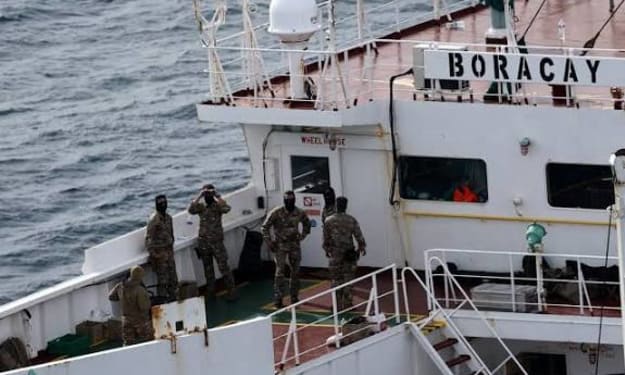
Russia has issued a stern warning that it may deploy naval forces to safeguard its commercial and energy shipments following what Moscow describes as acts of “Western piracy” targeting Russian vessels in international waters. The threat comes amid rising tensions with Western nations over sanctions, maritime trade restrictions, and ongoing geopolitical disputes. The statement, released by the Russian Ministry of Defense, claims that several Russian merchant ships and oil tankers have encountered interference from naval forces of countries imposing sanctions. Moscow asserts that such actions constitute unlawful interference with shipping and has vowed to protect its vessels using military assets if necessary. Background and Context The announcement follows a series of incidents in the Baltic Sea and the Black Sea, where Russian-flagged vessels have reportedly been prevented from accessing certain ports or forced to change routes due to inspection and boarding by foreign authorities. Russian officials argue that these measures violate international maritime law and threaten global energy and trade flows. Moscow has framed the situation as a matter of national security, highlighting the strategic importance of its naval and commercial shipping lanes. According to Russian analysts, deploying the navy is intended both as a deterrent and as a means of ensuring uninterrupted energy exports, particularly natural gas and oil, which are critical to the Russian economy. International Reactions Western nations have dismissed the claims as politically motivated rhetoric designed to justify aggressive actions. The United States and the European Union reiterated that sanctions and maritime controls are legal measures responding to Russia’s broader geopolitical conduct. Officials in Brussels and Washington stressed that the security of shipping lanes in international waters remains governed by international law, including the United Nations Convention on the Law of the Sea (UNCLOS). Despite Western rebuttals, the threat of deploying Russian warships has raised concerns among maritime insurers, commercial shipping companies, and regional governments. Experts warn that any military escort or naval patrols in contested waters could escalate tensions and increase the risk of confrontations at sea. Strategic Implications Russia’s naval build-up and readiness to deploy forces to protect commercial shipping have both economic and geopolitical implications. Economically, it aims to ensure that Russian exports—particularly energy resources—remain secure despite sanctions and disruptions. Geopolitically, it signals Moscow’s willingness to assert control over its shipping corridors and challenge Western influence in critical maritime regions. Military analysts note that Russia’s fleet includes a combination of surface combatants, submarines, and auxiliary vessels capable of escort missions, surveillance, and rapid response. Deploying these assets could alter the balance of power in regions such as the Black Sea, where NATO and partner nations maintain a significant presence. Risks of Escalation The situation carries inherent risks of escalation. Naval encounters between Russian warships and vessels from Western nations could quickly turn into international incidents, potentially disrupting global trade. Shipping companies may face higher insurance premiums and operational costs if military deployments increase the perceived threat level in key maritime routes. Additionally, experts warn that the rhetoric around “Western piracy” could be used to justify future military operations beyond escorting commercial vessels, further straining international relations and undermining diplomatic channels. Looking Ahead For now, Moscow appears to be emphasizing deterrence rather than immediate confrontation. Analysts predict that Russia may initially focus on visible naval patrols, exercises, and warnings to shipping operators before committing to permanent deployments. Nonetheless, the threat has already heightened attention in global maritime and political circles, highlighting the growing intersection between military strategy, trade security, and geopolitics. With Russian officials framing commercial shipping as a national security priority, the coming months could see increased tension in regions critical to both energy exports and international maritime commerce. The unfolding situation underscores the fragile nature of international shipping amid geopolitical conflicts and the potential for naval posturing to impact global trade flows, insurance markets, and regional security dynamics.
By Fiaz Ahmed 6 days ago in The Swamp



Comments
There are no comments for this story
Be the first to respond and start the conversation.