
Russia Threatens to Deploy Navy to Protect Vessels from ‘Western Piracy’
Formal / News Style Moscow warns of military action to safeguard shipping amid escalating tensions with the West Russian naval deployment considered to ensure commercial and energy shipments in contested waters 🔹 Neutral & Informative Russia cites interference with merchant vessels as justification for naval escort plans Potential deployment raises concerns over maritime security and global trade stability 🔹 Impactful Russian navy could patrol international waters as tensions with Western nations rise

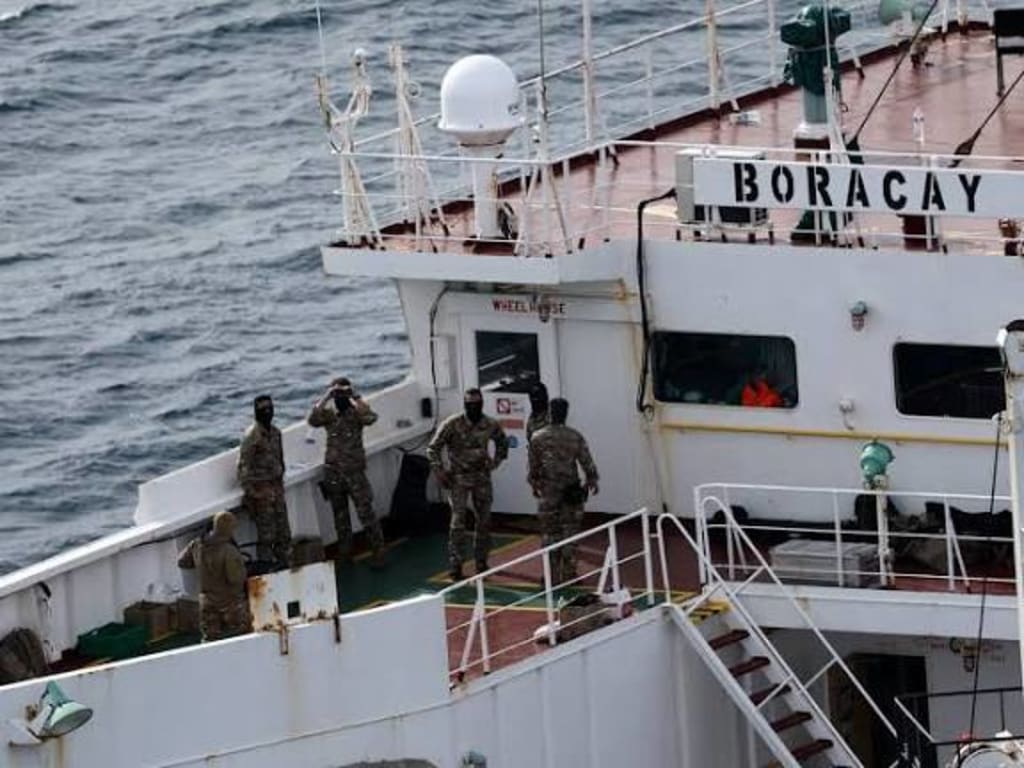
Russia has issued a stern warning that it may deploy naval forces to safeguard its commercial and energy shipments following what Moscow describes as acts of “Western piracy” targeting Russian vessels in international waters. The threat comes amid rising tensions with Western nations over sanctions, maritime trade restrictions, and ongoing geopolitical disputes.
The statement, released by the Russian Ministry of Defense, claims that several Russian merchant ships and oil tankers have encountered interference from naval forces of countries imposing sanctions. Moscow asserts that such actions constitute unlawful interference with shipping and has vowed to protect its vessels using military assets if necessary.
Background and Context
The announcement follows a series of incidents in the Baltic Sea and the Black Sea, where Russian-flagged vessels have reportedly been prevented from accessing certain ports or forced to change routes due to inspection and boarding by foreign authorities. Russian officials argue that these measures violate international maritime law and threaten global energy and trade flows.
Moscow has framed the situation as a matter of national security, highlighting the strategic importance of its naval and commercial shipping lanes. According to Russian analysts, deploying the navy is intended both as a deterrent and as a means of ensuring uninterrupted energy exports, particularly natural gas and oil, which are critical to the Russian economy.
International Reactions
Western nations have dismissed the claims as politically motivated rhetoric designed to justify aggressive actions. The United States and the European Union reiterated that sanctions and maritime controls are legal measures responding to Russia’s broader geopolitical conduct. Officials in Brussels and Washington stressed that the security of shipping lanes in international waters remains governed by international law, including the United Nations Convention on the Law of the Sea (UNCLOS).
Despite Western rebuttals, the threat of deploying Russian warships has raised concerns among maritime insurers, commercial shipping companies, and regional governments. Experts warn that any military escort or naval patrols in contested waters could escalate tensions and increase the risk of confrontations at sea.
Strategic Implications
Russia’s naval build-up and readiness to deploy forces to protect commercial shipping have both economic and geopolitical implications. Economically, it aims to ensure that Russian exports—particularly energy resources—remain secure despite sanctions and disruptions. Geopolitically, it signals Moscow’s willingness to assert control over its shipping corridors and challenge Western influence in critical maritime regions.
Military analysts note that Russia’s fleet includes a combination of surface combatants, submarines, and auxiliary vessels capable of escort missions, surveillance, and rapid response. Deploying these assets could alter the balance of power in regions such as the Black Sea, where NATO and partner nations maintain a significant presence.
Risks of Escalation
The situation carries inherent risks of escalation. Naval encounters between Russian warships and vessels from Western nations could quickly turn into international incidents, potentially disrupting global trade. Shipping companies may face higher insurance premiums and operational costs if military deployments increase the perceived threat level in key maritime routes.
Additionally, experts warn that the rhetoric around “Western piracy” could be used to justify future military operations beyond escorting commercial vessels, further straining international relations and undermining diplomatic channels.
Looking Ahead
For now, Moscow appears to be emphasizing deterrence rather than immediate confrontation. Analysts predict that Russia may initially focus on visible naval patrols, exercises, and warnings to shipping operators before committing to permanent deployments.
Nonetheless, the threat has already heightened attention in global maritime and political circles, highlighting the growing intersection between military strategy, trade security, and geopolitics. With Russian officials framing commercial shipping as a national security priority, the coming months could see increased tension in regions critical to both energy exports and international maritime commerce.
The unfolding situation underscores the fragile nature of international shipping amid geopolitical conflicts and the potential for naval posturing to impact global trade flows, insurance markets, and regional security dynamics.
About the Creator
Fiaz Ahmed
I am Fiaz Ahmed. I am a passionate writer. I love covering trending topics and breaking news. With a sharp eye for what’s happening around the world, and crafts timely and engaging stories that keep readers informed and updated.
Keep reading
More stories from Fiaz Ahmed and writers in The Swamp and other communities.
Bangladesh’s Incoming PM Tarique Rahman Sworn Into Parliament
In a historic and closely watched political development, Tarique Rahman, the leader of Bangladesh’s opposition party, was sworn in as a member of parliament, signaling a major shift in the country’s political landscape. The oath-taking ceremony took place in the capital, Dhaka, and was attended by senior party members, diplomats, and observers, amid heightened security and widespread media attention. Tarique Rahman, widely seen as the heir to the political legacy of his late father, former Prime Minister Ziaur Rahman, and his mother, former Prime Minister Khaleda Zia, has long been a central figure in Bangladesh’s political opposition. His entry into parliament marks a turning point for the Bangladesh Nationalist Party and sets the stage for a potentially transformative tenure. Oath and Parliamentary Induction The swearing-in ceremony was conducted in the main chamber of the Jatiya Sangsad, with the Speaker of the House administering the oath. Rahman pledged allegiance to the Constitution and affirmed his commitment to serve the people of Bangladesh with integrity and dedication. “This is not only a personal milestone but also a defining moment for democratic representation in our country,” Rahman said in his inaugural address to fellow lawmakers. He highlighted priorities such as economic development, social welfare, and national unity, signaling an intent to navigate both partisan and national interests. Political Context Rahman’s induction comes after a period of significant political turbulence in Bangladesh, including contentious elections, street protests, and challenges to the legitimacy of government institutions. Analysts note that his return to active parliamentary politics is likely to energize his party’s base while simultaneously increasing pressure on the ruling administration to address longstanding governance issues. Over the past decade, Rahman has faced political and legal scrutiny, including periods of exile and restrictions on political activity. His supporters view him as a symbol of resilience and continuity for the BNP, while critics have questioned his political strategies and the implications of his return. Party and Public Reaction The Bangladesh Nationalist Party celebrated the occasion as a “new chapter” for the country’s democracy. Party leaders emphasized that Rahman’s presence in parliament would strengthen opposition voices and provide a constructive counterbalance to the ruling party. Streets around the parliament were lined with supporters waving party flags and chanting slogans of welcome. Political analysts suggest that Rahman’s entry could lead to more vigorous debates on policy and governance, particularly regarding economic reforms, corruption investigations, and human rights issues. It is expected that the opposition will leverage his leadership to push for greater transparency and accountability within government operations. Security and Diplomatic Attention Due to the high-profile nature of the ceremony, security around the parliament complex was significantly increased, including roadblocks, aerial surveillance, and deployment of paramilitary units. Diplomats from various countries attended as observers, signaling international interest in Bangladesh’s evolving political dynamics and the potential implications for regional stability. “The world is watching Bangladesh as it navigates this new phase of parliamentary politics,” said a senior foreign diplomat. “Tarique Rahman’s induction reflects both domestic political change and broader geopolitical considerations in South Asia.” Challenges Ahead Despite the celebratory atmosphere, Rahman faces multiple challenges. Bangladesh continues to grapple with economic disparities, infrastructural development needs, climate-related crises, and complex regional diplomacy. Additionally, maintaining party unity and effectively negotiating with the ruling coalition will be critical for any legislative achievements. Experts also note that Rahman’s prominence could heighten political polarization, particularly in a parliament where the opposition must balance assertiveness with collaboration to achieve meaningful policy outcomes. Looking Forward Observers predict that Tarique Rahman’s role in parliament will shape Bangladesh’s political discourse over the next several years. His influence could extend beyond party lines, affecting national policymaking and diplomatic relations with neighboring countries such as India, Myanmar, and China. As Bangladesh moves forward, Rahman’s induction represents a critical juncture, offering both opportunities and uncertainties. Political observers emphasize that his actions in parliament will be closely scrutinized by constituents, party members, and international partners alike. In a statement following the ceremony, Rahman reaffirmed his commitment to strengthening democratic institutions, improving governance, and advancing the welfare of Bangladeshis nationwide, underscoring the high stakes and expectations surrounding his parliamentary role.
By Fiaz Ahmed about 13 hours ago in The Swamp
Why Black History Matters in America?
The United States of America is celebrating their 250th anniversary in 2026. I'm proud to be an American and as someone who was born here, I wouldn't imagine myself living anywhere else. This is a country where opportunities are possible. Where anyone can be successful in anything they desire to do. Equality, community, and togetherness are the backbones of what America is and should be about. However, we have an administration who wants to erase and disregard those who have made positive, meaningful impacts in our country, specifically Black figures, such as Martin Luther King, Jr., Rosa Parks, and Maya Angelou. President Trump and his administration have been constantly complaining and fighting against what they call the "Woke agenda". They use this excuse as a distraction from other issues they refuse to address, such as the high cost of living, climate change, and inflation. That equality is dividing America, when in reality, it's bringing us together. Being woke is not tied to a specific political party. No matter where you stand on the political spectrum, you can still care about other people and their plights. Compassion and empathy for others isn't tied to a political party, either. We were taught as children to treat others the way we want to be treated and not judge others because they're different from us. Caring about others isn't a personal attack on your beliefs. It doesn't make you any less of a person. People who are easily offended over African American figures, past or present, or anything related to it, are grasping at straws. Current and future generations need to know who people like Harriet Tubman and Shirley Chisholm were, especially in the classroom. Black History is part of American History. It should be recognized, not hidden or forgotten. Besides, you can't shield children from everything, just because your feelings are easily hurt.
By Mark Wesley Pritchard 16 days ago in The Swamp
Cloudflare Guidance Above Expectations
the digital age, where cyber threats loom large and web performance can make or break a business, Cloudflare has emerged as a game‑changer. What began as a solution for faster load times has evolved into a comprehensive platform for web security, performance optimization, and network reliability. Importantly, Cloudflare’s guidance—its documentation, developer tools, and customer support—regularly exceeds expectations, empowering businesses of all sizes to operate confidently in an increasingly hostile online environment.
By Ayesha Lashari6 days ago in The Swamp


Comments
There are no comments for this story
Be the first to respond and start the conversation.