
Baal on Fire, Iran’s Fiery Message to the West
Why a Baal effigy was burned in Tehran — and how Trump, Epstein and online narratives became part of the spectacle

1. A Revolutionary Anniversary with a Twist
On February 11, 2026, tens of thousands of Iranians took part in state-organised rallies marking the 47th anniversary of Iran’s 1979 Islamic Revolution. These rallies — held nationwide in cities from Tehran to Isfahan — blended political chanting, patriotic slogans and symbolic acts meant to underline Iran’s resistance to perceived foreign enemies.
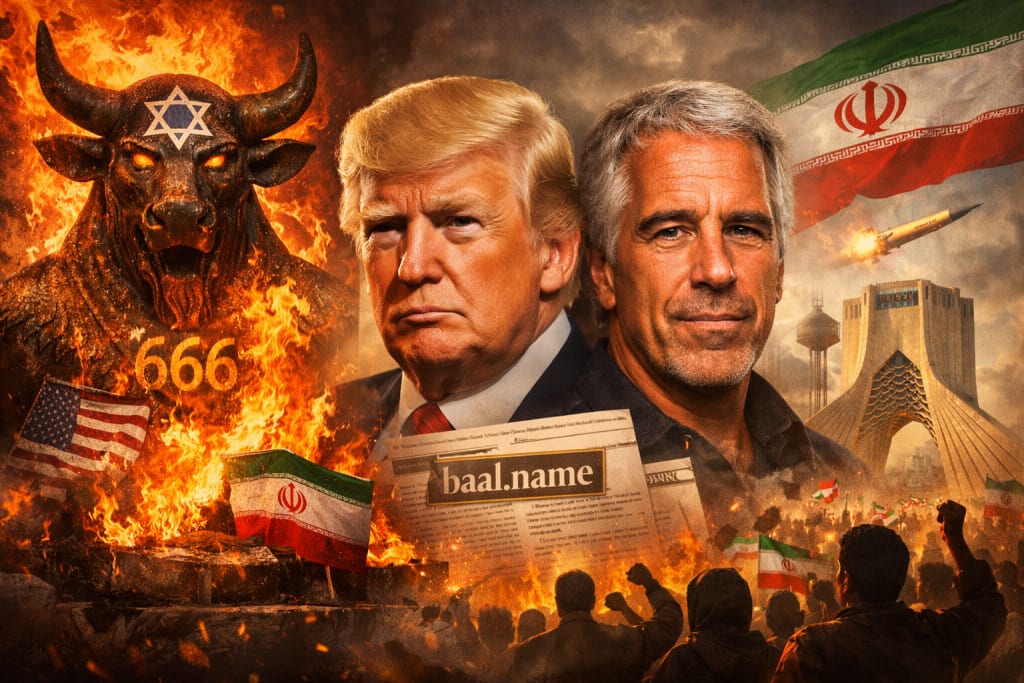
One act, however, drew global attention: a huge statue labelled “Baal” — complete with a horned, bull-like head — was set aflame in public squares, with crowds chanting “Death to Israel” and “Death to America.”
The imagery was unlike previous demonstrations, raising questions about why an ancient pagan deity — rarely invoked in modern Middle Eastern politics — suddenly appeared at the center of Iran’s revolutionary pageantry.
2. What Is “Baal” — And Why Use It in 2026?
“Baal” was an ancient deity worshipped in parts of the ancient Near East — particularly among Canaanite and Phoenician cultures. In biblical (and later Islamic) tradition, Baal is depicted as a false god opposed to monotheism, often associated with idolatry and moral corruption.
For centuries, Baal has appeared in religious texts as a symbol of idol worship and deviation from the teachings of prophets. In later traditions, the name became associated with evil, false gods, and even Satanic imagery, despite its historical roots as a legitimate ancient god.
Iran’s organisers used this loaded religious symbol to represent what they view as corrupt, decadent and hostile Western influences — especially the United States and its allies. Placing this figure at the heart of a state rally was meant to signal that Iran’s enemies are not just political opponents, but morally bankrupt and spiritually corrupt forces.
3. A Political Propaganda Statement
But the symbolism was not limited to religion.
Photos and videos shared on Iranian media and social platforms showed that the Baal effigy was not a neutral ancient statue. It was adorned with modern symbols:
A Star of David painted or affixed to the statue’s head.
Israeli and American flags draped at its base.
A picture of US President Donald Trump attached to its side.
In some depictions, imagery invoking the number “666” and references to the late financier Jeffrey Epstein circulated online alongside the statue’s burning.
By including these elements, the Iranian organisers turned the symbolic burning of Baal into a political theatre — casting Israel and the United States, as well as specific Western leaders, as embodiments of corruption and moral decay.
4. The Trump and Epstein Angle
So why was a picture of Donald Trump attached to the statue — and why were images referencing Jeffrey Epstein’s leaked files present in related online conversations?
The answer lies in several intersecting narratives that have taken hold in parts of the Iranian media ecosystem and certain corners of online discourse:
● Trump as a Symbol of Western Policy:
Donald Trump remains one of the most visible American political figures internationally. In Iranian state rhetoric, portraying Trump’s image on an effigy being burned conveys opposition not just to his past policies, but to American influence in the Middle East and Washington’s stance toward Tehran.
● Epstein Files and Misinterpreted References:
In late January 2026, the United States Department of Justice released a portion of documents related to Jeffrey Epstein’s criminal investigations — including scanned financial records. Some of those records contained text that reads like “baal.name,” which spread rapidly online.
But fact-checkers have pointed out that this appearance is almost certainly not evidence of occult worship or a secret coded reference to Baal:
The phrase “baal.name” is likely a mis-read OCR (optical character recognition) error or a mistranscription of “Bank Name” in scanned documents.
No credible evidence has been found that Epstein or his associates engaged in occult rituals or worshipped Baal.
Despite this, online discussions — including some amplified within Iranian state channels — have embraced the chaotic, symbolic idea that Epstein’s files reveal elite immorality tied to ancient demonology. It’s a powerful visual narrative, even if it’s not grounded in verified fact.
In this climate, Trump’s association with Epstein in online memes and posters — whether accurate or not — fed into the performance of burning Baal as a stand-in for “Western corruption.”
5. What Iran Aims to Communicate
The burning of the Baal statue — despite its confused mix of religious symbolism, modern political targets and controversial internet images — was intended as a multi-layered message:
✔ Rejection of perceived Western moral authority: The act implies that the West worships wealth, power and corruption — just as ancient idol worshippers worshipped false gods.
✔ Opposition to Israel and U.S. power: The Star of David and American iconography reinforce Iran’s geopolitical grievances.
✔ Propaganda for domestic and regional audiences: By invoking conspiracy imagery, Iranian organisers aim to tap into distrust of Western elites and promote solidarity against outside foes.
6. Reactions and Risks
International reaction to the display has been mixed:
Western and Israeli media highlighted the use of hostile rhetoric and imagery, calling it inflammatory.
Some analysts warned that blending religious myth with modern geopolitics could inflame sectarian tensions and feed misinformation.
Fact-checkers stressed that connecting real figures like Epstein to ancient deities is based on misinterpretation or error in leaked documents rather than established fact.
At home, the Iranian regime broadcast the event as an illustration of strength and resistance, while critics said the spectacle distracts from domestic issues like economic hardship and political discontent.
7. A Burning Symbol, A Blurred Message
In the end, the burning of the Baal statue in Iran on Feb. 11 became more than an anniversary ritual. It became a visual manifesto — fusing ancient myth, modern politics and online narratives — to project a message of defiance.
Whether one sees it as political theatre, propaganda, or something more, the event highlights how symbols can be repurposed rapidly in a world where ancient religion, social media, geopolitics and conspiracy theories collide.
About the Creator
USA daily update
News, Politics, Technology Updates
Keep reading
More stories from USA daily update and writers in The Swamp and other communities.
Help with US border
Overview of the Proposal President Donald Trump recently suggested — in a social media post on Truth Social — that the United States “should have” invoked Article 5 of the North Atlantic Treaty Organization (NATO) in order to bring NATO forces to the U.S. southern border to help stem illegal immigration. According to Trump, calling on NATO allies to secure the border would “free up large numbers of Border Patrol Agents for other tasks.” Article 5 is NATO’s collective defense clause, stating that an armed attack on one member is considered an attack on all. It’s the cornerstone of the alliance’s mutual defense guarantee — and in nearly 80 years, it has been invoked only once, when NATO allies responded to the September 11, 2001 terrorist attacks on the United States. Trump’s remarks represent a sharp departure from how Article 5 has historically been understood and applied. Illegal immigration — no matter the scale — is not typically viewed as an armed attack by another state, which is the standard under the treaty to trigger collective defense.
By USA daily update 24 days ago in The Swamp
Why Black History Matters in America?
The United States of America is celebrating their 250th anniversary in 2026. I'm proud to be an American and as someone who was born here, I wouldn't imagine myself living anywhere else. This is a country where opportunities are possible. Where anyone can be successful in anything they desire to do. Equality, community, and togetherness are the backbones of what America is and should be about. However, we have an administration who wants to erase and disregard those who have made positive, meaningful impacts in our country, specifically Black figures, such as Martin Luther King, Jr., Rosa Parks, and Maya Angelou. President Trump and his administration have been constantly complaining and fighting against what they call the "Woke agenda". They use this excuse as a distraction from other issues they refuse to address, such as the high cost of living, climate change, and inflation. That equality is dividing America, when in reality, it's bringing us together. Being woke is not tied to a specific political party. No matter where you stand on the political spectrum, you can still care about other people and their plights. Compassion and empathy for others isn't tied to a political party, either. We were taught as children to treat others the way we want to be treated and not judge others because they're different from us. Caring about others isn't a personal attack on your beliefs. It doesn't make you any less of a person. People who are easily offended over African American figures, past or present, or anything related to it, are grasping at straws. Current and future generations need to know who people like Harriet Tubman and Shirley Chisholm were, especially in the classroom. Black History is part of American History. It should be recognized, not hidden or forgotten. Besides, you can't shield children from everything, just because your feelings are easily hurt.
By Mark Wesley Pritchard 16 days ago in The Swamp
USS Mason Commander Fired
When news breaks that a Navy USS Mason commander has been fired, it quickly draws attention beyond military circles. Command at sea represents one of the most significant responsibilities in the United States Navy. A commanding officer is entrusted not only with a warship worth hundreds of millions of dollars, but also with the safety, morale, and readiness of hundreds of sailors. Removal from that position signals a serious breakdown in confidence.
By Saboor Brohi 3 days ago in The Swamp
The Pride Flag and the Diversion
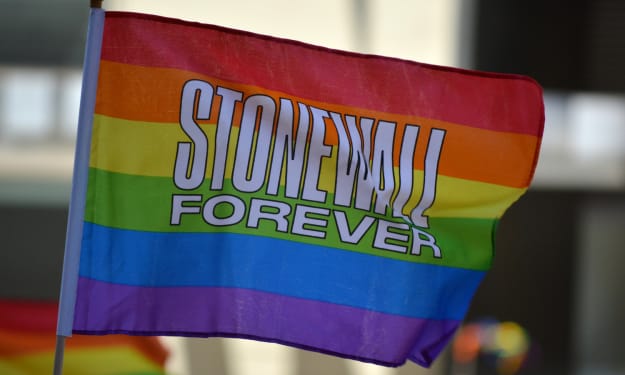
For nearly a decade, the LGBTQIA Pride Flag rippled in the wind at Christopher Park, a kaleidoscope of color staked into the soil of America’s first national monument to LGBTQIA+ liberation. That flag came down this week. Federal officials, citing new guidance from the Trump Administration, silently lowered the rainbow flag from its pole across the street from the Stonewall Inn. The birthplace of the modern gay rights movement now flies only the United States flag.
By Tim Carmichael6 days ago in Pride


Comments
There are no comments for this story
Be the first to respond and start the conversation.