
Can Mountain Lions Survive as Humans Close In?
California Is Trying to Find a Way
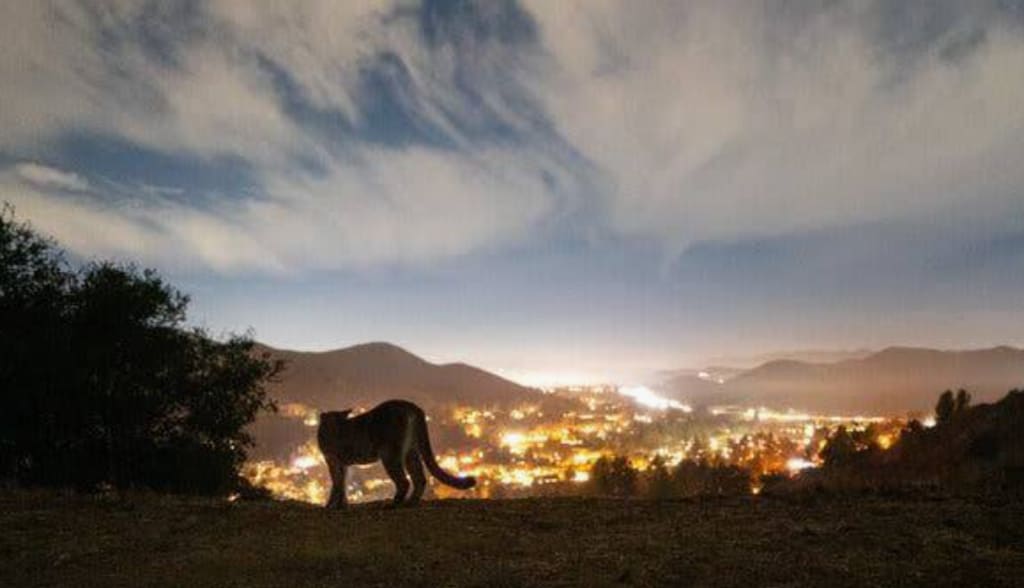
California’s mountain lions, also called cougars or pumas, once roamed vast stretches of wilderness with little interference. Today, their world is shrinking. Highways, neighborhoods, and urban sprawl are fragmenting their habitats, forcing these iconic predators into an uneasy coexistence with humans. The pressing question is: Can mountain lions survive as our cities expand—and if so, how?
The Mountain Lion at a Crossroads
Mountain lions in California have been protected from hunting since Proposition 117, the California Wildlife Protection Act of 1990. This law helped safeguard these big cats and fund habitat conservation. But legal protection is only part of the story.
As human populations grow, mountain lions face mounting threats. Vehicle collisions, accidental poisoning, and depredation permits—issued when lions attack livestock—have become leading causes of death. In many areas, human-related mortality now surpasses natural deaths.
Fragmentation is another challenge. Highways and urban development slice habitats into isolated “islands,” making it harder for mountain lions to find mates. This isolation threatens genetic diversity and could lead to local population collapse, particularly in Southern California’s Santa Ana and Santa Monica Mountains.
Why Human Encroachment Matters
When humans move in, mountain lions are forced to adapt. In urban fringes like Los Angeles, cougars have changed their habits, becoming more nocturnal to avoid people. But adaptations can’t replace the need for vast territories—sometimes hundreds of square miles—filled with prey and safe passageways.
The reality is harsh. Roads are deadly. Between 2015 and 2022, studies recorded one to two mountain lion deaths per week on California highways alone. For these predators, what was once silent, roaming wilderness now often ends in tragedy on asphalt.
Wildfires and Climate Stress
It isn’t just human expansion threatening mountain lions. California’s frequent wildfires destroy habitats and force animals into dangerous areas. Surviving lions sometimes wander closer to humans in search of food or shelter, increasing risk for both species.
Climate change compounds the issue. Drought and heat stress push prey—and predators—closer to human water sources. Scarcity can drive mountain lions into neighborhoods or suburban parks, making encounters more likely and more dangerous.
Innovative Solutions: Crossings and Connectivity
Despite these challenges, Californians are exploring creative solutions.
One of the most promising is wildlife crossings—overpasses and underpasses that let animals safely navigate highways. These structures reconnect fragmented habitats, letting mountain lions move freely, find mates, and maintain healthy genetics.
A major crossing near Los Angeles, after years of planning, recently opened. Biologists hope it will serve as a lifeline for mountain lions and other wildlife.
Meanwhile, the California Department of Fish and Wildlife is considering giving mountain lions in the Central Coast and Southern California regions “threatened” status. This designation would protect habitats, encourage more crossings, and limit toxic rodent poisons that can harm lions indirectly. If approved, it would be a historic step in protecting these apex predators.
Changing Human Behavior and Attitudes
Conservation isn’t just about fences or wildlife corridors—it’s about people too.
Mountain lion attacks on humans are extremely rare. Over the last 40 years, only a few dozen attacks have been verified, and fatalities are even rarer. Most cougars actively avoid people, hunting deer and other natural prey instead.
To coexist safely, communities are learning to secure pets and livestock, remove attractants like outdoor pet food, and understand how to react if a lion is spotted. Education benefits both humans and mountain lions, reducing unnecessary conflicts.
Citizen involvement is also critical. Californians are reporting sightings, supporting corridor projects, and advocating for policies that prioritize wildlife connectivity.
Can Mountain Lions Really Survive?
The answer is both hopeful and cautionary.
Mountain lions have shown remarkable adaptability, surviving in fragmented habitats and near urban areas. But resilience has limits. Without continued conservation efforts, habitat protection, and road-crossing infrastructure, local populations could disappear.
Their survival reflects a larger question about California itself: Do we value wildness and coexistence, or will development win at the expense of our iconic wildlife?
Ultimately, the fate of mountain lions depends on people. As the state seeks solutions, it’s clear that coexistence isn’t just possible—it’s necessary.
About the Creator
Keep reading
More stories from Aqib Hussain and writers in The Swamp and other communities.
US Slips to Its Lowest-Ever Rank in Global Corruption Index
The United States has fallen to its lowest position ever in a prominent global corruption index, marking a significant moment for a country long viewed as a benchmark for democratic governance and institutional accountability. The drop has sparked debate among policymakers, watchdog organizations, and citizens alike about the health of American democracy and the integrity of its public institutions.
By Aqib Hussaina day ago in The Swamp
The Saddest Thing - The Billionaires Who Rule America Aren't Even Enjoying Themselves
This single post says more about our ruling class than a thousand policy papers. The saddest thing about today's system is that the men robbing the rest of us - sabotaging our economic prospects, our pensions, our access to affordable healthcare - are not even happy.
By Scott Christenson🌴6 days ago in The Swamp
Super Bowl LX Recap: A Team Called Hawks
Sixty. The Super Bowl turned 60! Still amazes me that this was the sixtieth Super Bowl played in NFL history. It seems like yesterday that I watched Super Bowl XXVII, the first SB I ever watched. The QB who won Super Bowl XXVII has since called a few SBs, and will call next year's game, but that's another story. Super Bowl LX took place at Levi's Stadium in Santa Clara, California, the home stadium of the San Francisco 49ers. However, it was one of their division foes who represented the NFC, as the Seattle Seahawks faced off against the New England Patriots.
By Clyde E. Dawkins3 days ago in Unbalanced




Comments
There are no comments for this story
Be the first to respond and start the conversation.