
China Has Reportedly Told Banks to Scale Back Holdings of US Government Debt
A strategic recalibration in global finance sparks market debate over risk, reserve diversification, and the future of the dollar
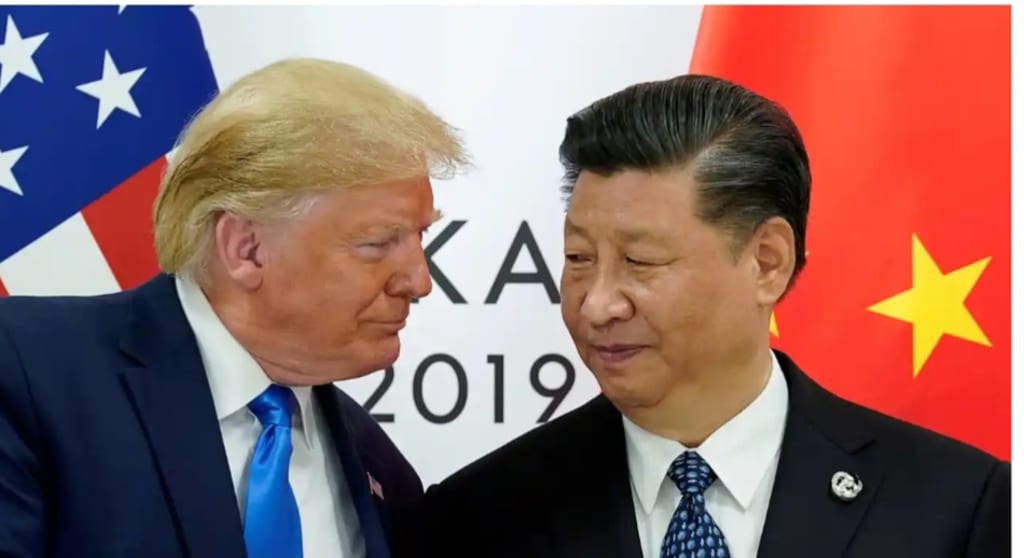
In a development reverberating through global financial markets, Chinese regulators have quietly instructed domestic banks to reduce their exposure to U.S. government debt—particularly U.S. Treasury securities—amid concerns about market volatility and concentration risk. The move, reported by Bloomberg and confirmed by several international news outlets, reflects a strategic shift in how China manages risk within its vast foreign exchange reserves and poses questions about the evolving role of U.S. government debt in the world’s financial architecture.
What China Is Asking Banks to Do
According to reports, regulators in Beijing have advised major Chinese banks to limit new purchases of U.S. Treasuries and, in some cases, trim existing holdings if exposure is considered excessive. The guidance—delivered verbally to avoid triggering market panic—does not apply to China’s official state holdings of U.S. debt but targets the commercial banking sector, which holds a significant share of dollar-denominated assets.
Officials have framed the directive as a proactive risk-management measure rather than a geopolitical blow against the U.S. Treasury market, emphasizing concerns about concentration risk and the vulnerability of banks to sharp price swings in the world’s largest bond market.
A Broader Trend of Reduction
This recent development is part of a long-running trend: China’s overall holdings of U.S. Treasury securities have been declining for years. Official U.S. Treasury data show that China’s stockpile of Treasuries has fallen dramatically from its peak of around $1.32 trillion in 2013 to levels below $700 billion, marking the lowest point since 2008.
While China remains one of the largest foreign holders of U.S. government debt, it now ranks behind Japan and the United Kingdom. Experts attribute the decline to strategic reserve rebalancing aimed at reducing exposure to U.S. debt and the U.S. dollar, while boosting holdings in other assets like gold and non-U.S. currencies.
Risk Management or Strategic Diversification?
Chinese authorities say the guidance to banks is grounded in financial risk management. Large holdings of U.S. debt can pose vulnerabilities for lenders if global bond yields move sharply—a risk underscored in volatile markets where geopolitical and economic factors can quickly shift investor sentiment.
By encouraging banks to diversify, Beijing aims to reduce systemic risk within its financial sector. The directive’s focus on commercial institutions, rather than the central bank’s official reserve portfolio, highlights a cautious, measured approach to adjustment.
At the same time, the broader context of foreign exchange reserve management suggests deeper strategic motives. Chinese authorities have publicly signaled a desire to optimize reserve composition by increasing investments in non-dollar assets, including gold, other sovereign bonds, and regional partnerships’ financial instruments. This aligns with long-term efforts to lessen dependence on the U.S. dollar and build greater resilience against external shocks.
Market Reactions and Global Implications
The financial markets have reacted—to a degree—but not with dramatic instability. After reports surfaced, U.S. Treasury yields experienced modest upward pressure, while the U.S. dollar dipped slightly, reflecting investor sensitivity to any shift in demand for dollar-denominated assets.
However, analysts note that the Treasury market—as the deepest and most liquid in the world—is capable of absorbing such changes without major disruption, especially since Chinese banks are not the sole major holders. Investors also point out that other central banks and institutional investors continue to buy U.S. debt, which supports overall demand.
Despite this resilience, the symbolic weight of China’s repositioning cannot be ignored. The United States Government debt market has long been seen as a global “safe haven,” underpinning international finance and currency reserves. Any structural reduction by a major holder feeds into conversations about the long-term sustainability of this status—particularly amid ongoing geopolitical tensions and concerns over U.S. fiscal policy.
The Geopolitical Dimension
The timing of this guidance—coming in the lead-up to diplomatic engagements between U.S. President Donald Trump and Chinese President Xi Jinping—adds nuance to its interpretation. Some observers see the move as Beijing’s effort to recalibrate financial exposure ahead of high-level talks, while others view it as a signal of deeper strategic divergence in economic policy.
Critics of China’s approach, especially in Western capitals, warn that reducing exposure to U.S. assets could exacerbate strains in bilateral relations and feed narratives of a weakening dollar. Supporters argue that diversification is a prudent buffer against unforeseen market shocks and geopolitical volatility.
Looking Forward: A Gradual Transition
Most analysts expect China’s adjustment of U.S. debt exposure to be gradual rather than abrupt. The intricate nature of reserve portfolio reallocation, combined with the central role of dollar-denominated assets in international finance, makes dramatic shifts unlikely in the short term. Instead, incremental changes, driven by risk management and diversification strategies, are more plausible.
For global markets, this development underscores the evolving dynamics of financial power and risk in the 21st century. The traditional dominance of U.S. government debt remains intact for now, but the actions of major holders like China illustrate how geopolitical and economic calculations are reshaping the landscape of international finance.
Whether this signals a broader realignment away from the dollar or simply reflects prudent risk management by Chinese authorities, its implications will continue to be debated by policymakers, economists, and investors alike.
About the Creator
Keep reading
More stories from Sadaqat Ali and writers in The Swamp and other communities.
Iran Suggests It Could Dilute Highly Enriched Uranium for Sanctions Relief
Iran has indicated that it may be willing to dilute its stockpile of highly enriched uranium (HEU) in exchange for relief from crippling international sanctions, a move that has reignited diplomatic debate over the future of its nuclear program and the broader stability of the Middle East. The suggestion, made amid mounting economic pressure and regional uncertainty, represents one of the clearest signals in recent months that Tehran could be open to compromise—if its core demands are met.
By Sadaqat Ali7 days ago in The Swamp
Why Black History Matters in America?
The United States of America is celebrating their 250th anniversary in 2026. I'm proud to be an American and as someone who was born here, I wouldn't imagine myself living anywhere else. This is a country where opportunities are possible. Where anyone can be successful in anything they desire to do. Equality, community, and togetherness are the backbones of what America is and should be about. However, we have an administration who wants to erase and disregard those who have made positive, meaningful impacts in our country, specifically Black figures, such as Martin Luther King, Jr., Rosa Parks, and Maya Angelou. President Trump and his administration have been constantly complaining and fighting against what they call the "Woke agenda". They use this excuse as a distraction from other issues they refuse to address, such as the high cost of living, climate change, and inflation. That equality is dividing America, when in reality, it's bringing us together. Being woke is not tied to a specific political party. No matter where you stand on the political spectrum, you can still care about other people and their plights. Compassion and empathy for others isn't tied to a political party, either. We were taught as children to treat others the way we want to be treated and not judge others because they're different from us. Caring about others isn't a personal attack on your beliefs. It doesn't make you any less of a person. People who are easily offended over African American figures, past or present, or anything related to it, are grasping at straws. Current and future generations need to know who people like Harriet Tubman and Shirley Chisholm were, especially in the classroom. Black History is part of American History. It should be recognized, not hidden or forgotten. Besides, you can't shield children from everything, just because your feelings are easily hurt.
By Mark Wesley Pritchard 16 days ago in The Swamp
USS Mason Commander Fired
When news breaks that a Navy USS Mason commander has been fired, it quickly draws attention beyond military circles. Command at sea represents one of the most significant responsibilities in the United States Navy. A commanding officer is entrusted not only with a warship worth hundreds of millions of dollars, but also with the safety, morale, and readiness of hundreds of sailors. Removal from that position signals a serious breakdown in confidence.
By Saboor Brohi 3 days ago in The Swamp
'Till Death We Do Art
There would be nothing divine in this world without art. Nature may surpass the divine to all intents and purposes, but like everything it absorbs and is absorbed by, it remains here, stuck on the surface of this world, ever-present, physically bound to the universe.
By Avocado Nunzella BSc (Psych) -- M.A.P about 15 hours ago in Art



Comments
There are no comments for this story
Be the first to respond and start the conversation.