
Crowded Field of Robot-Boat Makers Vies for Navy’s Attention
Dozens of defense companies and startups are competing to supply autonomous surface vessels to the U.S. Navy as it accelerates plans to modernize warfare with unmanned maritime technology.

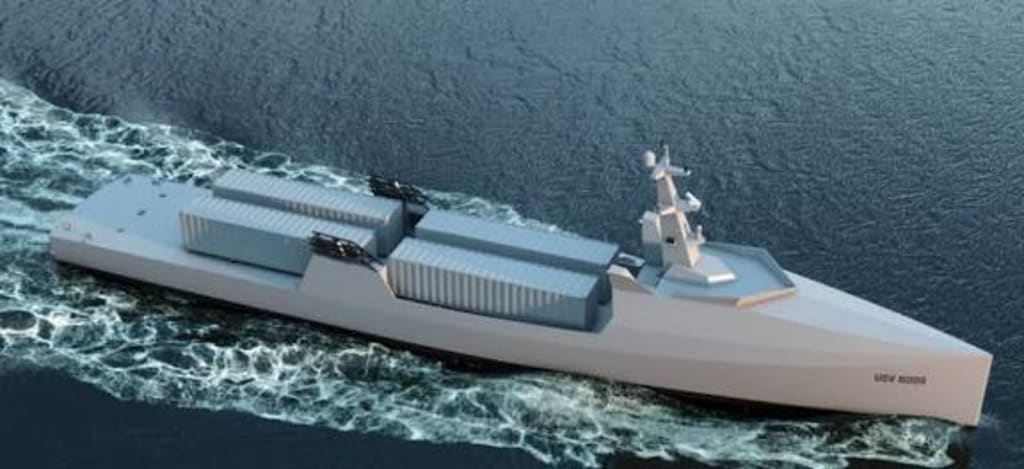
Dozens of defense startups and established contractors are racing to supply autonomous vessels to the U.S. Navy as Washington pushes to modernize maritime warfare with unmanned technology.
A rapidly expanding group of companies is competing for the attention of the U.S. Navy as it accelerates efforts to integrate robot boats into future naval operations. From Silicon Valley startups to long-established defense contractors, firms are showcasing unmanned surface vessels designed to patrol coastlines, hunt submarines, and support combat missions without putting sailors at risk.
The Navy’s growing interest in robotic ships is driven by both technological advances and strategic pressure. Rising tensions in the Indo-Pacific and lessons from the war in Ukraine have highlighted the importance of unmanned systems that can operate in dangerous waters, gather intelligence, and overwhelm adversaries with numbers rather than manpower.
At recent naval technology demonstrations, sleek, remote-controlled boats zigzagged across open water while company representatives explained how their platforms could perform tasks ranging from mine detection to missile launching. Some vessels resemble small speedboats packed with sensors and cameras, while others look like miniature warships capable of carrying weapons and long-range communications gear.
Defense officials say autonomous surface vessels could help the Navy solve a major problem: how to expand its presence across vast oceans without dramatically increasing costs. Traditional warships take years to build and require hundreds of crew members. Robot boats, by contrast, can be produced faster and at a fraction of the price, allowing the Navy to deploy large fleets that complicate enemy targeting.
“The goal is to create a distributed force,” said one Navy official involved in testing programs. “If you can put many unmanned vessels into contested waters, you reduce risk to sailors and increase operational flexibility.”
The competition among manufacturers is intense. Companies are offering vessels of different sizes and purposes. Some focus on long-endurance platforms that can stay at sea for months, powered by diesel engines or hybrid systems. Others emphasize speed and maneuverability for coastal surveillance or swarm operations.
Major defense firms such as Lockheed Martin and Boeing are leveraging their military experience to propose larger, heavily equipped unmanned ships. At the same time, smaller tech startups are promoting modular designs that can be quickly adapted for new missions by swapping out sensors or payloads.
This crowded field presents both opportunity and challenge for the Navy. On one hand, competition drives innovation and keeps prices down. On the other, officials must decide which designs are reliable enough for combat use and which companies can scale production to meet military demand.
Testing has revealed technical hurdles. Autonomous navigation in busy shipping lanes remains difficult, especially in poor weather or when communications are jammed. Cybersecurity is another concern, as unmanned vessels could be vulnerable to hacking or electronic interference. Engineers are working to improve onboard decision-making systems so robot boats can respond safely to unexpected obstacles without constant human control.
The Pentagon has made unmanned systems a central pillar of its modernization strategy. Through initiatives such as the Replicator program, the Department of Defense aims to field thousands of autonomous platforms across air, land, and sea within a few years. Robot boats are a key part of this vision, particularly for operations in the Pacific where distances are enormous and potential conflict zones are heavily contested.
Congress has shown cautious support, approving funding for experimental fleets while demanding strict oversight. Lawmakers want assurances that the technology will work as promised and that it will not drain resources from traditional shipbuilding programs. Some critics worry that enthusiasm for automation could outpace safety and ethical considerations, especially if unmanned vessels are armed with lethal weapons.
International competition adds urgency. China has invested heavily in maritime drones and has already deployed unmanned patrol boats in disputed waters. Analysts say the U.S. Navy fears falling behind in a technological race that could shape future naval warfare.
For companies vying for Navy contracts, the stakes are high. Winning a single program could mean billions of dollars in long-term production and maintenance deals. As a result, firms are partnering with universities, artificial intelligence labs, and marine engineering specialists to refine their designs and stand out from rivals.
Industry executives argue that unmanned vessels will not replace traditional warships but will complement them. “These systems extend the Navy’s reach,” said one company founder. “They act as scouts, shields, and force multipliers, allowing human crews to focus on higher-level missions.”
As trials continue, Navy officials stress that no final decisions have been made about which platforms will become standard. Instead, the service plans to experiment with multiple designs before narrowing the field.
What is clear is that the era of robotic ships is moving quickly from science fiction to reality. With dozens of companies now competing for contracts and influence, the battle for the Navy’s future fleet is being fought not just at sea, but in laboratories, shipyards, and corporate boardrooms across the United States.
About the Creator
Fiaz Ahmed
I am Fiaz Ahmed. I am a passionate writer. I love covering trending topics and breaking news. With a sharp eye for what’s happening around the world, and crafts timely and engaging stories that keep readers informed and updated.
Keep reading
More stories from Fiaz Ahmed and writers in The Swamp and other communities.
Ukraine War Briefing: Rubio to Meet Zelenskyy in Munich as Russian Strikes Leave Thousands Without Power
High-level diplomacy and renewed battlefield violence converge as Western leaders gather in Europe and Ukraine struggles with the humanitarian impact of fresh missile and drone attacks. Senior U.S. Senator Marco Rubio is set to meet Ukrainian President Volodymyr Zelenskyy on the sidelines of the annual Munich Security Conference, a key diplomatic gathering taking place in Munich. The meeting comes as Russia launched another wave of missile and drone strikes across Ukraine, damaging energy infrastructure and leaving tens of thousands of civilians without electricity in the middle of winter. Ukrainian officials said overnight attacks targeted power substations and transmission facilities in several regions, including central and eastern parts of the country. Emergency crews worked through the night to restore electricity, but authorities warned that full repairs could take days. Local governments urged residents to conserve energy and prepare for further outages as temperatures dropped. “This is a deliberate attempt to make civilian life unbearable,” Zelenskyy said in his nightly address, accusing Moscow of continuing its strategy of striking non-military targets to weaken morale. He added that Ukraine’s air defenses had intercepted many of the incoming missiles and drones but that the scale of the assault showed Russia’s continued capacity to mount large operations despite heavy battlefield losses. The attacks come as Ukraine faces increasing pressure on multiple fronts. Fighting remains intense in eastern regions where Russian forces have tried to gain ground through incremental advances. Military analysts say Moscow appears focused on wearing down Ukrainian defenses through constant bombardment while exploiting shortages of ammunition and air defense systems. Against this backdrop, Rubio’s planned meeting with Zelenskyy carries symbolic and political weight. The senator, a senior member of the U.S. Senate Foreign Relations Committee, is expected to discuss military aid, sanctions enforcement, and long-term security commitments. U.S. officials say the talks will also focus on sustaining international support at a time when political debates in Washington and some European capitals have slowed the delivery of weapons and financial assistance. The Munich Security Conference has traditionally served as a forum for Western allies to coordinate responses to global crises. This year, Ukraine is expected to dominate discussions as leaders debate how to counter Russia’s ongoing offensive and whether additional air defense systems and long-range weapons should be provided. Zelenskyy is also scheduled to meet several European leaders during the event. Diplomats familiar with the agenda say Rubio will emphasize the importance of unity among NATO partners and stress that Ukraine’s survival is tied directly to broader European security. “If aggression is rewarded, it sends a dangerous message to every authoritarian regime watching,” one U.S. official said. Meanwhile, the humanitarian toll of the latest Russian strikes is becoming clearer. Regional authorities reported that hospitals and schools were forced to switch to backup generators after power was cut. In some towns, public transport was suspended and water supplies were disrupted because pumping stations lost electricity. Aid organizations warned that vulnerable populations, including the elderly and displaced families, face heightened risks as winter conditions persist. Energy experts note that Russia’s renewed focus on infrastructure suggests a return to tactics seen earlier in the war, when systematic attacks on the power grid caused widespread blackouts. Ukraine has since strengthened its defenses around key facilities, but the sheer number of drones and missiles used in recent barrages makes it difficult to protect every site. International reaction to the strikes was swift. European Union officials condemned the attacks and reiterated calls for more advanced air defense equipment to be sent to Ukraine. Germany’s defense minister said the strikes demonstrated the urgency of accelerating weapons deliveries and improving coordination among allies. Russia, for its part, defended the attacks as legitimate military actions, claiming they were aimed at Ukraine’s “military-industrial complex.” The Kremlin has repeatedly denied targeting civilians, despite evidence from Ukrainian authorities and independent observers showing residential neighborhoods and civilian infrastructure among the damaged sites. The diplomatic dimension of the war is also evolving. Some Western officials hope that increased pressure on Russia through sanctions and military setbacks could eventually bring Moscow to the negotiating table. However, there are few signs of imminent talks, and both sides remain publicly committed to their military objectives. Zelenskyy is expected to use his meetings in Munich to press for additional Patriot missile systems and other advanced air defenses, arguing that protecting cities and energy infrastructure is as crucial as supporting troops on the front lines. He is also likely to warn that any slowdown in aid would embolden Russia to intensify its attacks. As Rubio prepares for his talks, political debates in the United States continue over the scale and duration of support for Ukraine. While bipartisan backing remains strong in many areas, divisions have emerged over budget priorities and foreign commitments. The senator has previously argued that helping Ukraine resist Russia is in America’s strategic interest, preventing a wider conflict in Europe. For ordinary Ukrainians, the immediate concern is survival through another round of blackouts and air raid sirens. In cities hit by the latest strikes, residents lined up for bottled water and used candles and portable heaters to cope with the outages. “We are used to this now, but it never gets easier,” said one woman in a central Ukrainian town affected by the attacks. The coming days will test both Ukraine’s resilience and the resolve of its allies. With Russian strikes continuing and diplomatic efforts intensifying, the meeting between Rubio and Zelenskyy in Munich underscores how closely military developments and international politics are now intertwined. As winter drags on, Ukraine’s battle is being fought not only on the front lines but also in conference halls where decisions about aid, security, and the future of the conflict are being shaped.
By Fiaz Ahmed 5 days ago in The Swamp
Why Black History Matters in America?
The United States of America is celebrating their 250th anniversary in 2026. I'm proud to be an American and as someone who was born here, I wouldn't imagine myself living anywhere else. This is a country where opportunities are possible. Where anyone can be successful in anything they desire to do. Equality, community, and togetherness are the backbones of what America is and should be about. However, we have an administration who wants to erase and disregard those who have made positive, meaningful impacts in our country, specifically Black figures, such as Martin Luther King, Jr., Rosa Parks, and Maya Angelou. President Trump and his administration have been constantly complaining and fighting against what they call the "Woke agenda". They use this excuse as a distraction from other issues they refuse to address, such as the high cost of living, climate change, and inflation. That equality is dividing America, when in reality, it's bringing us together. Being woke is not tied to a specific political party. No matter where you stand on the political spectrum, you can still care about other people and their plights. Compassion and empathy for others isn't tied to a political party, either. We were taught as children to treat others the way we want to be treated and not judge others because they're different from us. Caring about others isn't a personal attack on your beliefs. It doesn't make you any less of a person. People who are easily offended over African American figures, past or present, or anything related to it, are grasping at straws. Current and future generations need to know who people like Harriet Tubman and Shirley Chisholm were, especially in the classroom. Black History is part of American History. It should be recognized, not hidden or forgotten. Besides, you can't shield children from everything, just because your feelings are easily hurt.
By Mark Wesley Pritchard 16 days ago in The Swamp
Iran Suggests It Could Dilute Highly Enriched Uranium for Sanctions Relief
Iran has indicated that it may be willing to dilute its stockpile of highly enriched uranium (HEU) in exchange for relief from crippling international sanctions, a move that has reignited diplomatic debate over the future of its nuclear program and the broader stability of the Middle East. The suggestion, made amid mounting economic pressure and regional uncertainty, represents one of the clearest signals in recent months that Tehran could be open to compromise—if its core demands are met.
By Sadaqat Ali7 days ago in The Swamp



Comments
There are no comments for this story
Be the first to respond and start the conversation.