
Email Blunder Exposes $90bn Russian Oil Smuggling Ring
🔹 Formal / News Style IT error reveals sprawling network circumventing Western sanctions on Russian crude Misconfigured email uncovers shell companies moving tens of billions in oil exports 🔹 Neutral & Informative Email mistake exposes complex scheme redirecting sanctioned Russian oil Investigators trace $90 billion smuggling network through accidental data leak 🔹 Impactful A single email exposes one of the largest Russian oil sanction evasions ever discovered


An IT email misconfiguration has inadvertently uncovered what appears to be an extensive network of shell companies involved in smuggling tens of billions of dollars’ worth of Russian oil around Western sanctions, Financial Times reporting shows. The revelation sheds light on the sophisticated methods used to disguise the origin of crude exports tied to major Russian producers such as Rosneft after sanctions tightened in late 2025, and underscores the challenges global authorities face in enforcing restrictions on Moscow’s energy revenues.
Mistaken Email Reveals a Web of Firms
Investigative journalists traced a private email server — used by 48 seemingly unrelated companies — which inadvertently revealed that many of those entities were in fact part of a coordinated effort to reroute crude away from sanctioned Russian energy giants. The companies, which share the server “mx.phoenixtrading.ltd,” operated from a patchwork of jurisdictions and used obscure web domains.
By cross‑referencing public domain registrations and customs records from countries including India and Russia, the FT was able to link at least $90 billion in oil exports to this network. While the total value could be higher — due to incomplete filings and conservative counting — the figures already point to a large‑scale circumvention operation that undermines the effectiveness of Western sanctions.
Shell Companies and Sanction Evasion
The apparent smuggling ring used short‑lived companies, often active for only around six months, making them difficult to track or sanction. Many entities had no functional websites or public contact details, and crude cargoes were often declared under generic names such as “export blend” to mask origin points. Some shipments were routed through third countries such as the United Arab Emirates, where firms with UAE‑registered addresses were linked via customs data.
One of the most notable players in the network is Redwood Global Supply, a Ras Al Khaimah‑incorporated firm that has emerged as a major exporter of Russian crude since sanctions on Rosneft and Lukoil took effect. Redwood has been sanctioned by the United Kingdom Sanctions Authority and other Western authorities but continues operations due to the network’s opacity.
Individuals and Alleged Ties
Azerbaijani businessmen Etibar Eyyub and Tahir Garayev have been identified by EU officials as principal figures behind many of the companies sharing the email server. Eyyub, previously linked to Rosneft‑connected firms, is widely believed to be the network’s operational hub, although he has denied involvement in wrongdoing. Garayev, founder of Coral Energy — now inactive — similarly denies participation, despite being linked to multiple domain registrations.
The rapid abandonment of entities once they attract attention is a common characteristic of sanctioned networks. Customs records suggest that many firms lasted an average of about six months before shutting down or morphing into new corporate identities, complicating law‑enforcement measures.
Shadow Fleet and Deceptive Shipping
Experts say the smuggling network’s tactics resemble those used by the so‑called “shadow fleet” of older tankers that carry Russian crude under changing flags and concealed routes to avoid sanctions. Ships associated with these exporters often rely on opaque ownership structures and frequent name changes to avoid detection, with some vessels even listed under unrelated companies’ names.
Maritime analysts note that hiding the true origin of oil cargoes — including through middlemen and misleading paperwork — makes compliance with sanctions like price caps far more difficult. As Baiba Braže of Latvia has warned, such practices can undermine efforts to limit Russia’s oil revenues and reduce funding for Moscow’s war in Ukraine.
Regulatory Response
Several entities in the network — including Redwood and others connected to Coral and Nord Axis — have already been targeted with sanctions by the European Union, the U.K. and the U.S. But officials acknowledge that targeting individual companies is only part of the response; dismantling a sprawling, adaptive network requires coordinated international sanctions, financial regulation and maritime enforcement.
Sanctions envoys argue that the fluid nature of such networks — with hundreds of web domains and frequent changes in corporate identity — means authorities must update legal tools continually to close loopholes and disrupt sanctioned trade flows effectively.
Broader Implications
The exposure of this smuggling network raises fundamental questions about the efficacy of sanctions regimes when confronted with sophisticated evasion strategies. While sanctions have reduced direct exports by major Russian energy companies, these parallel channels — revealed by a simple email configuration error — highlight how commercial actors and intermediaries can adapt quickly.
As Western governments review the findings, lawmakers and sanctions specialists say that closing enforcement gaps will be crucial to maintaining pressure on Russia’s energy sector and cutting off revenue streams that fuel geopolitical conflicts and military operations.
About the Creator
Fiaz Ahmed
I am Fiaz Ahmed. I am a passionate writer. I love covering trending topics and breaking news. With a sharp eye for what’s happening around the world, and crafts timely and engaging stories that keep readers informed and updated.
Keep reading
More stories from Fiaz Ahmed and writers in The Swamp and other communities.
Malaysia Launches Third Littoral Combat Ship
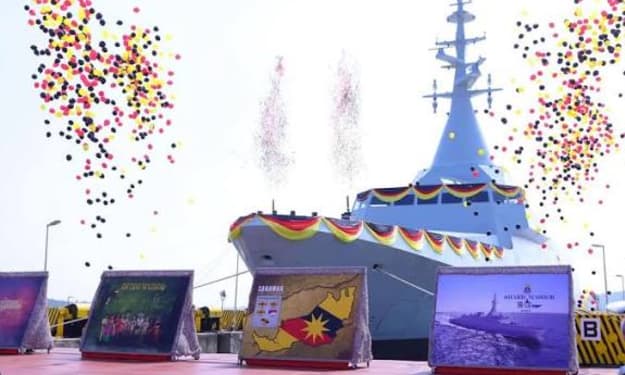
Malaysia has officially launched the third of its new littoral combat ships, marking a significant step forward in the modernization of its navy and maritime defence capabilities. The vessel’s launch at the Boustead Naval Shipyard facility in Kuala Lumpur was attended by senior military officials, government representatives, and defence industry partners, underscoring Kuala Lumpur’s commitment to strengthening its naval posture in contested waters. The new combat ship, designated KD Maharaja Lela II, will be the third in a series of modern surface combatants designed to operate in littoral — or near‑shore — environments. The series is part of Malaysia’s broader naval modernization plan aimed at addressing evolving maritime security challenges, including piracy, smuggling, and regional territorial disputes. Enhancing Maritime Security Malaysia’s strategic location along the Strait of Malacca — one of the world’s busiest sea lanes — makes maritime security a national priority. The patrol of these waters and surrounding exclusive economic zones (EEZs) necessitates a navy equipped with agile, networked, and well‑armed vessels capable of responding quickly to asymmetric threats and maintaining presence in contested areas. The littoral combat ship project, officially known as the Second Generation Patrol Vessel (SGPV) programme, reflects a shift towards modular, multi‑mission platforms that can be tailored for anti‑surface, anti‑air, and anti‑submarine operations. Unlike larger warships designed for open‑ocean engagements, littoral combat ships combine speed, flexibility, and advanced sensor suites suitable for complex coastal environments. A Milestone in Naval Capability Speaking at the launch ceremony, Malaysia’s Defence Minister hailed the event as a “significant milestone” in the Royal Malaysian Navy’s development. He noted that the new vessel would enhance Malaysia’s ability to safeguard its maritime interests, contribute to regional security initiatives, and participate in joint exercises with friendly navies. The ceremony included a traditional ship blessing, speeches from military leaders, and remarks from industry partners involved in the ship’s design and construction. Officials emphasized the importance of national industrial participation, with local firms contributing to systems integration, hull fabrication, and electronics packages. “The launch of the third littoral combat ship demonstrates Malaysia’s commitment to building a capable, credible navy,” the defence minister said. “This vessel strengthens our deterrence and increases our capacity to protect sovereign waters and maritime resources.” Technical Features and Capabilities While specific details of the ship’s capabilities remain classified, defence analysts say the SGPV series incorporates state‑of‑the‑art sensors, communication systems, and weaponry suited for multifaceted missions. Typical configurations include a 76mm main gun, close‑in weapon systems (CIWS), anti‑ship missiles, and a flight deck capable of supporting naval helicopters or drones. Modular design allows mission packages to be swapped out depending on operational needs, enabling the ship to transition from combat engagements to humanitarian assistance and disaster relief missions. Naval experts note that the ships’ automation and advanced command and control systems reduce crew requirements while enhancing situational awareness — a valuable feature for long patrols and networked operations with allied forces. Regional Implications The launch is occurring amid heightened maritime security concerns in Southeast Asia, where competing territorial claims in the South China Sea have underscored the need for capable naval assets among littoral states. Malaysia, like its neighbours, has been investing in naval upgrades to protect its EEZ, enforce national jurisdiction, and participate in freedom of navigation operations and regional patrols. Malaysia’s move has drawn attention from regional partners including Indonesia, Singapore and Association of Southeast Asian Nations members, who have expressed support for cooperative maritime security initiatives. Analysts say that while the new littoral combat ships are not designed to alter regional power balances, they contribute to a collective boost in naval capacity that enhances deterrence and stability in contested waters. Industry and Economic Impact The SGPV programme has also stimulated Malaysia’s defence industry, creating jobs and fostering skills in naval design, systems integration, and advanced manufacturing. Officials note that local suppliers have benefitted from contracts related to the programme, which could position Malaysian firms for future participation in international naval markets. Defence economists highlight that such investments not only improve national security but also contribute to long‑term industrial growth and technological development. Next Steps With the launch ceremony complete, the third littoral combat ship will undergo outfitting, sea trials, and crew training before it enters active service. The Royal Malaysian Navy expects all SGPV vessels to be fully operational within the next year, enhancing fleet readiness and response capacity. The launch of KD Maharaja Lela II underscores Malaysia’s focus on maritime defence and its determination to safeguard its sovereignty and economic interests in an increasingly contested regional theatre.
By Fiaz Ahmed about 11 hours ago in The Swamp
Why Black History Matters in America?
The United States of America is celebrating their 250th anniversary in 2026. I'm proud to be an American and as someone who was born here, I wouldn't imagine myself living anywhere else. This is a country where opportunities are possible. Where anyone can be successful in anything they desire to do. Equality, community, and togetherness are the backbones of what America is and should be about. However, we have an administration who wants to erase and disregard those who have made positive, meaningful impacts in our country, specifically Black figures, such as Martin Luther King, Jr., Rosa Parks, and Maya Angelou. President Trump and his administration have been constantly complaining and fighting against what they call the "Woke agenda". They use this excuse as a distraction from other issues they refuse to address, such as the high cost of living, climate change, and inflation. That equality is dividing America, when in reality, it's bringing us together. Being woke is not tied to a specific political party. No matter where you stand on the political spectrum, you can still care about other people and their plights. Compassion and empathy for others isn't tied to a political party, either. We were taught as children to treat others the way we want to be treated and not judge others because they're different from us. Caring about others isn't a personal attack on your beliefs. It doesn't make you any less of a person. People who are easily offended over African American figures, past or present, or anything related to it, are grasping at straws. Current and future generations need to know who people like Harriet Tubman and Shirley Chisholm were, especially in the classroom. Black History is part of American History. It should be recognized, not hidden or forgotten. Besides, you can't shield children from everything, just because your feelings are easily hurt.
By Mark Wesley Pritchard 19 days ago in The Swamp
Iranian Security Use Nationwide Dragnet to Arrest Protesters
In a dramatic escalation of its response to public unrest, Iranian security forces have launched a nationwide dragnet to identify, detain, and silence protesters across the country. From major urban centers to smaller provincial towns, reports indicate that security agencies are carrying out coordinated raids, road checkpoints, and digital surveillance operations aimed at dismantling protest networks and discouraging further demonstrations.
By Sajida Sikandar6 days ago in The Swamp



Comments
There are no comments for this story
Be the first to respond and start the conversation.