
Europe Under Pressure: Assessing Claims of Failure Amid Trump and Putin’s “Wrecking Ball” Politics
A senior security official’s criticism reignites debate over Europe’s strategic autonomy and geopolitical preparedness

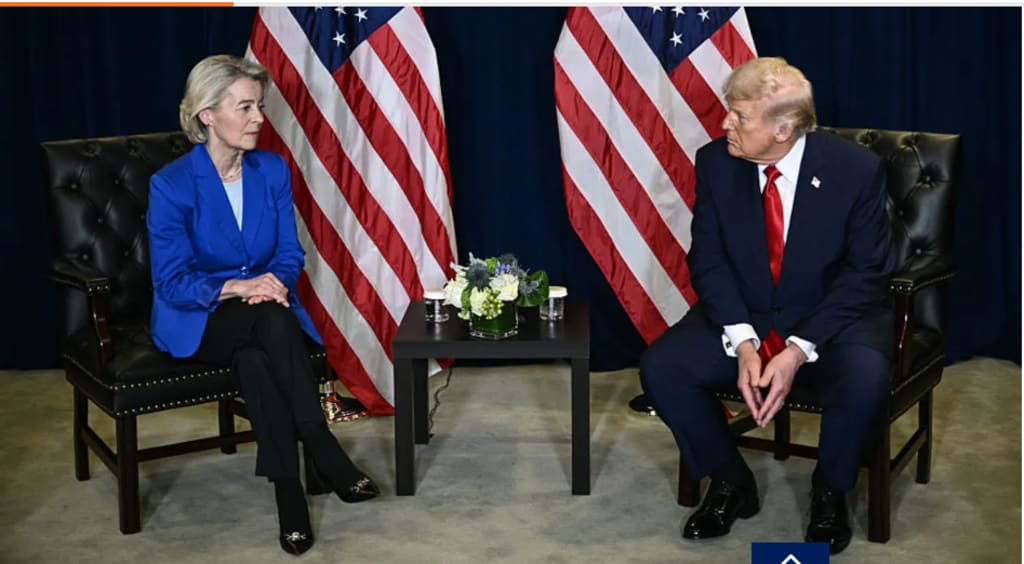
In an increasingly volatile geopolitical environment, Europe faces renewed scrutiny regarding its capacity to respond effectively to disruptive global leadership. A senior security official recently asserted that Europe has “failed” in confronting what he described as the “wrecking ball” politics of Donald Trump and Vladimir Putin.
This statement has intensified debate across policy circles, raising fundamental questions about Europe’s strategic autonomy, political unity, and long-term security planning.
The Meaning of “Wrecking Ball” Politics
The phrase refers to a governing style that challenges established international norms, questions longstanding alliances, and introduces abrupt shifts in foreign policy. Although Trump and Putin represent distinct political systems and ideologies, both have significantly altered the international landscape.
During his presidency, Donald Trump openly criticized NATO allies for insufficient defense spending and frequently questioned multilateral frameworks that had shaped transatlantic relations for decades. Meanwhile, Vladimir Putin pursued assertive foreign policies, including military actions and strategic energy leverage, which directly affected European stability.
The cumulative impact of these approaches compelled Europe to reassess its strategic assumptions.
Strains in the Transatlantic Alliance
For over seventy years, Europe relied heavily on the United States as a central pillar of its security architecture through NATO. However, Trump’s presidency introduced uncertainty into that relationship.
Repeated calls for increased European defense contributions and skepticism toward alliance commitments unsettled European policymakers. The criticism exposed an uncomfortable reality: Europe remained dependent on American military capabilities for deterrence and rapid response.
Observers argue that Europe did not act swiftly enough to enhance its independent defense infrastructure or present a unified response to evolving security challenges.
Russia’s Assertive Foreign Policy
Simultaneously, Russia’s increasingly assertive posture posed direct challenges to European security. Military operations, cyber activities, and geopolitical maneuvering intensified concerns among European governments.
The war in Ukraine, in particular, exposed vulnerabilities within Europe’s strategic planning. While the European Union ultimately imposed sanctions and provided significant support to Kyiv, critics contend that earlier warning signs were insufficiently addressed.
Moreover, Europe’s substantial reliance on Russian natural gas created economic and political exposure. When tensions escalated, energy markets experienced significant disruption, leading to inflationary pressures and economic strain across the continent.
Internal Divisions Within Europe
Europe’s response to external challenges has been complicated by internal fragmentation. Divergent political priorities among EU member states often impede rapid, coordinated decision-making.
Eastern European countries have generally advocated for a firm stance against Russia, while certain Western European states historically favored diplomatic engagement and economic cooperation. These differing perspectives delayed consensus-building at critical moments.
In addition, the rise of nationalist and populist movements within several European nations has added further complexity to policymaking processes.
Energy Security and Strategic Vulnerability
Energy dependency remains one of the most prominent examples of Europe’s strategic shortcomings. For years, relatively affordable Russian energy supported industrial growth and economic stability. However, this dependence created leverage that could be exploited during geopolitical tensions.
The resulting energy crisis served as a stark reminder of the importance of diversification. European governments have since accelerated investments in renewable energy, liquefied natural gas imports, and alternative suppliers. Nevertheless, critics argue that such measures should have been implemented more proactively.
The Pursuit of Strategic Autonomy
In response to mounting criticism, European leaders have increasingly emphasized the concept of “strategic autonomy.” This approach seeks to strengthen Europe’s ability to act independently in matters of defense, technology, and energy policy.
Recent initiatives include expanded defense cooperation, joint procurement programs, and increased investment in cybersecurity infrastructure. The European Union has also intensified efforts to reduce reliance on external energy sources.
However, achieving meaningful autonomy requires sustained political consensus and significant financial resources—both of which remain challenging to secure consistently across member states.
Evaluating the Claim of “Failure”
The assertion that Europe has “failed” may be viewed as severe. Europe remains one of the world’s largest economic blocs and continues to exert substantial diplomatic influence. It has imposed coordinated sanctions, reinforced alliances, and provided economic and military assistance to Ukraine.
Nevertheless, critics maintain that many of these responses were reactive rather than anticipatory. The criticism underscores the need for forward-looking strategic planning rather than crisis-driven policymaking.
The central issue may not be outright failure, but rather the pace and cohesion of Europe’s adaptation to a transformed geopolitical environment.
Conclusion: A Defining Moment for Europe
The disruptive political approaches associated with Donald Trump and Vladimir Putin have undeniably challenged Europe’s strategic assumptions. Whether Europe “failed” or merely struggled to adjust rapidly enough remains subject to interpretation.
What is clear is that Europe stands at a critical juncture. Strengthening unity, investing in defense capabilities, diversifying energy sources, and reinforcing institutional resilience will be essential to maintaining global influence.
In a world increasingly characterized by power politics and uncertainty, Europe’s ability to transition from reactive policymaking to proactive leadership will determine its role in shaping the future international order.
About the Creator
Asad Ali
I'm Asad Ali, a passionate blogger with 3 years of experience creating engaging and informative content across various niches. I specialize in crafting SEO-friendly articles that drive traffic and deliver value to readers.
Why Black History Matters in America?
The United States of America is celebrating their 250th anniversary in 2026. I'm proud to be an American and as someone who was born here, I wouldn't imagine myself living anywhere else. This is a country where opportunities are possible. Where anyone can be successful in anything they desire to do. Equality, community, and togetherness are the backbones of what America is and should be about. However, we have an administration who wants to erase and disregard those who have made positive, meaningful impacts in our country, specifically Black figures, such as Martin Luther King, Jr., Rosa Parks, and Maya Angelou. President Trump and his administration have been constantly complaining and fighting against what they call the "Woke agenda". They use this excuse as a distraction from other issues they refuse to address, such as the high cost of living, climate change, and inflation. That equality is dividing America, when in reality, it's bringing us together. Being woke is not tied to a specific political party. No matter where you stand on the political spectrum, you can still care about other people and their plights. Compassion and empathy for others isn't tied to a political party, either. We were taught as children to treat others the way we want to be treated and not judge others because they're different from us. Caring about others isn't a personal attack on your beliefs. It doesn't make you any less of a person. People who are easily offended over African American figures, past or present, or anything related to it, are grasping at straws. Current and future generations need to know who people like Harriet Tubman and Shirley Chisholm were, especially in the classroom. Black History is part of American History. It should be recognized, not hidden or forgotten. Besides, you can't shield children from everything, just because your feelings are easily hurt.
By Mark Wesley Pritchard 17 days ago in The Swamp
Gold Holds Firm in Global & Local Markets as Silver Gains Momentum
In a week marked by market volatility, gold prices have remained remarkably steady across global and local markets, while silver has seen notable gains, catching the eye of investors and traders alike. With uncertainty in equities and currency fluctuations, precious metals continue to serve as key anchors for both investment and industrial demand.
By Aqib Hussain5 days ago in The Swamp


Comments
There are no comments for this story
Be the first to respond and start the conversation.