
Freeways as Runways: Indonesia Plans to Turn Its Islands Into Cheaper ‘Aircraft Carriers’
Formal / News style: Indonesia tests fighter jet landings on highways as part of a low-cost strategy to strengthen air defense across its vast archipelago. The Southeast Asian nation is converting sections of toll roads into emergency airstrips to boost military readiness and territorial security. Facing geographic and budget constraints, Jakarta turns civilian infrastructure into a new layer of national defense. Powerful / catchy: 4. Highways may soon double as airbases in Indonesia’s bold experiment in military resilience. 5. From toll roads to takeoff zones: how Indonesia is reinventing air power without aircraft carriers. 6. A radical plan to use public roads as runways reshapes the future of defense in the world’s largest island nation.

By [Your Name], Special Defense Correspondent
Published February 12, 2026 — based on verified reporting by international news agencies
Indonesia is undertaking a bold and unconventional expansion of its air-defense strategy, transforming its network of highways and toll roads into a dispersed and resilient system of emergency runways. The plan, which military officials describe as far more cost-effective than purchasing or building conventional aircraft carriers, could fundamentally reshape how the archipelagic nation responds to air and maritime security threats
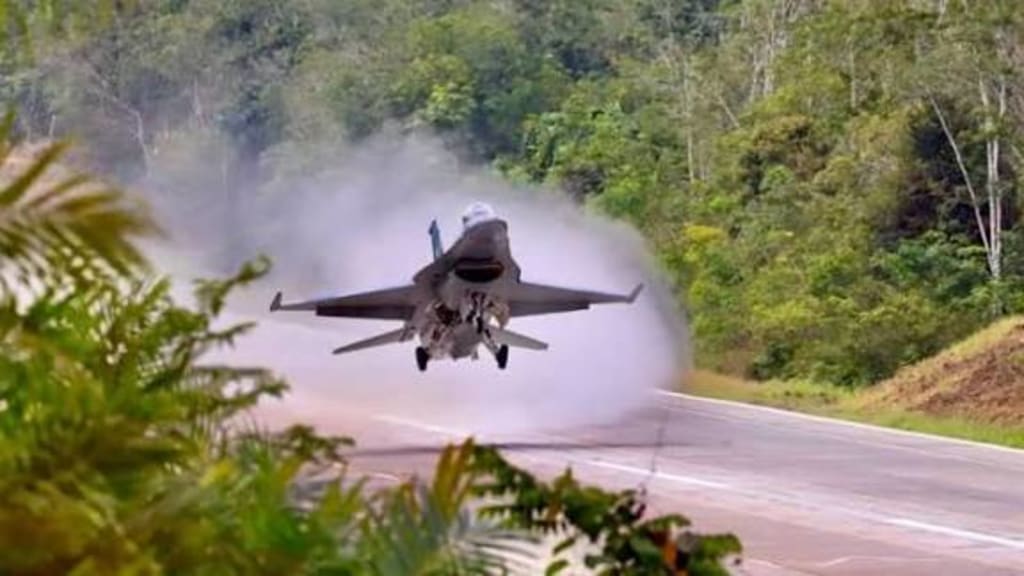
At a recent military demonstration in Lampung province on the southern tip of Sumatra, fighter aircraft landed and took off from a section of the Trans-Sumatra Toll Road, marking the first trial of its kind in Indonesia’s history. An F-16 fighter jet and an EMB-314 Super Tucano attack aircraft successfully completed runway operations from the 24-meter-wide highway, showcasing the feasibility of such maneuvers outside of conventional airfield.
The Indonesian Air Force chief of staff, Marshal Tonny Harjono, said on Wednesday that the goal is to enable each of the country’s 38 or more provinces to host at least one “situationally usable” runway section along major highways. While no formal timeline has been announced, officials say the initiative will be rolled out gradually as part of broader defense planning.
“The use of toll roads as situational alternative runways is expected to strengthen the operational readiness of the Indonesian Air Force in facing various potential threats, without reducing the primary function of toll roads as public transportation infrastructure,” the Air Force said in a statement.
Indonesia, the world’s largest archipelago nation with more than 6,000 inhabited islands stretching over 5,000 kilometers east to west, faces unique geographical challenges. Maritime and territorial disputes, particularly in the South China Sea, have underscored the need for flexible and redundant defense capabilities. The sprawling geography makes traditional concentrated air-base infrastructure vulnerable to disruption and limits rapid deployment across the nation’s vast territory.
Analysts say converting public highways into aircraft runways offers a way to mitigate these vulnerabilities. Civilian roadways can be spread across the country and upgraded incrementally at lower cost than a fleet of aircraft carriers. Acquiring and maintaining carriers — floating air bases that cost billions of dollars and require significant crew and logistics support — remains beyond Indonesia’s current defense budget priorities
“An aircraft carrier doesn’t seem that attractive as a cost-effective platform,” said Collin Koh, a research fellow at the S. Rajaratnam School of International Studies in Singapore. “Having countless toll roads and highways earmarked as emergency military runways across the entire archipelago makes more strategic and operational sense.”
The resilience of this distributed runway approach is also an advantage, according to Koh. “If you strike the aircraft carrier once, it’s gone,” he added. By contrast, a network of alternative road-based landing sites would ensure continuity of operations even if some locations were damaged or compromised.
To function effectively as emergency runways, certain highway segments must meet specific technical requirements. Indonesia’s Defense Ministry has begun preparing road maps to upgrade selected toll roads and national highways so that their surfaces, gradients, and clearances meet aircraft operational standards. In emergencies, these sections could serve as alternative airstrips when primary airfields are unavailable due to natural disasters, security concerns, or maintenance shutdowns.
en.antaranews.com
Deputy Defense Minister Donny Ermawan Taufanto described the initial demonstration on the Trans-Sumatra Toll Road as a milestone in Indonesia’s “universal defense system,” which aims to integrate civilian infrastructure into national defense planning.
Despite narrow widths (approximately 24 meters compared with 45–60 meters for standard airport runways), successful operations by highly trained Indonesian pilots demonstrate that the concept is practicable under controlled conditions. Harjono emphasized that pilots are receiving specialized training for these runway environments, which require precision and skill given the constrained space.
Critics of the strategy have questioned whether civilian infrastructure should be repurposed for military use, arguing that the duality could complicate road maintenance and safety standards. However, proponents say the trade-offs are justified by strengthened national resilience and the deterrent value of distributed air capability.
Ultimately, Indonesia’s highways-as-runways plan reflects a broader trend in defense thinking: the need to maximize strategic depth and adaptability in a world of evolving threats. By reimagining everyday infrastructure as part of its military toolkit, Indonesia seeks to ensure that its forces can operate effectively across one of the most geographically complex countries on earth.
About the Creator
Fiaz Ahmed
I am Fiaz Ahmed. I am a passionate writer. I love covering trending topics and breaking news. With a sharp eye for what’s happening around the world, and crafts timely and engaging stories that keep readers informed and updated.
Keep reading
More stories from Fiaz Ahmed and writers in The Swamp and other communities.
The Future of Naval Autonomy: Boats and Drone Swarms
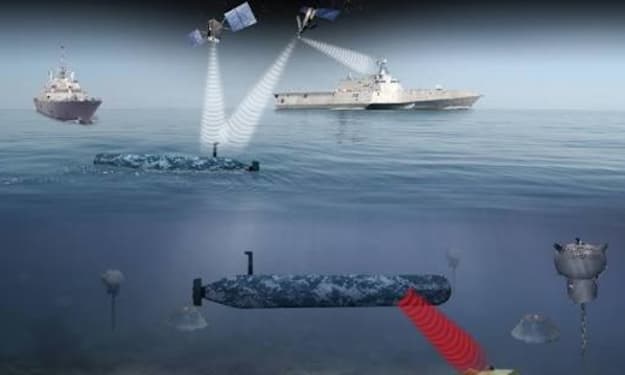
Naval warfare is entering a transformative era as autonomous boats and coordinated drone swarms begin to reshape how maritime operations are conducted. Advances in artificial intelligence, robotics and sensor technology are enabling navies to deploy unmanned surface vessels (USVs) and aerial drones capable of operating independently or in tightly coordinated groups. Defense analysts say this shift toward autonomy represents one of the most significant changes in naval strategy since the introduction of aircraft carriers. Autonomous naval systems are designed to perform missions that traditionally required crewed ships, including surveillance, mine detection, reconnaissance and even combat support. These platforms reduce risk to human sailors while expanding the reach and persistence of naval forces. With global tensions rising in contested maritime regions, particularly in the Indo-Pacific and the Black Sea, many countries are accelerating investment in autonomous fleets. Rise of Unmanned Surface Vessels Unmanned surface vessels are at the center of this evolution. These robotic boats range from small, fast patrol craft to large, ship-sized platforms capable of operating for weeks without human intervention. Equipped with radar, sonar and electro-optical sensors, USVs can monitor shipping lanes, track submarines and gather intelligence in dangerous waters. The United States Navy has already tested large autonomous vessels such as Sea Hunter and Sea Hawk, designed for anti-submarine warfare and long-duration patrol missions. Similarly, the United Kingdom, Israel and several European nations have deployed experimental or operational unmanned boats for coastal defense and mine countermeasures. Ukraine’s use of explosive-laden sea drones during the conflict with Russia has further demonstrated the tactical impact of autonomous naval platforms. These systems have successfully damaged or disabled large warships at a fraction of the cost of traditional weapons, proving that smaller autonomous craft can challenge conventional naval power. Drone Swarms at Sea Beyond individual unmanned vessels, the concept of drone swarms is gaining attention. Swarms consist of dozens or even hundreds of drones that communicate with one another and coordinate their actions using artificial intelligence. Unlike traditional systems controlled by a single operator, swarms can adapt to threats, share data and continue missions even if some units are destroyed. In naval operations, drone swarms could be used to overwhelm enemy defenses, conduct wide-area surveillance or escort larger ships through hostile waters. A swarm of small surface drones might screen a fleet against incoming threats, while aerial drones could provide real-time intelligence across vast ocean areas. China has invested heavily in swarm technology, testing coordinated drone launches from ships and submarines. The U.S. Defense Department is also pursuing swarm programs under initiatives such as the Replicator project, which aims to field large numbers of autonomous systems quickly and at low cost. Strategic and Economic Advantages Autonomous naval systems offer several strategic benefits. First, they significantly reduce operational costs. Unmanned boats are cheaper to build and maintain than crewed warships and can be produced in large numbers. This allows navies to adopt a “distributed force” model, spreading capability across many small platforms instead of relying on a few expensive ships. Second, autonomy improves endurance. Without the need for crew accommodations, food or rest, unmanned vessels can remain at sea for extended periods. This is particularly valuable for surveillance missions in remote or contested areas. Third, autonomous systems change the risk equation. Commanders can deploy robotic platforms into dangerous zones without endangering human lives, enabling more aggressive or persistent operations. Challenges and Risks Despite their promise, naval autonomous systems face serious challenges. One major concern is cybersecurity. Because these platforms rely heavily on software and communications networks, they are vulnerable to hacking, jamming and spoofing. An enemy that takes control of an autonomous vessel could turn it into a weapon against its own fleet. Ethical and legal questions also remain unresolved. International law governing the use of force at sea was developed for human decision-makers, not algorithms. Determining accountability for actions taken by autonomous weapons systems is a complex issue that policymakers have yet to fully address. There are also technical hurdles. Operating in harsh maritime environments requires reliable navigation, collision avoidance and decision-making under unpredictable conditions. While artificial intelligence has made significant progress, fully autonomous combat decision-making remains controversial and limited. The Road Ahead Experts agree that the future navy will be a hybrid force combining crewed ships with autonomous boats and drone swarms. Rather than replacing sailors entirely, autonomous systems will act as force multipliers, extending the reach and effectiveness of traditional fleets. Over the next decade, naval warfare is likely to become more networked and data-driven, with swarms of drones feeding information to command centers in real time. As countries race to develop these technologies, maritime security will increasingly depend on algorithms as much as armor. The rise of naval autonomy marks a fundamental shift in how power is projected at sea. Boats and drone swarms are no longer experimental concepts but emerging tools of modern warfare, redefining strategy, deterrence and the balance of power on the world’s oceans.
By Fiaz Ahmed 5 days ago in The Swamp
Why Black History Matters in America?
The United States of America is celebrating their 250th anniversary in 2026. I'm proud to be an American and as someone who was born here, I wouldn't imagine myself living anywhere else. This is a country where opportunities are possible. Where anyone can be successful in anything they desire to do. Equality, community, and togetherness are the backbones of what America is and should be about. However, we have an administration who wants to erase and disregard those who have made positive, meaningful impacts in our country, specifically Black figures, such as Martin Luther King, Jr., Rosa Parks, and Maya Angelou. President Trump and his administration have been constantly complaining and fighting against what they call the "Woke agenda". They use this excuse as a distraction from other issues they refuse to address, such as the high cost of living, climate change, and inflation. That equality is dividing America, when in reality, it's bringing us together. Being woke is not tied to a specific political party. No matter where you stand on the political spectrum, you can still care about other people and their plights. Compassion and empathy for others isn't tied to a political party, either. We were taught as children to treat others the way we want to be treated and not judge others because they're different from us. Caring about others isn't a personal attack on your beliefs. It doesn't make you any less of a person. People who are easily offended over African American figures, past or present, or anything related to it, are grasping at straws. Current and future generations need to know who people like Harriet Tubman and Shirley Chisholm were, especially in the classroom. Black History is part of American History. It should be recognized, not hidden or forgotten. Besides, you can't shield children from everything, just because your feelings are easily hurt.
By Mark Wesley Pritchard 15 days ago in The Swamp



Comments
There are no comments for this story
Be the first to respond and start the conversation.