
Game On or Game Over: A Look Ahead to 2026 for the Video Games Industry
Innovation, consolidation, and player expectations will define the next chapter of gaming


The video games industry stands at a critical crossroads as it looks ahead to 2026. After years of explosive growth fueled by the pandemic, followed by layoffs, studio closures, and shifting player habits, the question facing the industry is clear: is it game on for a new era of creativity, or game over for outdated business models?
As gaming continues to evolve into a mainstream cultural force, developers, publishers, and players alike are bracing for major changes that could reshape how games are made, sold, and experienced.
A Post-Boom Reality Check
The pandemic years brought unprecedented growth to gaming. Player numbers soared, revenues hit record highs, and investment poured into studios of all sizes. However, as the world reopened, the industry faced a harsh correction.
By 2024 and 2025, layoffs and project cancellations became common as companies adjusted to slower growth and rising development costs. This period exposed vulnerabilities in studios that expanded too quickly or relied heavily on live-service models without sustainable engagement.
Heading into 2026, the industry appears more cautious — but also more focused.
Rising Development Costs and Risk Aversion
One of the biggest challenges facing the video game industry is the soaring cost of development. AAA games now require massive budgets, often rivaling blockbuster films, with development cycles stretching five to seven years.
As a result, publishers are becoming more risk-averse. Sequels, remakes, and established franchises dominate release schedules, while experimental projects struggle to secure funding. While this approach reduces financial risk, it also raises concerns about creative stagnation.
For players, the result may be fewer surprises — but higher expectations for polish, performance, and long-term support.
Indie Games and Creative Resilience
Despite these challenges, indie developers continue to inject creativity into the industry. Smaller studios, often operating with leaner budgets and flexible teams, are better positioned to experiment with new ideas and genres.
Digital storefronts, subscription services, and early access platforms have helped indie games reach global audiences. Looking toward 2026, many analysts believe indie titles will play a crucial role in keeping the industry innovative and diverse.
Community-driven development and player feedback loops are becoming powerful tools for smaller teams to succeed.
AI and the Future of Game Development
Artificial intelligence is set to play a transformative role by 2026. From procedural world-building to smarter non-player characters, AI tools are already reshaping development workflows.
For studios, AI offers the promise of faster production and reduced costs. For players, it could mean more dynamic worlds and personalized gameplay experiences. However, the rise of AI also raises ethical and employment concerns, particularly around job displacement and creative ownership.
How the industry balances efficiency with human creativity will be one of the defining debates of the next few years.
Live Services, Subscriptions, and Player Fatigue
The live-service model, once seen as the future of gaming, is facing increasing scrutiny. Players are showing signs of fatigue from endless battle passes, seasonal grinds, and microtransactions.
While some live-service games remain highly successful, many others have failed to sustain long-term engagement. By 2026, companies may shift toward more player-friendly monetization models, focusing on quality content rather than constant revenue extraction.
Subscription services are also evolving, offering players access to large libraries but forcing developers to rethink traditional sales strategies.
New Hardware and Platform Shifts
Hardware innovation will continue to shape the industry’s future. As companies prepare for the next generation of consoles and more powerful PC components, performance expectations will rise.
At the same time, cloud gaming and cross-platform play are becoming more common. By 2026, platform boundaries may matter less, allowing players to move seamlessly between devices.
This shift could redefine how games are marketed and monetized, placing greater emphasis on accessibility and community building.
The Role of Players and Communities
Perhaps the most important factor shaping the industry’s future is the player community itself. Gamers today are more informed, vocal, and demanding than ever.
Communities now influence development decisions, shape post-launch support, and hold studios accountable for unfinished or exploitative products. Transparency, communication, and trust are becoming essential for long-term success.
Studios that listen to players and respect their time and money are more likely to thrive in the years ahead.
Game On or Game Over?
Looking toward 2026, the video games industry is neither collapsing nor guaranteed success. Instead, it is undergoing a necessary transformation.
For companies willing to adapt — embracing sustainable development, fair monetization, and creative risk — it is clearly game on. For those clinging to outdated models and short-term gains, the future may indeed feel like game over.
As technology advances and player expectations evolve, the next chapter of gaming will be defined not by hype, but by balance — between innovation and stability, profit and passion, business and community.
About the Creator
Asad Ali
I'm Asad Ali, a passionate blogger with 3 years of experience creating engaging and informative content across various niches. I specialize in crafting SEO-friendly articles that drive traffic and deliver value to readers.
Why Black History Matters in America?
The United States of America is celebrating their 250th anniversary in 2026. I'm proud to be an American and as someone who was born here, I wouldn't imagine myself living anywhere else. This is a country where opportunities are possible. Where anyone can be successful in anything they desire to do. Equality, community, and togetherness are the backbones of what America is and should be about. However, we have an administration who wants to erase and disregard those who have made positive, meaningful impacts in our country, specifically Black figures, such as Martin Luther King, Jr., Rosa Parks, and Maya Angelou. President Trump and his administration have been constantly complaining and fighting against what they call the "Woke agenda". They use this excuse as a distraction from other issues they refuse to address, such as the high cost of living, climate change, and inflation. That equality is dividing America, when in reality, it's bringing us together. Being woke is not tied to a specific political party. No matter where you stand on the political spectrum, you can still care about other people and their plights. Compassion and empathy for others isn't tied to a political party, either. We were taught as children to treat others the way we want to be treated and not judge others because they're different from us. Caring about others isn't a personal attack on your beliefs. It doesn't make you any less of a person. People who are easily offended over African American figures, past or present, or anything related to it, are grasping at straws. Current and future generations need to know who people like Harriet Tubman and Shirley Chisholm were, especially in the classroom. Black History is part of American History. It should be recognized, not hidden or forgotten. Besides, you can't shield children from everything, just because your feelings are easily hurt.
By Mark Wesley Pritchard 15 days ago in The Swamp
US Pressures Vanuatu at UN Over ICJ’s Landmark Climate Change Ruling
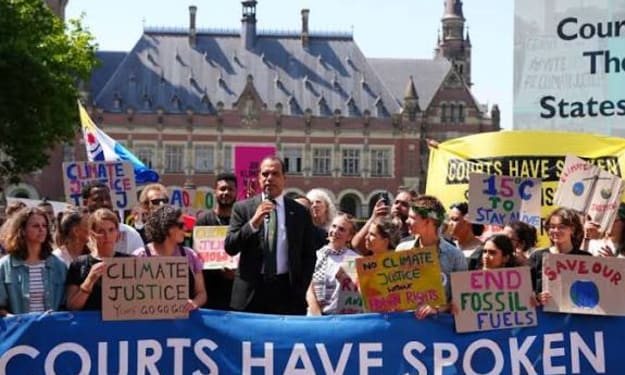
The United States has come under scrutiny after reports emerged that it applied diplomatic pressure on Vanuatu at the United Nations following a landmark advisory ruling by the International Court of Justice on climate change obligations. The ICJ ruling, hailed by climate-vulnerable nations as a historic step toward accountability, declared that states have a legal duty to protect the environment and prevent harm caused by greenhouse gas emissions. The opinion strengthened arguments that wealthy and high-emitting countries could be held responsible under international law for climate damage affecting vulnerable nations. Vanuatu, which led years of campaigning to bring the issue before the court, celebrated the decision as a victory for small island states threatened by rising seas and extreme weather. However, diplomatic sources say the United States has since sought to limit how the ruling is interpreted and applied within UN forums. Diplomatic Tensions After Historic Decision According to officials familiar with the discussions, U.S. representatives warned Vanuatu and allied countries against pushing for binding resolutions or enforcement mechanisms that could expose major economies to legal or financial consequences. While the ICJ’s opinion is not legally binding, it carries significant moral and political weight and is expected to influence future climate negotiations and litigation. A senior diplomat from a Pacific nation described the pressure as “deeply disappointing,” adding that the ruling was meant to amplify the voices of countries most affected by climate change rather than silence them. “The court affirmed what we have known for decades—that those who contribute most to climate change must act to prevent harm,” the diplomat said. “Attempts to water down that message undermine the spirit of international cooperation.” US Position on Climate Responsibility The U.S. government has not denied engaging in talks with Vanuatu but maintains that its actions are intended to preserve consensus and prevent divisions within the UN system. A spokesperson said Washington supports global climate action through existing agreements, including the Paris Agreement, and remains committed to reducing its emissions. However, officials cautioned against what they called “overreach” in interpreting the ICJ opinion as a basis for new legal liabilities. They argued that climate challenges should be addressed through diplomacy and cooperative frameworks rather than through courts. “Climate change requires collective solutions,” the spokesperson said. “We must avoid approaches that risk fragmenting international efforts or creating legal uncertainty.” A Victory for Climate-Vulnerable Nations For Vanuatu and other island nations, the ICJ decision represents a milestone after years of advocacy by youth groups, environmental organizations, and Pacific governments. The ruling recognized that environmental harm caused by climate change can violate human rights and international law, giving vulnerable states a stronger platform in negotiations with major emitters. Environmental activists accused the United States of attempting to weaken the ruling’s impact. Several non-governmental organizations called on Washington to respect the court’s findings and support efforts to translate them into meaningful action. “This ruling is about survival,” said a spokesperson for a global climate justice network. “It affirms that powerful nations cannot ignore the consequences of their emissions on communities that are losing land, livelihoods, and lives.” Broader Implications for Global Politics The controversy highlights a growing divide between industrialized countries and developing nations over responsibility for climate damage. While wealthier states emphasize voluntary commitments and technological solutions, vulnerable countries increasingly demand legal recognition of loss and damage. Analysts say the dispute also reflects fears among major economies that the ICJ ruling could open the door to lawsuits or compensation claims. Several governments are reportedly reviewing their legal exposure and diplomatic strategies in light of the decision. “The court’s opinion changes the conversation,” said an international law expert based in Europe. “Even if it is advisory, it sets a standard that future climate negotiations cannot ignore.” What Comes Next Vanuatu is expected to continue pushing for stronger language on climate responsibility in upcoming UN resolutions. Supporters hope the ICJ ruling will be referenced in future climate talks and used to strengthen global commitments to reduce emissions and protect vulnerable communities. Whether U.S. pressure will succeed in moderating that push remains uncertain. For now, the episode underscores how climate change is no longer only an environmental issue, but a legal and diplomatic battleground shaping relations between powerful states and those most at risk. As the international community grapples with rising temperatures and intensifying climate impacts, the ICJ’s landmark ruling—and the response to it—may mark a turning point in how responsibility for climate change is defined on the world stage.
By Fiaz Ahmed 2 days ago in The Swamp
Diaries to Nietzsche
Quotation from Friedrich Nietzsche "He who wrestles long with monsters should beware lest he himself become a monster. And if you gaze long into an abyss, the abyss also gazes into you. Man is not destroyed by suffering, but by the meaning he makes of it."
By LUCCIAN LAYTH4 days ago in Critique



Comments
There are no comments for this story
Be the first to respond and start the conversation.