
Germany and France Interested in Polish Piorun MANPADS, Some May Be Supplied to Ukraine
Formal / News Style European powers explore Polish air-defense system as Ukraine strengthens front-line capabilities Berlin and Paris evaluate Piorun MANPADS amid growing short-range aerial threats 🔹 Neutral & Informative Poland’s portable missile system draws interest from Germany, France, and potentially Ukraine Advanced MANPADS could enhance NATO and Ukrainian defense against drones and helicopters 🔹 Impactful Portable air-defense systems from Poland may shift the balance of short-range protection in Europe

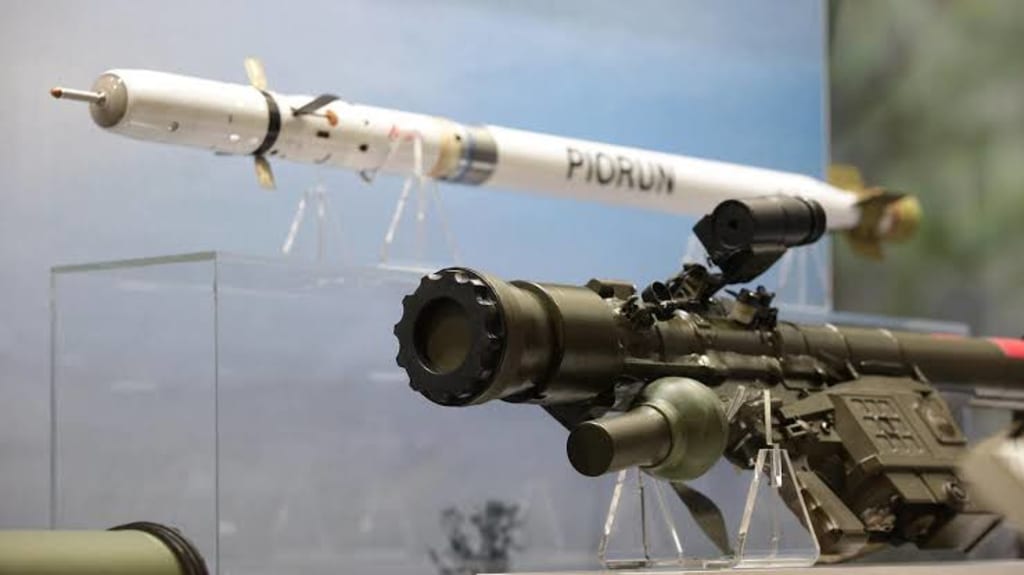
Amid the ongoing conflict in Ukraine, European nations are exploring the potential acquisition of Poland’s Piorun man-portable air-defense systems (MANPADS), with some units reportedly slated for deployment to Ukrainian forces. These developments underscore growing Western interest in advanced short-range air defense systems to counter threats posed by drones, helicopters, and low-flying aircraft on the modern battlefield.
Polish Piorun: A Proven Air-Defense Solution
The Piorun, developed by Polish Armaments Group, is an upgraded version of the earlier Grom MANPADS. It features advanced guidance systems, higher agility, and improved targeting sensors capable of tracking low-signature aerial threats. The system is portable, allowing infantry units to carry it in combat zones, and can be deployed quickly to protect front-line positions.
Poland has demonstrated the Piorun in exercises alongside NATO forces, showcasing its efficacy against drones and aircraft operating at low altitudes. The system’s versatility has attracted interest from other European militaries, particularly as hybrid threats and unmanned aerial vehicles (UAVs) become more prevalent in contemporary conflicts.
Germany and France Express Interest
Recent defense briefings indicate that both Germany and France are evaluating the feasibility of acquiring the Piorun to bolster their short-range air defense capabilities. Officials in Berlin and Paris have highlighted the system’s potential to fill gaps in protection against small, agile aerial threats, which traditional air defense platforms sometimes struggle to counter.
A source familiar with the discussions told analysts that while neither country has finalized procurement agreements, both are conducting technical assessments and evaluating production capacity in Poland to meet potential orders. These assessments also include compatibility with existing NATO communications and command systems, as interoperability remains a key factor in multinational operations.
Supplying Piorun Systems to Ukraine
Poland has emerged as a critical supplier of advanced defense equipment to Ukraine, providing various armored vehicles, artillery systems, and short-range air defense weapons. Reports indicate that a limited number of Piorun units may be transferred to Ukrainian forces, enhancing their capability to defend against Russian helicopters, drones, and tactical aircraft operating near contested frontlines.
Ukrainian military officials have welcomed the prospect, noting that portable, high-precision air-defense systems provide front-line troops with flexible options to counter aerial threats in dynamic combat situations. The Piorun’s mobility and modern guidance make it especially suitable for Ukraine’s current battlefield, where small-unit operations and rapidly changing front lines are common.
Strategic Implications
The potential transfer of Piorun systems to Ukraine carries both military and geopolitical implications. It represents continued Western support for Kyiv, signaling NATO countries’ willingness to supply advanced weapons while avoiding direct involvement in combat operations. The provision of such systems could also influence Russian operational planning, compelling Moscow to adjust tactics to mitigate the threat from portable, precision air-defense systems.
For Germany and France, acquiring the Piorun offers the opportunity to modernize their own arsenals quickly. Both nations are undergoing reviews of their air-defense capabilities in light of evolving threats from UAVs, cruise missiles, and low-flying aircraft. European analysts suggest that the adoption of systems like the Piorun could strengthen NATO’s layered air-defense posture in Central and Eastern Europe.
Production and Export Considerations
Polish defense manufacturers have confirmed that production capacity could be scaled to accommodate both domestic needs and foreign orders. However, officials caution that international sales require careful negotiation, particularly regarding delivery timelines, licensing agreements, and training for operators in foreign militaries.
Furthermore, supplying Piorun units to Ukraine involves sensitive coordination with NATO allies to ensure that technology transfer does not compromise security protocols or escalate tensions with Russia. Officials have emphasized that any deliveries will be carefully measured to support Ukraine without crossing thresholds that could provoke broader escalation.
Looking Ahead
As Germany and France continue evaluating the Piorun MANPADS, and as Poland prepares potential shipments to Ukraine, analysts will monitor both operational deployment and geopolitical messaging closely. The move reflects a growing recognition among European countries of the importance of agile, portable air-defense systems in modern conflicts and highlights Poland’s emerging role as a key provider of advanced military technology in the region.
The coming months may reveal further agreements or transfers, potentially altering both NATO’s short-range air-defense posture and Ukraine’s ability to defend critical front-line positions against evolving aerial threats.
About the Creator
Fiaz Ahmed
I am Fiaz Ahmed. I am a passionate writer. I love covering trending topics and breaking news. With a sharp eye for what’s happening around the world, and crafts timely and engaging stories that keep readers informed and updated.
Keep reading
More stories from Fiaz Ahmed and writers in The Swamp and other communities.
Ukraine War Briefing: Kyiv’s Forces Made Fastest Battlefield Gains Since 2023, Analysis Finds
Ukrainian forces have achieved their most significant and rapid battlefield advances since 2023, according to new military analysis assessing recent developments along several front-line sectors. The findings suggest a shift in momentum after months of largely static fighting and point to improvements in coordination, intelligence, and the use of precision weapons by Ukraine. The analysis, based on satellite imagery, open-source intelligence, and battlefield reporting, indicates that Ukrainian units have reclaimed small but strategically important areas in the eastern and southern regions. While the territorial gains remain limited in scale, their speed marks a notable change from the slow, attritional pace that dominated much of last year. Breakthroughs in Key Sectors Recent fighting has focused on contested zones where Russian defensive lines had hardened over months of trench warfare. Ukrainian troops reportedly exploited weaknesses created by sustained artillery pressure and targeted drone strikes, allowing them to advance more quickly than in previous operations. Military analysts say these advances were not the result of a single large offensive but rather a series of coordinated local pushes. Small, mobile units supported by drones and long-range firepower appear to have disrupted Russian supply routes and command posts, forcing withdrawals in certain areas. “This is the fastest pace of Ukrainian movement we’ve observed since mid-2023,” one defense analyst said. “It suggests a tactical adaptation that emphasizes precision and flexibility rather than mass assaults.” Role of Technology and Intelligence A key factor behind the gains has been the expanded use of drones for reconnaissance and targeting. Ukrainian forces have increasingly relied on real-time battlefield intelligence to guide artillery and missile strikes, reducing the risk of costly frontal attacks. Electronic warfare capabilities have also played a growing role. By jamming Russian communications and GPS signals, Ukrainian units have limited the effectiveness of enemy drones and missile systems in certain sectors. Western-supplied equipment continues to shape operations, though officials caution that ammunition shortages and logistical constraints remain serious challenges. Despite these limits, commanders appear to be prioritizing carefully chosen objectives rather than broad territorial pushes. Political and Strategic Impact The advances come at a politically sensitive moment, as debates continue in Western capitals over the scale and duration of military aid to Ukraine. Officials in Kyiv have repeatedly argued that sustained support is essential to maintain pressure on Russian forces and prevent a prolonged stalemate. President Volodymyr Zelensky praised the military’s performance, saying the gains demonstrated Ukraine’s resilience and adaptability. “Our soldiers are proving that we can move forward, even under extremely difficult conditions,” Zelensky said in a recent address. “Every kilometer matters for our security and our future.” Russian officials, meanwhile, downplayed the significance of the advances, describing them as minor tactical adjustments rather than a strategic setback. Moscow maintains that its forces remain firmly in control of most contested territories. Risks of Escalation Despite the positive assessment, analysts warn that the situation remains volatile. Faster Ukrainian advances could provoke heavier Russian counterattacks, including intensified missile strikes on infrastructure and urban areas. There is also concern that success on the battlefield may encourage riskier operations in the coming months, particularly as both sides seek leverage before any potential diplomatic initiatives. With no comprehensive peace talks underway, military action continues to be the primary tool shaping the conflict’s trajectory. Civilian populations in contested regions remain vulnerable, with reports of shelling and displacement increasing in areas where fighting has intensified. Humanitarian groups have called for renewed efforts to protect non-combatants and maintain access to aid corridors. A Shift, Not a Turning Point Experts caution against interpreting the latest gains as a decisive turning point in the war. The advances are measured in kilometers rather than regions, and Russian forces still retain significant manpower and firepower. However, the speed of movement itself is significant. It signals that Ukraine has found ways to overcome some of the tactical obstacles that slowed its operations last year, particularly heavy minefields and layered defenses. “This doesn’t mean the war is close to ending,” one analyst noted. “But it does show that Ukraine can still generate momentum under the right conditions.” Looking Ahead As winter conditions ease and fighting intensifies, both sides are expected to increase pressure along key fronts. For Ukraine, maintaining recent gains will depend on continued access to weapons, ammunition, and intelligence support from allies. For now, the latest assessment offers Kyiv a rare moment of cautious optimism after months of grinding warfare. Whether these advances can be sustained — or expanded — will shape the next phase of a conflict that has already redrawn Europe’s security landscape. The coming weeks are likely to determine whether this faster pace of battlefield movement marks the beginning of a broader strategic shift or remains a brief window of opportunity in a long and costly war.
By Fiaz Ahmed a day ago in The Swamp
Why Black History Matters in America?
The United States of America is celebrating their 250th anniversary in 2026. I'm proud to be an American and as someone who was born here, I wouldn't imagine myself living anywhere else. This is a country where opportunities are possible. Where anyone can be successful in anything they desire to do. Equality, community, and togetherness are the backbones of what America is and should be about. However, we have an administration who wants to erase and disregard those who have made positive, meaningful impacts in our country, specifically Black figures, such as Martin Luther King, Jr., Rosa Parks, and Maya Angelou. President Trump and his administration have been constantly complaining and fighting against what they call the "Woke agenda". They use this excuse as a distraction from other issues they refuse to address, such as the high cost of living, climate change, and inflation. That equality is dividing America, when in reality, it's bringing us together. Being woke is not tied to a specific political party. No matter where you stand on the political spectrum, you can still care about other people and their plights. Compassion and empathy for others isn't tied to a political party, either. We were taught as children to treat others the way we want to be treated and not judge others because they're different from us. Caring about others isn't a personal attack on your beliefs. It doesn't make you any less of a person. People who are easily offended over African American figures, past or present, or anything related to it, are grasping at straws. Current and future generations need to know who people like Harriet Tubman and Shirley Chisholm were, especially in the classroom. Black History is part of American History. It should be recognized, not hidden or forgotten. Besides, you can't shield children from everything, just because your feelings are easily hurt.
By Mark Wesley Pritchard 16 days ago in The Swamp
A piece on Palantir and it's dangers
In the current political landscape of the United States, you may have heard the name “Palantir” brought up in conversation at some point. Palantir, a data analytics company, has been the target of much scrutiny and debate over its anti-crime and anti-terrorism advantages, as well as severe privacy concerns and fears of mass surveillance. This is the reason why Palantir is a very important topic in the area of Homeland Security. First, to truly understand the importance and dangers of Palantir, the background of the company must be understood.
By Alexander Goodrichabout 21 hours ago in The Swamp
Draft Deleting? Don't Do It!
Today, I had a little time. I decided that I would have a look at the drafts that I have on Vocal. This is part of a long-term wish to have everything I've written on paper rather than virtually. I've not looked at them for weeks and something drew me to them, just to browse and see what was there.
By Rachel Deeming3 days ago in Writers



Comments
There are no comments for this story
Be the first to respond and start the conversation.