
Government Considers Removing Prince Andrew from Royal Line of Succession
UK government reviews potential removal of Prince Andrew from succession amid legal controversies and public scrutiny

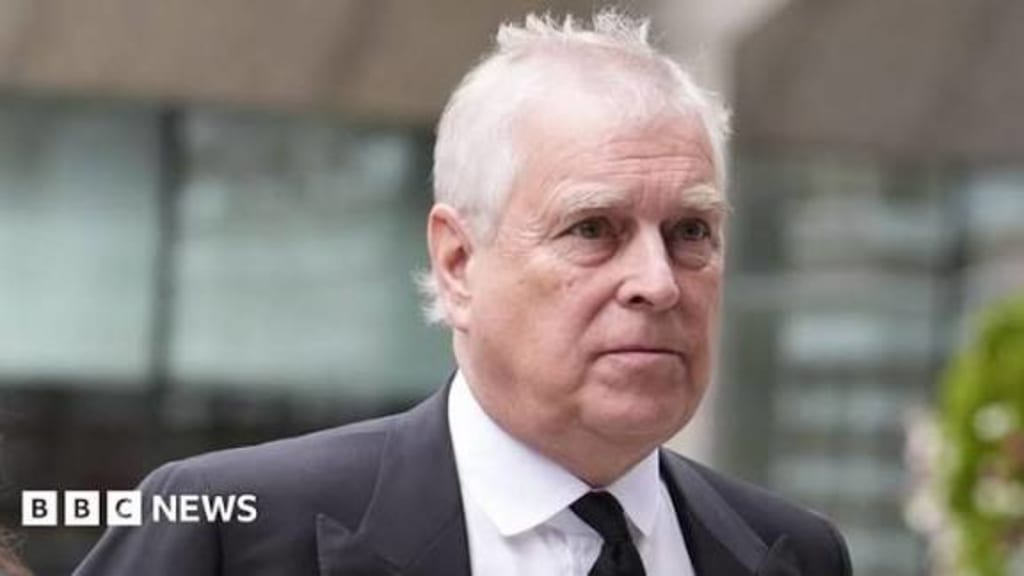
The UK government is reportedly exploring the possibility of removing Prince Andrew from the line of succession to the British throne. The move comes amid sustained scrutiny over his legal issues and public controversies, raising questions about the monarchy’s public image, accountability, and the potential implications for royal protocol.
Background
Prince Andrew, the Duke of York, has been embroiled in multiple controversies that have undermined his public standing. While he stepped back from official royal duties in recent years, his position in the line of succession has remained unchanged. The government review indicates that officials are examining whether legislative or procedural measures could formally alter his status in the royal hierarchy.
Historically, removing a royal from the succession is rare and legally complex. The Succession to the Crown Act 2013 sets out rules governing succession, including conditions related to marriage, religion, and other statutory requirements. While no recent precedent exists for removal due to conduct, historical examples show that heirs have been bypassed or excluded for political, religious, or personal reasons.
Government Deliberations
Sources within Whitehall suggest that officials are considering multiple pathways, including voluntary renunciation, formal legislative amendments, or a hybrid approach combining procedural and symbolic measures. Legal advisors have reportedly been engaged to assess the feasibility, risks, and constitutional ramifications of such an action.
A senior government adviser told confidential sources: “The matter is highly sensitive. We are considering all legal avenues while being mindful of public perception, parliamentary requirements, and the broader stability of the monarchy.”
Public Opinion and Political Pressure
Public sentiment appears to favor some form of action. Surveys indicate that a majority of citizens believe royals implicated in serious legal or ethical controversies should not retain their place in the line of succession. Advocacy groups and media commentators have argued that failing to act could erode public trust in the monarchy and its relevance in modern Britain.
Members of Parliament from multiple parties have reportedly raised questions regarding Prince Andrew’s status, emphasizing accountability, transparency, and ethical governance. Some lawmakers suggest that formal removal could demonstrate that the monarchy adheres to contemporary standards of responsibility.
Legal and Constitutional Challenges
Legal experts caution that removing a royal from succession is complicated. Any formal change would require parliamentary approval and possibly coordination with other Commonwealth realms that recognize the British monarch as head of state. Challenges include ensuring compliance with existing statutes, addressing succession rights of other family members, and avoiding potential legal disputes.
Even if successfully implemented, such a move could set a precedent for scrutiny of other royals’ conduct, raising questions about how personal behavior intersects with hereditary rights.
Potential Outcomes
Officials are reportedly considering a range of outcomes, from voluntary abdication of succession rights by Prince Andrew to formal legislative action. Timing and communication of any decision are expected to be carefully managed to minimize disruption to the royal household and public confidence.
Observers suggest that the decision could influence the monarchy’s public image significantly, either reinforcing standards of accountability or exposing institutional vulnerabilities. The government is likely to weigh both symbolic and practical effects before taking action.
Looking Ahead
As deliberations continue, attention is focused on legal feasibility, constitutional precedent, and public perception. For the monarchy, the outcome could redefine expectations of responsibility and conduct for members of the royal family, highlighting tensions between tradition, public accountability, and modern governance standards.
About the Creator
Fiaz Ahmed
I am Fiaz Ahmed. I am a passionate writer. I love covering trending topics and breaking news. With a sharp eye for what’s happening around the world, and crafts timely and engaging stories that keep readers informed and updated.
Keep reading
More stories from Fiaz Ahmed and writers in The Swamp and other communities.
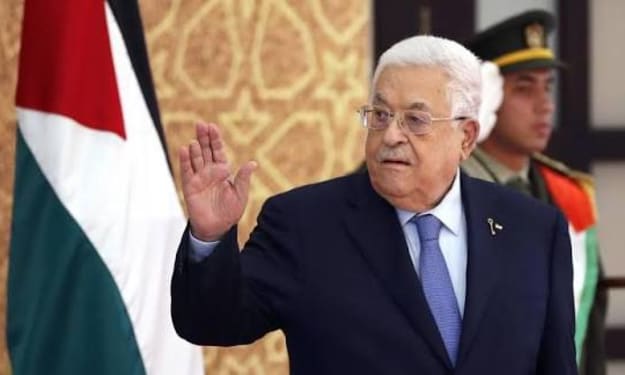
Palestinian Authority in Dire Straits as Israel's Hold on West Bank Deepens
The Palestinian Authority is facing mounting political, economic, and social pressure as Israel consolidates its control over key areas of the West Bank, leaving the Palestinian leadership struggling to maintain authority and deliver basic services. Analysts warn that the combination of territorial restrictions, financial constraints, and internal divisions is pushing the PA toward a precarious situation that could have long-term implications for governance and stability. Territorial and Security Pressures Over the past year, Israel has increased its presence in the West Bank through expanded settlements, military operations, and tighter control of movement for Palestinian residents. These measures have restricted the PA’s ability to operate freely and undermine its capacity to implement policy in areas where it nominally holds authority. Palestinian officials report frequent clashes between Israeli forces and local communities, further complicating law enforcement and civil administration. “Every week, we face new restrictions that limit our access to villages and towns,” said a senior PA official on condition of anonymity. “Our ability to govern effectively is being systematically reduced.” Economic Strains Economic pressures are intensifying as Israel retains significant control over trade, taxes, and resource allocation. Customs revenues collected by Israel on behalf of the PA have been delayed or withheld at times, depriving the Palestinian government of crucial funds. Coupled with dwindling foreign aid and budget deficits, this has left the PA struggling to pay public sector salaries and maintain basic services such as health care, education, and utilities. According to recent estimates, the PA faces a shortfall exceeding hundreds of millions of dollars. Municipal services are increasingly disrupted, with shortages affecting hospitals, schools, and public transportation. Residents report frustration and uncertainty as service delivery falters, heightening social tension. Internal Political Challenges Compounding the external pressures are internal divisions within Palestinian politics. The longstanding rivalry between the PA, dominated by Fatah, and Hamas, which controls Gaza, has hampered coordinated policy responses. Reconciliation efforts have repeatedly stalled, leaving the PA politically isolated and reducing its leverage in negotiations with Israel and international actors. Political analysts say that without effective governance and unity, public confidence in the PA is eroding. Recent protests over unpaid salaries and restrictions on movement illustrate growing dissatisfaction among Palestinians, particularly in the West Bank’s younger population. International Implications The deepening control by Israel has also affected international diplomatic efforts. While some foreign governments continue to provide financial support to the PA, growing concerns about accountability and efficiency have led to calls for greater scrutiny. Additionally, ongoing settlement expansion and security operations complicate the prospects for renewed peace negotiations, leaving the two-state framework increasingly tenuous. “The Palestinian Authority is caught in a vise,” said a Middle East policy expert. “Israel’s consolidation of control, combined with internal political fractures and economic dependency, is leaving the PA with very limited maneuvering room.” Humanitarian and Social Impact For ordinary Palestinians, the convergence of territorial, economic, and political pressures translates into daily hardships. Restricted movement hampers access to workplaces, hospitals, and schools, while economic stagnation exacerbates poverty. Humanitarian organizations have warned that the situation could worsen without urgent interventions to ensure public services and protect vulnerable communities. Looking Ahead Observers suggest that unless the PA can secure stable funding, strengthen internal cohesion, and regain some operational autonomy, its ability to function as a governing authority may continue to decline. Failure to address these challenges could destabilize the West Bank, increase tensions with Israel, and further fragment Palestinian political and social structures. As Israel deepens its presence and influence, the Palestinian Authority finds itself in an increasingly vulnerable position—struggling to assert authority, deliver essential services, and maintain legitimacy in the eyes of its people and the international community. The coming months may prove critical in determining whether the PA can survive under mounting pressure or be rendered largely symbolic.
By Fiaz Ahmed about 15 hours ago in The Swamp
A Gathering of Evil Bosses
“I’m the queen of chin jutting while I smooth my hair, attacking, insulting, and deflecting to protect my appointer.” “Oh, please, Blondi, my hair is curled, highlighted, and longer than yours. I feature television commercials telling immigrants that we will give them a free plane ride home, and if they voluntarily turn themselves in, they will be allowed to legally apply for re-entry. It runs everywhere, and I look good in it! You can’t compete because of your blond hair. Mine is nicer, and my lips are prettier than yours.”
By Andrea Corwin 3 days ago in The Swamp


Comments
There are no comments for this story
Be the first to respond and start the conversation.