
Prince William May Shape the Royal Future of Princesses Beatrice and Eugenie, Expert Says
Discussion grows over how the next generation of leadership could redefine roles within the British monarchy

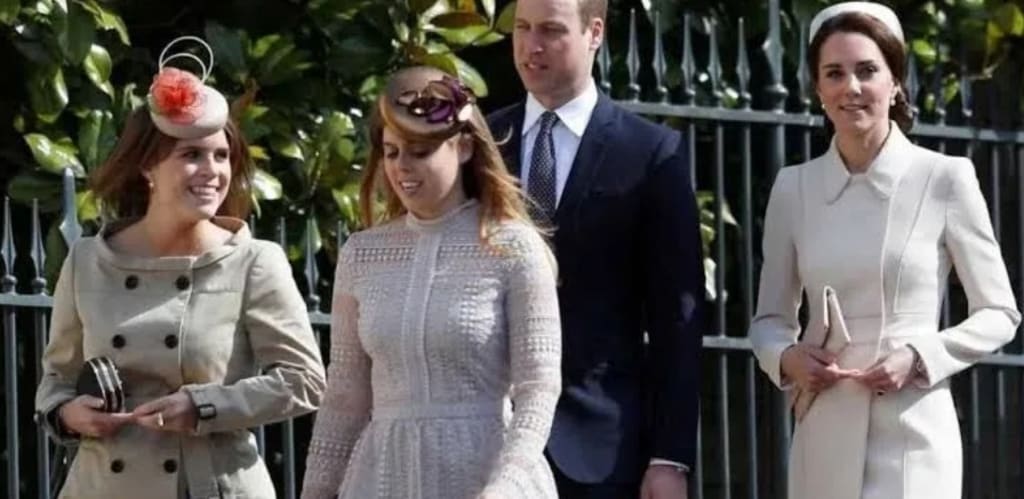
A New Chapter in Royal Leadership
A renewed discussion has emerged about how Prince William might influence the future royal standing of his cousins, Princess Beatrice and Princess Eugenie. According to royal commentators, decisions made during William’s eventual reign could clarify the long-term roles of extended family members within the monarchy.
The conversation comes as the British royal family continues to adjust under the leadership of King Charles III, who has supported a streamlined approach to official duties.
While Beatrice and Eugenie are not working royals in the same way as senior members of the family, they retain their titles and occasionally appear at major events. Their position has prompted ongoing debate about what defines a modern royal role.
Background: The Impact of the Duke of York’s Withdrawal
The status of the two princesses is often discussed in the context of their father, Prince Andrew, who stepped back from public duties in 2019. His withdrawal followed controversy connected to his association with the late financier Jeffrey Epstein.
Although Princess Beatrice and Princess Eugenie were not directly involved in the controversy, public interest in their future has increased due to wider discussions about the size and structure of the monarchy.
Observers note that their careers outside royal duties—both have professional roles in the private sector—reflect a shift toward independence from full-time royal service.
The Concept of a Slimmed-Down Monarchy
King Charles III has long expressed interest in a smaller core of working royals. This approach focuses public funding and official responsibilities on a limited group of senior members.
Prince William is widely expected to continue this strategy when he becomes monarch. Analysts suggest that clarity about the working status of extended family members may form part of that transition.
In this context, the future of Beatrice and Eugenie becomes a practical question rather than a personal one. The monarchy’s long-term sustainability depends on balancing tradition with efficiency.
What Experts Are Saying
Royal experts often highlight that titles and working roles are separate matters. A royal title does not automatically mean an individual performs official duties on behalf of the Crown.
Some commentators argue that William, as a future king, may choose to formally define which members of the extended family carry out public engagements funded by the state.
Others believe that informal arrangements could continue without dramatic announcements. The British monarchy has traditionally evolved through gradual adjustment rather than sudden reform.
Princess Beatrice and Princess Eugenie Today
Princess Beatrice and Princess Eugenie maintain public visibility but are not considered senior working royals.
They attend family events such as state occasions and commemorations. Both have professional careers and are involved in charitable initiatives.
Their hybrid role—part private citizen, part royal family member—illustrates how the institution has adapted in recent decades.
Under Prince William’s future leadership, that balance could either remain unchanged or become more clearly structured.
Constitutional and Financial Considerations
The monarchy functions within the framework of the United Kingdom’s constitutional system. Public funding supports official duties performed by designated working royals.
If William eventually narrows the circle of state-funded representatives, it could affect which family members receive security, office support, or ceremonial roles.
However, such decisions are influenced by legal guidelines, historical precedent, and public opinion.
Experts emphasize that any structural changes would be carefully considered and implemented over time.
Public Perception and Accountability
Public attitudes toward the monarchy have evolved in recent years. Younger generations often emphasize transparency and accountability.
In this environment, clarity about roles and funding is increasingly important. Royal observers note that defining responsibilities can help maintain trust.
Princess Beatrice and Princess Eugenie are generally viewed as maintaining low public profiles. Nevertheless, broader discussions about royal reform continue to bring their status into focus.
Prince William’s Leadership Style
Prince William has emphasized environmental advocacy, mental health awareness, and community engagement during his time as Prince of Wales.
His approach reflects continuity with tradition but also attention to contemporary concerns. Observers expect his eventual reign to balance ceremonial duties with focused public initiatives.
If he chooses to redefine the roles of extended family members, the decision would likely align with this practical, service-oriented vision.
The Role of King Charles III in the Present
While speculation centers on Prince William’s future decisions, King Charles III remains responsible for current royal arrangements.
So far, there has been no formal indication that Princess Beatrice or Princess Eugenie’s status will change.
Any significant shift would likely be communicated through official channels, ensuring consistency with constitutional practice.
For now, the monarchy continues operating under existing guidelines.
Social Media and Media Commentary
Modern royal coverage often includes discussion across social media platforms. Online commentary sometimes amplifies speculation about potential changes.
However, digital debate does not necessarily translate into policy action. Decisions regarding royal roles are shaped by institutional needs rather than online trends.
Experts caution against reading too much into media commentary unless supported by official statements.
Possible Scenarios for the Future
Several outcomes are possible regarding the princesses’ roles:
Continued informal participation in family events without expanded duties
Formal clarification that they are private citizens with royal titles
Expanded charitable engagement without full working status
Each scenario carries implications for how the monarchy presents itself to the public.
A streamlined structure could reinforce accountability, while flexibility could preserve tradition and family unity.
Tradition and Adaptation
The British monarchy has endured for centuries by adapting to political and social change.
From constitutional reforms to adjustments in succession rules, evolution has been gradual.
Prince William’s eventual decisions will likely reflect this pattern. Rather than dramatic restructuring, incremental clarification may define the future.
Princess Beatrice and Princess Eugenie’s position serves as a case study in how hereditary institutions navigate modern expectations.
Conclusion
The question of whether Prince William may shape the royal future of Princess Beatrice and Princess Eugenie reflects broader conversations about reform within the British monarchy.
As the institution continues to modernize under King Charles III, attention turns to how the next generation of leadership will define roles and responsibilities.
While no immediate changes are expected, the topic remains part of ongoing public discourse.
Ultimately, the future status of extended royal family members will depend on constitutional considerations, financial realities, and the leadership priorities of the reigning monarch.
For now, Princess Beatrice and Princess Eugenie continue balancing private careers with public association to the Crown, while observers watch how the monarchy evolves in the years ahead.
About the Creator
Saad
I’m Saad. I’m a passionate writer who loves exploring trending news topics, sharing insights, and keeping readers updated on what’s happening around the world.
Why Black History Matters in America?
The United States of America is celebrating their 250th anniversary in 2026. I'm proud to be an American and as someone who was born here, I wouldn't imagine myself living anywhere else. This is a country where opportunities are possible. Where anyone can be successful in anything they desire to do. Equality, community, and togetherness are the backbones of what America is and should be about. However, we have an administration who wants to erase and disregard those who have made positive, meaningful impacts in our country, specifically Black figures, such as Martin Luther King, Jr., Rosa Parks, and Maya Angelou. President Trump and his administration have been constantly complaining and fighting against what they call the "Woke agenda". They use this excuse as a distraction from other issues they refuse to address, such as the high cost of living, climate change, and inflation. That equality is dividing America, when in reality, it's bringing us together. Being woke is not tied to a specific political party. No matter where you stand on the political spectrum, you can still care about other people and their plights. Compassion and empathy for others isn't tied to a political party, either. We were taught as children to treat others the way we want to be treated and not judge others because they're different from us. Caring about others isn't a personal attack on your beliefs. It doesn't make you any less of a person. People who are easily offended over African American figures, past or present, or anything related to it, are grasping at straws. Current and future generations need to know who people like Harriet Tubman and Shirley Chisholm were, especially in the classroom. Black History is part of American History. It should be recognized, not hidden or forgotten. Besides, you can't shield children from everything, just because your feelings are easily hurt.
By Mark Wesley Pritchard 18 days ago in The Swamp
Production Starts on Indonesian Navy’s A-VIATOR Aircraft in Italy
Production has officially begun on the A-VIATOR aircraft for the Indonesian Navy, with assembly taking place at a major aerospace facility in Italy. The program represents a key step in Indonesia’s efforts to modernize its naval aviation capabilities and enhance maritime surveillance, reconnaissance, and tactical operations in the region. Aircraft Overview The A-VIATOR is a multirole aircraft designed to operate in both maritime patrol and combat support roles. Equipped with advanced radar, sensor suites, and communications systems, the aircraft is intended to provide the Indonesian Navy with improved situational awareness over its territorial waters, critical shipping lanes, and archipelagic regions. Italian aerospace manufacturers have been tasked with building the initial production batch, while final delivery and integration will occur in coordination with Indonesian defense officials. The program includes training for pilots and technical crews, maintenance support, and gradual incorporation into existing naval operations. Strategic Importance for Indonesia Indonesia, as the world’s largest archipelagic state, faces unique maritime challenges. Monitoring and securing its extensive coastline, territorial waters, and exclusive economic zones requires advanced aerial and naval assets. The A-VIATOR aircraft program is intended to bolster the country’s maritime security infrastructure and provide rapid-response capabilities to both civilian and military contingencies. Defense analysts note that the introduction of modern aircraft like the A-VIATOR enhances Indonesia’s ability to detect and track unauthorized vessels, respond to regional disputes, and support search and rescue operations. “The aircraft significantly improves the Navy’s reach and effectiveness,” said a regional defense expert. “It’s a critical investment for Indonesia’s maritime defense strategy.” Production and Technology The aircraft features cutting-edge avionics, including automated surveillance systems, electronic intelligence capabilities, and secure communication networks compatible with allied platforms. Its multirole design allows it to switch between reconnaissance, anti-submarine warfare, and limited tactical strike operations, giving the Navy flexibility in deployment. The Italian manufacturer has emphasized precision engineering and adherence to international aerospace standards, ensuring that the aircraft meet both operational and safety requirements. Advanced composite materials and fuel-efficient engines are integrated to maximize performance and endurance. International Cooperation The A-VIATOR program reflects growing collaboration between Indonesia and Italy in defense and aerospace industries. Beyond aircraft production, the partnership includes knowledge transfer, technical training, and long-term support agreements. Indonesian pilots and technical personnel are scheduled for training sessions in Italy before the aircraft are delivered. “This project exemplifies the benefits of international defense collaboration,” an Indonesian Ministry of Defense official said. “We gain access to advanced technology while developing domestic skills and operational expertise for our naval forces.” Regional Implications Southeast Asia has seen increasing competition over maritime security, with neighboring countries investing in modern naval assets to address territorial disputes, piracy, and smuggling. The A-VIATOR aircraft program positions Indonesia to maintain situational awareness and assert its strategic interests more effectively. Analysts believe that the aircraft’s deployment will not only strengthen Indonesia’s defense posture but also enhance regional stability by providing rapid-response surveillance and operational support to multilateral exercises and humanitarian missions. Looking Ahead Initial production is expected to continue through the next several months, with the first aircraft delivered to the Indonesian Navy by late 2026. The program includes gradual fleet expansion, allowing pilots and support crews to familiarize themselves with operations and maintenance procedures. As Indonesia continues to modernize its naval capabilities, the A-VIATOR aircraft program represents a tangible step toward achieving a more versatile and responsive maritime force. Its combination of advanced technology, multirole flexibility, and international collaboration underscores Indonesia’s strategic vision for securing its maritime domain and projecting influence in Southeast Asia.
By Fiaz Ahmed a day ago in The Swamp
The Tango Connection
I suppose I've become a writer so I wouldn't bore everyone to death telling them my stories. Reading them is reading. Not the same. There's rhythm. And timing and, most importantly, drama and suspense. Unless you have tremendous magnetism and an undeniable stage presence, there's no way you can engage an audience the way you can by writing your story. That's my opinion.
By Rene Volpi 5 days ago in Beat




Comments
There are no comments for this story
Be the first to respond and start the conversation.