
Has Bangladesh’s New PM Named Student Leaders to His Cabinet?
From protest movements to positions of power — what the new appointments reveal about Bangladesh’s political shift

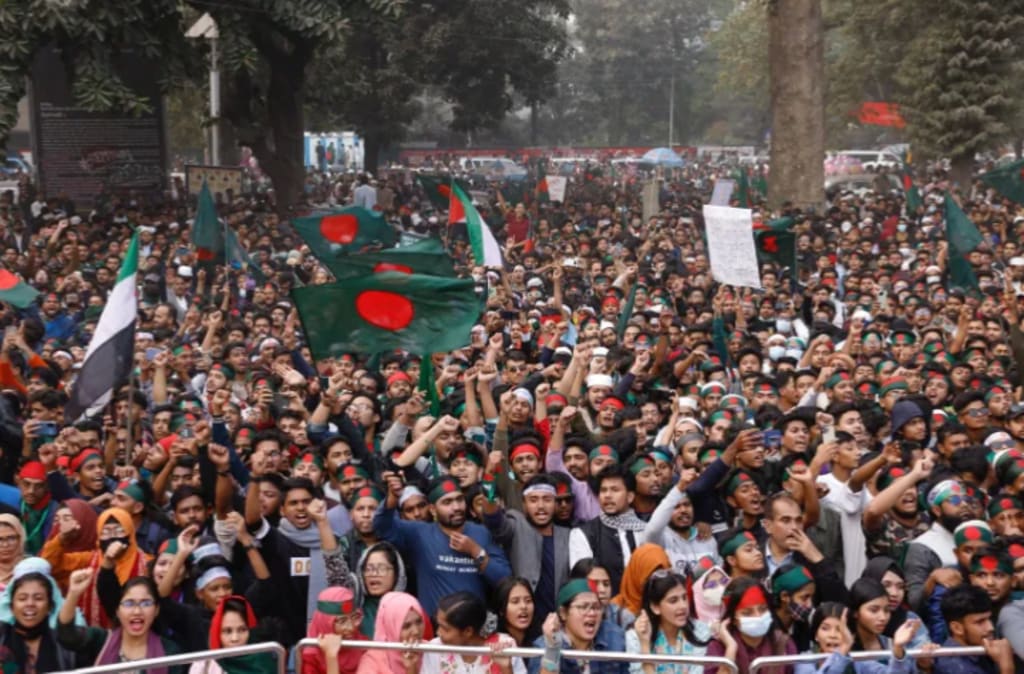
Bangladesh is witnessing a rare political transformation — one where voices from student protests are now echoing inside the nation’s highest decision-making chambers. Since the swearing-in of the country’s new prime minister, many citizens and observers have been asking the same question: Has Bangladesh’s new PM actually named student leaders to his cabinet?
The answer is yes — but with layers of political meaning and consequence.
Following the recent general elections, Tarique Rahman, leader of the Bangladesh Nationalist Party (BNP), formed a cabinet that includes former student activists who once led mass protests against corruption and political stagnation. Their inclusion marks a symbolic shift from campus demonstrations to cabinet meetings — a journey few activists ever complete.
A New Government After a Turbulent Past
Bangladesh’s political reset came after years of unrest, culminating in a powerful youth-driven uprising that forced the resignation of the previous government. Students had been at the heart of that movement, organizing nationwide demonstrations demanding fair governance, employment reforms, and democratic accountability.
When the BNP secured victory in the elections, expectations were high. Many wondered whether the new administration would reward the very youth who helped reshape the political landscape — or revert to traditional party politics.
The cabinet announcement offered a partial answer.
Who Are the Student Leaders in the Cabinet?
Among the newly appointed ministers are two figures widely recognized for their roots in student activism:
Nurul Haque Nur
Nurul Haque Nur, popularly known as “Nur,” rose to prominence during the 2018 anti-quota protests at the University of Dhaka. At the time, thousands of students took to the streets to challenge a government job quota system they believed favored political insiders over merit.
Nur became one of the most visible faces of the movement — outspoken, organized, and unafraid to confront authority. Over time, his activism expanded into national politics, earning him a seat in parliament in the latest elections.
Zonayed Abdur Rahim Saki
Another notable appointee is Zonayed Abdur Rahim Saki, often called Zonayed Saki. He has long been associated with student organizations and progressive political movements advocating social justice and political reform.
Like Nur, Saki entered parliament for the first time after the elections and was soon named to the cabinet — a move that surprised many and energized young voters who had rarely seen their peers represented at such levels.
What Their Appointment Really Means
At first glance, naming former student leaders to the cabinet appears to be a victory for youth activism. It sends a message that protest movements can translate into political influence and that the voices of younger generations are no longer confined to the streets.
But the reality is more complex.
Neither Nur nor Saki rose through the BNP’s traditional hierarchy. They were backed as coalition partners rather than long-time party loyalists. Their inclusion reflects a strategic decision by Prime Minister Rahman to broaden his government’s appeal and absorb the energy of the youth movement rather than allow it to remain outside the political system.
In other words, the cabinet appointments are as much about political stability as they are about recognition.
From Protest to Policy: A Difficult Transition
Moving from activism to governance is not easy. Protest leaders thrive on slogans and moral clarity, while ministers must navigate budgets, bureaucracy, and compromise.
For Nur and Saki, the challenge will be proving that they can influence real policy — not just symbolize change. Their supporters expect reforms in education, employment, and transparency. Their critics question whether two former activists can make a meaningful impact in a cabinet dominated by seasoned politicians.
This tension reflects a larger question facing Bangladesh: can the spirit of its youth movement survive inside a traditional political structure?
Public Reaction: Hope Mixed With Skepticism
The public response has been divided.
Many young Bangladeshis welcomed the news with optimism. Social media filled with posts celebrating the idea that “students are now ministers.” For them, it felt like a long-overdue acknowledgment of their sacrifices and struggles.
Others, however, remain skeptical. They argue that symbolic appointments do not guarantee systemic change. Some fear that former activists may lose their independence once absorbed into party politics, becoming part of the very system they once opposed.
Political analysts also point out that the majority of cabinet posts remain in the hands of veteran BNP figures, suggesting that the core power structure has not fundamentally changed.
A Broader Trend in South Asian Politics
Bangladesh is not alone in witnessing the rise of activists-turned-politicians. Across South Asia, youth movements have increasingly challenged established political elites. What makes Bangladesh’s case unique is how directly student protest leaders have been brought into the executive branch of government.
This could set a precedent — showing future movements that peaceful activism can lead to formal political participation rather than repression or marginalization.
What Comes Next?
The appointment of student leaders to the cabinet is historic, but it is only the beginning of their political test. Their true success will be measured not by their past activism, but by what they achieve in office.
Will they push for education reform?
Will they advocate for youth employment programs?
Will they maintain the trust of the students who once marched with them?
For now, their presence in government represents both promise and uncertainty.
A Symbol of Change — or a Political Strategy?
So, has Bangladesh’s new PM named student leaders to his cabinet? Yes — and in doing so, he has blurred the line between protest and power.
Whether this marks the dawn of a more inclusive political culture or simply a tactical move within coalition politics remains to be seen. What is undeniable is that Bangladesh has entered a moment where youth voices are no longer just demanding change — they are now responsible for delivering it.
In a country shaped by student movements since its independence, this chapter may prove to be one of the most significant yet.
About the Creator
Sajida Sikandar
Hi, I’m Sajida Sikandar, a passionate blogger with 3 years of experience in crafting engaging and insightful content. Join me as I share my thoughts, stories, and ideas on a variety of topics that matter to you.
Keep reading
More stories from Sajida Sikandar and writers in The Swamp and other communities.
Amid Destruction, Loss, Gaza Clings to Ramadan Traditions with Resilience
As the crescent moon signals the arrival of Ramadan, the streets of the Gaza Strip look very different from years past. Once vibrant neighborhoods decorated with glowing lanterns and bustling markets now stand scarred by rubble and silence. Homes have been reduced to debris, electricity is scarce, and the rhythm of daily life has been shattered by months of conflict and loss.
By Sajida Sikandara day ago in The Swamp
The Saddest Thing - The Billionaires Who Rule America Aren't Even Enjoying Themselves
This single post says more about our ruling class than a thousand policy papers. The saddest thing about today's system is that the men robbing the rest of us - sabotaging our economic prospects, our pensions, our access to affordable healthcare - are not even happy.
By Scott Christenson🌴14 days ago in The Swamp
Japan’s New Direction: Why Rare Earth Cooperation with the United States Matters
In a time when the world feels uncertain and divided, economic security has become as important as military strength. After being reelected as Japan’s leader, Sanae Takaichi has made it clear that her government wants stronger cooperation with the United States on rare earth development. This decision may sound technical, but its impact could shape the future of technology, global trade, and international relations.
By dua fatima2 days ago in The Swamp



Comments
There are no comments for this story
Be the first to respond and start the conversation.