
India Watches With Concern as Its Biggest Rival Plans to Add 50 New Warships to Its Fleet
Formal / News Style China’s naval expansion raises strategic alarms across the Indo-Pacific New Delhi monitors rapid fleet growth that could reshape regional maritime power 🔹 Neutral & Informative Planned buildup signals Beijing’s ambition to dominate key sea lanes India assesses implications of rival’s major warship acquisition program 🔹 Impactful Fifty new warships could tilt the balance of naval power in Asia

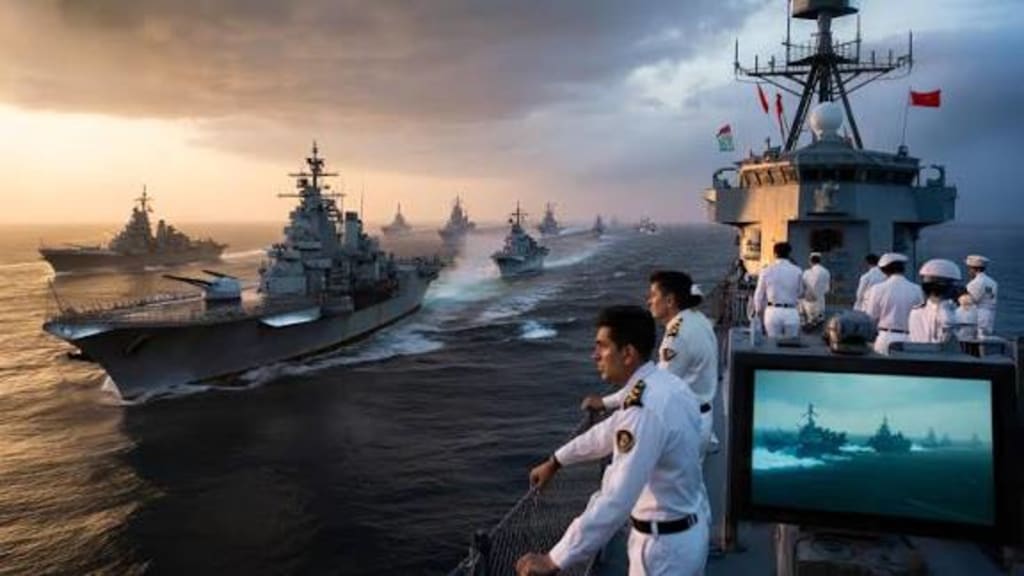
India is closely monitoring the rapid expansion of its biggest regional rival’s naval forces, as new reports indicate that China intends to acquire up to 50 additional warships in the coming years. The ambitious plan would significantly enhance Beijing’s maritime power and reshape the strategic balance across the Indo-Pacific, a region critical to global trade and security.
For New Delhi, the development raises urgent questions about deterrence, regional influence, and the future of naval competition in Asia. Defense analysts say the scale of China’s proposed expansion underscores its determination to project power far beyond its coastline and challenge established maritime actors, including India.
A Major Expansion of Naval Power
China already operates the world’s largest navy by number of vessels, with a fleet that includes aircraft carriers, destroyers, frigates, submarines, and amphibious assault ships. The reported plan to add 50 new warships would further strengthen the People’s Liberation Army Navy, allowing it to conduct sustained operations in the South China Sea, the Indian Ocean, and beyond.
According to military experts, the new ships are expected to include advanced destroyers, multi-role frigates, and possibly additional aircraft carriers and submarines. These platforms would be equipped with long-range missiles, modern radar systems, and enhanced anti-submarine warfare capabilities, making them formidable assets in any potential conflict scenario.
The expansion is part of a broader modernization drive aimed at transforming China’s navy into a “world-class force” capable of defending overseas interests, securing maritime trade routes, and supporting Beijing’s geopolitical ambitions.
India’s Strategic Concerns
For India, China’s naval buildup is not an abstract development but a direct strategic challenge. New Delhi has long viewed the Indian Ocean as its primary sphere of influence. However, China’s growing presence in the region—through port investments, naval patrols, and joint exercises—has steadily increased pressure on India’s maritime dominance.
Indian defense officials privately acknowledge that a fleet expansion of this magnitude could tilt the balance of power in contested waters. The concern is not only about numbers but about the sophistication and reach of Chinese naval forces.
“China is no longer a coastal navy,” said one Indian security analyst. “It is becoming a blue-water navy with the ability to operate far from home, including in areas India considers strategically vital.”
Regional Implications
China’s plan to expand its fleet comes amid heightened tensions across the Indo-Pacific. Disputes in the South China Sea, concerns over Taiwan, and growing rivalry between major powers have turned the region into one of the most militarized maritime zones in the world.
Neighboring countries such as Japan, Vietnam, and the Philippines are also watching developments closely. Many have increased their own defense spending in response to China’s naval growth, leading to fears of an accelerating arms race at sea.
For India, the implications extend beyond direct confrontation. A stronger Chinese navy could affect freedom of navigation, trade routes, and regional partnerships. India’s role within strategic groupings such as the Quad—alongside the United States, Japan, and Australia—has already taken on greater importance as a counterbalance to Beijing’s influence.
India’s Response
India has been investing steadily in its own naval modernization. The Indian Navy is expanding its fleet with new destroyers, submarines, and domestically built aircraft carriers. Indigenous shipbuilding programs aim to reduce dependence on foreign suppliers while improving technological self-reliance.
However, defense planners admit that matching China ship-for-ship is unrealistic. Instead, India is focusing on asymmetric capabilities such as submarines, maritime surveillance, and partnerships with friendly navies to maintain strategic equilibrium.
New Delhi is also strengthening ties with regional partners to ensure that the Indian Ocean does not become dominated by any single power. Joint exercises and intelligence-sharing agreements have increased in recent years, reflecting a shift toward collective security.
Economic and Political Dimensions
China’s naval expansion is backed by its vast industrial capacity and defense budget, which far outstrips that of most regional competitors. Shipyards are producing advanced vessels at a pace unmatched globally, giving Beijing a sustained advantage in fleet growth.
Politically, the program sends a strong signal of China’s ambitions as a maritime power. It reinforces President Xi Jinping’s vision of a strong military capable of safeguarding China’s global interests and supporting its rise as a major world power.
Looking Ahead
As China moves forward with its plan to acquire 50 new warships, India faces a complex strategic environment marked by competition, uncertainty, and shifting alliances. While open conflict remains unlikely, the expanding naval capabilities of China will continue to shape India’s defense planning and regional diplomacy.
For now, New Delhi is watching closely, aware that the balance of power in Asian waters is evolving rapidly. The coming decade will likely determine whether the Indo-Pacific becomes a zone of cooperation or a stage for intensified naval rivalry, with India and China at its center.
About the Creator
Fiaz Ahmed
I am Fiaz Ahmed. I am a passionate writer. I love covering trending topics and breaking news. With a sharp eye for what’s happening around the world, and crafts timely and engaging stories that keep readers informed and updated.
Keep reading
More stories from Fiaz Ahmed and writers in The Swamp and other communities.
“I Just Want to Stop Hearing About It”: A Weary South Korea Awaits Verdict on Yoon Insurrection Charges
South Korea is bracing for a highly anticipated verdict in the legal proceedings against former President Yoon Suk-yeol, who faces charges related to alleged insurrection attempts during his tenure. The case has dominated headlines, polarized public opinion, and tested the resilience of South Korea’s democratic institutions. Citizens and political observers alike express fatigue as the country awaits the court’s decision. Background of the Case The charges against Yoon stem from events surrounding public protests and security measures implemented during his presidency. Prosecutors allege that Yoon and several close aides attempted to undermine democratic processes, including manipulating law enforcement and using state apparatus to suppress dissent. Supporters of the former president deny wrongdoing, framing the allegations as politically motivated and an attempt to tarnish his legacy. Legal experts note that the case is unprecedented in recent South Korean history. While previous administrations have faced scrutiny over corruption and policy missteps, direct allegations of insurrection carry severe implications for the nation’s political stability and democratic norms. Public Sentiment Across South Korea, the public reaction has been mixed but increasingly fatigued. Polls indicate that while a segment of the population remains deeply invested in the outcome, a majority expresses frustration over the prolonged media coverage and political wrangling. Many citizens describe the situation as a distraction from pressing economic, social, and foreign policy concerns. “I just want to stop hearing about it,” said a Seoul resident. “No matter the verdict, it feels like politics is stuck in a loop, and the country’s real issues get ignored.” Others echo this sentiment, emphasizing that economic stagnation, housing affordability, and tensions with North Korea demand more attention from leaders and media alike. Political Implications The verdict carries significant ramifications for South Korea’s political landscape. Should Yoon be convicted, it could trigger legal penalties including imprisonment, effectively removing him from any future political activity. Conversely, an acquittal could energize his supporters, potentially reshaping upcoming elections and the broader partisan dynamic. Analysts suggest that regardless of the outcome, the case has already reshaped public trust in political institutions. For some, the legal proceedings are a demonstration of South Korea’s commitment to accountability. For others, the drawn-out process and intense partisan debate have deepened skepticism toward government and judiciary effectiveness. Media and International Attention International observers have followed the case closely, viewing it as a litmus test for South Korea’s democratic resilience. Coverage by global media emphasizes both the legal merits and the broader political context, highlighting concerns about freedom of expression, the balance of power, and the rule of law. Domestically, the media landscape has been saturated with trial updates, analysis, and commentary. Critics argue that this coverage has contributed to public fatigue, with citizens reporting “news burnout” as repeated narratives dominate headlines without clear resolution. Broader Context The case also occurs against the backdrop of rising geopolitical tensions on the Korean Peninsula. With North Korea conducting frequent missile tests and regional powers observing South Korea’s stability closely, the country’s internal political turbulence adds an extra layer of complexity to foreign relations and national security. Economically, South Korea faces challenges including inflationary pressures, youth unemployment, and a slowing tech sector. Analysts warn that prolonged political focus on the Yoon case could divert attention and resources from these pressing matters. Looking Ahead As the verdict approaches, citizens, political actors, and international observers brace for a decision that could either conclude a tumultuous chapter in South Korea’s political history or ignite further debate. Regardless of the outcome, the case underscores the tensions inherent in a vibrant democracy: accountability, political polarization, and public fatigue all intersect in a high-stakes judicial proceeding. For a nation eager to move forward, the verdict represents not only a legal conclusion but also an opportunity for South Korea to focus once more on governance, policy priorities, and national cohesion, setting the stage for its future political trajectory.
By Fiaz Ahmed a day ago in The Swamp
The Saddest Thing - The Billionaires Who Rule America Aren't Even Enjoying Themselves
This single post says more about our ruling class than a thousand policy papers. The saddest thing about today's system is that the men robbing the rest of us - sabotaging our economic prospects, our pensions, our access to affordable healthcare - are not even happy.
By Scott Christenson🌴11 days ago in The Swamp
Island Gold Mine Set to Boost Production Beyond 500,000 Ounces by 2028
The Island Gold Mine is entering a transformative phase as plans to boost annual gold production to more than 500,000 ounces by 2028 take shape. This ambitious target reflects a broader trend in the global gold industry, where established assets are being expanded and modernized to meet rising demand, offset declining grades elsewhere, and capitalize on favorable long-term gold price dynamics. For Island Gold, the production leap represents not just a numerical milestone, but a strategic evolution that could redefine its standing among the world’s premier underground gold operations.
By Sadaqat Ali8 days ago in The Swamp
The Salt in her Voice
The myth says mermaids sing to lure sailors to their death. But why? The ocean is huge. Only 5 percent has been discovered by man. Why would a creature of the sea with that much space to roam ever care about the fate of men on ships? The answer, as it turns out, is not a simple one at all. The truth about the myth is older than the tides. Long ago before the first ship ever cut across the surface, the sea made a pact with the sky. The sky would take the souls of the drowned. Anyone who died in storms or any quiet accidents of the deep would have their soul lifted upward to the Heavens while the bodies would remain below, feeding the oceans endless hunger. The greedy sea however wanted more souls than the sky would claim. So it created mermaids. It gave them beautiful voices woven from currents and moonlight. It commanded them to sing. "Bring forth the ones who float where they should sink." it instructed them. So they did. They never killed out of malice but out of obligation. They sung to summon, not to seduce. A mermaid's voice could loosen the tether between the body and soul, making any man step willingly into the water. The sea would take the body and the sky would take the soul. Balance maintained.
By Sara Wilson7 days ago in Fiction



Comments
There are no comments for this story
Be the first to respond and start the conversation.