
Iran Prepares Nuclear Counterproposal as U.S. Considers Limited Military Strikes
Tehran readies nuclear deal draft as Washington weighs limited strikes amid stalled talks and rising military tensions

Tensions between the United States and Iran over Tehran’s nuclear programme have intensified this week as Iranian officials prepare a draft nuclear counterproposal while Washington weighs the possibility of limited military strikes if diplomacy fails to yield a deal, according to multiple government and diplomatic sources.
Iran’s Foreign Minister Abbas Araghchi said on Friday that Tehran expects to have a draft proposal ready for delivery to U.S. negotiators within the next two to three days, following indirect talks earlier this week in Geneva. Araghchi suggested that although significant disagreements remain, there is room for negotiation on measures to ensure Iran’s nuclear activities remain peaceful.
“We have not offered any suspension [of enrichment] and the U.S. side has not asked for zero enrichment,” Araghchi said in a televised interview, adding that discussions are focused on safeguards and confidence-building measures. He said the two sides had agreed on some guiding principles but that a full agreement was not yet within reach.
U.S. Pressure and Military Options
Meanwhile, Donald Trump has publicly warned that the United States is considering limited military action to compel Tehran to accept terms on its nuclear programme, setting an informal deadline of roughly 10–15 days for a diplomatic breakthrough. Trump said on Friday that he is “considering” a limited strike to pressure Iran, framing it as a necessary step if talks falter.
U.S. military planners have reportedly advanced options that include targeted strikes against specific military and leadership infrastructure, as well as contingencies that could involve broader measures if conflict escalates. Some officials even discussed the possibility of actions aimed at regime figures, though no formal order has been issued.
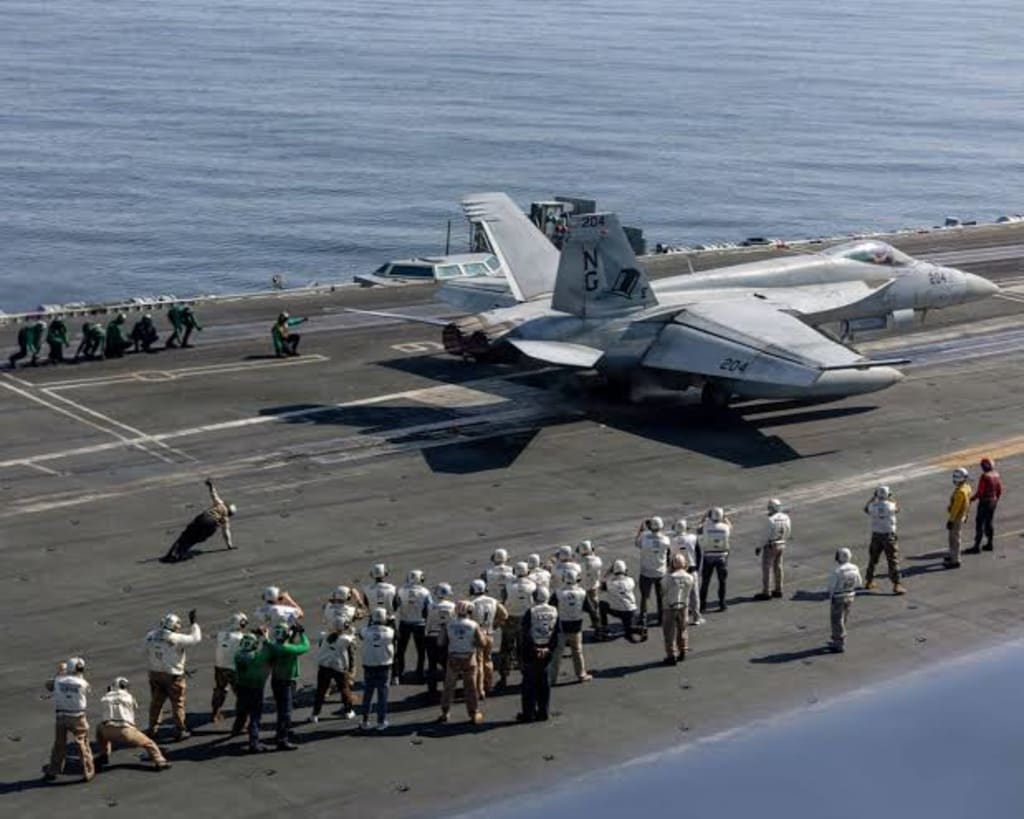
The massive U.S. military presence already deployed in the Middle East — including aircraft carriers, fighters, and support assets — underscores the seriousness of Washington’s intent to use force if deemed necessary. Observers say the deployment is meant to signal resolve and deter miscalculation, but also complicates diplomatic channels.
Diplomatic Efforts and Objections
Despite the military rhetoric, both sides have emphasised a preference for diplomacy. Araghchi reiterated that Iran seeks a peaceful resolution and that it believes a deal is possible “in a very short period of time,” provided that negotiations focus on practical confidence-building and safeguards rather than maximalist demands. He rejected calls for Iran to permanently cease enrichment, especially without corresponding sanction relief, arguing that peaceful enrichment is a right recognized for many nations.
Foreign diplomats and international organisations, including the United Nations, have expressed concern over the deteriorating rhetoric, urging both sides to keep diplomacy alive and avoid actions that could spiral into wider conflict. Some envoys have warned that military action would risk destabilising not only Iran but the broader region, affecting energy markets and global security cooperation.
Regional and Global Implications
Analysts say Iran’s move to prepare a formal counterproposal reflects a strategic calculation to avoid direct confrontation and safeguard its nuclear programme while winning sanction relief and international recognition of its rights to peaceful nuclear activities. Tehran’s insistence on maintaining enrichment, coupled with its resistance to zero-enrichment demands, remains a central sticking point in negotiations.
In Washington, the suggestion of limited strikes has prompted debate in Congress, with some lawmakers calling for stronger congressional oversight over any military action, citing constitutional authority and fears of entanglement in another Middle Eastern conflict. Others stress the need to uphold U.S. security and prevent Iran from approaching nuclear weapons capability.
What Comes Next
Iran’s counterproposal, expected within days, could open the door to renewed talks if both sides are willing to compromise. However, with President Trump’s timeline and the spectre of military action looming, the next two weeks are likely to be decisive. Observers warn that continued friction could either push the parties back to the negotiating table with a clearer framework or escalate into direct conflict with far-reaching consequences for the region and beyond.
About the Creator
Fiaz Ahmed
I am Fiaz Ahmed. I am a passionate writer. I love covering trending topics and breaking news. With a sharp eye for what’s happening around the world, and crafts timely and engaging stories that keep readers informed and updated.
Keep reading
More stories from Fiaz Ahmed and writers in The Swamp and other communities.
The Supreme Court’s Declaration of Independence
The U.S. Supreme Court has issued a series of recent rulings that many legal scholars describe as a modern “declaration of independence” from political pressure, signaling a firm assertion of judicial authority at a moment of intense polarization in the United States. In decisions touching on executive power, regulatory authority, and constitutional interpretation, the Court has increasingly positioned itself as an institution unwilling to bend to shifting political winds. While supporters praise the move as a defense of constitutional balance, critics warn that the justices are reshaping the boundaries between the judiciary, Congress, and the presidency in ways that could permanently alter American governance. A Turning Point in Judicial Authority At the heart of the Court’s recent posture is its insistence that constitutional questions belong squarely within the judiciary’s domain, regardless of political consequences. Several high-profile rulings have curtailed the reach of federal agencies and limited the discretion of the executive branch, reinforcing the idea that unelected judges, not political leaders, are the final arbiters of constitutional meaning. Legal analysts say this marks a departure from decades of judicial restraint, during which the Court often deferred to Congress or regulatory bodies on complex policy matters. The shift reflects a belief among a majority of justices that democratic accountability must be balanced against strict constitutional limits, even if that produces controversial outcomes. “This is the Court reminding the nation that it is not a subsidiary of the political branches,” said one constitutional law professor. “It is asserting its independence in unmistakable terms.” Political Reactions The response from Washington has been swift and divided. Lawmakers from both parties have accused the Court of either overreach or timidity, depending on the issue at hand. Progressive leaders argue that the justices are rolling back protections on voting rights and environmental regulation, while conservatives counter that the Court is finally restoring the Constitution’s original structure. The White House has expressed respect for judicial independence but has also raised concerns about the practical consequences of certain rulings, particularly those affecting healthcare, climate policy, and federal oversight. Behind the scenes, congressional aides say lawmakers are exploring legislative strategies to counter or clarify some of the Court’s decisions, setting the stage for an institutional standoff between branches of government. Public Trust and Institutional Legitimacy Public confidence in the Supreme Court has declined in recent years, driven in part by perceptions that the Court has become too political. Opinion polls show trust in the institution near historic lows, even as the Court insists it is acting purely on legal principle rather than ideology. Chief Justice John Roberts has repeatedly emphasized the importance of preserving the Court’s legitimacy by demonstrating neutrality and respect for precedent. Yet critics argue that recent rulings suggest a willingness to overturn long-standing doctrines, raising questions about stability in constitutional law. Supporters, however, contend that the Court is doing exactly what the framers intended: checking the power of elected officials and safeguarding the Constitution against temporary majorities. Constitutional Implications The phrase “declaration of independence” has gained traction among commentators who see the Court’s actions as redefining the separation of powers. By narrowing the authority of administrative agencies and emphasizing judicial review, the Court is effectively reclaiming influence that had shifted toward the executive branch over the last half-century. This recalibration could have far-reaching consequences. Regulatory systems governing finance, environmental protection, labor, and public health may now face higher legal hurdles. States, too, may find greater room to challenge federal authority, reshaping the balance between national and local power. A Court at the Center of American Politics Ironically, the Court’s effort to assert independence has placed it squarely at the center of political debate. Every major decision is now scrutinized not only for legal reasoning but for its political impact. Some historians compare the current moment to the New Deal era, when the Court’s resistance to federal programs sparked intense conflict with President Franklin D. Roosevelt. Others argue that today’s divisions are even sharper, fueled by social media and partisan media ecosystems that amplify every ruling into a national controversy. Looking Ahead Whether the Supreme Court’s assertiveness strengthens or weakens democracy remains an open question. Its defenders say the institution is restoring constitutional discipline and protecting liberty. Its critics fear that unelected judges are shaping policy without accountability. What is clear is that the Court has entered a new phase in its relationship with the political branches—one defined by independence, confrontation, and profound influence over the nation’s future. In doing so, it has made a statement not unlike the one issued in 1776: that its authority does not flow from politics, but from principle.
By Fiaz Ahmed about 10 hours ago in The Swamp
A Gathering of Evil Bosses
“I’m the queen of chin jutting while I smooth my hair, attacking, insulting, and deflecting to protect my appointer.” “Oh, please, Blondi, my hair is curled, highlighted, and longer than yours. I feature television commercials telling immigrants that we will give them a free plane ride home, and if they voluntarily turn themselves in, they will be allowed to legally apply for re-entry. It runs everywhere, and I look good in it! You can’t compete because of your blond hair. Mine is nicer, and my lips are prettier than yours.”
By Andrea Corwin 3 days ago in The Swamp


Comments
There are no comments for this story
Be the first to respond and start the conversation.