
Iran-US Tensions: President Pezeshkian Says “Will Not Bow Our Heads” Amid US Military Buildup
Tehran responds firmly as Washington increases regional military presence, diplomatic channels remain under scrutiny

Introduction
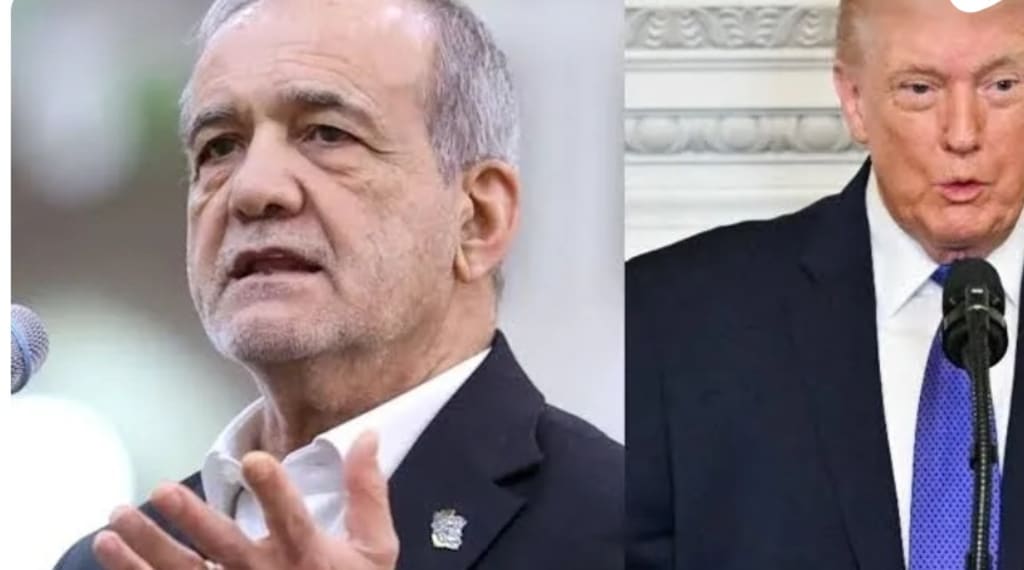
Tensions between Iran and the United States have intensified following reports of an expanded US military presence in the Middle East. In response, Iranian President Masoud Pezeshkian stated that Iran “will not bow our heads” under pressure.
The remarks come as Washington reinforces its military assets in the region, citing security concerns and deterrence. The situation has drawn international attention, with diplomatic observers closely monitoring the next steps from both sides.
President Pezeshkian’s Statement
President Pezeshkian addressed the issue during a public speech, emphasizing Iran’s sovereignty and national interests. He stated that Iran would continue to defend its rights under international law and would not yield to external pressure.
The president’s message focused on unity and resilience. He stressed that diplomatic engagement remains possible but warned that Iran would not accept actions perceived as intimidation.
His statement reflects a long-standing position in Tehran that national security decisions must be based on independent policy rather than external influence.
US Military Buildup in the Region
The United States has recently increased its military presence in strategic locations across the Middle East. According to American officials, these deployments are defensive in nature and intended to deter escalation.
US forces have expanded naval patrols in the Persian Gulf and reinforced air capabilities at regional bases. Washington maintains that the buildup is aimed at protecting commercial shipping lanes and maintaining stability.
The decision comes amid ongoing concerns about regional security, including maritime incidents and proxy tensions involving regional actors.
Diplomatic Relations at a Crossroads
Diplomatic relations between Iran and the United States have remained strained for several years. Although there have been indirect talks on nuclear and regional issues, progress has been limited.
President Pezeshkian indicated that Iran remains open to dialogue but emphasized that negotiations must be based on mutual respect. He noted that diplomacy cannot succeed under what he described as unilateral pressure.
Observers say the current situation presents both risks and opportunities. While military movements increase tension, they may also push both sides to reconsider diplomatic channels.
Historical Context of the Dispute
The Iran-US relationship has experienced multiple periods of tension over the past decades. Disagreements over nuclear policy, sanctions, and regional influence have shaped interactions.
In 2015, Iran and several world powers signed the Joint Comprehensive Plan of Action (JCPOA), aimed at limiting Iran’s nuclear activities in exchange for sanctions relief. However, the United States later withdrew from the agreement, leading to renewed economic sanctions and heightened mistrust.
Since then, attempts to revive the agreement have faced obstacles, including disagreements over compliance steps and political conditions.
Regional Impact and Security Concerns
The Middle East remains a complex security environment. Increased military activity often has ripple effects across neighboring countries.
Allies of the United States have expressed support for maintaining regional security. Meanwhile, Iran has reiterated that regional stability should be achieved through cooperation among neighboring states rather than foreign intervention.
Analysts note that any miscalculation or misunderstanding could lead to unintended escalation. Both sides have publicly stated that they do not seek direct conflict, but tensions remain high.
Domestic Reactions in Iran
Within Iran, President Pezeshkian’s remarks have received varied responses. Supporters view his stance as a defense of national dignity and sovereignty. Others stress the importance of avoiding confrontation and prioritizing economic stability.
Economic pressures, including sanctions and inflation, continue to affect Iranian citizens. Many observers believe that resolving tensions could ease economic challenges and create room for growth.
At the same time, public opinion reflects a desire for stability and clear communication from leadership.
International Reactions
Global leaders and international organizations have urged restraint. The European Union has called for renewed diplomatic efforts, emphasizing the importance of de-escalation.
Regional actors have also expressed concern about rising military activity. Countries in the Gulf region are particularly attentive to developments, given their proximity to potential conflict zones.
The United Nations has reiterated its support for dialogue and peaceful resolution of disputes. Diplomatic channels remain open, though progress depends on political decisions in both capitals.
The Role of Sanctions
Economic sanctions continue to shape the broader context of Iran-US relations. The United States maintains that sanctions are necessary to address security concerns and encourage policy changes.
Iran argues that sanctions harm ordinary citizens and complicate diplomatic engagement. President Pezeshkian has called for the removal of sanctions as part of any broader agreement.
The interplay between sanctions and military posture adds complexity to the current situation. Economic measures and security strategies often influence each other.
Prospects for Dialogue
Despite strong rhetoric, both sides have historically engaged in indirect communication through intermediaries. Diplomatic talks in the past have shown that agreements are possible when conditions align.
President Pezeshkian’s statement did not close the door to negotiations. Instead, it emphasized principles of equality and mutual respect.
Policy analysts suggest that confidence-building measures could reduce tensions. These might include transparency steps, limited agreements, or regional security discussions.
However, domestic political considerations in both countries may shape how quickly dialogue resumes.
Media Coverage and Public Attention
International media outlets, including Hindustan Times, have provided ongoing updates on the situation. Coverage highlights both official statements and military developments.
Public interest in the story reflects broader concerns about global stability. Tensions between major regional actors often affect energy markets and international trade.
Accurate reporting plays an important role in helping audiences understand the facts and avoid misinformation.
Looking Ahead
The coming weeks may prove significant. Continued military activity without diplomatic progress could increase pressure on both governments.
At the same time, history shows that periods of tension sometimes lead to renewed negotiations. The balance between deterrence and diplomacy remains central.
President Pezeshkian’s message signals determination but leaves space for discussion. Whether this balance can be maintained depends on actions taken by both sides.
Conclusion
Iran-US tensions have entered another sensitive phase as the United States increases its military presence in the Middle East and President Masoud Pezeshkian declares that Iran “will not bow our heads.” The statement underscores Tehran’s emphasis on sovereignty and resilience.
While rhetoric has intensified, diplomatic options remain available. The broader international community continues to encourage dialogue and restraint.
The situation illustrates the ongoing challenge of balancing national security concerns with the need for diplomatic engagement. As events unfold, careful communication and measured decisions will be essential to prevent further escalation and to create conditions for meaningful discussion.
About the Creator
Saad
I’m Saad. I’m a passionate writer who loves exploring trending news topics, sharing insights, and keeping readers updated on what’s happening around the world.
A Gathering of Evil Bosses
“I’m the queen of chin jutting while I smooth my hair, attacking, insulting, and deflecting to protect my appointer.” “Oh, please, Blondi, my hair is curled, highlighted, and longer than yours. I feature television commercials telling immigrants that we will give them a free plane ride home, and if they voluntarily turn themselves in, they will be allowed to legally apply for re-entry. It runs everywhere, and I look good in it! You can’t compete because of your blond hair. Mine is nicer, and my lips are prettier than yours.”
By Andrea Corwin 3 days ago in The Swamp
Exclusive: Riyadh Wants to Replace Israel with Syria for Greece Fibre-Optic Cable Route
Saudi Arabia is pushing for a major revision to a planned undersea fibre-optic cable linking the Middle East with Europe, seeking to reroute the project through Syria instead of Israel, according to regional officials and industry sources familiar with the negotiations. The proposal would connect the cable to Greece, offering a shorter and potentially cheaper digital corridor between Asia and Europe. The project, backed by Saudi investment and supported by several Gulf and European telecom operators, is designed to strengthen data connectivity between the Middle East and Europe while reducing reliance on congested routes through the Red Sea and Egypt. However, Riyadh’s push to bypass Israel reflects broader geopolitical calculations as well as technical and regulatory concerns. Strategic Shift in Routing Under earlier plans, the cable would have passed from the Gulf through Israel and then onward to the Mediterranean before reaching Greece. Saudi officials now argue that routing through Syria would provide greater political control over infrastructure and avoid dependence on a country with which Riyadh does not maintain formal diplomatic relations. A senior regional official said the change was driven by “sovereignty and security considerations” rather than purely commercial factors. “Saudi Arabia wants to ensure that critical digital infrastructure remains under friendly and cooperative jurisdictions,” the official noted. The revised route would cross Saudi territory, enter Syria via Jordan or Iraq, and then continue under the Mediterranean Sea to Greece. Engineers say the route is technically feasible, though it would require new landing stations and regulatory approvals from Damascus and European partners. Syria’s Return to Regional Projects For Syria, the proposal could represent a major economic opportunity and a symbolic step toward reintegration into regional infrastructure networks after years of isolation due to civil war and international sanctions. Syrian authorities have reportedly welcomed the idea, viewing it as a way to generate transit revenue and rebuild damaged telecommunications systems. Telecom analysts say Syria’s geographic position makes it a natural bridge between the Gulf and Europe. “From a purely technical standpoint, Syria offers one of the shortest land corridors to the Mediterranean,” said a regional infrastructure consultant. “The challenge is political risk and long-term stability.” Israel Factor and Regional Politics Israel had been considered a strong candidate for the original route because of its advanced telecom infrastructure and proximity to Europe. But Saudi officials are reluctant to rely on Israeli territory for a project they view as strategically sensitive. Although Saudi Arabia and Israel have cooperated indirectly in security matters, formal diplomatic ties have not been established. The rerouting effort comes amid renewed tensions in the region and shifting alliances following the Gaza war and broader instability in the Middle East. An Israeli industry source said the proposal, if implemented, would be “a missed opportunity for regional digital integration.” “Israel has the infrastructure and experience to handle such a project efficiently,” the source said, adding that excluding Israel could increase both cost and risk. European and Commercial Concerns European partners, including Greek authorities, are said to be cautiously evaluating the Saudi proposal. Greece sees the project as a way to strengthen its role as a digital gateway between Europe and the Middle East, but officials are concerned about the regulatory and security implications of routing through Syria. Brussels has not publicly commented, but diplomats note that European Union sanctions on Syria could complicate financing and insurance for the project. Private telecom companies involved in the consortium are reportedly pressing for guarantees that the route will not expose them to legal or reputational risks. One executive involved in the talks said the consortium is studying multiple options. “We are balancing geopolitics, engineering feasibility, and long-term reliability. This is not just about laying a cable; it’s about creating a stable digital highway for decades.” Saudi Digital Ambitions The fibre-optic project is part of Saudi Arabia’s broader push to become a global data and technology hub under its Vision 2030 economic diversification plan. Riyadh has invested heavily in data centers, cloud services, and international connectivity to attract tech firms and financial institutions. Officials argue that controlling major data routes will enhance national security and reduce dependence on traditional chokepoints such as the Suez Canal. Recent disruptions to Red Sea cables caused by maritime incidents have reinforced Saudi concerns about vulnerability. “Digital infrastructure is now as important as oil pipelines,” said a Saudi technology policy adviser. “Whoever controls the routes controls the future of data trade.” Uncertain Outcome Negotiations over the route are still at an early stage, and no final decision has been made. Industry insiders say pressure from European regulators and commercial partners could yet restore Israel to the plan or result in a hybrid solution with multiple landing points. For now, Riyadh’s push to replace Israel with Syria underscores how geopolitics is reshaping even the most technical infrastructure projects. What was once an engineering decision has become a diplomatic balancing act involving regional rivalries, post-war reconstruction, and Europe’s digital security. As one Western diplomat observed, “This cable is not just about faster internet. It’s about influence, trust, and who sits at the crossroads of tomorrow’s data economy.”
By Fiaz Ahmed a day ago in The Swamp



Comments
There are no comments for this story
Be the first to respond and start the conversation.