humanity
Humanity topics include pieces on the real lives of politicians, legislators, activists, women in politics and the everyday voter.
Rules for Authors 2026
Rules for Authors 2026 Remember Control the Masses? Word Patrol 2026 I am sharing these notes because it is not about me but about the authoritarian system under which we are living. One Need to research rules for authors, artists, etc.
By Vicki Lawana Trusselli 35 minutes ago in The Swamp
Why Black History Matters in America?
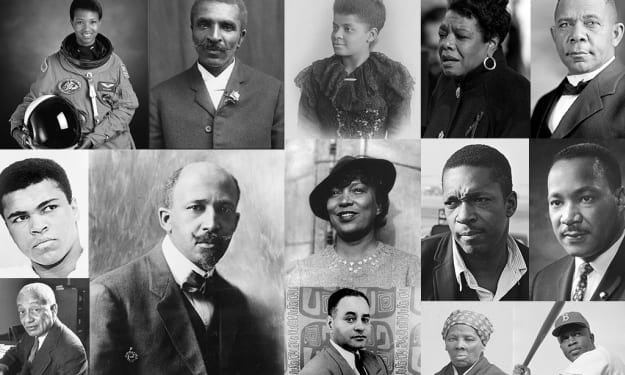
The United States of America is celebrating their 250th anniversary in 2026. I'm proud to be an American and as someone who was born here, I wouldn't imagine myself living anywhere else. This is a country where opportunities are possible. Where anyone can be successful in anything they desire to do. Equality, community, and togetherness are the backbones of what America is and should be about. However, we have an administration who wants to erase and disregard those who have made positive, meaningful impacts in our country, specifically Black figures, such as Martin Luther King, Jr., Rosa Parks, and Maya Angelou. President Trump and his administration have been constantly complaining and fighting against what they call the "Woke agenda". They use this excuse as a distraction from other issues they refuse to address, such as the high cost of living, climate change, and inflation. That equality is dividing America, when in reality, it's bringing us together. Being woke is not tied to a specific political party. No matter where you stand on the political spectrum, you can still care about other people and their plights. Compassion and empathy for others isn't tied to a political party, either. We were taught as children to treat others the way we want to be treated and not judge others because they're different from us. Caring about others isn't a personal attack on your beliefs. It doesn't make you any less of a person. People who are easily offended over African American figures, past or present, or anything related to it, are grasping at straws. Current and future generations need to know who people like Harriet Tubman and Shirley Chisholm were, especially in the classroom. Black History is part of American History. It should be recognized, not hidden or forgotten. Besides, you can't shield children from everything, just because your feelings are easily hurt.
By Mark Wesley Pritchard about 2 hours ago in The Swamp
Becoming The Villain
As I said before the hero’s journey either leads to being the hero or becoming the villain. And remember some peoples hero are other peoples villain and vice versa. Yet we understand when a character has become the villain, is the villain or might be the villain.
By WrittenWritRalf3 days ago in The Swamp
Small Heat Challenge Winners: Celebrating Creativity, Talent, and the Fire of Competition. AI-Generated.
A Platform for Creativity In the digital age, creative competitions have become a powerful way for artists, writers, and innovators to showcase their skills. Among these, the Small Heat Challenge stands out as one of the most inspiring platforms for emerging talent. Designed to encourage artistic exploration, storytelling, and experimentation, the challenge has grown exponentially in popularity. The latest round of the competition has just concluded, revealing a remarkable range of winners whose works reflect ingenuity, originality, and emotional depth. From thought-provoking short stories to visually striking art pieces, the Small Heat Challenge has once again proven that creativity knows no bounds. The Genesis of the Small Heat Challenge Before diving into the winners, it is important to understand the concept behind the challenge. The Small Heat Challenge was created to provide a level playing field for both emerging and seasoned creators. Its goals are simple but powerful: Inspire participants to experiment with new ideas Celebrate creative diversity across genres and media Provide recognition and rewards for talent often overlooked Over the years, the competition has evolved from a small, community-driven event into a globally recognized platform. It now attracts entries from multiple countries, each bringing unique cultural and stylistic perspectives. The Selection Process: From Hundreds to a Few Selecting winners in the Small Heat Challenge is no small feat. Judges consider creativity, originality, execution, and emotional impact. Submissions go through multiple rounds of evaluation: Preliminary Review: Initial screening to ensure adherence to the theme and quality standards Judging Panel Evaluation: Expert judges analyze technical skill, storytelling, and artistic expression Community Input: In many categories, audience votes influence the final decision Final Deliberation: Judges determine winners based on combined scores and impact This rigorous process ensures that the winners represent the best of the best, reflecting both skill and the spirit of creativity. Celebrating the Winners This year’s winners embody a range of talent, demonstrating that creativity can manifest in unexpected ways. Let’s explore some of the standout entries: 1. Fiction That Ignites the Mind The storytelling category produced entries that were both emotionally resonant and intellectually engaging. One winner crafted a short story that explored human resilience amid dystopian settings, earning praise for narrative depth and innovative structure. Another entry blended fantasy and contemporary reality, creating a world that captivated readers from the first sentence. 2. Visual Arts: The Power of Imagination In visual arts, winners pushed the boundaries of color, composition, and concept. From intricate digital illustrations to mixed-media masterpieces, these artworks reflected not only technical skill but also a distinct voice and perspective. One particular piece, which depicted a fusion of human emotion with natural elements, became a viral sensation within the challenge community. 3. Poetry and Spoken Word: Emotion in Motion The poetry and spoken word category saw entries that captured raw human emotion with brevity and power. Themes ranged from love and loss to hope and social commentary. Judges lauded winners for their ability to convey profound ideas through concise language, demonstrating that sometimes less is more when it comes to storytelling. 4. Innovative Multimedia Projects Some of the most remarkable entries came from creators who blended multiple mediums, combining animation, music, and interactive storytelling. These projects highlighted the challenge’s emphasis on experimentation and innovation, proving that creative expression is not limited by format. Interviews with the Winners: Insights and Inspiration Many winners shared their experiences and creative philosophies. Common themes emerged: Persistence: Almost all winners emphasized the importance of continuing to create despite obstacles or rejection Curiosity: Winners credited their ability to explore new techniques and ideas for their success Community Support: Many highlighted the role of peer feedback and mentorship in shaping their work These insights provide valuable lessons for aspiring creators: success is a combination of talent, effort, and openness to learning. The Role of the Small Heat Challenge in Career Growth Winning the Small Heat Challenge is more than just a badge of honor; it has tangible benefits: Exposure to a Global Audience: Winners often see their work shared widely, reaching new fans and collaborators Professional Opportunities: Recognition can lead to commissions, collaborations, and publishing deals Confidence and Validation: Receiving acknowledgment from a respected platform can boost confidence and fuel future projects Many past winners have gone on to launch successful careers in their fields, illustrating the challenge’s role as a springboard for creative professionals. Why the Small Heat Challenge Resonates The challenge resonates because it balances competition with community. Participants are not only vying for prizes but also engaging in meaningful dialogue with other creators, sharing feedback, and celebrating artistic achievement. This dual focus on individual excellence and community support sets the Small Heat Challenge apart from other contests. The Global Impact: Creativity Without Borders Entries in the Small Heat Challenge come from all corners of the globe, reflecting cultural diversity and unique perspectives. This global reach demonstrates that creativity is universal and that storytelling, art, and innovation can transcend borders and languages. Moreover, the challenge highlights emerging trends in digital art, literature, and multimedia storytelling, providing insight into the future of creative expression. Tips for Aspiring Participants For those looking to enter future challenges, winners often share actionable advice: Stay True to Your Voice: Originality and authenticity matter more than imitation Experiment Boldly: Try new techniques, formats, or genres Seek Feedback Early: Constructive criticism strengthens your work Be Persistent: Don’t be discouraged by initial rejection or setbacks Engage With the Community: Networking and collaboration can open unexpected doors Following these tips increases both the quality of submissions and the chances of success. Looking Ahead: The Future of the Small Heat Challenge With its growing popularity, the Small Heat Challenge is continuously evolving: Expanding categories to include emerging art forms Incorporating digital and interactive media Increasing scholarships, grants, and professional opportunities for winners The platform’s vision is clear: to empower creators worldwide, provide a stage for innovation, and celebrate creativity in all its forms. Conclusion: Celebrating Creativity in the Modern Age The latest Small Heat Challenge winners exemplify what it means to create fearlessly, imaginatively, and with passion. Their work is a testament to the power of human expression and the enduring importance of platforms that nurture talent. As the challenge continues to grow, it reminds us that creativity is not just a skill—it’s a movement, one that brings together artists, writers, and innovators from around the globe to inspire, challenge, and elevate each other. The Small Heat Challenge proves that, in a world of constant change, the spark of creativity is always worth celebrating.
By Zahid Hussain3 days ago in The Swamp
Iran Warns of ‘Hazardous Consequences’ After EU Designates Revolutionary Guard as a Terrorist Organization. AI-Generated.
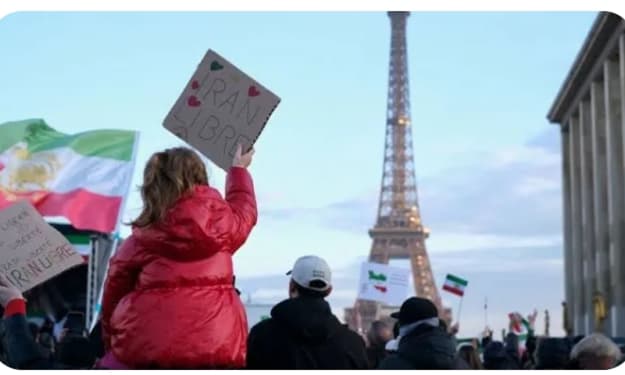
On January 29, 2026, the European Union formally designated Iran’s Islamic Revolutionary Guard Corps (IRGC) as a terrorist organization — a dramatic escalation of diplomatic pressure rooted in Iran’s suppression of domestic protests and its role in regional security dynamics. The move provoked an immediate and forceful condemnation from Tehran, which warned of “hazardous consequences” that could reverberate across European capitals and potentially destabilize broader regional relations. � Reuters +1 What the EU Decision Entails In a rare consensus among the EU’s 27 member states, foreign ministers in Brussels approved the terrorist designation of the IRGC — placing it alongside groups such as al-Qaeda, Hamas, and ISIL in terms of legal categorization. � The Guardian EU officials, including EU foreign policy chief Kaja Kallas, framed the decision as a response to human rights abuses — specifically the IRGC’s role in violently suppressing widespread protests in Iran, which authorities and human rights groups say resulted in thousands of deaths. “Repression cannot go unanswered,” Kallas wrote on social media, arguing that actors who engage in systematic brutality must face consequences. � News-Press NOW The designation also triggered sanctions: asset freezes on individuals and entities travel bans within the EU criminalization of material support or collaboration with the IRGC under EU law While largely symbolic in terms of direct economic impact, it intensifies legal and political pressure and aligns the EU with similar classifications by the United States, Canada, and Australia. � The Guardian +1 Iran’s Immediate Response: ‘Hazardous Consequences’ Iran’s reaction was swift and vehement. In statements carried by state media, including the Islamic Republic News Agency (IRNA), senior Iranian military authorities denounced the EU’s decision as “illogical, irresponsible, and spiteful,” accusing European leaders of acting under pressure from the United States and Israel rather than on objective grounds. They warned that the “hazardous consequences of this hostile and provocative decision will fall directly on the European policymakers.” � News-Press NOW Iranian Foreign Minister Abbas Araghchi echoed these sentiments on social media, calling the move a “major strategic mistake” that escalates tensions in the Middle East and undermines diplomatic engagement. He argued that European governments were “fanning the flames” rather than working to avert regional conflict and suggested that any future instability — including spikes in global energy prices — would be linked to this decision. � News Channel 3-12 Why the IRGC’s Designation Matters 1. A Shift in European Policy For years, major EU countries were divided on labeling the IRGC as a terrorist organization. Some governments feared such a move would sever diplomatic channels and undermine negotiations on other critical issues. That this designation was ultimately approved signals a major shift in EU attitudes toward Iran’s domestic repression and regional behavior. � Reuters 2. Human Rights as a Catalyst The crackdown on anti-government protests in Iran — triggered by economic grievances and rapidly expanding into broader calls for political change — has drawn unprecedented international condemnation. Rights groups have claimed death tolls far exceeding official figures, arguing that security forces, including the IRGC, have been disproportionately lethal. � www.ndtv.com 3. Legal and Diplomatic Implications While the designation may not immediately change on-the-ground dynamics within Iran, it empowers EU law enforcement and financial regulators to act against IRGC affiliates. It also creates a deeper rift in EU-Iran relations, complicating any future efforts at diplomacy. � Auswärtiges Amt Tehran’s Warning: What ‘Hazardous Consequences’ Could Mean Iran’s rhetoric has hinted at several possible areas of fallout: Political and diplomatic strain: Tehran may reduce cooperation with European states on nuclear discussions, regional diplomacy, or prisoner negotiations. � News-Press NOW Energy market implications: Iran suggested that conflict escalation could affect energy prices, a sensitive issue for European economies heavily dependent on global supplies. � News Channel 3-12 Heightened military posturing: While Iran has not clarified specific countermeasures, previous escalations have included military exercises and public shows of force — moves that risk miscalculation. � Gulf Today Analysts caution that unspecified “hazardous consequences” may ultimately be rhetorical signaling rather than concrete threats — but in a region already fraught with tensions involving the U.S., Israel, Saudi Arabia, and other actors, even ambiguous warnings can fuel uncertainty. Broader Geopolitical Context The EU’s designation does not occur in isolation. It follows a pattern of Western powers aligning their posture toward Tehran: The U.S. has listed the IRGC as a terrorist group since 2019. Canada and Australia followed with similar designations. The EU’s move is the most significant by a major multilateral bloc. � News-Press NOW At the same time, pressures over Iran’s nuclear program, regional influence, and proxy conflicts continue to shape international engagement. The Biden administration, Trump administration, and other global leaders have varied approaches — but consensus on adding the IRGC to a terrorist list reflects shared concern over both human rights abuses and regional stability. Can Diplomacy Still Work? Despite the sharp rhetoric, some officials — including those within Europe and the United Nations — emphasize the need for diplomatic channels to remain open. Without dialogue, tensions risk spiraling into unintended confrontations with broader consequences for global security. UN Secretary-General António Guterres urged restraint and diplomacy to “avoid a crisis that could have devastating consequences in the region,” emphasizing that escalatory moves on both sides could undercut efforts toward negotiated solutions. � The Guardian Conclusion: A Dangerous Turning Point The European Union’s terrorist designation of the IRGC marks a significant escalation in Western policy toward Iran, grounded in human rights concerns and broader geopolitical contestation. Iran’s warnings of “hazardous consequences” underscore how deeply this decision has aggravated Tehran and could influence diplomatic, economic, and security dynamics in the months ahead. Whether this leads to tangible retaliation or remains largely rhetorical, the episode highlights the fragility of international efforts to balance accountability, negotiation, and stability in an already complex Middle East landscape.
By Zahid Hussain3 days ago in The Swamp
Dr. Oz in Los Angeles: A Political Hunt for Fraud or a Dangerous Narrative?. AI-Generated.
When Dr. Mehmet Oz traveled to Los Angeles claiming he was “seeking fraud,” he likely expected attention. What he may not have expected was the fierce response from California Governor Gavin Newsom, who dismissed Oz’s assertions as “baseless and racist allegations.” The clash quickly escalated beyond a routine political disagreement. It exposed a deeper national conflict—one where public health, race, political ambition, and misinformation collide in an era already saturated with distrust. This is not just about Dr. Oz or Gavin Newsom. It’s about how narratives are built, who they target, and why they resonate. From Television Doctor to Political Provocateur Dr. Oz is no stranger to controversy. Once celebrated as a heart surgeon and trusted television health expert, Oz’s transition into politics has been anything but smooth. Critics argue that his recent actions reflect a shift from evidence-based medicine to headline-driven politics. His visit to Los Angeles—framed as an investigation into alleged fraud—was presented without publicly verifiable data, formal audits, or coordination with local authorities. Instead, it relied on broad claims, selective anecdotes, and emotionally charged language. That approach raised immediate red flags. Why Los Angeles Became the Target Los Angeles has long been a symbolic battleground in American politics. To supporters of conservative populism, it represents government overreach, immigration failure, and urban decay. To its defenders, it is a diverse, complex metropolis grappling with challenges common to major global cities. By choosing L.A., Oz wasn’t just picking a location—he was tapping into a pre-existing narrative. One that resonates with audiences already primed to believe that fraud, corruption, and chaos define certain communities. Newsom’s Sharp Rebuttal Governor Gavin Newsom wasted no time responding. Calling Oz’s claims “baseless”, Newsom emphasized the absence of credible evidence. But it was his use of the word “racist” that transformed the dispute into a national conversation. According to Newsom, Oz’s rhetoric echoed a familiar pattern: Allegations that disproportionately frame minority-heavy cities as inherently corrupt, without substantiation. This, Newsom argued, isn’t accountability—it’s scapegoating. When Allegations Become a Political Weapon Fraud is a serious accusation. When proven, it demands consequences. But when fraud claims are made without evidence, they risk becoming something else entirely: a political weapon designed to inflame fear rather than uncover truth. History shows that vague allegations often serve three purposes: Energizing a political base Delegitimizing institutions Distracting from policy substance Critics argue that Oz’s actions fit this pattern precisely. The Racial Undertones of “Urban Fraud” Narratives The word “racist” in political discourse is powerful—and often controversial. But scholars and civil rights advocates point out that claims of widespread fraud in cities like Los Angeles, Chicago, or Atlanta have historically been linked to racialized assumptions. The implication is subtle but damaging: That diversity equals dysfunction. That immigrant-heavy communities are less trustworthy. That urban poverty is evidence of moral failure. Newsom’s response suggests that Oz’s visit wasn’t just about fraud—it was about reinforcing these narratives. Evidence Matters More Than Optics One of the most troubling aspects of this episode is the lack of transparency. No documented findings. No independent verification. No collaboration with investigative bodies. In an age of viral clips and social media outrage, optics often replace substance. A camera crew can create the illusion of investigation without producing facts. That’s dangerous—especially when trust in institutions is already fragile. Public Health, Politics, and Lost Credibility Dr. Oz’s background makes this situation even more complex. As a physician, he once represented scientific authority. That authority carries ethical weight. When medical professionals enter politics, their words carry added credibility—whether deserved or not. Critics argue that making unsupported allegations risks eroding public trust not only in politics, but in science and medicine as well. Once credibility is lost, it’s nearly impossible to regain. A Symptom of a Larger Crisis This controversy reflects something larger than two men arguing. It highlights: The weaponization of misinformation The collapse of evidence-based discourse The rise of performative politics The deep racial fault lines in American narratives When accusations replace investigations, democracy suffers. Conclusion: Accountability Requires Proof, Not Provocation If fraud exists, it must be exposed—with facts, data, and due process. But accusations without evidence don’t strengthen democracy. They weaken it. Governor Newsom’s harsh response underscores a growing frustration with political theatrics masquerading as accountability. Whether one agrees with him or not, the message is clear: Truth requires proof. Justice requires fairness. And leadership requires responsibility. Anything less is just noise.
By Zahid Hussain3 days ago in The Swamp
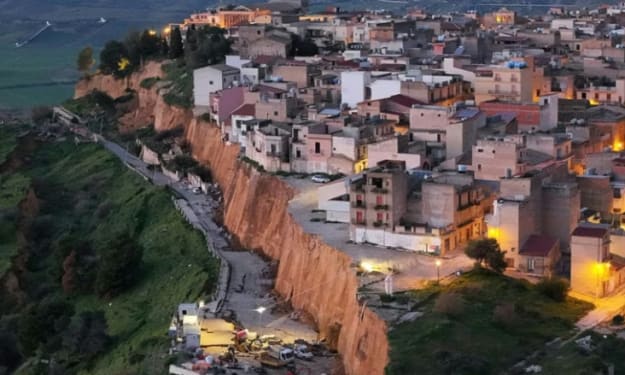
Huge Landslide Leaves Sicilian Homes Teetering on Cliff Edge. AI-Generated.
The ground gave way without warning. One moment, homes stood quietly against the backdrop of sea and sky; the next, the earth beneath them began to slide toward the void. In parts of Sicily, a massive landslide has left entire neighborhoods perched precariously on a cliff edge, forcing evacuations and reigniting urgent conversations about climate change, aging infrastructure, and the fragile balance between people and nature.
By Aqib Hussain4 days ago in The Swamp